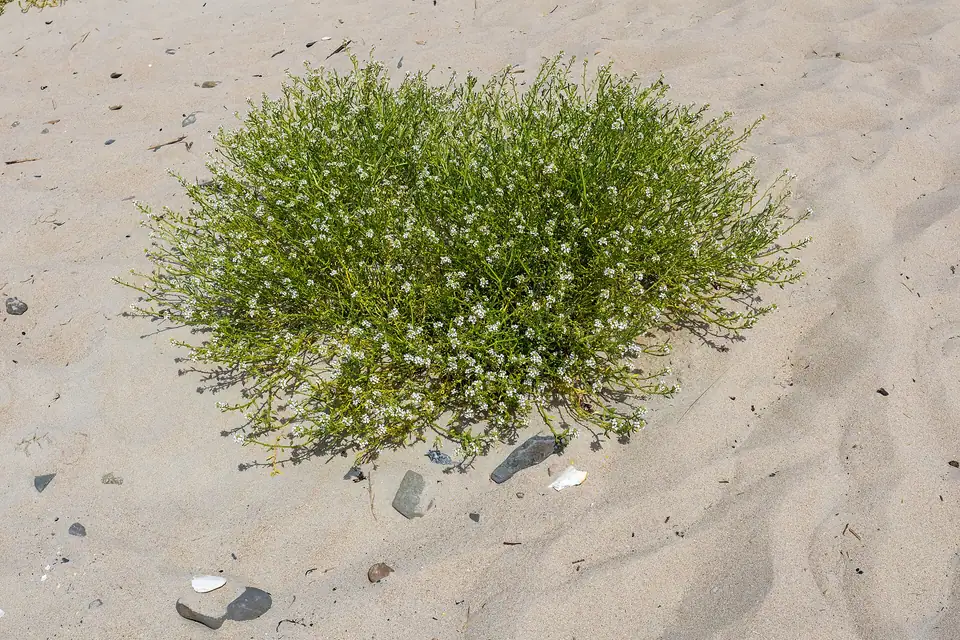
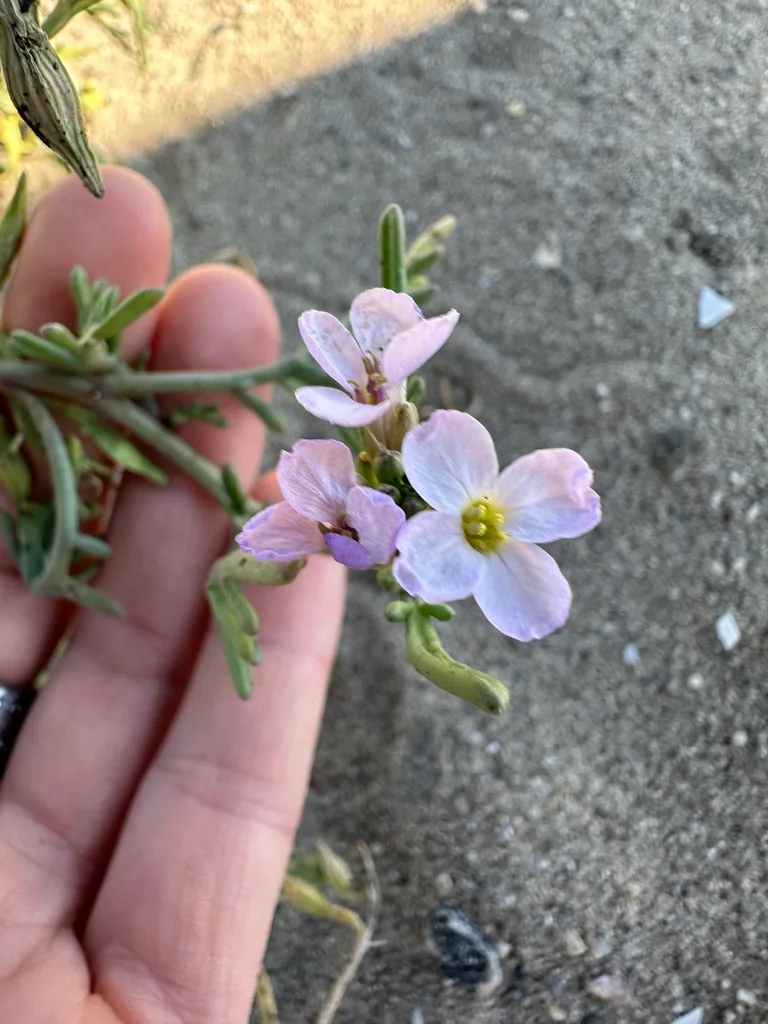

How to Grow and Care for Sea rocket
Cakile maritima
Written by Emilio Marruso · last checked
At a glance
Sea rocket is a sun-loving plant: give it full sun and light, well-drained soil, then sow the seeds right where they will grow in late spring or early fall. Once settled, it sows itself year after year. Its leaves, stems, flower buds and young seedpods are edible raw, with a pungent bite and plenty of vitamin C.
- Sun
Full sun
- Soil
Light, well-drained soil
What the sources say (2)
- Harvest
Leaves, stems, flower buds and young seedpods are edible raw: rich in vitamin C, but bitter
- Propagation
Grows from seed and sows itself
What the sources say (3)
Propagation: Seed; self-sows
Seed - sow late spring or early autumn in situ. Germination is usually rapid.
— Cakile maritima - Useful Temperate Plants [3] Plants are easily grown in a garden situation and can self-sow if the ground is disturbed by hoeing etc
— Cakile maritima - Useful Temperate Plants [3] European sea rocket reproduces by seed, which is distributed by ship ballasts, sand transport, tidal movement, and human activity.
— Cakile maritima Profile – California Invasive Plant Council [1] - Sowing
Sow right where it will grow, in late spring or early fall
What the sources say (1)
Sowing: Late spring or early autumn, in situ
Seed - sow late spring or early autumn in situ. Germination is usually rapid.
— Cakile maritima - Useful Temperate Plants [3]
Overview
Cakile maritima is a succulent annual of sandy and shingly coasts, tolerant of salt spray and occasional seawater flooding. [1][6] It is easily grown in a garden in a sunny position on light, well-drained soil and can self-sow. [3][6] Seed is sown in situ in late spring or early autumn and germinates quickly. [3]
This record is incomplete: the sources we read do not cover every field yet.
Not yet covered by our sources: Hardiness, coldest zone, Hardiness, warmest zone
Sea rocket care
How to water Sea rocket
Needs light, well-drained soil
How much light Sea rocket needs
How much cold Sea rocket can take
Hardiness, coldest zone
Not stated in the sources we read.
Hardiness, warmest zone
Not stated in the sources we read.
How to propagate Sea rocket
Seed; self-sows
What the sources say (3)
Seed - sow late spring or early autumn in situ. Germination is usually rapid.Plants are easily grown in a garden situation and can self-sow if the ground is disturbed by hoeing etcEuropean sea rocket reproduces by seed, which is distributed by ship ballasts, sand transport, tidal movement, and human activity.How to grow Sea rocket
The plant
Family
Brassicaceae (Cruciferae)
What the sources say (1)
Family: CRUCIFERAE (BRASSICACEAE) Genus: Cakile Catalan common name: Rave de mar. Ravenissa de mar.Remedies
Each remedy shows what official sources say about it; traditional remedies without an official source are marked as such. Harmful ones are listed so you know to avoid them.
Getting rid of it
weed
manual removal before pods form Not verified
Traditional remedy, not verified by an official source.
How: Remove plants by hand at least every 8-10 weeks; once pods have formed, seed often matures even on uprooted plants.
Calendar
Sowing
Late spring or early autumn, in situ
What the sources say (1)
Seed - sow late spring or early autumn in situ. Germination is usually rapid.Months as given by the sources, which are mostly from the United States (northern hemisphere). In the southern hemisphere they shift by about six months.
Edibility
Reported by the source, quoted verbatim. Do not eat a plant on the basis of this page alone: identification mistakes can be dangerous.
Leaves, stems, flower buds and immature seedpods - raw or cooked. They are rich in vitamin C but have a very bitter taste
[3]Leaves, stems, flower buds and immature seed pods raw. They can be cooked but cooking makes them very bitter. However, they are rich in Vitamin C.
[7]Root - dried and ground into a powder, then mixed with cereal flours and used to make bread
[3]Despite its pungent and sometimes bitter taste, Cakile maritima can be eaten raw or cooked.
[6]
Similar plants
- Abraham Trachystemon orientalis
- Abyssinian banana Ensete ventricosum
- Acacia longifolia Acacia longifolia
- African Blue Lily Agapanthus praecox
- African lily Dietes bicolor
- African lovegrass Eragrostis curvula
- African tuliptree Spathodea campanulata
- Agretti Soda inermis
Sources
Every value above is quoted from these documents. Links lead to the original publisher.
- Cakile maritima Profile – California Invasive Plant Council · cal-ipc.org, consulted
- Cakile maritima, Sea Rocket: identification, distribution, habitat · first-nature.com, consulted
- Cakile maritima - Useful Temperate Plants · temperate.theferns.info, consulted
- · cretanflora.com, consulted
- Frontiers | Salinity tolerance in the halophyte species Cakile maritima from the Apulia region, southern Italy · frontiersin.org, consulted
- Cakile maritima (European Searocket) - World of Succulents · worldofsucculents.com, consulted
- April 16, 2017 - Eat The Weeds and other things, too · eattheweeds.com, consulted
- Cakile maritima Scop. - Herbari Virtual del Mediterrani Occidental · herbarivirtual.uib.cat, consulted
Written by Emilio Marruso · last checked