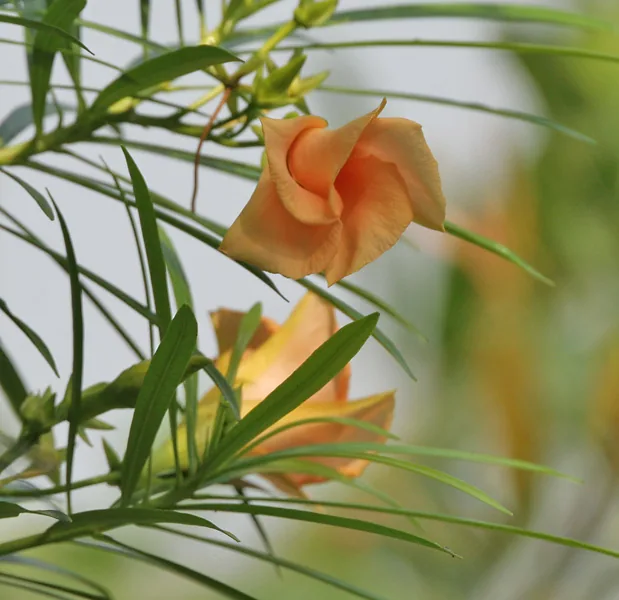
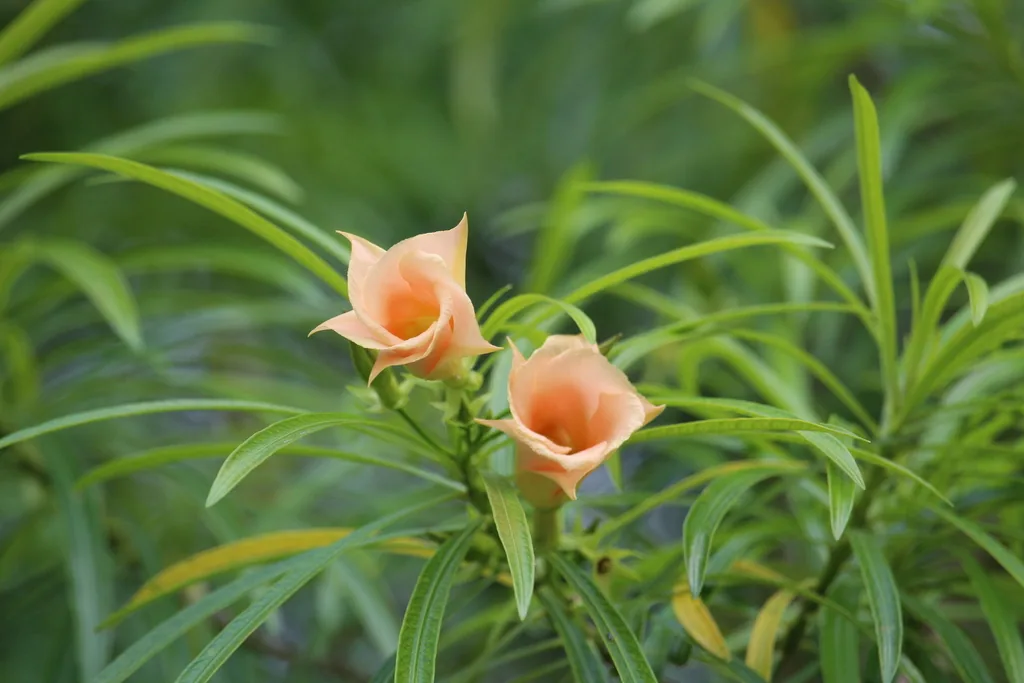

Cómo cultivar y cuidar Árbol de ayoyote
Cascabela thevetia
Escrito por Emilio Marruso · última revisión
Tóxica para: Gatos, Perros, Caballos, Ganado, Personas · Por qué
De un vistazo
Esta perenne tan agradecida pide muy poco: dale sol pleno o semisombra y se conforma con poca agua, aunque agradece un buen riego. Crece a gusto en maceta e incluso en interior, alcanza 1,2–1,5 m de ancho y solo necesita una poda ligera después de la floración. Eso sí, toda la planta es venenosa: mantenla lejos de niños y mascotas.
- Sol
Sol pleno o semisombra
Qué dicen las fuentes (4)
Luz: Pleno sol a semisombra
Según NC State Extension: Yellow oleander does best in rich, sandy soils, but will do well in average, medium moisture soils in full sun to part shade.
— Cascabela thevetia (Be-Still Tree, Lucky Nut, Yellow Oleander) | North Carolina Extension Gardener Plant Toolbox [1] Según NParks Singapore: Plant Care and Propagation | Light Preference | Full Sun | Water Preference
— NParks | Cascabela thevetia [4] Yellow oleander does best in rich, sandy soils, but will do well in average, medium moisture soils in full sun to part shade.
— Cascabela thevetia (Be-Still Tree, Lucky Nut, Yellow Oleander) | North Carolina Extension Gardener Plant Toolbox [1] Light: full sun to part shade Water: well-drained soil, somewhat drought tolerant
— UNF: Thevetia peruviana [3] - Riego
Resiste la sequía y necesita poca agua, pero agradece el riego
Qué dicen las fuentes (4)
Notas sobre el riego: Tolerante a la sequía, bajo consumo de agua; responde bien al riego; necesita suelo bien drenado; cuando se hiberna en interiores, da muy poca agua
Its low water use makes it an excellent addition to a drought-tolerant garden, patio planting, or near a pool.
— Cascabela thevetia (Be-Still Tree, Lucky Nut, Yellow Oleander) | North Carolina Extension Gardener Plant Toolbox [1] Water: well-drained soil, somewhat drought tolerant, responds well to irrigation
— UNF: Thevetia peruviana [3] To overwinter yellow oleander indoors, site it in a cool location (about 40 degrees F.), such as a basement, with moderate light and very little water.
— Cascabela thevetia (Be-Still Tree, Lucky Nut, Yellow Oleander) | North Carolina Extension Gardener Plant Toolbox [1] Sequía: Bajo consumo de agua; apta para jardines tolerantes a la sequía.
Its low water use makes it an excellent addition to a drought-tolerant garden, patio planting, or near a pool.
— Cascabela thevetia (Be-Still Tree, Lucky Nut, Yellow Oleander) | North Carolina Extension Gardener Plant Toolbox [1] - Suelo
Necesita un suelo con buen drenaje
Qué dicen las fuentes (3)
Notas sobre el riego: Tolerante a la sequía, bajo consumo de agua; responde bien al riego; necesita suelo bien drenado; cuando se hiberna en interiores, da muy poca agua
Its low water use makes it an excellent addition to a drought-tolerant garden, patio planting, or near a pool.
— Cascabela thevetia (Be-Still Tree, Lucky Nut, Yellow Oleander) | North Carolina Extension Gardener Plant Toolbox [1] Water: well-drained soil, somewhat drought tolerant, responds well to irrigation
— UNF: Thevetia peruviana [3] To overwinter yellow oleander indoors, site it in a cool location (about 40 degrees F.), such as a basement, with moderate light and very little water.
— Cascabela thevetia (Be-Still Tree, Lucky Nut, Yellow Oleander) | North Carolina Extension Gardener Plant Toolbox [1] - Poda
Poda ligera para darle forma después de la floración, de finales de verano a otoño
Qué dicen las fuentes (4)
Poda: Después de la floración (fines del verano a otoño)
Según NC State Extension: It can be propagated from cuttings taken in late summer and the plant will tolerate light pruning to shape it after flowering (late summer to fall).
— Cascabela thevetia (Be-Still Tree, Lucky Nut, Yellow Oleander) | North Carolina Extension Gardener Plant Toolbox [1] Tanzania: Fast growing, prune about a month before the rains to induce flowering.
— Thevetia peruviana (T. neriifolia) Apocynaceae [5] It can be propagated from cuttings taken in late summer and the plant will tolerate light pruning to shape it after flowering (late summer to fall).
— Cascabela thevetia (Be-Still Tree, Lucky Nut, Yellow Oleander) | North Carolina Extension Gardener Plant Toolbox [1] Cuándo podar: Poda ligera para dar forma a la planta después de la floración (desde fines del verano hasta el otoño).
the plant will tolerate light pruning to shape it after flowering (late summer to fall).
— Cascabela thevetia (Be-Still Tree, Lucky Nut, Yellow Oleander) | North Carolina Extension Gardener Plant Toolbox [1] - Plagas
Cochinillas algodonosas, cochinillas, pulgones y orugas; quita las hojas con manchas
Qué dicen las fuentes (2)
Plagas: cochinillas, escamas, pulgones, orugas
Insects, Diseases, and Other Plant Problems: Minor insect issues include mealybugs, scale, and aphids. Caterpillars are known to chew on the leaves.
— Cascabela thevetia (Be-Still Tree, Lucky Nut, Yellow Oleander) | North Carolina Extension Gardener Plant Toolbox [1] Enfermedades: mancha foliar
If leaf spot appears on the leaves, remove them from the plant. Like most members of the dogbane family, yellow oleander is toxic.
— Cascabela thevetia (Be-Still Tree, Lucky Nut, Yellow Oleander) | North Carolina Extension Gardener Plant Toolbox [1] - Tamaño
1,2–1,5 m de ancho
Qué dicen las fuentes (1)
Anchura adulta: 122-152 cm (4-5 pies)
Dimensions: Height: 4 ft. 0 in. - 8 ft. 0 in. Width: 4 ft. 0 in. - 5 ft. 0 in.
— Cascabela thevetia (Be-Still Tree, Lucky Nut, Yellow Oleander) | North Carolina Extension Gardener Plant Toolbox [1] - Multiplicación
Esquejes de punta a finales de verano, o por semilla
Qué dicen las fuentes (5)
Propagación: Esquejes de tallo (punta), tomados a fines del verano; semilla
It can be propagated from cuttings taken in late summer and the plant will tolerate light pruning to shape it after flowering (late summer to fall).
— Cascabela thevetia (Be-Still Tree, Lucky Nut, Yellow Oleander) | North Carolina Extension Gardener Plant Toolbox [1] Rootzone Tolerance | Drought Tolerant, Waterlogged Soils | Propagation Method | Stem Cutting (Tip)
— NParks | Cascabela thevetia [4] Propagation: Seeds, cuttings, self sows, and can become weedy
— Yellow Oleander, Lucky Nut (Thevetia peruviana) [6] Management: Seedlings, cuttings. No. of seeds per kg: about 300. Good germination rate of treatment: not necessary.
— Thevetia peruviana (T. neriifolia) Apocynaceae [5] Esquejes: Se propaga a partir de esquejes tomados a fines del verano.
It can be propagated from cuttings taken in late summer and the plant will tolerate light pruning to shape it after flowering (late summer to fall).
— Cascabela thevetia (Be-Still Tree, Lucky Nut, Yellow Oleander) | North Carolina Extension Gardener Plant Toolbox [1] - Maceta
Crece en maceta y en interior; riega muy poco cuando pase el invierno dentro
Qué dicen las fuentes (5)
En maceta: Sí
In cooler climates of the United States, it is often grown as a container plant brought indoors in winter or as a year-round houseplant.
— Cascabela thevetia (Be-Still Tree, Lucky Nut, Yellow Oleander) | North Carolina Extension Gardener Plant Toolbox [1] En interior: Sí
Alternatively, you can grow it as a houseplant in a sunny but cool room with reduced water.
— Cascabela thevetia (Be-Still Tree, Lucky Nut, Yellow Oleander) | North Carolina Extension Gardener Plant Toolbox [1] Notas sobre el riego: Tolerante a la sequía, bajo consumo de agua; responde bien al riego; necesita suelo bien drenado; cuando se hiberna en interiores, da muy poca agua
Its low water use makes it an excellent addition to a drought-tolerant garden, patio planting, or near a pool.
— Cascabela thevetia (Be-Still Tree, Lucky Nut, Yellow Oleander) | North Carolina Extension Gardener Plant Toolbox [1] Water: well-drained soil, somewhat drought tolerant, responds well to irrigation
— UNF: Thevetia peruviana [3] To overwinter yellow oleander indoors, site it in a cool location (about 40 degrees F.), such as a basement, with moderate light and very little water.
— Cascabela thevetia (Be-Still Tree, Lucky Nut, Yellow Oleander) | North Carolina Extension Gardener Plant Toolbox [1] - Seguridad
Toda la planta es venenosa si se ingiere y su savia puede irritar la piel; también daña a gatos, perros y caballos
Resumen
La adelfa amarilla es un arbusto tropical o árbol pequeño de hoja perenne y porte erguido, de la familia de las apocynaceae, que se cultiva por sus grandes flores amarillas, fragantes y en forma de embudo. [1] Todas las partes de la planta son venenosas si se ingieren; la savia lechosa contiene tevetina, un glucósido cardíaco. [1][2] En climas más fríos se cultiva en contenedores que se llevan al interior en invierno o como planta de interior. [1]
Citado en inglés, como en la fuente.
Cuidados
Riego
Riego
Las fuentes dan valores distintos según la región, la zona o las condiciones de cultivo.
Lo que dice cada fuente
Según NC State Extension: Riega regularmente; deja que el suelo se seque entre riegos
Según Desert-Tropicals (Phoenix): Riego profundo regular una vez establecida
Según NParks Singapore: Poca agua; tolerante a la sequía
Qué dicen las fuentes (3)
Según NC State Extension: If grown in a container, use fertile soils with good drainage. Water regularly, but let the soil dry out between watering.Según Desert-Tropicals (Phoenix): Growth Habits: Small evergreen tree to 8 feet high (3 m)
Flowers: Yellow flowers
Watering Needs: When established, regular deep wateringSegún NParks Singapore: Light Preference
| Full Sun
| Water Preference
| Little Water
| Rootzone Tolerance
| Drought Tolerant, Waterlogged SoilsNotas sobre el riego
Tolerante a la sequía, bajo consumo de agua; responde bien al riego; necesita suelo bien drenado; cuando se hiberna en interiores, da muy poca agua
Qué dicen las fuentes (3)
Its low water use makes it an excellent addition to a drought-tolerant garden, patio planting, or near a pool.Water: well-drained soil, somewhat drought tolerant, responds well to irrigationTo overwinter yellow oleander indoors, site it in a cool location (about 40 degrees F.), such as a basement, with moderate light and very little water.Luz
Pleno sol a semisombra
Lo que dice cada fuente
Según NC State Extension: Pleno sol a semisombra
Según NParks Singapore: Pleno sol
Qué dicen las fuentes (4)
Según NC State Extension: Yellow oleander does best in rich, sandy soils, but will do well in average, medium moisture soils in full sun to part shade.Según NParks Singapore: Plant Care and Propagation
| Light Preference
| Full Sun
| Water PreferenceYellow oleander does best in rich, sandy soils, but will do well in average, medium moisture soils in full sun to part shade.Light: full sun to part shade
Water: well-drained soil, somewhat drought tolerantClima y frío
Rusticidad, zona más fría
Las fuentes dan valores distintos según la región, la zona o las condiciones de cultivo.
Lo que dice cada fuente
Según NC State Extension: 8a [mínima invernal de −12,2 a −9,4 °C (de 10 a 15 °F)]
Según Oregon State University: 9 [mínima invernal de −6,7 a −1,1 °C (de 20 a 30 °F)]
Según Desert-Tropicals: 9 [mínima invernal de −6,7 a −1,1 °C (de 20 a 30 °F)]
Qué dicen las fuentes (3)
Según NC State Extension: USDA Plant Hardiness Zone:
8a, 8b, 9a, 9b, 10a, 10bSegún Oregon State University: Hardy to USDA Zone 9 (tropical) A close relative of Oleander ( Nerium oleander )Según Desert-Tropicals: Recommended Temperature Zone:
Sunset: 13-14,21-27
USDA: 9-10
Frost ToleranceRusticidad, zona más cálida
10b [mínima invernal de 1,7 a 4,4 °C (de 35 a 40 °F)]
Lo que dice cada fuente
Según NC State Extension: 10b [mínima invernal de 1,7 a 4,4 °C (de 35 a 40 °F)]
Según Desert-Tropicals: 10 [mínima invernal de −1,1 a 4,4 °C (de 30 a 40 °F)]
Qué dicen las fuentes (4)
Según NC State Extension: USDA Plant Hardiness Zone:
8a, 8b, 9a, 9b, 10a, 10bSegún Desert-Tropicals: Recommended Temperature Zone:
Sunset: 13-14,21-27
USDA: 9-10
Frost ToleranceUSDA Plant Hardiness Zone:
8a, 8b, 9a, 9b, 10a, 10bRecommended Temperature Zone:
Sunset: 13-14,21-27
USDA: 9-10
Frost ToleranceDónde cultivarla
En interior
Sí
Qué dicen las fuentes (1)
Alternatively, you can grow it as a houseplant in a sunny but cool room with reduced water.En maceta
Sí
Qué dicen las fuentes (1)
In cooler climates of the United States, it is often grown as a container plant brought indoors in winter or as a year-round houseplant.Propagación
Esquejes de tallo (punta), tomados a fines del verano; semilla
Qué dicen las fuentes (4)
It can be propagated from cuttings taken in late summer and the plant will tolerate light pruning to shape it after flowering (late summer to fall).Rootzone Tolerance
| Drought Tolerant, Waterlogged Soils
| Propagation Method
| Stem Cutting (Tip)Propagation: Seeds, cuttings, self sows, and can become weedyManagement: Seedlings, cuttings. No. of seeds per kg: about 300. Good germination rate of treatment: not necessary.Cultivo
La planta
Ciclo de vida
perenne
Qué dicen las fuentes (1)
Life Cycle:
Perennial
Woody
Recommended Propagation Strategy:
Stem CuttingFamilia
Apocynaceae
Qué dicen las fuentes (1)
Genus:
Cascabela
Species:
thevetia
Family:
Apocynaceae
Uses (Ethnobotany):
Used as an animal foodAltura adulta
Las fuentes no coinciden:
Description Yellow oleander is an upright, evergreen, tropical shrub or small tree in the dogbane family (Apocynaceae) growing to a mature height of 8 feet and a spread of 4 feet.
[1]Broadleaf evergreen shrub or small tree to about 25 ft (~8 m) tall.
[2]Size: Shrub or small tree to about ten feet tall. ## Care Instructions:
[3]
Anchura adulta
122-152 cm (4-5 pies)
Qué dicen las fuentes (1)
Dimensions:
Height: 4 ft. 0 in. - 8 ft. 0 in.
Width: 4 ft. 0 in. - 5 ft. 0 in.Plagas y enfermedades
Plagas
cochinillas, escamas, pulgones, orugas
Qué dicen las fuentes (1)
Insects, Diseases, and Other Plant Problems: Minor insect issues include mealybugs, scale, and aphids. Caterpillars are known to chew on the leaves.Enfermedades
mancha foliar
Qué dicen las fuentes (1)
If leaf spot appears on the leaves, remove them from the plant. Like most members of the dogbane family, yellow oleander is toxic.Propagación
Esquejes
Se propaga a partir de esquejes tomados a fines del verano.
Qué dicen las fuentes (1)
It can be propagated from cuttings taken in late summer and the plant will tolerate light pruning to shape it after flowering (late summer to fall).Calor y sequía
Sequía
Bajo consumo de agua; apta para jardines tolerantes a la sequía.
Qué dicen las fuentes (1)
Its low water use makes it an excellent addition to a drought-tolerant garden, patio planting, or near a pool.Poda
Cuándo podar
Poda ligera para dar forma a la planta después de la floración (desde fines del verano hasta el otoño).
Qué dicen las fuentes (1)
the plant will tolerate light pruning to shape it after flowering (late summer to fall).Problemas
Cochinillas, escamas y pulgones
Síntoma: Infestaciones menores de insectos
Qué dicen las fuentes (1)
Insects, Diseases, and Other Plant Problems: Minor insect issues include mealybugs, scale, and aphids. Caterpillars are known to chew on the leaves.
— Cascabela thevetia (Be-Still Tree, Lucky Nut, Yellow Oleander) | North Carolina Extension Gardener Plant Toolbox [1] Mancha foliar
Síntoma: Manchas en las hojas
Qué hacer: Retira las hojas afectadas de la planta
Qué dicen las fuentes (1)
If leaf spot appears on the leaves, remove them from the plant. Like most members of the dogbane family, yellow oleander is toxic.
— Cascabela thevetia (Be-Still Tree, Lucky Nut, Yellow Oleander) | North Carolina Extension Gardener Plant Toolbox [1]
Remedios
Cada remedio indica qué dicen las fuentes oficiales; los remedios tradicionales sin fuente oficial aparecen marcados. Los perjudiciales están para que sepas evitarlos.
Primeros auxilios
Primeros auxilios: no sustituyen al médico
savia en la piel o los ojos
Lava la piel y enjuaga los ojos con agua corriente. Fuente oficial, sin prueba independiente
Call the NSW Poisons Information Centre on 13 11 26 for immediate support. They will give you information about any first aid you need to do and tell you which emergency department to go to.
— schn.health.nsw.gov.au [7] Cómo: Lava la piel afectada con agua corriente; enjuaga los ojos con agua limpia y corriente durante 10-15 minutos.
washing the affected skin with running water - flushing the eyes with clean, running water for 10-15 minutes
— schn.health.nsw.gov.au [7]
ingestión
Retira los trozos de plantas de la boca y enjuaga. Fuente oficial, sin prueba independiente
Call the NSW Poisons Information Centre on 13 11 26 for immediate support. They will give you information about any first aid you need to do and tell you which emergency department to go to.
— schn.health.nsw.gov.au [7] Seek immediate medical help. DO NOT make a person throw up unless told to do so by poison control or a health care provider.
— medlineplus.gov [8] Cómo: Retira los trozos de la planta de la boca y luego enjuaga con agua.
flushing the eyes with clean, running water for 10-15 minutes - removing plant pieces from your child's mouth, then rinsing with water.
— schn.health.nsw.gov.au [7]
Cuidar la planta
mancha foliar
eliminación de las hojas afectadas Fuente oficial, sin prueba independiente
Plant saps can cause allergic skin reactions in some people and smoke from burning plant material can be toxic. Use extreme caution growing this plant around children or pets.
— Cascabela thevetia (Be-Still Tree, Lucky Nut, Yellow Oleander) | North Carolina Extension Gardener Plant Toolbox [1] Cómo: Si aparece mancha foliar en las hojas, retíralas de la planta.
If leaf spot appears on the leaves, remove them from the plant. Like most members of the dogbane family, yellow oleander is toxic.
— Cascabela thevetia (Be-Still Tree, Lucky Nut, Yellow Oleander) | North Carolina Extension Gardener Plant Toolbox [1]
Cómo eliminarla
propagación invasiva
desarraigar y arrancar las plántulas a mano No verificado
Remedio tradicional, no verificado por una fuente oficial.
Plant saps can cause allergic skin reactions in some people and smoke from burning plant material can be toxic. Use extreme caution growing this plant around children or pets.
— Cascabela thevetia (Be-Still Tree, Lucky Nut, Yellow Oleander) | North Carolina Extension Gardener Plant Toolbox [1] Cómo: Arranca y desherba manualmente los plantones; las plantas pequeñas individuales pueden eliminarse a mano, cuidando de extraer las raíces (no es viable para ejemplares más grandes).
tala de árboles grandes No verificado
Remedio tradicional, no verificado por una fuente oficial.
Plant saps can cause allergic skin reactions in some people and smoke from burning plant material can be toxic. Use extreme caution growing this plant around children or pets.
— Cascabela thevetia (Be-Still Tree, Lucky Nut, Yellow Oleander) | North Carolina Extension Gardener Plant Toolbox [1] Cómo: Los árboles grandes deben talarse.
revisión de las zonas tratadas para detectar rebrotes Fuente oficial, sin prueba independiente
Cómo: Revisa periódicamente todas las zonas tratadas y trata cualquier rebrote; el seguimiento es necesario para un programa de control exitoso.
All treated areas must be periodically checked and any regrowth treated, or initial treatment efforts will be wasted. Follow-up must be undertaken to ensure a successful control program.
— business.qld.gov.au [9]
Venenosa para los animales
Según la fuente, citada textualmente. No es un consejo médico ni veterinario: si una persona o un animal pudo haber ingerido esta planta, contacta con un centro de toxicología o con un veterinario.
Animales
Poisonous to Humans Problem for Cats Problem for Dogs Problem for Horses
[1]La fuente señala el riesgo para este animal pero no explica por qué.
Every part of the plant is extremely poisonous to livestock and is not touched even by goats—take care with children.
[5]- Partes venenosas
Every part of the plant is extremely poisonous to livestock and is not touched even by goats—take care with children.
[5]
Personas
All parts of the plant are poisonous if ingested and the sap can cause allergic skin reactions in some people. Smoke from burning plant material can be toxic.
[1]- Partes venenosas
Poison Toxic Principle: Unidentified, possibly a glycoside Causes Contact Dermatitis: Yes Poison Part: Sap/Juice
[1]- Partes venenosas
This compound is extremely poisonous as are all parts of the plants, especially the seeds.
[2]- Principio tóxico
It has a milky sap (latex) which contains, among other things, thevetin (a cardiac glycoside, C42H66O18) with an action similar to that of the digitalis.
[2]- Gravedad
Poisonous to Humans: Poison Severity: High Poison Symptoms:
[1]
Calendario
Poda
Después de la floración (fines del verano a otoño)
Lo que dice cada fuente
Según NC State Extension: Después de la floración (fines del verano a otoño), poda ligera para dar forma
Tanzania: Aproximadamente un mes antes de las lluvias, para inducir la floración
Qué dicen las fuentes (3)
Según NC State Extension: It can be propagated from cuttings taken in late summer and the plant will tolerate light pruning to shape it after flowering (late summer to fall).Tanzania: Fast growing, prune about a month before the rains to induce flowering.It can be propagated from cuttings taken in late summer and the plant will tolerate light pruning to shape it after flowering (late summer to fall).Meses tal como los dan las fuentes, en su mayoría de Estados Unidos (hemisferio norte). En el hemisferio sur se desplazan unos seis meses.
Plantas similares
- Jazmín de Cuba Allamanda cathartica
- Jazmín asiático Trachelospermum asiaticum
- Jazmín de Tucumán Araujia sericifera
- Blue Star Amsonia ciliata
- Blue Star Amsonia hubrichtii
- Bush allamanda Allamanda schottii
- Butterfly Weed Asclepias tuberosa
- Carolina Spinypod Matelea carolinensis
Fuentes
Cada valor anterior se cita de estos documentos. Los enlaces llevan al editor original.
- Cascabela thevetia (Be-Still Tree, Lucky Nut, Yellow Oleander) | North Carolina Extension Gardener Plant Toolbox · plants.ces.ncsu.edu, consultado
- Thevetia peruviana | Landscape Plants | Oregon State University · landscapeplants.oregonstate.edu, consultado
- UNF: Thevetia peruviana · unf.edu, consultado
- NParks | Cascabela thevetia · nparks.gov.sg, consultado
- Thevetia peruviana (T. neriifolia) Apocynaceae · apps.worldagroforestry.org, consultado
- Yellow Oleander, Lucky Nut (Thevetia peruviana) · desert-tropicals.com, consultado
- schn.health.nsw.gov.au · schn.health.nsw.gov.au
- medlineplus.gov · medlineplus.gov
- business.qld.gov.au · business.qld.gov.au
Escrito por Emilio Marruso · última revisión