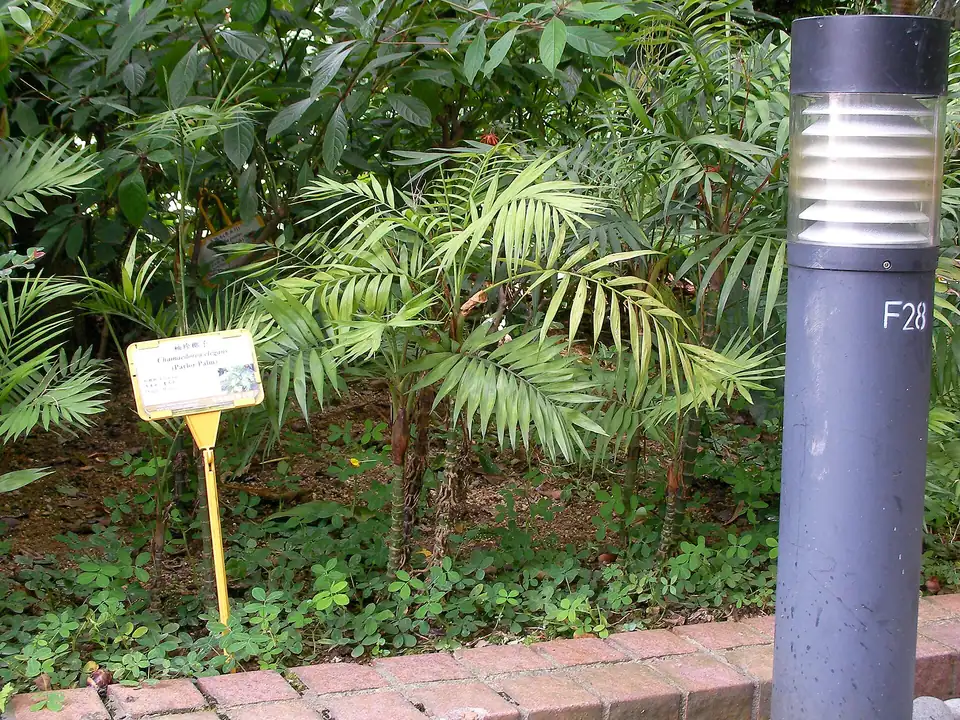
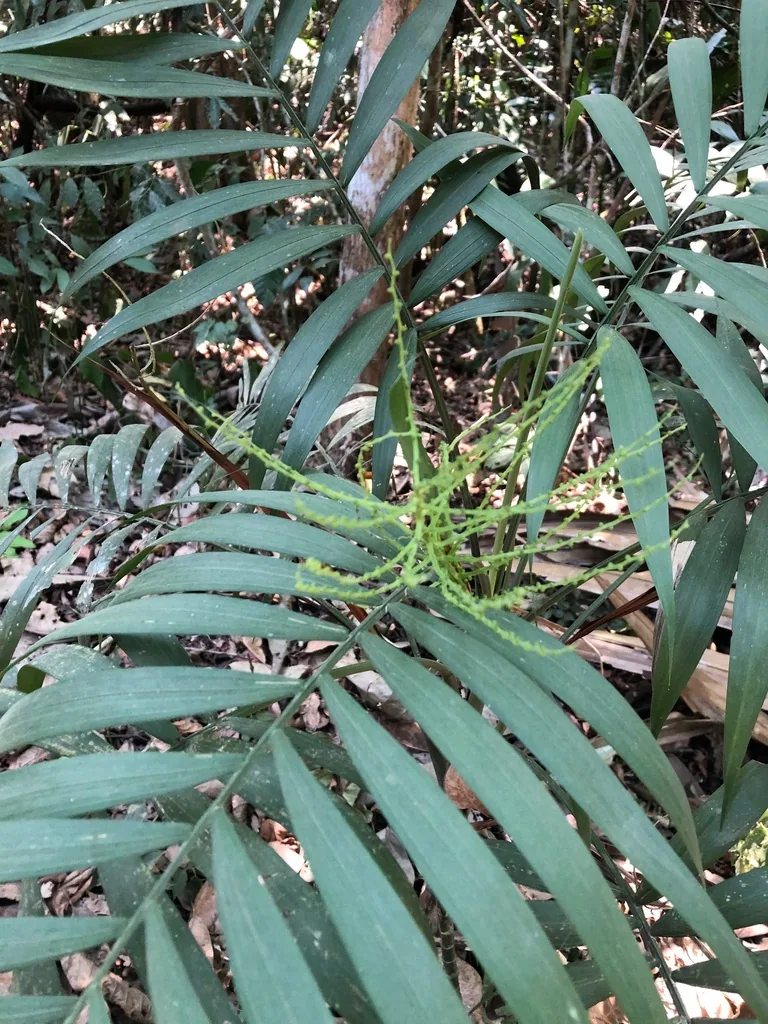

Cómo cultivar y cuidar Camaedorea
Chamaedorea elegans
Escrito por Emilio Marruso · última revisión
Tóxica para: Personas · Por qué
De un vistazo
La palmera de salón es una perenne agradecida que crece feliz en maceta, incluso en interior, y alcanza de 61 cm a 2,3 m de alto. No es tóxica para gatos, perros ni caballos, así que encaja muy bien en una casa con mascotas. Solo ten cuidado con el riego: dale un suelo bien drenado y deja que se seque un poco entre riegos.
- Riego
No la riegues en exceso: deja que la tierra se seque un poco entre riegos
Qué dicen las fuentes (1)
Notas sobre el riego: El riego excesivo puede ser un problema, así que planta en suelo bien drenado
Overwatering can be a problem, so be sure to plant in well-drained soil and let the soil dry slightly out between waterings.
— Chamaedorea elegans (Bamboo Palm, Chamaedorea, Collinia Elegans, Dwarf Palm, Good Luck Palm, Neanthebella, Neanthe Bella Palm, Neanthe Palm, Parlor Palm, Parlour Palm, Reed Palm) | North Carolina Extension Gardener Plant Toolbox [1] - Frío
Aguanta inviernos de hasta −1,1 °C (30 °F)
Semirrústica: inviernos suaves o invernadero sin calefacción · USDA 10a · RHS H3 · Z10
Qué dicen las fuentes (2)
Rusticidad, zona más fría: 10a [mínima invernal de −1,1 a 1,7 °C (de 30 a 35 °F)]
USDA Plant Hardiness Zone: 10a, 10b, 11a, 11b, 12a, 12b
— Chamaedorea elegans (Bamboo Palm, Chamaedorea, Collinia Elegans, Dwarf Palm, Good Luck Palm, Neanthebella, Neanthe Bella Palm, Neanthe Palm, Parlor Palm, Parlour Palm, Reed Palm) | North Carolina Extension Gardener Plant Toolbox [1] Rusticidad, zona más cálida: 12b [mínima invernal de 12,8 a 15,6 °C (de 55 a 60 °F)]
USDA Plant Hardiness Zone: 10a, 10b, 11a, 11b, 12a, 12b
— Chamaedorea elegans (Bamboo Palm, Chamaedorea, Collinia Elegans, Dwarf Palm, Good Luck Palm, Neanthebella, Neanthe Bella Palm, Neanthe Palm, Parlor Palm, Parlour Palm, Reed Palm) | North Carolina Extension Gardener Plant Toolbox [1] - Suelo
Suelo bien drenado
Qué dicen las fuentes (1)
Notas sobre el riego: El riego excesivo puede ser un problema, así que planta en suelo bien drenado
Overwatering can be a problem, so be sure to plant in well-drained soil and let the soil dry slightly out between waterings.
— Chamaedorea elegans (Bamboo Palm, Chamaedorea, Collinia Elegans, Dwarf Palm, Good Luck Palm, Neanthebella, Neanthe Bella Palm, Neanthe Palm, Parlor Palm, Parlour Palm, Reed Palm) | North Carolina Extension Gardener Plant Toolbox [1] - Abonado
Abono de liberación lenta para palmeras 2–3 veces al año en primavera y verano; nunca en invierno
Qué dicen las fuentes (6)
Cuándo: Primavera y verano, mientras la planta está creciendo activamente
Fertilize only two to three times a year while the plant is actively growing during the spring and summer months. Excessive fertilizer can be harmful to palms.
— Indoor Palms | Home & Garden Information Center [4] Fertilize periodically during the growing season and none in the winter.
— Chamaedorea elegans (Bamboo Palm, Chamaedorea, Collinia Elegans, Dwarf Palm, Good Luck Palm, Neanthebella, Neanthe Bella Palm, Neanthe Palm, Parlor Palm, Parlour Palm, Reed Palm) | North Carolina Extension Gardener Plant Toolbox [1] Frecuencia: Dos o tres veces al año
Fertilize only two to three times a year while the plant is actively growing during the spring and summer months. Excessive fertilizer can be harmful to palms.
— Indoor Palms | Home & Garden Information Center [4] Abonos minerales: Fertilizante de palmera de liberación lenta con un análisis como 12-4-12 u 8-2-12, que contenga micronutrientes
Fertilize with a slow-release palm fertilizer with an analysis like 12-4-12 or 8-2-12. It should contain micronutrients, such as iron, manganese, zinc, boron and copper to maintain a healthy plant.
— Indoor Palms | Home & Garden Information Center [4] Evitar: Exceso de fertilizante; abonar en invierno
Fertilize only two to three times a year while the plant is actively growing during the spring and summer months. Excessive fertilizer can be harmful to palms.
— Indoor Palms | Home & Garden Information Center [4] Fertilize periodically during the growing season and none in the winter.
— Chamaedorea elegans (Bamboo Palm, Chamaedorea, Collinia Elegans, Dwarf Palm, Good Luck Palm, Neanthebella, Neanthe Bella Palm, Neanthe Palm, Parlor Palm, Parlour Palm, Reed Palm) | North Carolina Extension Gardener Plant Toolbox [1] - Plagas
Araña roja y cochinilla algodonosa; pulverizar y limpiar las hojas con un paño húmedo las previene
Qué dicen las fuentes (1)
Plagas: arañitas rojas, cochinillas harinosas
Red spider mites and mealybugs are potential insects that can cause problems.
— Chamaedorea elegans (Bamboo Palm, Chamaedorea, Collinia Elegans, Dwarf Palm, Good Luck Palm, Neanthebella, Neanthe Bella Palm, Neanthe Palm, Parlor Palm, Parlour Palm, Reed Palm) | North Carolina Extension Gardener Plant Toolbox [1] - Tamaño
De 61 cm a 2,3 m de alto y 61–91 cm de ancho
Qué dicen las fuentes (2)
Altura adulta: 61-229 cm (2 pies - 7 pies 6 pulgadas)
Height: 2 ft. 0 in. - 7 ft. 6 in.
— Chamaedorea elegans (Bamboo Palm, Chamaedorea, Collinia Elegans, Dwarf Palm, Good Luck Palm, Neanthebella, Neanthe Bella Palm, Neanthe Palm, Parlor Palm, Parlour Palm, Reed Palm) | North Carolina Extension Gardener Plant Toolbox [1] Anchura adulta: 61-91 cm (2 pies - 3 pies)
Width: 2 ft. 0 in. - 3 ft. 0 in.
— Chamaedorea elegans (Bamboo Palm, Chamaedorea, Collinia Elegans, Dwarf Palm, Good Luck Palm, Neanthebella, Neanthe Bella Palm, Neanthe Palm, Parlor Palm, Parlour Palm, Reed Palm) | North Carolina Extension Gardener Plant Toolbox [1] - Maceta
Crece bien en maceta, también en interior
Qué dicen las fuentes (2)
En maceta: Sí
growers frequently put three or more plants in a single pot to give a more lush finished product.
— Chamaedorea elegans (Bamboo Palm, Chamaedorea, Collinia Elegans, Dwarf Palm, Good Luck Palm, Neanthebella, Neanthe Bella Palm, Neanthe Palm, Parlor Palm, Parlour Palm, Reed Palm) | North Carolina Extension Gardener Plant Toolbox [1] En interior: Sí
It is one of the most sought-after indoor palms because it thrives in interior conditions (dry air, dim light) that other plants cannot tolerate.
— Chamaedorea elegans (Bamboo Palm, Chamaedorea, Collinia Elegans, Dwarf Palm, Good Luck Palm, Neanthebella, Neanthe Bella Palm, Neanthe Palm, Parlor Palm, Parlour Palm, Reed Palm) | North Carolina Extension Gardener Plant Toolbox [1] - Seguridad
No es tóxica para gatos, perros ni caballos; el jugo del fruto puede irritar la piel
Resumen
La palma de salón es una palma solitaria pequeña cultivada como planta de interior, que prospera en aire seco y luz tenue. [1]
Citado en inglés, como en la fuente.
Esta ficha está incompleta: las fuentes consultadas aún no cubren todos los campos.
Aún no cubierto por nuestras fuentes: Propagación
Cuidados
Riego
Riego
Las fuentes dan valores distintos según la región, la zona o las condiciones de cultivo.
Lo que dice cada fuente
Según NC State Extension: Deja que el suelo se seque ligeramente entre riegos; tolera la sequía y el suelo seco por períodos cortos, pero crece más frondoso en suelo húmedo
Según Clemson HGIC (indoor palms): Mantén la humedad; nunca dejes que se seque ni que quede en agua estancada
Qué dicen las fuentes (3)
Según NC State Extension: let the soil dry slightly out between waterings. It can tolerate drought and dry soil for short periods, but it grows more lushly in moist soil.Según Clemson HGIC (indoor palms): Palms need to be kept moist. They should never be allowed to dry out or allowed to stand in water.let the soil dry slightly out between waterings. It can tolerate drought and dry soil for short periods, but it grows more lushly in moist soil.Notas sobre el riego
El riego excesivo puede ser un problema, así que planta en suelo bien drenado
Qué dicen las fuentes (1)
Overwatering can be a problem, so be sure to plant in well-drained soil and let the soil dry slightly out between waterings.Luz
Las fuentes dan valores distintos según la región, la zona o las condiciones de cultivo.
Lo que dice cada fuente
Según NC State Extension: Luz indirecta brillante; tolera condiciones de poca luz; cerca de una ventana orientada al norte o al este
Según Clemson HGIC (indoor palms): Luz natural brillante; luz filtrada cerca de una ventana orientada al sureste o al oeste
Qué dicen las fuentes (3)
Según NC State Extension: Try to keep near a north- or east-facing window if possible for optimal light levels.Según Clemson HGIC (indoor palms): Filtered light near a south-east-or west-facing window is suitable for most indoor palms.They need bright indirect light and low to medium humidity levels, though they can tolerate low-light conditions.Clima y frío
Rusticidad, zona más fría
10a [mínima invernal de −1,1 a 1,7 °C (de 30 a 35 °F)]
Qué dicen las fuentes (1)
USDA Plant Hardiness Zone:
10a, 10b, 11a, 11b, 12a, 12bRusticidad, zona más cálida
12b [mínima invernal de 12,8 a 15,6 °C (de 55 a 60 °F)]
Qué dicen las fuentes (1)
USDA Plant Hardiness Zone:
10a, 10b, 11a, 11b, 12a, 12bDónde cultivarla
En interior
Sí
Qué dicen las fuentes (1)
It is one of the most sought-after indoor palms because it thrives in interior conditions (dry air, dim light) that other plants cannot tolerate.En maceta
Sí
Qué dicen las fuentes (1)
growers frequently put three or more plants in a single pot to give a more lush finished product.Propagación
No figura en las fuentes consultadas.
Cultivo
La planta
Ciclo de vida
perenne
Qué dicen las fuentes (1)
Life Cycle: PerennialFamilia
Arecaceae
Qué dicen las fuentes (1)
Parlor palm is a solitary, understory member of the palm family (Arecaceae)Altura adulta
61-229 cm (2 pies - 7 pies 6 pulgadas)
Qué dicen las fuentes (1)
Height: 2 ft. 0 in. - 7 ft. 6 in.Anchura adulta
61-91 cm (2 pies - 3 pies)
Qué dicen las fuentes (1)
Width: 2 ft. 0 in. - 3 ft. 0 in.Plagas y enfermedades
Plagas
arañitas rojas, cochinillas harinosas
Qué dicen las fuentes (1)
Red spider mites and mealybugs are potential insects that can cause problems.Abonado
Cuándo
Primavera y verano, mientras la planta está creciendo activamente
Qué dicen las fuentes (2)
Fertilize only two to three times a year while the plant is actively growing during the spring and summer months. Excessive fertilizer can be harmful to palms.Fertilize periodically during the growing season and none in the winter.Frecuencia
Dos o tres veces al año
Qué dicen las fuentes (1)
Fertilize only two to three times a year while the plant is actively growing during the spring and summer months. Excessive fertilizer can be harmful to palms.Abonos minerales
Fertilizante de palmera de liberación lenta con un análisis como 12-4-12 u 8-2-12, que contenga micronutrientes
Qué dicen las fuentes (1)
Fertilize with a slow-release palm fertilizer with an analysis like 12-4-12 or 8-2-12. It should contain micronutrients, such as iron, manganese, zinc, boron and copper to maintain a healthy plant.Microelementos
Hierro, manganeso, zinc, boro y cobre, aportados en el fertilizante de palmera
Qué dicen las fuentes (1)
Fertilize with a slow-release palm fertilizer with an analysis like 12-4-12 or 8-2-12. It should contain micronutrients, such as iron, manganese, zinc, boron and copper to maintain a healthy plant.Evitar
Exceso de fertilizante; abonar en invierno
Qué dicen las fuentes (2)
Fertilize only two to three times a year while the plant is actively growing during the spring and summer months. Excessive fertilizer can be harmful to palms.Fertilize periodically during the growing season and none in the winter.Signos de exceso
Puntas de las hojas inferiores que se vuelven marrones y mueren; manchas en el follaje por exceso de hierro
Qué dicen las fuentes (1)
Tips of lower leaves may turn brown and die from excessive fertilization. Excessive iron fertilization can cause foliage spotting.Problemas
Riego excesivo
Síntoma: El riego excesivo puede ser un problema.
Qué hacer: Planta en suelo bien drenado y deja que el suelo se seque ligeramente entre riegos.
Qué dicen las fuentes (1)
Overwatering can be a problem, so be sure to plant in well-drained soil and let the soil dry slightly out between waterings. It can tolerate drought and dry soil for short periods, but it grows more lushly in moist soil.
— Chamaedorea elegans (Bamboo Palm, Chamaedorea, Collinia Elegans, Dwarf Palm, Good Luck Palm, Neanthebella, Neanthe Bella Palm, Neanthe Palm, Parlor Palm, Parlour Palm, Reed Palm) | North Carolina Extension Gardener Plant Toolbox [1] Arañitas rojas y cochinillas harinosas
Síntoma: Posibles plagas de insectos.
Qué hacer: Rocía y limpia con un paño húmedo para prevenirlas o eliminarlas.
Qué dicen las fuentes (1)
Red spider mites and mealybugs are potential insects that can cause problems. Misting and cleaning with a damp cloth can prevent or remove these from the plant.
— Chamaedorea elegans (Bamboo Palm, Chamaedorea, Collinia Elegans, Dwarf Palm, Good Luck Palm, Neanthebella, Neanthe Bella Palm, Neanthe Palm, Parlor Palm, Parlour Palm, Reed Palm) | North Carolina Extension Gardener Plant Toolbox [1]
Remedios
Cada remedio indica qué dicen las fuentes oficiales; los remedios tradicionales sin fuente oficial aparecen marcados. Los perjudiciales están para que sepas evitarlos.
Cuidar la planta
arañitas rojas y cochinillas harinosas
Rocía y limpia con un paño húmedo. Funciona
Cómo: Pulveriza la planta y limpia el follaje con un paño húmedo para prevenirlos o eliminarlos.
Misting and cleaning with a damp cloth can prevent or remove these from the plant.
— Chamaedorea elegans (Bamboo Palm, Chamaedorea, Collinia Elegans, Dwarf Palm, Good Luck Palm, Neanthebella, Neanthe Bella Palm, Neanthe Palm, Parlor Palm, Parlour Palm, Reed Palm) | North Carolina Extension Gardener Plant Toolbox [1] Qué dicen las pruebas A wipe with a damp cloth or a gentle spray of water will help remove the offenders.
— extension.psu.edu [5]
ácaros araña
cochinillas harinosas y cochinillas
hisopo de algodón empapado en alcohol isopropílico No verificado
Remedio tradicional, no verificado por una fuente oficial.
Cómo: Lava los insectos o, si solo hay unos pocos, tócalos con un hisopo de algodón empapado en alcohol isopropílico.
jabón insecticida Funciona
Cómo: Trata las plagas con un jabón insecticida orgánico.
treat any pests you find with an organic insecticidal soap or neem oil spray.
— almanac.com [7] Qué dicen las pruebas insecticidal soap is a safe, effective organic insecticide with minimal environmental impact.
— extension.psu.edu [8] spray de aceite de neem Funciona en parte
Despite these being biological pesticides, it is important to read the directions on the label and wear safety equipment.
— extension.illinois.edu [10] Cómo: Trata las plagas con un spray de aceite de neem.
treat any pests you find with an organic insecticidal soap or neem oil spray.
— almanac.com [7] Qué dicen las pruebas However, neem oil is not effective against every insect and disease, and often must be frequently reapplied to reach the desired outcome.
— extension.unh.edu [9]
pudrición de la raíz
Trasplanta a tierra fresca y a un contenedor limpio. No verificado
Remedio tradicional, no verificado por una fuente oficial.
Cómo: Trasplanta la planta en tierra fresca y un contenedor limpio.
puntas de hojas marrones
bandeja de guijarros (grava en el platillo) Funciona
Cómo: Coloca una bandeja de guijarros debajo de la planta para aumentar los niveles de humedad.
add a humidifier or pebble tray beneath your plant to raise humidity levels and keep palm fronds from developing brown edges.
— almanac.com [7] Qué dicen las pruebas Indoors, if the humidity level is below 50%, the pot saucer can be filled with gravel to increase the moisture level without rotting the plant roots.
— Indoor Palms | Home & Garden Information Center [4]
Toxicidad
Según la fuente, citada textualmente. No es un consejo médico ni veterinario: si una persona o un animal pudo haber ingerido esta planta, contacta con un centro de toxicología o con un veterinario.
Animales
non-toxic for cats #non-toxic for horses #non-toxic for dogs
[1]La fuente señala el riesgo para este animal pero no explica por qué.
Personas
Juice from the fruit may cause skin irritation.
[1]The pulp contains crystals that irritate the skin of sensitive individuals.
[1]- Partes venenosas
but if you encounter fruits, take care in handling them. The pulp contains crystals that irritate the skin of sensitive individuals.
[1]- Principio tóxico
The pulp contains crystals that irritate the skin of sensitive individuals.
[1]- Gravedad
This plant has low severity poison characteristics. See below
[1]
Valores orientativos
Valores de una fuente secundaria, no comprobados palabra por palabra como el resto de esta página. Úselos como punto de partida.
- Horas de sol
- 4-6 horasValor orientativo, adáptalo a tu clima · Fuente secundaria
- Resiste la sequía
- SíValor orientativo, adáptalo a tu clima · Fuente secundaria
- pH del suelo
- 5.5-7Valor orientativo, adáptalo a tu clima · Fuente secundaria
- Nivel de cuidado
- ModeradoValor orientativo, adáptalo a tu clima · Fuente secundaria
- Crecimiento
- BajoValor orientativo, adáptalo a tu clima · Fuente secundaria
- Poda
- marzo, abril, mayoValor orientativo, adáptalo a tu clima · Fuente secundaria
- Propagación
- Siembra de semillasValor orientativo, adáptalo a tu clima · Fuente secundaria
Plantas similares
- Bamboo Palm Chamaedorea seifrizii
- Areca Palm Chrysalidocarpus lutescens
- Palma fénix Phoenix canariensis
- Palma de navidad Adonidia merrillii
- Dwarf Date Palm Phoenix acaulis
- Palmito Chamaerops humilis
- Amarilleo letal Caryota mitis
- Kentia Howea forsteriana
Fuentes
Cada valor anterior se cita de estos documentos. Los enlaces llevan al editor original.
- Chamaedorea elegans (Bamboo Palm, Chamaedorea, Collinia Elegans, Dwarf Palm, Good Luck Palm, Neanthebella, Neanthe Bella Palm, Neanthe Palm, Parlor Palm, Parlour Palm, Reed Palm) | North Carolina Extension Gardener Plant Toolbox · plants.ces.ncsu.edu, consultado
- Chamaedorea - Chamaedorea elegans | North Carolina Extension Gardener Plant Toolbox · plants.ces.ncsu.edu, consultado
- Neanthe Bella Palm - Chamaedorea elegans | North Carolina Extension Gardener Plant Toolbox · plants.ces.ncsu.edu, consultado
- Indoor Palms | Home & Garden Information Center · hgic.clemson.edu, consultado
- extension.psu.edu · extension.psu.edu
- gardeningknowhow.com · gardeningknowhow.com
- almanac.com · almanac.com
- extension.psu.edu · extension.psu.edu
- extension.unh.edu · extension.unh.edu
- extension.illinois.edu · extension.illinois.edu
Escrito por Emilio Marruso · última revisión