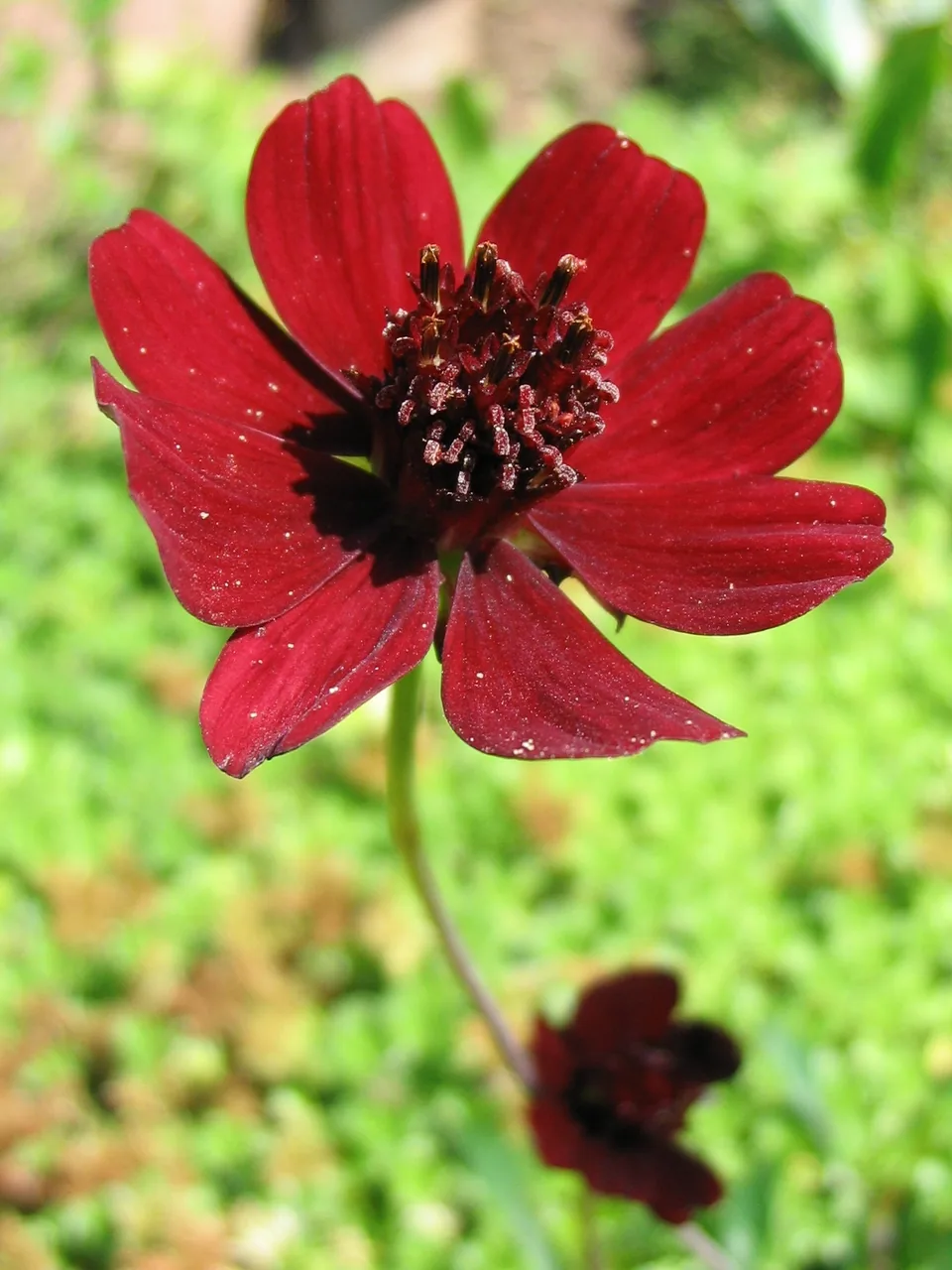

Cómo cultivar y cuidar Flor de chocolate
Cosmos atrosanguineus
Escrito por Emilio Marruso · última revisión
Tóxica para: Personas · Por qué
De un vistazo
El cosmos chocolate es una perenne de aroma delicioso que pide muy poco: sol pleno, al menos seis horas al día, y una tierra que se seque entre riegos. Planta los tubérculos a principios de primavera, olvídate del abono y alcanzará 60 cm de alto. También crece feliz en maceta, así que cualquier rincón soleado puede tener el suyo.
- Sol
Sol pleno: al menos 6 horas al día
Qué dicen las fuentes (2)
Luz: Pleno sol (al menos seis horas diarias).
chocolate cosmos requires a full-sun placement for at least six hours of exposure daily.
— How to Grow Chocolate Cosmos Flowers | Gardener’s Path [6] it enjoys a sunny, well-drained position and is best treated as a tender perennial
— Cosmos atrosanguineus - Cambridge University Botanic Garden [2] - Riego
Deja que la tierra se seque entre riegos; el exceso de agua pudre las raíces
Qué dicen las fuentes (2)
Notas sobre el riego: Deja que el suelo se seque entre riegos; demasiada agua hace que las raíces se pudran.
Make sure to let the soil dry out between waterings; remember that chocolate cosmos flowers originated in a dry area.
— Chocolate Cosmos Info - Tips For Planting Chocolate Cosmos In The Garden | Gardening Know How [5] Too much water will cause the roots to rot
— Chocolate Cosmos Info - Tips For Planting Chocolate Cosmos In The Garden | Gardening Know How [5] - Frío
Donde los inviernos son húmedos o con heladas, saca los tubérculos y guárdalos
- Suelo
Suelo con buen drenaje, pH 6,0–8,0
Qué dicen las fuentes (2)
pH del suelo, mínimo: 6.0
Average, well-draining soil with a pH of 6.0 to 8.0 is ideal.
— How to Grow Chocolate Cosmos Flowers | Gardener’s Path [6] pH del suelo, máximo: 8.0
Average, well-draining soil with a pH of 6.0 to 8.0 is ideal.
— How to Grow Chocolate Cosmos Flowers | Gardener’s Path [6] - Distancia
30–60 cm entre plantas
Qué dicen las fuentes (1)
Distancia de plantación: 30.5-61.0 cm (12-24 pulgadas)
Leave 12 to 24 inches between them to accommodate mature dimensions.
— How to Grow Chocolate Cosmos Flowers | Gardener’s Path [6] - Plantación
Planta los tubérculos a principios de primavera
Qué dicen las fuentes (1)
Plantación: Principios de primavera (tubérculos).
In early spring, purchase individual tubers or dig and divide a clump as discussed above.
— How to Grow Chocolate Cosmos Flowers | Gardener’s Path [6] - Abonado
No lo abones nunca: el abono da tallos débiles y caídos y pocas flores
Qué dicen las fuentes (3)
Frecuencia: Ninguno: las cosmos no deben fertilizarse
Do not fertilize cosmos. Nutrient rich soil produces plants that are weak-stemmed (floppy), late blooming and flower sparsely.
— Cosmos in the Garden | USU [3] Evitar: Cualquier fertilizante; suelo muy enriquecido con fertilizante y compost
Nutrient rich soil produces plants that are weak-stemmed (floppy), late blooming and flower sparsely. Avoid soil that have been heavily amended with fertilizer and compost.
— Cosmos in the Garden | USU [3] Signos de exceso: Tallos débiles y flácidos, floración tardía y flores escasas
Do not fertilize cosmos. Nutrient rich soil produces plants that are weak-stemmed (floppy), late blooming and flower sparsely.
— Cosmos in the Garden | USU [3] - Poda
A principios de otoño, corta el follaje marchito a 5 cm del suelo
Qué dicen las fuentes (1)
Poda: Principios de otoño (corta el follaje a 2 pulgadas [5,1 cm] después de que se marchite).
Allow the foliage to wither naturally and then cut it down to a height of two inches in early fall.
— How to Grow Chocolate Cosmos Flowers | Gardener’s Path [6] - Plagas
Pulgón en los brotes nuevos, botritis en las hojas y podredumbre de tubérculos si hay encharcamiento
- Tamaño
60 cm de alto
Qué dicen las fuentes (1)
Altura adulta: 60 cm [24 in]
An erect, tuberous perennial growing to 60cm, it has pinnate leaves, toothed leaflets, and dark stems.
— Cosmos atrosanguineus - Cambridge University Botanic Garden [2] - Multiplicación
Divide los tubérculos o toma esquejes de la base de los tallos
Qué dicen las fuentes (3)
Propagación: División de tubérculos; esquejes de tallo basal.
Unlike most other cosmos flowers , chocolate cosmos are propagated by their tuberous roots.
— Chocolate Cosmos Info - Tips For Planting Chocolate Cosmos In The Garden | Gardening Know How [5] Additional propagation methods include starting from tubers, either purchased or divided, basal stem cuttings, and nursery starts.
— How to Grow Chocolate Cosmos Flowers | Gardener’s Path [6] Plants can be propagated by basal stem cuttings or by division of the tubers
— NParks | Cosmos atrosanguineus [7] - Maceta
Crece también en maceta
Qué dicen las fuentes (2)
En maceta: Sí
Chocolate cosmos plants are often grown in containers and borders so their color and scent can be fully enjoyed.
— Chocolate Cosmos Info - Tips For Planting Chocolate Cosmos In The Garden | Gardening Know How [5] Landscape Uses | Parks & Gardens, Small Gardens, Flowerbed / Border, Skyrise / Balcony, Container Planting
— NParks | Cosmos atrosanguineus [7] - Seguridad
Es tóxico: pese a su aroma delicioso, no lo comas
Resumen
La cosmos de chocolate es una perenne tierna, erecta y tuberosa de México, con flores con aroma a chocolate. [2][6] Se desarrolla bien en una posición soleada y bien drenada, y se propaga principalmente dividiendo los tubérculos. [2][5] En regiones frías, los tubérculos se levantan en otoño y se almacenan durante el invierno. [6]
Citado en inglés, como en la fuente.
Esta ficha está incompleta: las fuentes consultadas aún no cubren todos los campos.
Aún no cubierto por nuestras fuentes: Riego
Cuidados
Las medidas entre corchetes son nuestra conversión al otro sistema de unidades; el texto citado no cambia.
Riego
Riego
No figura en las fuentes consultadas.
Notas sobre el riego
Deja que el suelo se seque entre riegos; demasiada agua hace que las raíces se pudran.
Qué dicen las fuentes (2)
Make sure to let the soil dry out between waterings; remember that chocolate cosmos flowers originated in a dry area.Too much water will cause the roots to rotLuz
Pleno sol (al menos seis horas diarias).
Qué dicen las fuentes (2)
chocolate cosmos requires a full-sun placement for at least six hours of exposure daily.it enjoys a sunny, well-drained position and is best treated as a tender perennialClima y frío
Rusticidad, zona más fría
Las fuentes dan valores distintos según la región, la zona o las condiciones de cultivo.
Lo que dice cada fuente
Según Gardener's Path: 9 [mínima invernal de −6,7 a −1,1 °C (de 20 a 30 °F)]
Según Gardening Know How: 7 [mínima invernal de −17,8 a −12,2 °C (de 0 a 10 °F)]
Según UC Cooperative Extension Master Gardeners of Tulare-Kings Co.: 4 [mínima invernal de −34,4 a −28,9 °C (de −30 a −20 °F)]
Qué dicen las fuentes (3)
Según Gardener's Path: Hardiness (USDA Zone): 9-11 (perennial)Según Gardening Know How: can be grown outside as a perennial in hardiness zones 7 and above.Según UC Cooperative Extension Master Gardeners of Tulare-Kings Co.: Zone: 4-9 (dig and store like dahlias in colder areas)Rusticidad, zona más cálida
Las fuentes dan valores distintos según la región, la zona o las condiciones de cultivo.
Lo que dice cada fuente
Según Gardener's Path: 11 [mínima invernal de 4,4 a 10 °C (de 40 a 50 °F)]
Según UC Cooperative Extension Master Gardeners of Tulare-Kings Co.: 9 [mínima invernal de −6,7 a −1,1 °C (de 20 a 30 °F)]
Qué dicen las fuentes (2)
Según Gardener's Path: Hardiness (USDA Zone): 9-11 (perennial)Según UC Cooperative Extension Master Gardeners of Tulare-Kings Co.: Zone: 4-9 (dig and store like dahlias in colder areas)Suelo
pH del suelo, mínimo
6.0
Qué dicen las fuentes (1)
Average, well-draining soil with a pH of 6.0 to 8.0 is ideal.pH del suelo, máximo
8.0
Qué dicen las fuentes (1)
Average, well-draining soil with a pH of 6.0 to 8.0 is ideal.Dónde cultivarla
En maceta
Sí
Qué dicen las fuentes (2)
Chocolate cosmos plants are often grown in containers and borders so their color and scent can be fully enjoyed.Landscape Uses
| Parks & Gardens, Small Gardens, Flowerbed / Border, Skyrise / Balcony, Container PlantingDistancia de plantación
30.5-61.0 cm (12-24 pulgadas)
Qué dicen las fuentes (1)
Leave 12 to 24 inches between them to accommodate mature dimensions.Propagación
División de tubérculos; esquejes de tallo basal.
Qué dicen las fuentes (3)
Unlike most other cosmos flowers , chocolate cosmos are propagated by their tuberous roots.Additional propagation methods include starting from tubers, either purchased or divided, basal stem cuttings, and nursery starts.Plants can be propagated by basal stem cuttings or by division of the tubersCultivo
La planta
Ciclo de vida
perenne
Qué dicen las fuentes (1)
An erect, tuberous perennial growing to 60cm, it has pinnate leaves, toothed leaflets, and dark stems.Familia
Asteraceae
Qué dicen las fuentes (1)
Asteraceae Cosmos ## Cosmos atrosanguineus (Hook.) Voss First published in Vilm. Blumengärtn., ed. 3. 1: 485 (1894) This species is acceptedAltura adulta
60 cm [24 in]
Qué dicen las fuentes (1)
An erect, tuberous perennial growing to 60cm, it has pinnate leaves, toothed leaflets, and dark stems.Abonado
Frecuencia
Ninguno: las cosmos no deben fertilizarse
Qué dicen las fuentes (1)
Do not fertilize cosmos. Nutrient rich soil produces plants that are weak-stemmed (floppy), late blooming and flower sparsely.Evitar
Cualquier fertilizante; suelo muy enriquecido con fertilizante y compost
Qué dicen las fuentes (1)
Nutrient rich soil produces plants that are weak-stemmed (floppy), late blooming and flower sparsely. Avoid soil that have been heavily amended with fertilizer and compost.Signos de exceso
Tallos débiles y flácidos, floración tardía y flores escasas
Qué dicen las fuentes (1)
Do not fertilize cosmos. Nutrient rich soil produces plants that are weak-stemmed (floppy), late blooming and flower sparsely.Problemas
Pulgones
Síntoma: Pulgones apilados en brotes nuevos de clima fresco con rastros de melaza pegajosa.
Qué hacer: Rocía con la manguera o aplica aceite de neem orgánico.
Qué dicen las fuentes (2)
In the spring, when the weather is cool and the new shoots are tender, you may find aphids stacked one upon the other and sticky “honeydew” trails.
— How to Grow Chocolate Cosmos Flowers | Gardener’s Path [6] For most of the above, keeping garden areas weeded, installing floating row covers over emergent foliage, handpicking pests, spraying with the hose, and applying organic neem oil are all that’s needed.
— How to Grow Chocolate Cosmos Flowers | Gardener’s Path [6] Pudrición del tubérculo
Síntoma: Los tubérculos pueden pudrirse en condiciones de exceso de humedad.
Qué hacer: Asegúrate de que el suelo drene bien; levanta y almacena los tubérculos donde los inviernos sean húmedos o helados.
Qué dicen las fuentes (1)
Finally, the tubers can be prone to rotting in oversaturated conditions. Avoid disappointment by ensuring that your soil drains well.
— How to Grow Chocolate Cosmos Flowers | Gardener’s Path [6] Tizón por Botrytis (moho gris)
Síntoma: Capa difusa de color marrón en las hojas que puede avanzar hasta la pudrición.
Qué hacer: Elimina las partes afectadas de la planta y aplica un fungicida a base de cobre.
Qué dicen las fuentes (2)
It begins as a fuzzy brownish coating on the leaves and may progress to rotting if unchecked.
— How to Grow Chocolate Cosmos Flowers | Gardener’s Path [6] Treatment includes the removal of affected plant portions and the application of a copper-based fungicide.
— How to Grow Chocolate Cosmos Flowers | Gardener’s Path [6]
Remedios
Las fuentes consultadas no dan remedios para esta planta.
Toxicidad
Según la fuente, citada textualmente. No es un consejo médico ni veterinario: si una persona o un animal pudo haber ingerido esta planta, contacta con un centro de toxicología o con un veterinario.
In spite of the delightful scent, unlike some edible flowers, chocolate cosmos are toxic and should not be consumed.
[6]
Calendario
Plantación
Principios de primavera (tubérculos).
Qué dicen las fuentes (1)
In early spring, purchase individual tubers or dig and divide a clump as discussed above.Poda
Principios de otoño (corta el follaje a 2 pulgadas [5,1 cm] después de que se marchite).
Qué dicen las fuentes (1)
Allow the foliage to wither naturally and then cut it down to a height of two inches in early fall.Meses tal como los dan las fuentes, en su mayoría de Estados Unidos (hemisferio norte). En el hemisferio sur se desplazan unos seis meses.
Valores orientativos
Valores de una fuente secundaria, no comprobados palabra por palabra como el resto de esta página. Úselos como punto de partida.
- Riego
- MínimoValor orientativo, adáptalo a tu clima · Fuente secundaria
- Crecimiento
- BajoValor orientativo, adáptalo a tu clima · Fuente secundaria
Plantas similares
- Cosmos Cosmos bipinnatus
- Cosmos Cosmos sulphureus
- African Daisy Dimorphotheca pluvialis
- Cempasúchil Tagetes erecta
- Ageratum Ageratum houstonianum
- Alpine aster Aster alpinus
- Appalachian Blazing Star Liatris squarrulosa
- Appalachian Ironweed Vernonia glauca
Fuentes
Cada valor anterior se cita de estos documentos. Los enlaces llevan al editor original.
- Cosmos atrosanguineus (Hook.) Voss | Plants of the World Online | Kew Science · powo.science.kew.org, consultado
- Cosmos atrosanguineus - Cambridge University Botanic Garden · botanic.cam.ac.uk, consultado
- Cosmos in the Garden | USU · extension.usu.edu, consultado
- This information courtesy of: · class.ucanr.edu, consultado
- Chocolate Cosmos Info - Tips For Planting Chocolate Cosmos In The Garden | Gardening Know How · gardeningknowhow.com, consultado
- How to Grow Chocolate Cosmos Flowers | Gardener’s Path · gardenerspath.com, consultado
- NParks | Cosmos atrosanguineus · nparks.gov.sg, consultado
Escrito por Emilio Marruso · última revisión