
Cómo cultivar y cuidar Yellowdicks
Helenium amarum
Escrito por Emilio Marruso · última revisión
Tóxica para: Ganado vacuno, Ganado · Por qué
De un vistazo
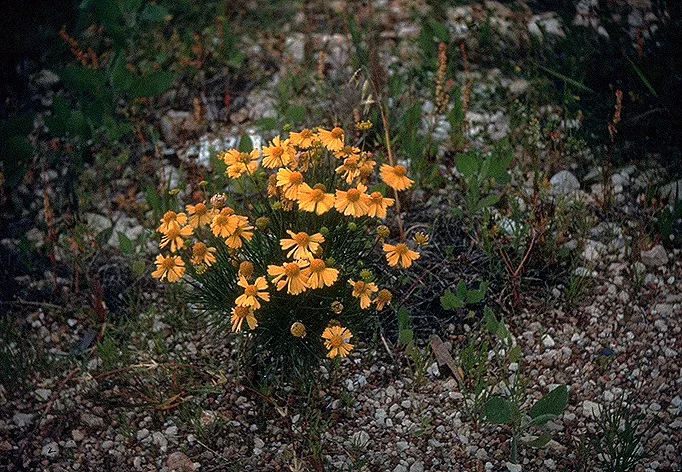
Esta anual compacta, de solo 25–51 cm de alto, se cultiva por completo a partir de semilla. Siémbrala en primavera en invernadero, cría las plántulas en maceta y pásalas al jardín a principios de verano. Hasta su nombre inglés, «bitterweed» (hierba amarga), cuenta una historia: las vacas que la pastan dan leche amarga.
- Plantación
Trasplanta a principios de verano las plántulas criadas en maceta
Qué dicen las fuentes (1)
Plantación: Principios del verano (plántulas cultivadas en macetas)
Seed - sow spring in a greenhouse. When they are large enough to handle, prick the seedlings out into individual pots and plant them out in early summer.
— Bitter Sneezeweed (Helenium amarum) — Practical Plants [2] - Tamaño
Planta anual de 25–51 cm de alto
Qué dicen las fuentes (4)
Altura adulta: 25.4-50.8 cm (10-20 pulgadas)
Bitter sneezeweed and basin sneezeweed are erect, upper-branching native annuals that reach 10 to 20 inches tall.
— Plants of Texas Rangelands » Bitter sneezeweed, Basin sneezeweed [7] It is also in the same family as Sunflowers. It can grow up to 20 inches tall and has a taproot.
— Weed ID- Bitter Sneezeweed - Lee County Center | N.C. Cooperative Extension [8] Ciclo de vida: anual
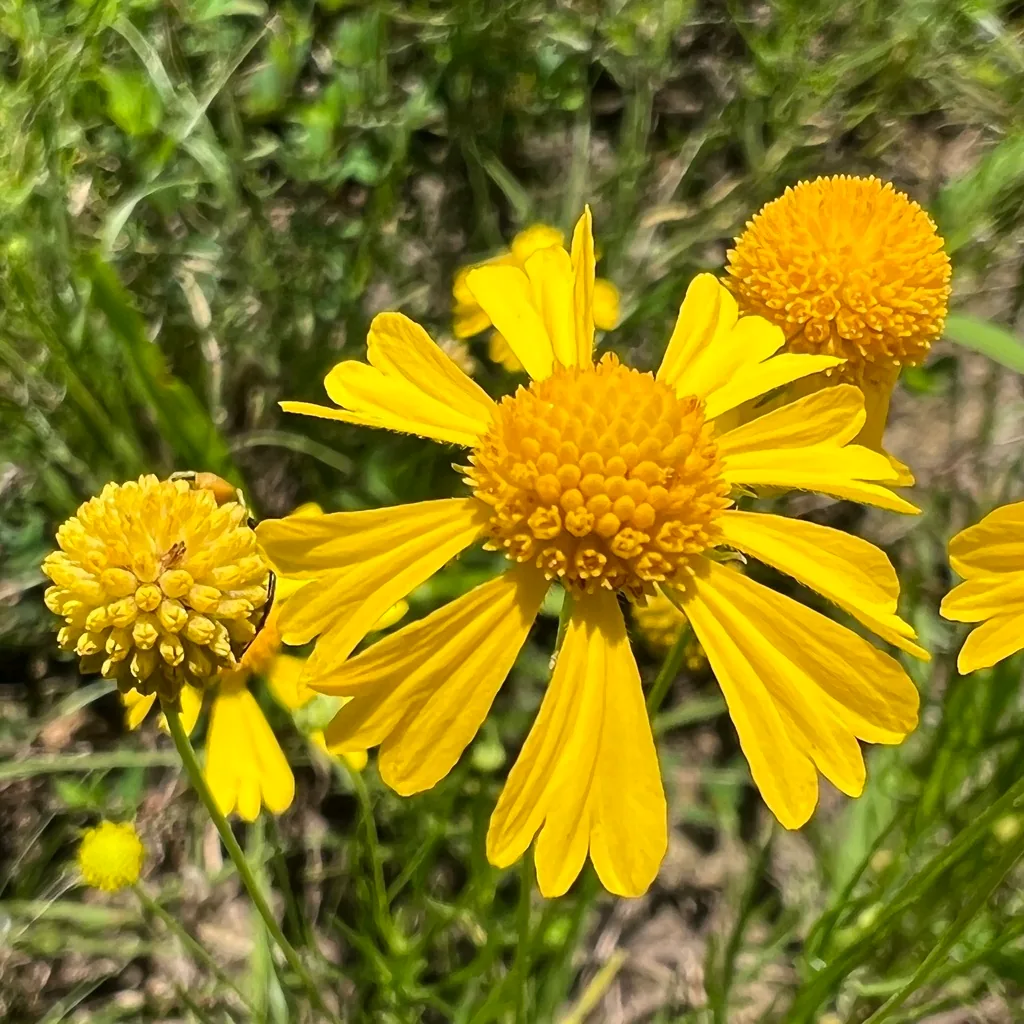
Bitter Sneezeweed ( Helenium amarum ) is a warm season annual that has a small yellow flower with narrow leaves.
— Weed ID- Bitter Sneezeweed - Lee County Center | N.C. Cooperative Extension [8] Bitter sneezeweed and basin sneezeweed are erect, upper-branching native annuals that reach 10 to 20 inches tall.
— Plants of Texas Rangelands » Bitter sneezeweed, Basin sneezeweed [7] - Multiplicación
Se multiplica por semilla
Qué dicen las fuentes (1)
Propagación: Semilla
Seed - sow spring in a greenhouse. When they are large enough to handle, prick the seedlings out into individual pots and plant them out in early summer.
— Bitter Sneezeweed (Helenium amarum) — Practical Plants [2] - Siembra
Siembra en primavera en invernadero
Qué dicen las fuentes (1)
Siembra: Primavera, en un invernadero
Seed - sow spring in a greenhouse. When they are large enough to handle, prick the seedlings out into individual pots and plant them out in early summer.
— Bitter Sneezeweed (Helenium amarum) — Practical Plants [2] - Seguridad
Tóxica para el ganado que la pasta; las vacas que la comen dan leche amarga
Resumen
La amargosa es una planta anual nativa que crece de 10 a 20 pulgadas [25–51 cm] de alto. [7] Es tóxica para el ganado en pastoreo, pero rara vez se consume en cantidades tóxicas. [7] Forma poblaciones densas a lo largo de las cunetas segadas y en pastizales sobrepastoreados. [6]
Citado en inglés, como en la fuente.
Esta ficha está incompleta: las fuentes consultadas aún no cubren todos los campos.
Aún no cubierto por nuestras fuentes: Rusticidad, zona más fría, Rusticidad, zona más cálida
Cuidados
Las medidas entre corchetes son nuestra conversión al otro sistema de unidades; el texto citado no cambia.
Riego
Las fuentes dan valores distintos según la región, la zona o las condiciones de cultivo.
Lo que dice cada fuente
Según Lady Bird Johnson Wildflower Center: Bajo
Según Practical Plants: Moderado
Qué dicen las fuentes (2)
Según Lady Bird Johnson Wildflower Center: Water Use: Low Light Requirement: Part Shade Soil Moisture: DrySegún Practical Plants: Water moderate Soil textures sandy, loamy, clay Soil pH acid, neutral, alkaline Tolerates Nutritionally Poor Soil No Drought intolerantLuz
Las fuentes dan valores distintos según la región, la zona o las condiciones de cultivo.
Lo que dice cada fuente
Según Lady Bird Johnson Wildflower Center: Semisombra
Según Practical Plants: Pleno sol
Qué dicen las fuentes (2)
Según Lady Bird Johnson Wildflower Center: Water Use: Low Light Requirement: Part Shade Soil Moisture: DrySegún Practical Plants: Light full sun Shade tolerance no shade Water moderateClima y frío
Rusticidad, zona más fría
No figura en las fuentes consultadas.
Rusticidad, zona más cálida
No figura en las fuentes consultadas.
Propagación
Semilla
Qué dicen las fuentes (1)
Seed - sow spring in a greenhouse. When they are large enough to handle, prick the seedlings out into individual pots and plant them out in early summer.Cultivo
La planta
Ciclo de vida
anual
Qué dicen las fuentes (2)
Bitter Sneezeweed ( Helenium amarum ) is a warm season annual that has a small yellow flower with narrow leaves.Bitter sneezeweed and basin sneezeweed are erect, upper-branching native annuals that reach 10 to 20 inches tall.Familia
Asteraceae
Qué dicen las fuentes (1)
Helenium amarum (Raf.) H. Rock var. amarum
Asteraceae (Sunflower Family)Altura adulta
25.4-50.8 cm (10-20 pulgadas)
Qué dicen las fuentes (2)
Bitter sneezeweed and basin sneezeweed are erect, upper-branching native annuals that reach 10 to 20 inches tall.It is also in the same family as Sunflowers. It can grow up to 20 inches tall and has a taproot.Plagas y enfermedades
Enfermedades
Las fuentes dan valores distintos según la región, la zona o las condiciones de cultivo.
Lo que dice cada fuente
género Helenium (página del género): mildiu polvoriento, mancha foliar, roya:
Qué dicen las fuentes (1)
género Helenium (página del género): mildiu polvoriento, mancha foliar, roya: Insects, Diseases, and Other Plant Problems: Powdery mildew, leaf spot, and rust. Taller species may require staking.Remedios
Cada remedio indica qué dicen las fuentes oficiales; los remedios tradicionales sin fuente oficial aparecen marcados. Los perjudiciales están para que sepas evitarlos.
Cómo eliminarla
mala hierba de pasto
siega Funciona
Avoid cutting hay containing a large amount of bitter sneezeweed. Do not feed hay containing any of the plant to lactating dairy cows.
— Plants of Texas Rangelands » Bitter sneezeweed, Basin sneezeweed [7] Cómo: siega; la planta tiene raíces superficiales
It is shallow rooted and easily controlled by mowing and management for vigorous perennial species.
— warcapps.usgs.gov [9] Qué dicen las pruebas It is shallow rooted and easily controlled by mowing and management for vigorous perennial species.
— warcapps.usgs.gov [9] cubierta vegetal perenne vigorosa Funciona
Cómo: manejo de especies perennes vigorosas
It is shallow rooted and easily controlled by mowing and management for vigorous perennial species.
— warcapps.usgs.gov [9] Qué dicen las pruebas It is shallow rooted and easily controlled by mowing and management for vigorous perennial species.
— warcapps.usgs.gov [9]
Venenosa para los animales
Según la fuente, citada textualmente. No es un consejo médico ni veterinario: si una persona o un animal pudo haber ingerido esta planta, contacta con un centro de toxicología o con un veterinario.
The plant is toxic to grazing livestock but is rarely consumed in toxic amounts.
[7]This plant contains bitter, toxic substances, and cattle forced to graze on it in overgrazed pastures produce bitter milk, thus the name bitterweed.
[6]- Síntomas
Livestock Affected: Cattle Livestock Signs: Depression/ Weakness, Diarrhea, Excess Salivation, Incoordination, Vomiting/Regurgitation
[7]
Calendario
Siembra
Primavera, en un invernadero
Qué dicen las fuentes (1)
Seed - sow spring in a greenhouse. When they are large enough to handle, prick the seedlings out into individual pots and plant them out in early summer.Plantación
Principios del verano (plántulas cultivadas en macetas)
Qué dicen las fuentes (1)
Seed - sow spring in a greenhouse. When they are large enough to handle, prick the seedlings out into individual pots and plant them out in early summer.Meses tal como los dan las fuentes, en su mayoría de Estados Unidos (hemisferio norte). En el hemisferio sur se desplazan unos seis meses.
Valores orientativos
Valores de una fuente secundaria, no comprobados palabra por palabra como el resto de esta página. Úselos como punto de partida.
- pH del suelo
- 6-7.5Valor orientativo, adáptalo a tu clima · Fuente secundaria
- Zonas de rusticidad USDA
- 3-10 [mínima invernal de −40 a 4,4 °C (de −40 a 40 °F)]Valor orientativo, adáptalo a tu clima · Fuente secundaria
- Nivel de cuidado
- MedioValor orientativo, adáptalo a tu clima · Fuente secundaria
- Crecimiento
- BajoValor orientativo, adáptalo a tu clima · Fuente secundaria
- Poda
- marzo, abril, mayo, junio, julio, agosto, septiembre, marzo, abril, mayoValor orientativo, adáptalo a tu clima · Fuente secundaria
Plantas similares
- Sneezeweed Helenium autumnale
- Southern Sneezeweed Helenium flexuosum
- African Daisy Dimorphotheca pluvialis
- Cempasúchil Tagetes erecta
- Ageratum Ageratum houstonianum
- Alpine aster Aster alpinus
- American Burnweed Erechtites hieraciifolius
- Appalachian Blazing Star Liatris squarrulosa
Fuentes
Cada valor anterior se cita de estos documentos. Los enlaces llevan al editor original.
- Lady Bird Johnson Wildflower Center - The University of Texas at Austin · wildflower.org, consultado
- Bitter Sneezeweed (Helenium amarum) — Practical Plants · practicalplants.org, consultado
- Dog-Tooth Daisy. - Helenium | North Carolina Extension Gardener Plant Toolbox · plants.ces.ncsu.edu, consultado
- Bitter Sneezeweed · ag.missouristate.edu, consultado
- Bitter sneezeweed | Kansas Wildflowers · kswildflower.org, consultado
- Bitterweed (Bitter Sneezeweed) | Missouri Department of Conservation · mdc.mo.gov, consultado
- Plants of Texas Rangelands » Bitter sneezeweed, Basin sneezeweed · rangeplants.tamu.edu, consultado
- Weed ID- Bitter Sneezeweed - Lee County Center | N.C. Cooperative Extension · lee.ces.ncsu.edu, consultado
- warcapps.usgs.gov · warcapps.usgs.gov
Escrito por Emilio Marruso · última revisión