
How to Grow and Care for Yellowdicks
Helenium amarum
Written by Emilio Marruso · last checked
Toxic to: Cattle, Livestock · Why
At a glance
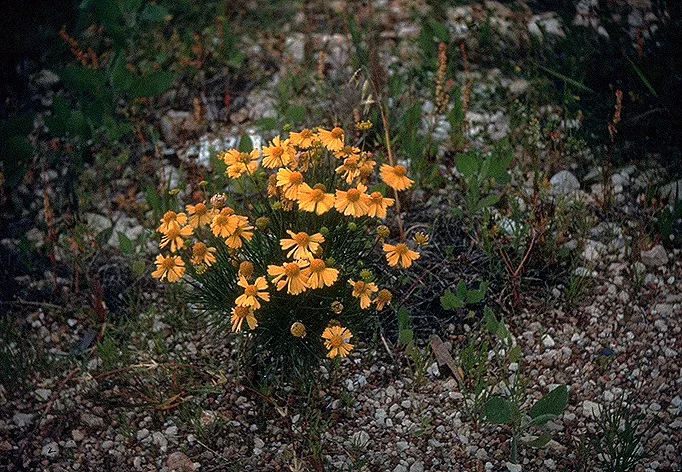
Bitterweed is a compact annual, just 10–20 inches tall, that you can grow entirely from seed. Sow it in spring in a greenhouse, raise the seedlings in pots, and move them into the garden in early summer. Even its name tells a story: cattle that graze on it give bitter milk, which is how bitterweed got its name.
- Planting
Plant out in early summer, using seedlings raised in pots
What the sources say (1)
Planting: Early summer (seedlings raised in pots)
Seed - sow spring in a greenhouse. When they are large enough to handle, prick the seedlings out into individual pots and plant them out in early summer.
— Bitter Sneezeweed (Helenium amarum) — Practical Plants [2] - Size
An annual, 10–20 inches tall
What the sources say (4)
Mature height: 25.4-50.8 cm (10-20 in)
Bitter sneezeweed and basin sneezeweed are erect, upper-branching native annuals that reach 10 to 20 inches tall.
— Plants of Texas Rangelands » Bitter sneezeweed, Basin sneezeweed [7] It is also in the same family as Sunflowers. It can grow up to 20 inches tall and has a taproot.
— Weed ID- Bitter Sneezeweed - Lee County Center | N.C. Cooperative Extension [8] Life cycle: annual
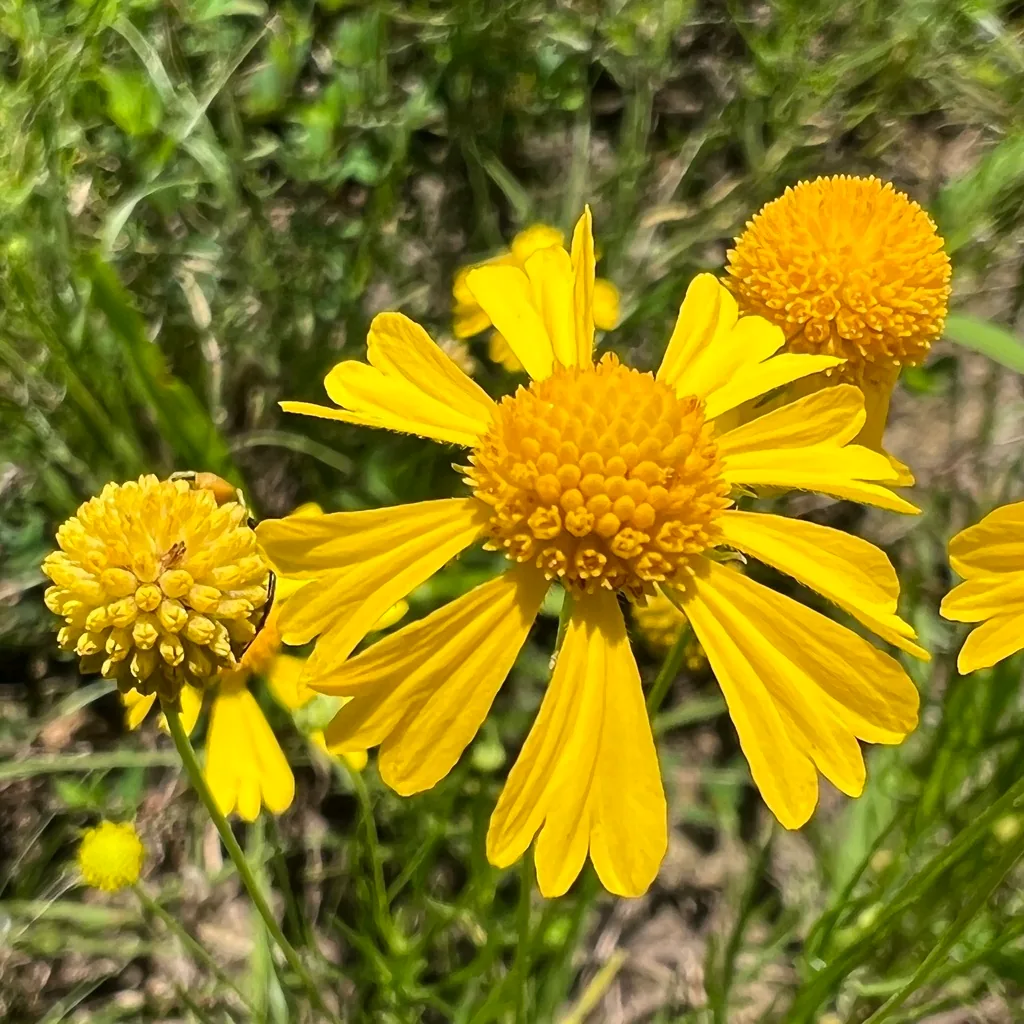
Bitter Sneezeweed ( Helenium amarum ) is a warm season annual that has a small yellow flower with narrow leaves.
— Weed ID- Bitter Sneezeweed - Lee County Center | N.C. Cooperative Extension [8] Bitter sneezeweed and basin sneezeweed are erect, upper-branching native annuals that reach 10 to 20 inches tall.
— Plants of Texas Rangelands » Bitter sneezeweed, Basin sneezeweed [7] - Propagation
Grows from seed
What the sources say (1)
Propagation: Seed
Seed - sow spring in a greenhouse. When they are large enough to handle, prick the seedlings out into individual pots and plant them out in early summer.
— Bitter Sneezeweed (Helenium amarum) — Practical Plants [2] - Sowing
Sow in spring in a greenhouse
What the sources say (1)
Sowing: Spring, in a greenhouse
Seed - sow spring in a greenhouse. When they are large enough to handle, prick the seedlings out into individual pots and plant them out in early summer.
— Bitter Sneezeweed (Helenium amarum) — Practical Plants [2] - Safety
Toxic to grazing livestock; cows that eat it give bitter milk
Overview
Bitter sneezeweed is a native annual that grows 10 to 20 inches [25–51 cm] tall. [7] It is toxic to grazing livestock but is rarely consumed in toxic amounts. [7] It forms dense populations along mowed roadsides and in overgrazed pastures. [6]
This record is incomplete: the sources we read do not cover every field yet.
Not yet covered by our sources: Hardiness, coldest zone, Hardiness, warmest zone
Yellowdicks care
Measurements in square brackets are our conversion into the other unit system; the quoted text is unchanged.
How to water Yellowdicks
The sources give different values depending on region, zone or growing conditions.
What each source says
According to Lady Bird Johnson Wildflower Center: Low
According to Practical Plants: Moderate
What the sources say (2)
According to Lady Bird Johnson Wildflower Center: Water Use: Low Light Requirement: Part Shade Soil Moisture: DryAccording to Practical Plants: Water moderate Soil textures sandy, loamy, clay Soil pH acid, neutral, alkaline Tolerates Nutritionally Poor Soil No Drought intolerantHow much light Yellowdicks needs
The sources give different values depending on region, zone or growing conditions.
What each source says
According to Lady Bird Johnson Wildflower Center: Part shade
According to Practical Plants: Full sun
What the sources say (2)
According to Lady Bird Johnson Wildflower Center: Water Use: Low Light Requirement: Part Shade Soil Moisture: DryAccording to Practical Plants: Light full sun Shade tolerance no shade Water moderateHow much cold Yellowdicks can take
Hardiness, coldest zone
Not stated in the sources we read.
Hardiness, warmest zone
Not stated in the sources we read.
How to propagate Yellowdicks
Seed
What the sources say (1)
Seed - sow spring in a greenhouse. When they are large enough to handle, prick the seedlings out into individual pots and plant them out in early summer.How to grow Yellowdicks
The plant
Life cycle
annual
What the sources say (2)
Bitter Sneezeweed ( Helenium amarum ) is a warm season annual that has a small yellow flower with narrow leaves.Bitter sneezeweed and basin sneezeweed are erect, upper-branching native annuals that reach 10 to 20 inches tall.Family
Asteraceae
What the sources say (1)
Helenium amarum (Raf.) H. Rock var. amarum
Asteraceae (Sunflower Family)Mature height
25.4-50.8 cm (10-20 in)
What the sources say (2)
Bitter sneezeweed and basin sneezeweed are erect, upper-branching native annuals that reach 10 to 20 inches tall.It is also in the same family as Sunflowers. It can grow up to 20 inches tall and has a taproot.Pests and diseases
Diseases
The sources give different values depending on region, zone or growing conditions.
What each source says
genus Helenium (genus page): powdery mildew, leaf spot, rust:
What the sources say (1)
genus Helenium (genus page): powdery mildew, leaf spot, rust: Insects, Diseases, and Other Plant Problems: Powdery mildew, leaf spot, and rust. Taller species may require staking.Remedies
Each remedy shows what official sources say about it; traditional remedies without an official source are marked as such. Harmful ones are listed so you know to avoid them.
Getting rid of it
pasture weed
mowing Works
Avoid cutting hay containing a large amount of bitter sneezeweed. Do not feed hay containing any of the plant to lactating dairy cows.
— Plants of Texas Rangelands » Bitter sneezeweed, Basin sneezeweed [7] How: mowing; the plant is shallow rooted
It is shallow rooted and easily controlled by mowing and management for vigorous perennial species.
— warcapps.usgs.gov [9] What the evidence says It is shallow rooted and easily controlled by mowing and management for vigorous perennial species.
— warcapps.usgs.gov [9] vigorous perennial cover Works
How: management for vigorous perennial species
It is shallow rooted and easily controlled by mowing and management for vigorous perennial species.
— warcapps.usgs.gov [9] What the evidence says It is shallow rooted and easily controlled by mowing and management for vigorous perennial species.
— warcapps.usgs.gov [9]
Is Yellowdicks toxic to pets?
Reported by the source, quoted verbatim. This is not medical or veterinary advice: if a person or an animal may have eaten this plant, contact a poison control centre or a veterinarian.
The plant is toxic to grazing livestock but is rarely consumed in toxic amounts.
[7]This plant contains bitter, toxic substances, and cattle forced to graze on it in overgrazed pastures produce bitter milk, thus the name bitterweed.
[6]- Symptoms
Livestock Affected: Cattle Livestock Signs: Depression/ Weakness, Diarrhea, Excess Salivation, Incoordination, Vomiting/Regurgitation
[7]
Calendar
Sowing
Spring, in a greenhouse
What the sources say (1)
Seed - sow spring in a greenhouse. When they are large enough to handle, prick the seedlings out into individual pots and plant them out in early summer.Planting
Early summer (seedlings raised in pots)
What the sources say (1)
Seed - sow spring in a greenhouse. When they are large enough to handle, prick the seedlings out into individual pots and plant them out in early summer.Months as given by the sources, which are mostly from the United States (northern hemisphere). In the southern hemisphere they shift by about six months.
Indicative values
Values from a secondary source, not checked word for word like the rest of this page. Use them as a starting point.
- Soil pH
- 6-7.5Indicative value, adapt it to your climate · Secondary source
- USDA hardiness zones
- 3-10 [winter low −40 to 4.4 °C (−40 to 40 °F)]Indicative value, adapt it to your climate · Secondary source
- Care level
- MediumIndicative value, adapt it to your climate · Secondary source
- Growth rate
- LowIndicative value, adapt it to your climate · Secondary source
- Pruning
- March, April, May, June, July, August, September, March, April, MayIndicative value, adapt it to your climate · Secondary source
Similar plants
- Sneezeweed Helenium autumnale
- Southern Sneezeweed Helenium flexuosum
- African Daisy Dimorphotheca pluvialis
- African Marigold Tagetes erecta
- Ageratum Ageratum houstonianum
- Alpine aster Aster alpinus
- American Burnweed Erechtites hieraciifolius
- Appalachian Blazing Star Liatris squarrulosa
Sources
Every value above is quoted from these documents. Links lead to the original publisher.
- Lady Bird Johnson Wildflower Center - The University of Texas at Austin · wildflower.org, consulted
- Bitter Sneezeweed (Helenium amarum) — Practical Plants · practicalplants.org, consulted
- Dog-Tooth Daisy. - Helenium | North Carolina Extension Gardener Plant Toolbox · plants.ces.ncsu.edu, consulted
- Bitter Sneezeweed · ag.missouristate.edu, consulted
- Bitter sneezeweed | Kansas Wildflowers · kswildflower.org, consulted
- Bitterweed (Bitter Sneezeweed) | Missouri Department of Conservation · mdc.mo.gov, consulted
- Plants of Texas Rangelands » Bitter sneezeweed, Basin sneezeweed · rangeplants.tamu.edu, consulted
- Weed ID- Bitter Sneezeweed - Lee County Center | N.C. Cooperative Extension · lee.ces.ncsu.edu, consulted
- warcapps.usgs.gov · warcapps.usgs.gov
Written by Emilio Marruso · last checked