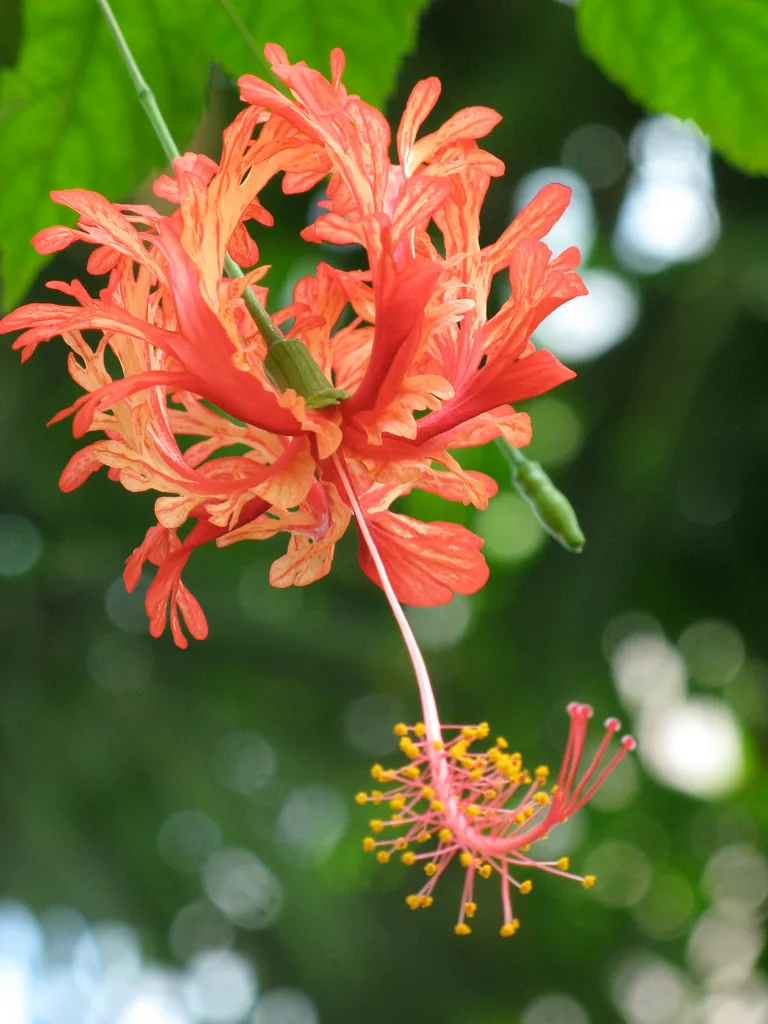
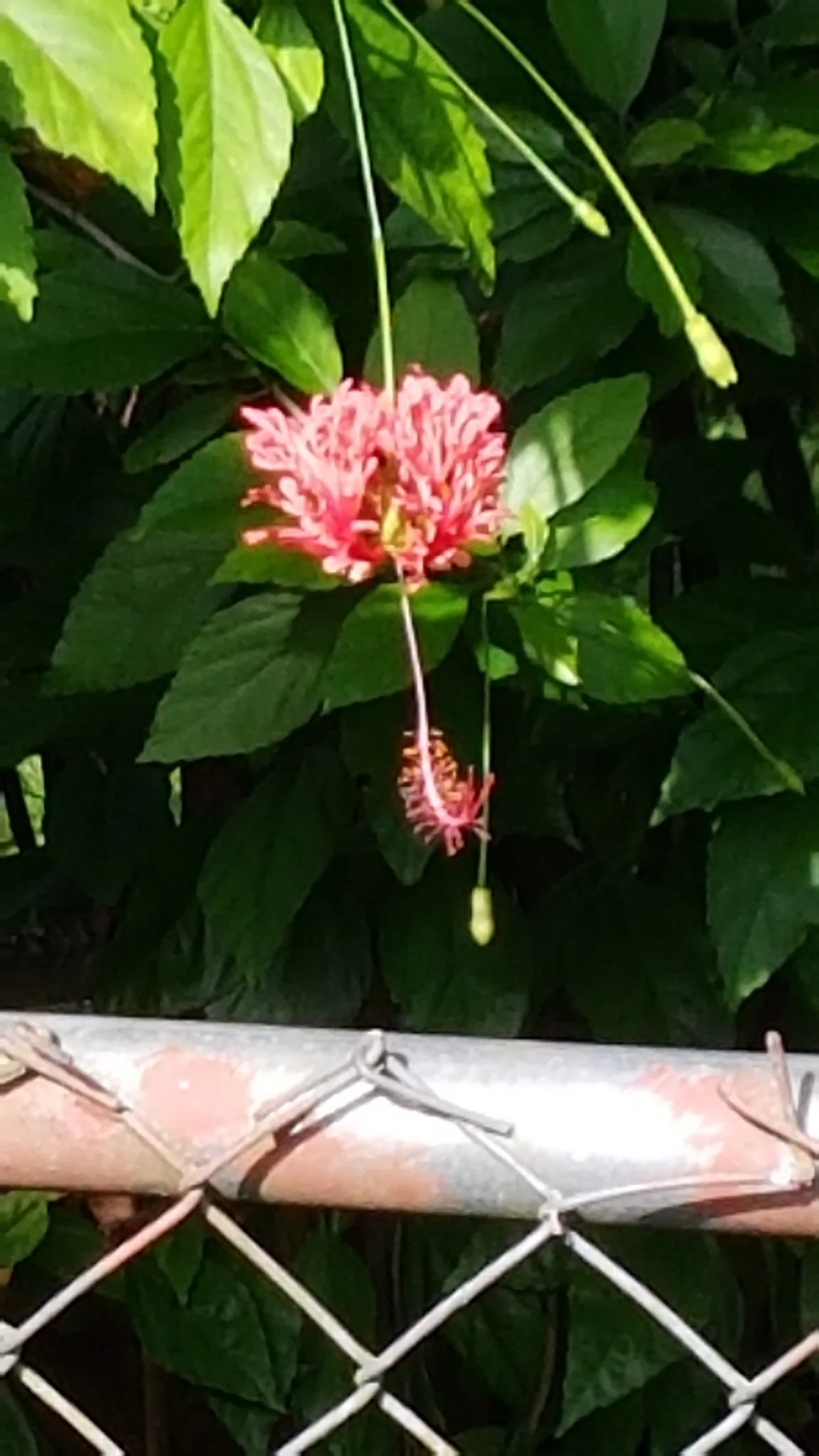

Cómo cultivar y cuidar Fringed rosemallow
Hibiscus schizopetalus
Escrito por Emilio Marruso · última revisión
De un vistazo
Este hibisco se convierte en un arbusto generoso, de 3 a 3,7 m de alto y otro tanto de ancho, y se adapta a la maceta e incluso al interior. Dale sol pleno y mucha humedad en un suelo que drene bien. Riega las macetas a diario en los meses cálidos de verano y podrás sacar plantas nuevas de esquejes en primavera.
- Sol
Sol pleno
- Riego
Mucha humedad; en maceta, riego diario en los meses cálidos y mucho menos en interior cuando hace fresco
Qué dicen las fuentes (3)
Riego: Humedad abundante; las plantas en contenedores necesitan riego diario en los meses cálidos de verano y mucho menos en interiores con condiciones más frescas y de menor luz; preferencia de agua moderada
H. schizopetalus prefers full sun and copious moisture
— Hibiscus schizopetalus – Wisconsin Horticulture [1] Container-grown plants will require daily watering during the warm summer months but need much less when indoors with less light and cooler temperatures.
— Hibiscus schizopetalus – Wisconsin Horticulture [1] Light Preference | Full Sun | Water Preference | Moderate Water
— NParks | Hibiscus schizopetalus [4] - Suelo
Suelo húmedo y con buen drenaje
Qué dicen las fuentes (1)
Notas sobre el riego: Suelos húmedos y bien drenados
Water Preference | Moderate Water | Plant Growth Rate | Moderate | Rootzone Tolerance | Moist Soils, Well-Drained Soils
— NParks | Hibiscus schizopetalus [4] - Plagas
Vigila el pulgón, la cochinilla algodonosa, la araña roja y la mosca blanca
Qué dicen las fuentes (1)
Plagas: pulgones, cochinillas harinosas, arañitas rojas, moscas blancas
It is susceptible to the same pests that plague Chinese hibiscus, including aphids, mealybugs, spider mites, and whiteflies.
— Hibiscus schizopetalus – Wisconsin Horticulture [1] - Tamaño
3–3,7 m de alto y otro tanto de ancho
Qué dicen las fuentes (2)
Altura adulta: 305-366 cm (10-12 pies)
The plant is a rangy shrub growing 10 to 12 feet tall and wide if not pruned
— Hibiscus schizopetalus – Wisconsin Horticulture [1] Anchura adulta: 305-366 cm (10-12 pies)
The plant is a rangy shrub growing 10 to 12 feet tall and wide if not pruned
— Hibiscus schizopetalus – Wisconsin Horticulture [1] - Multiplicación
Esquejes semileñosos en primavera o acodo
Qué dicen las fuentes (1)
Propagación: Esquejes de madera semidura en primavera; acodo
This species is easily propagated from semi-hardwood cuttings in spring or by layering
— Hibiscus schizopetalus – Wisconsin Horticulture [1] - Maceta
Crece también en maceta y en interior
Qué dicen las fuentes (2)
En maceta: Sí
This species is typically grown as a container plant in the Midwest , although it could be planted in the ground during the warm summer months.
— Hibiscus schizopetalus – Wisconsin Horticulture [1] En interior: Sí
As a houseplant it should be given as much light as possible.
— Hibiscus schizopetalus – Wisconsin Horticulture [1]
Resumen
El hibisco con flecos es un arbusto ornamental perenne de África oriental tropical cultivado por sus flores colgantes y con flecos. [4][2] Prefiere pleno sol y mucha humedad y a menudo se cultiva en contenedores fuera de los climas tropicales. [1]
Citado en inglés, como en la fuente.
Esta ficha está incompleta: las fuentes consultadas aún no cubren todos los campos.
Aún no cubierto por nuestras fuentes: Rusticidad, zona más fría, Rusticidad, zona más cálida, Poda
Cuidados
Riego
Riego
Humedad abundante; las plantas en contenedores necesitan riego diario en los meses cálidos de verano y mucho menos en interiores con condiciones más frescas y de menor luz; preferencia de agua moderada
Qué dicen las fuentes (3)
H. schizopetalus prefers full sun and copious moistureContainer-grown plants will require daily watering during the warm summer months but need much less when indoors with less light and cooler temperatures.Light Preference
| Full Sun
| Water Preference
| Moderate WaterNotas sobre el riego
Suelos húmedos y bien drenados
Qué dicen las fuentes (1)
Water Preference
| Moderate Water
| Plant Growth Rate
| Moderate
| Rootzone Tolerance
| Moist Soils, Well-Drained SoilsLuz
Clima y frío
Rusticidad, zona más fría
No figura en las fuentes consultadas.
Rusticidad, zona más cálida
No figura en las fuentes consultadas.
Dónde cultivarla
En interior
Sí
Qué dicen las fuentes (1)
As a houseplant it should be given as much light as possible.En maceta
Sí
Qué dicen las fuentes (1)
This species is typically grown as a container plant in the Midwest , although it could be planted in the ground during the warm summer months.Propagación
Esquejes de madera semidura en primavera; acodo
Qué dicen las fuentes (1)
This species is easily propagated from semi-hardwood cuttings in spring or by layeringCultivo
La planta
Altura adulta
305-366 cm (10-12 pies)
Qué dicen las fuentes (1)
The plant is a rangy shrub growing 10 to 12 feet tall and wide if not prunedAnchura adulta
305-366 cm (10-12 pies)
Qué dicen las fuentes (1)
The plant is a rangy shrub growing 10 to 12 feet tall and wide if not prunedPlagas y enfermedades
Plagas
pulgones, cochinillas harinosas, arañitas rojas, moscas blancas
Qué dicen las fuentes (1)
It is susceptible to the same pests that plague Chinese hibiscus, including aphids, mealybugs, spider mites, and whiteflies.Problemas
Áfidos, cochinillas, arañas rojas y moscas blancas
Síntoma: Susceptible a las mismas plagas que afectan al hibisco chino
Qué dicen las fuentes (1)
It is susceptible to the same pests that plague Chinese hibiscus, including aphids, mealybugs, spider mites, and whiteflies.
— Hibiscus schizopetalus – Wisconsin Horticulture [1]
Remedios
Las fuentes consultadas no dan remedios para esta planta.
Calendario
Poda
No figura en las fuentes consultadas.
Meses tal como los dan las fuentes, en su mayoría de Estados Unidos (hemisferio norte). En el hemisferio sur se desplazan unos seis meses.
Valores orientativos
Valores de una fuente secundaria, no comprobados palabra por palabra como el resto de esta página. Úselos como punto de partida.
- Ciclo de vida
- PerenneValor orientativo, adáptalo a tu clima · Fuente secundaria
- Horas de sol
- 6-8 horasValor orientativo, adáptalo a tu clima · Fuente secundaria
- Resiste la sequía
- SíValor orientativo, adáptalo a tu clima · Fuente secundaria
- pH del suelo
- 6-7Valor orientativo, adáptalo a tu clima · Fuente secundaria
- Zonas de rusticidad USDA
- 10-11 [mínima invernal de −1,1 a 10 °C (de 30 a 50 °F)]Valor orientativo, adáptalo a tu clima · Fuente secundaria
- Nivel de cuidado
- MedioValor orientativo, adáptalo a tu clima · Fuente secundaria
- Crecimiento
- BajoValor orientativo, adáptalo a tu clima · Fuente secundaria
- Poda
- Marzo, abril, mayo, agostoValor orientativo, adáptalo a tu clima · Fuente secundaria
Plantas similares
- Rosa de China Hibiscus × rosa-sinensis
- Cranberry Hibiscus Hibiscus acetosella
- Flower of an hour Hibiscus trionum
- Hibisco militar Hibiscus laevis
- Hamabo Hibiscus Hibiscus hamabo
- Tulipán del Monte Hibiscus martianus
- Altea Hibiscus syriacus
- Scarlet Rose Mallow Hibiscus coccineus
Fuentes
Cada valor anterior se cita de estos documentos. Los enlaces llevan al editor original.
- Hibiscus schizopetalus – Wisconsin Horticulture · hort.extension.wisc.edu, consultado
- Hibiscus schizopetalus - Plant Detail - Tropical Plants Database - NTBG Database · ntbg.org, consultado
- Hibiscus schizopetalus / [Species detail] / Plant Atlas · florida.plantatlas.usf.edu, consultado
- NParks | Hibiscus schizopetalus · nparks.gov.sg, consultado
- 7 Hibiscus schizopetalus - Botany Brisbane · botanybrisbane.com, consultado
- Hibiscus schizopetalus (HIBSH)[Overview]| EPPO Global Database · gd.eppo.int, consultado
- How to Grow and Care for Tropical Hibiscus | Gardener’s Path · gardenerspath.com, consultado
Escrito por Emilio Marruso · última revisión