
How to Grow and Care for Fringed rosemallow
Hibiscus schizopetalus
Written by Emilio Marruso · last checked
At a glance
This hibiscus grows into a generous shrub, 10 to 12 feet tall and just as wide, and it is happy in a container or even indoors. Give it full sun and plenty of moisture in soil that drains well. Water pots daily in warm summer months, and you can make new plants from cuttings in spring.
- Sun
Full sun
- Water
Lots of moisture; in pots water daily in warm summer months, much less indoors when it is cooler
What the sources say (3)
Watering: Copious moisture; container plants need daily watering in warm summer months and much less indoors in cooler, lower-light conditions; moderate water preference
H. schizopetalus prefers full sun and copious moisture
— Hibiscus schizopetalus – Wisconsin Horticulture [1] Container-grown plants will require daily watering during the warm summer months but need much less when indoors with less light and cooler temperatures.
— Hibiscus schizopetalus – Wisconsin Horticulture [1] Light Preference | Full Sun | Water Preference | Moderate Water
— NParks | Hibiscus schizopetalus [4] - Soil
Moist soil that drains well
What the sources say (1)
Watering notes: Moist, well-drained soils
Water Preference | Moderate Water | Plant Growth Rate | Moderate | Rootzone Tolerance | Moist Soils, Well-Drained Soils
— NParks | Hibiscus schizopetalus [4] - Pests
Watch for aphids, mealybugs, spider mites and whiteflies
What the sources say (1)
Pests: aphids, mealybugs, spider mites, whiteflies
It is susceptible to the same pests that plague Chinese hibiscus, including aphids, mealybugs, spider mites, and whiteflies.
— Hibiscus schizopetalus – Wisconsin Horticulture [1] - Size
10–12 ft tall and just as wide
What the sources say (2)
Mature height: 305-366 cm (10-12 ft)
The plant is a rangy shrub growing 10 to 12 feet tall and wide if not pruned
— Hibiscus schizopetalus – Wisconsin Horticulture [1] Mature width: 305-366 cm (10-12 ft)
The plant is a rangy shrub growing 10 to 12 feet tall and wide if not pruned
— Hibiscus schizopetalus – Wisconsin Horticulture [1] - Propagation
Cuttings from half-woody stems in spring, or layering
What the sources say (1)
Propagation: Semi-hardwood cuttings in spring; layering
This species is easily propagated from semi-hardwood cuttings in spring or by layering
— Hibiscus schizopetalus – Wisconsin Horticulture [1] - Containers
Grows in containers and indoors too
What the sources say (2)
In containers: Yes
This species is typically grown as a container plant in the Midwest , although it could be planted in the ground during the warm summer months.
— Hibiscus schizopetalus – Wisconsin Horticulture [1] Indoors: Yes
As a houseplant it should be given as much light as possible.
— Hibiscus schizopetalus – Wisconsin Horticulture [1]
Overview
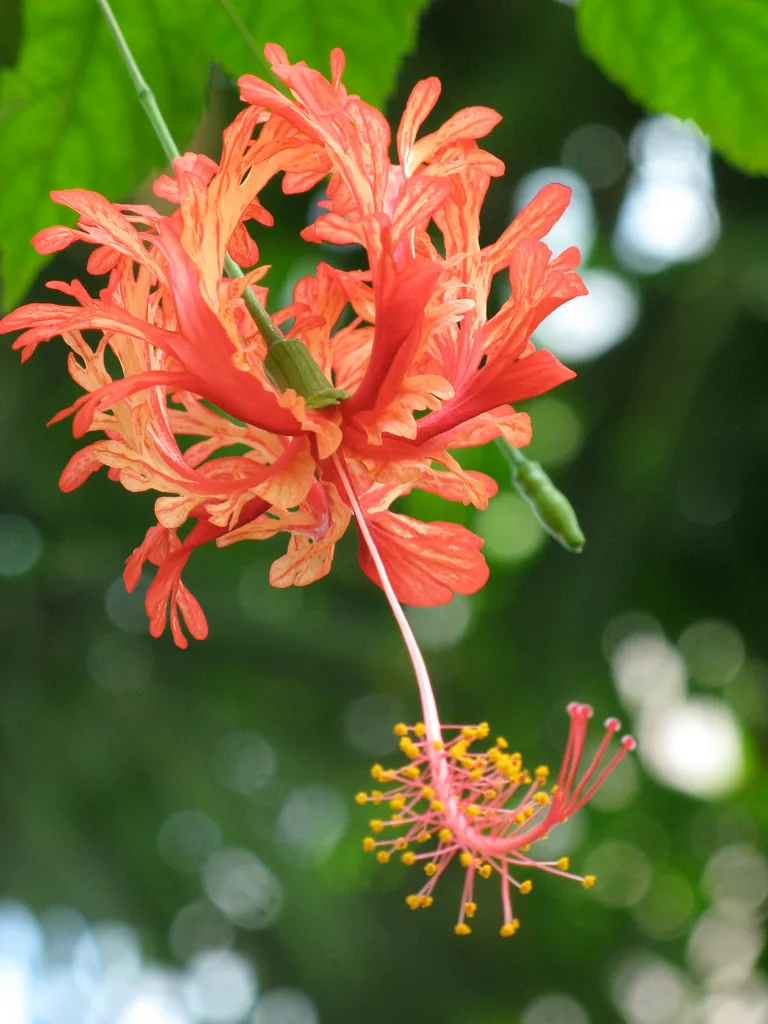
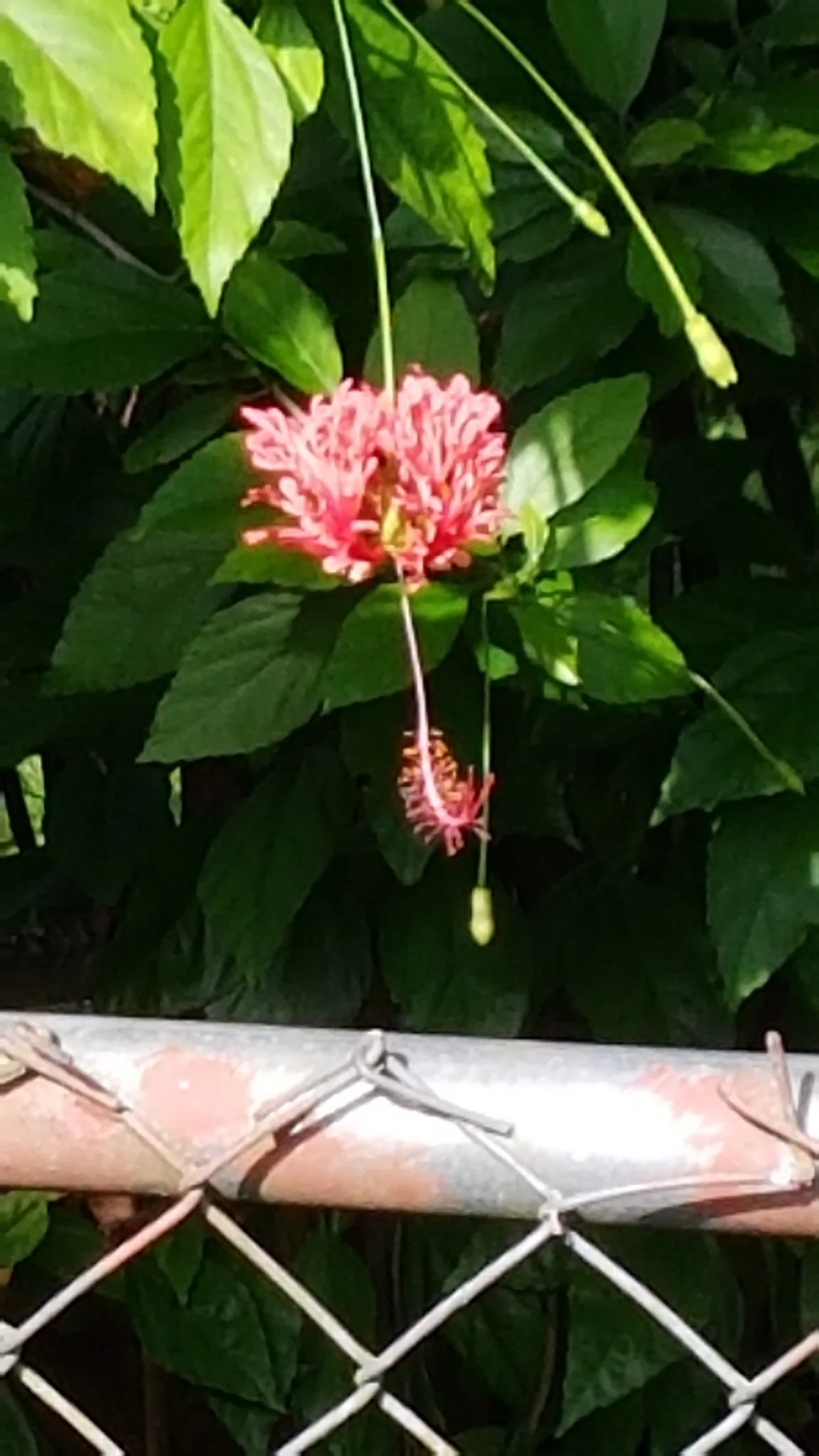
Fringed rosemallow is an evergreen ornamental shrub from tropical East Africa grown for its pendant, fringed flowers. [4][2] It prefers full sun and plenty of moisture and is often grown in containers outside tropical climates. [1]
This record is incomplete: the sources we read do not cover every field yet.
Not yet covered by our sources: Hardiness, coldest zone, Hardiness, warmest zone, Pruning
Fringed rosemallow care
How to water Fringed rosemallow
Watering
Copious moisture; container plants need daily watering in warm summer months and much less indoors in cooler, lower-light conditions; moderate water preference
What the sources say (3)
H. schizopetalus prefers full sun and copious moistureContainer-grown plants will require daily watering during the warm summer months but need much less when indoors with less light and cooler temperatures.Light Preference
| Full Sun
| Water Preference
| Moderate WaterWatering notes
Moist, well-drained soils
What the sources say (1)
Water Preference
| Moderate Water
| Plant Growth Rate
| Moderate
| Rootzone Tolerance
| Moist Soils, Well-Drained SoilsHow much light Fringed rosemallow needs
How much cold Fringed rosemallow can take
Hardiness, coldest zone
Not stated in the sources we read.
Hardiness, warmest zone
Not stated in the sources we read.
Where to grow Fringed rosemallow
Indoors
Yes
What the sources say (1)
As a houseplant it should be given as much light as possible.In containers
Yes
What the sources say (1)
This species is typically grown as a container plant in the Midwest , although it could be planted in the ground during the warm summer months.How to propagate Fringed rosemallow
Semi-hardwood cuttings in spring; layering
What the sources say (1)
This species is easily propagated from semi-hardwood cuttings in spring or by layeringHow to grow Fringed rosemallow
The plant
Mature height
305-366 cm (10-12 ft)
What the sources say (1)
The plant is a rangy shrub growing 10 to 12 feet tall and wide if not prunedMature width
305-366 cm (10-12 ft)
What the sources say (1)
The plant is a rangy shrub growing 10 to 12 feet tall and wide if not prunedPests and diseases
Pests
aphids, mealybugs, spider mites, whiteflies
What the sources say (1)
It is susceptible to the same pests that plague Chinese hibiscus, including aphids, mealybugs, spider mites, and whiteflies.Fringed rosemallow pests and problems
Aphids, mealybugs, spider mites and whiteflies
Symptom: Susceptible to the same pests that plague Chinese hibiscus
What the sources say (1)
It is susceptible to the same pests that plague Chinese hibiscus, including aphids, mealybugs, spider mites, and whiteflies.
— Hibiscus schizopetalus – Wisconsin Horticulture [1]
Remedies
The sources we checked give no remedies for this plant.
Calendar
Pruning
Not stated in the sources we read.
Months as given by the sources, which are mostly from the United States (northern hemisphere). In the southern hemisphere they shift by about six months.
Indicative values
Values from a secondary source, not checked word for word like the rest of this page. Use them as a starting point.
- Life cycle
- PerennialIndicative value, adapt it to your climate · Secondary source
- Hours of sun
- 6-8 hoursIndicative value, adapt it to your climate · Secondary source
- Drought tolerant
- yesIndicative value, adapt it to your climate · Secondary source
- Soil pH
- 6-7Indicative value, adapt it to your climate · Secondary source
- USDA hardiness zones
- 10-11 [winter low −1.1 to 10 °C (30 to 50 °F)]Indicative value, adapt it to your climate · Secondary source
- Care level
- MediumIndicative value, adapt it to your climate · Secondary source
- Growth rate
- LowIndicative value, adapt it to your climate · Secondary source
- Pruning
- March, April, May, AugustIndicative value, adapt it to your climate · Secondary source
Similar plants
- Chinese Hibiscus Hibiscus × rosa-sinensis
- Cranberry Hibiscus Hibiscus acetosella
- Flower of an hour Hibiscus trionum
- Halberdleaf Rosemallow Hibiscus laevis
- Hamabo Hibiscus Hibiscus hamabo
- Heart-leaf Hibiscus Hibiscus martianus
- Rose of Sharon Hibiscus syriacus
- Scarlet Rose Mallow Hibiscus coccineus
Sources
Every value above is quoted from these documents. Links lead to the original publisher.
- Hibiscus schizopetalus – Wisconsin Horticulture · hort.extension.wisc.edu, consulted
- Hibiscus schizopetalus - Plant Detail - Tropical Plants Database - NTBG Database · ntbg.org, consulted
- Hibiscus schizopetalus / [Species detail] / Plant Atlas · florida.plantatlas.usf.edu, consulted
- NParks | Hibiscus schizopetalus · nparks.gov.sg, consulted
- 7 Hibiscus schizopetalus - Botany Brisbane · botanybrisbane.com, consulted
- Hibiscus schizopetalus (HIBSH)[Overview]| EPPO Global Database · gd.eppo.int, consulted
- How to Grow and Care for Tropical Hibiscus | Gardener’s Path · gardenerspath.com, consulted
Written by Emilio Marruso · last checked