

Cómo cultivar y cuidar Aligustrón
Ligustrum japonicum
Escrito por Emilio Marruso · última revisión
Tóxica para: Gatos, Perros, Caballos, Personas · Por qué
De un vistazo
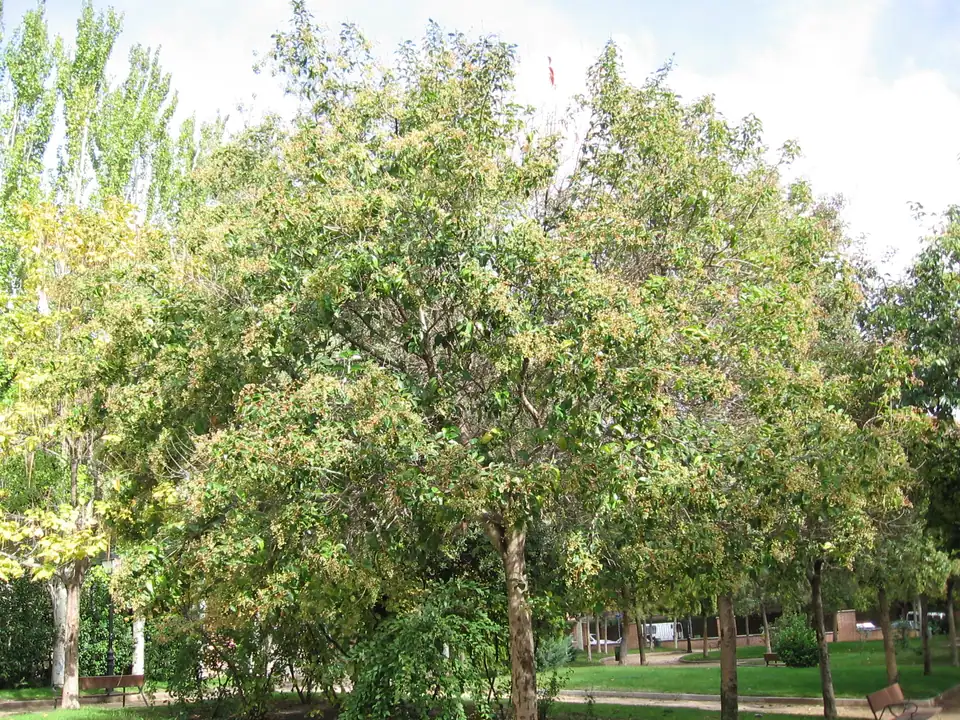
El aligustre del Japón es una planta perenne y agradecida que alcanza 1,8–3,7 m de alto y 1,5–1,8 m de ancho, feliz a pleno sol o en semisombra. Aguanta la sequía y crece en suelos muy variados, siempre que no estén encharcados. Dale un rincón luminoso, evita que sus raíces se queden en agua y llenará tu jardín con su presencia.
- Sol
De pleno sol a semisombra
Qué dicen las fuentes (2)
Luz: Pleno sol a semisombra
It grows rapidly up to 12 feet tall and 6 feet wide in sun to partial shade.
— Ligustrum japonicum (Japanese Privet, Privet, Wax-leaf Privet) | North Carolina Extension Gardener Plant Toolbox [1] It is easily transplanted and prefers partial shade to full sun.
— Ligustrum | Home & Garden Information Center [2] - Riego
Aguanta bien la sequía; no dejes nunca la tierra encharcada
Qué dicen las fuentes (2)
Riego: Tolerante a la sequía; crece en una variedad de condiciones de suelo excepto en suelos constantemente húmedos
It is dense and upright, drought and salt spray tolerant, and grows in a range of soil conditions (except constantly wet).
— Ligustrum japonicum (Japanese Privet, Privet, Wax-leaf Privet) | North Carolina Extension Gardener Plant Toolbox [1] Notas sobre el riego: No crece bien en suelos permanentemente húmedos
The only soils this shrub does not grow in well are those that are permanently wet.
— Ligustrum | Home & Garden Information Center [2] - Frío
Aguanta inviernos de hasta −17,8 °C (0 °F)
Rústica en inviernos muy fríos · USDA 7a · RHS H6 · Z7
Qué dicen las fuentes (2)
Rusticidad, zona más fría: 7a [mínima invernal de −17,8 a −15 °C (de 0 a 5 °F)]
USDA Plant Hardiness Zone: 7a, 7b, 8a, 8b, 9a, 9b, 10a, 10b
— Ligustrum japonicum (Japanese Privet, Privet, Wax-leaf Privet) | North Carolina Extension Gardener Plant Toolbox [1] Rusticidad, zona más cálida: 10b [mínima invernal de 1,7 a 4,4 °C (de 35 a 40 °F)]
USDA Plant Hardiness Zone: 7a, 7b, 8a, 8b, 9a, 9b, 10a, 10b
— Ligustrum japonicum (Japanese Privet, Privet, Wax-leaf Privet) | North Carolina Extension Gardener Plant Toolbox [1] - Suelo
Crece en muchos tipos de suelo, pH 8,0, pero no en suelos siempre húmedos
Qué dicen las fuentes (2)
Riego: Tolerante a la sequía; crece en una variedad de condiciones de suelo excepto en suelos constantemente húmedos
It is dense and upright, drought and salt spray tolerant, and grows in a range of soil conditions (except constantly wet).
— Ligustrum japonicum (Japanese Privet, Privet, Wax-leaf Privet) | North Carolina Extension Gardener Plant Toolbox [1] pH del suelo, mínimo: 8.0
Soil pH: Alkaline (>8.0) Soil Drainage: Good Drainage
— Ligustrum japonicum (Japanese Privet, Privet, Wax-leaf Privet) | North Carolina Extension Gardener Plant Toolbox [1] - Abonado
Puede sufrir fácilmente falta de cobre
Qué dicen las fuentes (2)
Microelementos: Cobre: la especie es susceptible a la deficiencia de cobre
Anthracnose, twig blight, cankers, powdery mildew and root rot are common disease problems. Susceptible to copper deficiency.
— Ligustrum japonicum (Japanese Privet, Privet, Wax-leaf Privet) | North Carolina Extension Gardener Plant Toolbox [1] Anthracnose, twig blight, cankers, powdery mildew and root rot are common disease problems. Susceptible to copper deficiency.
— Wax-leaf Privet - Ligustrum japonicum | North Carolina Extension Gardener Plant Toolbox [4] - Plagas
Moscas blancas, gorgojos, cochinillas y ácaros; también oídio y podredumbre de raíz
Qué dicen las fuentes (5)
Plagas: moscas blancas, gorgojos japoneses, gorgojos del ligustro, cochinilla blanca del duraznero, ácaros de la roya del ligustro
Whiteflies, Japanese and ligustrum weevils, white peach scale and privet rust mites are common insect problems.
— Ligustrum japonicum (Japanese Privet, Privet, Wax-leaf Privet) | North Carolina Extension Gardener Plant Toolbox [1] Enfermedades: antracnosis, tizón de ramas, cancros, mildiu polvoriento, pudrición de raíces, manchas foliares fúngicas, muerte regresiva y cancro por Botryosphaeria, pudrición de raíces por Armillaria
Anthracnose, twig blight, cankers, powdery mildew and root rot are common disease problems.
— Ligustrum japonicum (Japanese Privet, Privet, Wax-leaf Privet) | North Carolina Extension Gardener Plant Toolbox [1] Fungal Leaf Spots: Leaf spots caused by the fungi Cercospora species and Pseudocercospora species
— Ligustrum | Home & Garden Information Center [2] The fungal disease called Botryosphaeria dieback and canker, caused by Botryosphaeria species
— Ligustrum | Home & Garden Information Center [2] Armillaria root rot is also known as shoestring root rot, mushroom root rot, and oak root rot.
— Ligustrum | Home & Garden Information Center [2] - Tamaño
1,8–3,7 m de alto y 1,5–1,8 m de ancho
Qué dicen las fuentes (2)
Altura adulta: 183-366 cm (6-12 pies)
Height: 6 ft. 0 in. - 12 ft. 0 in. Width: 5 ft. 0 in. - 6 ft. 0 in.
— Ligustrum japonicum (Japanese Privet, Privet, Wax-leaf Privet) | North Carolina Extension Gardener Plant Toolbox [1] Anchura adulta: 152-183 cm (5-6 pies)
Height: 6 ft. 0 in. - 12 ft. 0 in. Width: 5 ft. 0 in. - 6 ft. 0 in.
— Ligustrum japonicum (Japanese Privet, Privet, Wax-leaf Privet) | North Carolina Extension Gardener Plant Toolbox [1] - Seguridad
Tóxica si se come: causa malestar de estómago y es un problema para gatos, perros y caballos
Resumen
El ligustro japonés es un arbusto de hoja perenne grande o un árbol pequeño de la familia del olivo, nativo de Asia oriental. [1] Tolera la sequía y la niebla salina, crece a pleno sol o semisombra, y es excelente como seto o pantalla. [1][2] Es una especie invasora en Carolina del Norte, y su ingestión puede causar dolor abdominal, náuseas y vómitos. [1]
Citado en inglés, como en la fuente.
Esta ficha está incompleta: las fuentes consultadas aún no cubren todos los campos.
Aún no cubierto por nuestras fuentes: Poda, Propagación
Cuidados
Riego
Riego
Tolerante a la sequía; crece en una variedad de condiciones de suelo excepto en suelos constantemente húmedos
Qué dicen las fuentes (1)
It is dense and upright, drought and salt spray tolerant, and grows in a range of soil conditions (except constantly wet).Notas sobre el riego
No crece bien en suelos permanentemente húmedos
Qué dicen las fuentes (1)
The only soils this shrub does not grow in well are those that are permanently wet.Luz
Pleno sol a semisombra
Qué dicen las fuentes (2)
It grows rapidly up to 12 feet tall and 6 feet wide in sun to partial shade.It is easily transplanted and prefers partial shade to full sun.Clima y frío
Rusticidad, zona más fría
7a [mínima invernal de −17,8 a −15 °C (de 0 a 5 °F)]
Qué dicen las fuentes (1)
USDA Plant Hardiness Zone:
7a, 7b, 8a, 8b, 9a, 9b, 10a, 10bRusticidad, zona más cálida
10b [mínima invernal de 1,7 a 4,4 °C (de 35 a 40 °F)]
Qué dicen las fuentes (1)
USDA Plant Hardiness Zone:
7a, 7b, 8a, 8b, 9a, 9b, 10a, 10bSuelo
8.0
Qué dicen las fuentes (1)
Soil pH:
Alkaline (>8.0)
Soil Drainage:
Good DrainagePropagación
No figura en las fuentes consultadas.
Cultivo
La planta
Ciclo de vida
perenne
Qué dicen las fuentes (1)
Plant Type:
Perennial
Poisonous
Shrub
Tree
Woody Plant Leaf Characteristics:
Broadleaf EvergreenFamilia
Oleaceae
Qué dicen las fuentes (1)
Japanese privet is a large evergreen shrub or small tree in the olive family (Oleaceae) and native to eastern Asia.Altura adulta
183-366 cm (6-12 pies)
Qué dicen las fuentes (1)
Height: 6 ft. 0 in. - 12 ft. 0 in.
Width: 5 ft. 0 in. - 6 ft. 0 in.Anchura adulta
152-183 cm (5-6 pies)
Qué dicen las fuentes (1)
Height: 6 ft. 0 in. - 12 ft. 0 in.
Width: 5 ft. 0 in. - 6 ft. 0 in.Plagas y enfermedades
Plagas
moscas blancas, gorgojos japoneses, gorgojos del ligustro, cochinilla blanca del duraznero, ácaros de la roya del ligustro
Qué dicen las fuentes (1)
Whiteflies, Japanese and ligustrum weevils, white peach scale and privet rust mites are common insect problems.Enfermedades
antracnosis, tizón de ramas, cancros, mildiu polvoriento, pudrición de raíces, manchas foliares fúngicas, muerte regresiva y cancro por Botryosphaeria, pudrición de raíces por Armillaria
Qué dicen las fuentes (4)
Anthracnose, twig blight, cankers, powdery mildew and root rot are common disease problems.Fungal Leaf Spots: Leaf spots caused by the fungi Cercospora species and Pseudocercospora speciesThe fungal disease called Botryosphaeria dieback and canker, caused by Botryosphaeria speciesArmillaria root rot is also known as shoestring root rot, mushroom root rot, and oak root rot.Abonado
Microelementos
Cobre: la especie es susceptible a la deficiencia de cobre
Qué dicen las fuentes (2)
Anthracnose, twig blight, cankers, powdery mildew and root rot are common disease problems. Susceptible to copper deficiency.Anthracnose, twig blight, cankers, powdery mildew and root rot are common disease problems. Susceptible to copper deficiency.Problemas
Insectos plaga
Síntoma: Moscas blancas, gorgojos japoneses y del ligustro, cochinilla blanca del duraznero y ácaros del óxido del ligustro
Qué hacer: No indicado
Qué dicen las fuentes (1)
Whiteflies, Japanese and ligustrum weevils, white peach scale and privet rust mites are common insect problems.
— Ligustrum japonicum (Japanese Privet, Privet, Wax-leaf Privet) | North Carolina Extension Gardener Plant Toolbox [1] Enfermedades
Síntoma: Antracnosis, tizón de ramas, cancros, mildiu polvoriento y pudrición de raíces
Qué hacer: No indicado
Qué dicen las fuentes (1)
Anthracnose, twig blight, cankers, powdery mildew and root rot are common disease problems.
— Ligustrum japonicum (Japanese Privet, Privet, Wax-leaf Privet) | North Carolina Extension Gardener Plant Toolbox [1] Deficiencia de cobre
Síntoma: Susceptible a la deficiencia de cobre
Qué hacer: No indicado
Qué dicen las fuentes (1)
Susceptible to copper deficiency. Invasive. See native or less problematic suggestions to the left.
— Ligustrum japonicum (Japanese Privet, Privet, Wax-leaf Privet) | North Carolina Extension Gardener Plant Toolbox [1]
Remedios
Cada remedio indica qué dicen las fuentes oficiales; los remedios tradicionales sin fuente oficial aparecen marcados. Los perjudiciales están para que sepas evitarlos.
Cuidar la planta
moscas blancas
spray de jabón insecticida Funciona
Foliar injury from soaps and oils may occur on plants under drought stress.
— Ligustrum | Home & Garden Information Center [2] Cómo: Rocía bien para que el jabón entre en contacto con los insectos en el envés de las hojas. Repite la pulverización tres veces con intervalos de 5 a 7 días.
Insecticidal soap or horticultural oil sprays are effective against whiteflies, but the plant must be sprayed thoroughly so that the soap or oil contacts the insects on the underside of leaves.
— Ligustrum | Home & Garden Information Center [2] Qué dicen las pruebas Insecticidal soap or horticultural oil sprays are effective against whiteflies
— Ligustrum | Home & Garden Information Center [2] pulverización con agua de la manguera No verificado
Remedio tradicional, no verificado por una fuente oficial.
Cómo: Rocía las plantas afectadas con agua de una manguera de jardín o una botella con atomizador.
spray de jabón para platos No demostrado
Cómo: Echa jabón para platos en un galón de agua y rocía por la tarde, tres veces aproximadamente una vez por semana, cuando las temperaturas sean inferiores a 90 grados Fahrenheit.
Shoot a squirt of dish soap into a gallon of water and spray your plants with this homemade pesticide mixture in the evening when it's cooler outside.
— hunker.com [5] Qué dicen las pruebas Despite being made of common household materials like dish soap and vinegar and having seemingly fewer risks, these concoctions may have unforeseen consequences and cannot be relied upon to have the same effectiveness as a registered pesticide.
— extension.unh.edu [6]
manchas foliares por hongos
eliminación manual de hojas manchadas Fuente oficial, sin prueba independiente
Cómo: Elimina manualmente las hojas manchadas en plantas con infección leve. Rastrilla y destruye las hojas caídas infectadas.
Hand remove spotted leaves on lightly diseased plants. Rake up and destroy infected fallen leaves.
— Ligustrum | Home & Garden Information Center [2]
Cómo eliminarla
ligustrina japonesa invasora
arrancado a mano Funciona
Be sure to remove all the roots as they may re-sprout.
— Invasives in Your Woodland: Japanese Privet | University of Maryland Extension [3] Cómo: Las plantas individuales pequeñas se pueden quitar arrancándolas a mano o con una herramienta tipo "llave de malezas". Asegúrate de quitar todas las raíces, ya que pueden volver a brotar.
Small individual plants can be removed by hand-pulling or using a “weed wrench”-type tool.
— Invasives in Your Woodland: Japanese Privet | University of Maryland Extension [3] Qué dicen las pruebas Small individual plants can be removed by hand-pulling or using a “weed wrench”-type tool.
— Invasives in Your Woodland: Japanese Privet | University of Maryland Extension [3] cortes repetidos sin herbicida No verificado
Remedio tradicional, no verificado por una fuente oficial.
Removal will require follow-up control to successfully kill the same individual plant if herbicide is not used.
— treesatlanta.org [7] Cómo: Corta el tallo a la altura de la espinilla y, cuando vuelva a crecer, elimina todo el nuevo crecimiento en cuanto lo veas.
Venenosa para los animales
Según la fuente, citada textualmente. No es un consejo médico ni veterinario: si una persona o un animal pudo haber ingerido esta planta, contacta con un centro de toxicología o con un veterinario.
Animales
Problem for Cats Problem for Dogs Problem for Horses
[1]La fuente señala el riesgo para este animal pero no explica por qué.
Personas
Abdominal pain, nausea, vomiting, diarrhea, headache, weakness, Gastrointestinal upset (most common), incoordination, increased heart rate, death (rare)
[1]- Partes venenosas
Poison Part: Fruits Leaves Download Print-Friendly QR Code
[1]- Principio tóxico
Poison Toxic Principle: Glycosides: syringin (ligustrin), a glycoside; shikimic acid (lowest toxic dose 4,000mg); and others
[1]- Síntomas
Poison Symptoms: Abdominal pain, nausea, vomiting, diarrhea, headache, weakness, Gastrointestinal upset (most common), incoordination, increased heart
[1]- Gravedad
Poison Severity: Medium Poison Symptoms: Abdominal pain, nausea, vomiting, diarrhea, headache, weakness,
[1]
Calendario
Poda
No figura en las fuentes consultadas.
Meses tal como los dan las fuentes, en su mayoría de Estados Unidos (hemisferio norte). En el hemisferio sur se desplazan unos seis meses.
Valores orientativos
Valores de una fuente secundaria, no comprobados palabra por palabra como el resto de esta página. Úselos como punto de partida.
- Resiste la sequía
- SíValor orientativo, adáptalo a tu clima · Fuente secundaria
- Nivel de cuidado
- MedioValor orientativo, adáptalo a tu clima · Fuente secundaria
- Crecimiento
- AltaValor orientativo, adáptalo a tu clima · Fuente secundaria
- Poda
- Mayo, agosto, marzo, abril, mayo, junio, julio, agostoValor orientativo, adáptalo a tu clima · Fuente secundaria
- Propagación
- Esqueje, propagación por acodo, propagación por injerto, división, propagación por semillaValor orientativo, adáptalo a tu clima · Fuente secundaria
Plantas similares
- Amur privet Ligustrum amurense
- Aligustrina Ligustrum sinense
- Glossy Privet Ligustrum lucidum
- Aligustre Ligustrum vulgare
- California privet Ligustrum ovalifolium
- Fresno negro Fraxinus nigra
- Fresno azul Fraxinus quadrangulata
- Chinese Fringetree Chionanthus retusus
Fuentes
Cada valor anterior se cita de estos documentos. Los enlaces llevan al editor original.
- Ligustrum japonicum (Japanese Privet, Privet, Wax-leaf Privet) | North Carolina Extension Gardener Plant Toolbox · plants.ces.ncsu.edu, consultado
- Ligustrum | Home & Garden Information Center · hgic.clemson.edu, consultado
- Invasives in Your Woodland: Japanese Privet | University of Maryland Extension · extension.umd.edu, consultado
- Wax-leaf Privet - Ligustrum japonicum | North Carolina Extension Gardener Plant Toolbox · plants.ces.ncsu.edu, consultado
- hunker.com · hunker.com
- extension.unh.edu · extension.unh.edu
- treesatlanta.org · treesatlanta.org
Escrito por Emilio Marruso · última revisión