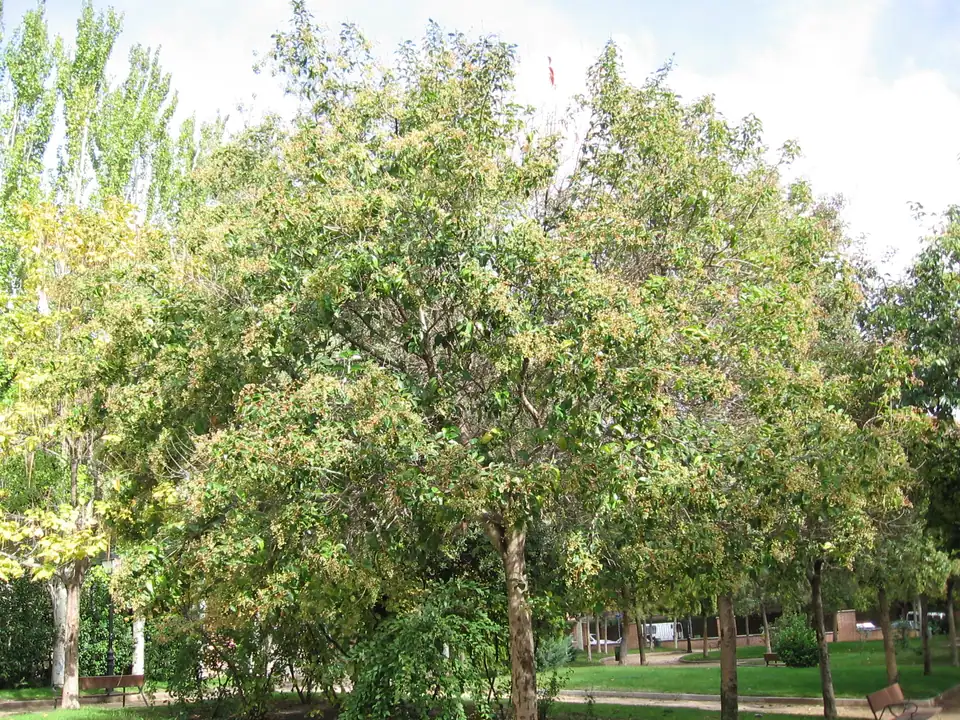


How to Grow and Care for Privet
Ligustrum japonicum
Written by Emilio Marruso · last checked
Toxic to: Cats, Dogs, Horses, People · Why
At a glance
Japanese privet is an easygoing perennial that grows 6–12 feet tall and 5–6 feet wide, happy in full sun or partial shade. It handles drought and grows in a range of soils, as long as they are never constantly wet. Give it a bright spot, keep its roots from sitting in water, and it will become a generous presence in your garden.
- Sun
Full sun to partial shade
What the sources say (2)
Light: Full sun to partial shade
It grows rapidly up to 12 feet tall and 6 feet wide in sun to partial shade.
— Ligustrum japonicum (Japanese Privet, Privet, Wax-leaf Privet) | North Carolina Extension Gardener Plant Toolbox [1] It is easily transplanted and prefers partial shade to full sun.
— Ligustrum | Home & Garden Information Center [2] - Water
Handles drought well; never leave the soil constantly wet
What the sources say (2)
Watering: Drought tolerant; grows in a range of soil conditions except constantly wet
It is dense and upright, drought and salt spray tolerant, and grows in a range of soil conditions (except constantly wet).
— Ligustrum japonicum (Japanese Privet, Privet, Wax-leaf Privet) | North Carolina Extension Gardener Plant Toolbox [1] Watering notes: Does not grow well in permanently wet soils
The only soils this shrub does not grow in well are those that are permanently wet.
— Ligustrum | Home & Garden Information Center [2] - Cold
Survives winters down to 0 °F (−17.8 °C)
Hardy in very cold winters · USDA 7a · RHS H6 · Z7
What the sources say (2)
Hardiness, coldest zone: 7a [winter low −17.8 to −15 °C (0 to 5 °F)]
USDA Plant Hardiness Zone: 7a, 7b, 8a, 8b, 9a, 9b, 10a, 10b
— Ligustrum japonicum (Japanese Privet, Privet, Wax-leaf Privet) | North Carolina Extension Gardener Plant Toolbox [1] Hardiness, warmest zone: 10b [winter low 1.7 to 4.4 °C (35 to 40 °F)]
USDA Plant Hardiness Zone: 7a, 7b, 8a, 8b, 9a, 9b, 10a, 10b
— Ligustrum japonicum (Japanese Privet, Privet, Wax-leaf Privet) | North Carolina Extension Gardener Plant Toolbox [1] - Soil
Grows in many kinds of soil, pH 8.0, but not in soil that stays wet
What the sources say (2)
Watering: Drought tolerant; grows in a range of soil conditions except constantly wet
It is dense and upright, drought and salt spray tolerant, and grows in a range of soil conditions (except constantly wet).
— Ligustrum japonicum (Japanese Privet, Privet, Wax-leaf Privet) | North Carolina Extension Gardener Plant Toolbox [1] Soil pH, minimum: 8.0
Soil pH: Alkaline (>8.0) Soil Drainage: Good Drainage
— Ligustrum japonicum (Japanese Privet, Privet, Wax-leaf Privet) | North Carolina Extension Gardener Plant Toolbox [1] - Feeding
It can easily run short of copper
What the sources say (2)
Micronutrients: Copper: the species is susceptible to copper deficiency
Anthracnose, twig blight, cankers, powdery mildew and root rot are common disease problems. Susceptible to copper deficiency.
— Ligustrum japonicum (Japanese Privet, Privet, Wax-leaf Privet) | North Carolina Extension Gardener Plant Toolbox [1] Anthracnose, twig blight, cankers, powdery mildew and root rot are common disease problems. Susceptible to copper deficiency.
— Wax-leaf Privet - Ligustrum japonicum | North Carolina Extension Gardener Plant Toolbox [4] - Pests
Whiteflies, weevils, scale and rust mites; also powdery mildew and root rot
What the sources say (5)
Pests: whiteflies, Japanese weevils, ligustrum weevils, white peach scale, privet rust mites
Whiteflies, Japanese and ligustrum weevils, white peach scale and privet rust mites are common insect problems.
— Ligustrum japonicum (Japanese Privet, Privet, Wax-leaf Privet) | North Carolina Extension Gardener Plant Toolbox [1] Diseases: anthracnose, twig blight, cankers, powdery mildew, root rot, fungal leaf spots, Botryosphaeria dieback and canker, Armillaria root rot
Anthracnose, twig blight, cankers, powdery mildew and root rot are common disease problems.
— Ligustrum japonicum (Japanese Privet, Privet, Wax-leaf Privet) | North Carolina Extension Gardener Plant Toolbox [1] Fungal Leaf Spots: Leaf spots caused by the fungi Cercospora species and Pseudocercospora species
— Ligustrum | Home & Garden Information Center [2] The fungal disease called Botryosphaeria dieback and canker, caused by Botryosphaeria species
— Ligustrum | Home & Garden Information Center [2] Armillaria root rot is also known as shoestring root rot, mushroom root rot, and oak root rot.
— Ligustrum | Home & Garden Information Center [2] - Size
6–12 ft tall and 5–6 ft wide
What the sources say (2)
Mature height: 183-366 cm (6-12 ft)
Height: 6 ft. 0 in. - 12 ft. 0 in. Width: 5 ft. 0 in. - 6 ft. 0 in.
— Ligustrum japonicum (Japanese Privet, Privet, Wax-leaf Privet) | North Carolina Extension Gardener Plant Toolbox [1] Mature width: 152-183 cm (5-6 ft)
Height: 6 ft. 0 in. - 12 ft. 0 in. Width: 5 ft. 0 in. - 6 ft. 0 in.
— Ligustrum japonicum (Japanese Privet, Privet, Wax-leaf Privet) | North Carolina Extension Gardener Plant Toolbox [1] - Safety
Toxic if eaten: upsets the stomach in people and is a problem for cats, dogs and horses
Overview
Japanese privet is a large evergreen shrub or small tree in the olive family, native to eastern Asia. [1] It tolerates drought and salt spray, grows in sun to partial shade, and is excellent as a hedge or screen. [1][2] It is an invasive species in North Carolina, and ingestion can cause abdominal pain, nausea and vomiting. [1]
This record is incomplete: the sources we read do not cover every field yet.
Not yet covered by our sources: Pruning, Propagation
Privet care
How to water Privet
Watering
Drought tolerant; grows in a range of soil conditions except constantly wet
What the sources say (1)
It is dense and upright, drought and salt spray tolerant, and grows in a range of soil conditions (except constantly wet).Watering notes
Does not grow well in permanently wet soils
What the sources say (1)
The only soils this shrub does not grow in well are those that are permanently wet.How much light Privet needs
Full sun to partial shade
What the sources say (2)
It grows rapidly up to 12 feet tall and 6 feet wide in sun to partial shade.It is easily transplanted and prefers partial shade to full sun.How much cold Privet can take
Hardiness, coldest zone
7a [winter low −17.8 to −15 °C (0 to 5 °F)]
What the sources say (1)
USDA Plant Hardiness Zone:
7a, 7b, 8a, 8b, 9a, 9b, 10a, 10bHardiness, warmest zone
10b [winter low 1.7 to 4.4 °C (35 to 40 °F)]
What the sources say (1)
USDA Plant Hardiness Zone:
7a, 7b, 8a, 8b, 9a, 9b, 10a, 10bBest soil for Privet
8.0
What the sources say (1)
Soil pH:
Alkaline (>8.0)
Soil Drainage:
Good DrainageHow to propagate Privet
Not stated in the sources we read.
How to grow Privet
The plant
Life cycle
perennial
What the sources say (1)
Plant Type:
Perennial
Poisonous
Shrub
Tree
Woody Plant Leaf Characteristics:
Broadleaf EvergreenFamily
Oleaceae
What the sources say (1)
Japanese privet is a large evergreen shrub or small tree in the olive family (Oleaceae) and native to eastern Asia.Mature height
183-366 cm (6-12 ft)
What the sources say (1)
Height: 6 ft. 0 in. - 12 ft. 0 in.
Width: 5 ft. 0 in. - 6 ft. 0 in.Mature width
152-183 cm (5-6 ft)
What the sources say (1)
Height: 6 ft. 0 in. - 12 ft. 0 in.
Width: 5 ft. 0 in. - 6 ft. 0 in.Pests and diseases
Pests
whiteflies, Japanese weevils, ligustrum weevils, white peach scale, privet rust mites
What the sources say (1)
Whiteflies, Japanese and ligustrum weevils, white peach scale and privet rust mites are common insect problems.Diseases
anthracnose, twig blight, cankers, powdery mildew, root rot, fungal leaf spots, Botryosphaeria dieback and canker, Armillaria root rot
What the sources say (4)
Anthracnose, twig blight, cankers, powdery mildew and root rot are common disease problems.Fungal Leaf Spots: Leaf spots caused by the fungi Cercospora species and Pseudocercospora speciesThe fungal disease called Botryosphaeria dieback and canker, caused by Botryosphaeria speciesArmillaria root rot is also known as shoestring root rot, mushroom root rot, and oak root rot.Fertilizing
Micronutrients
Copper: the species is susceptible to copper deficiency
What the sources say (2)
Anthracnose, twig blight, cankers, powdery mildew and root rot are common disease problems. Susceptible to copper deficiency.Anthracnose, twig blight, cankers, powdery mildew and root rot are common disease problems. Susceptible to copper deficiency.Privet pests and problems
Insect pests
Symptom: Whiteflies, Japanese and ligustrum weevils, white peach scale and privet rust mites
What to do: Not stated
What the sources say (1)
Whiteflies, Japanese and ligustrum weevils, white peach scale and privet rust mites are common insect problems.
— Ligustrum japonicum (Japanese Privet, Privet, Wax-leaf Privet) | North Carolina Extension Gardener Plant Toolbox [1] Diseases
Symptom: Anthracnose, twig blight, cankers, powdery mildew and root rot
What to do: Not stated
What the sources say (1)
Anthracnose, twig blight, cankers, powdery mildew and root rot are common disease problems.
— Ligustrum japonicum (Japanese Privet, Privet, Wax-leaf Privet) | North Carolina Extension Gardener Plant Toolbox [1] Copper deficiency
Symptom: Susceptible to copper deficiency
What to do: Not stated
What the sources say (1)
Susceptible to copper deficiency. Invasive. See native or less problematic suggestions to the left.
— Ligustrum japonicum (Japanese Privet, Privet, Wax-leaf Privet) | North Carolina Extension Gardener Plant Toolbox [1]
Remedies
Each remedy shows what official sources say about it; traditional remedies without an official source are marked as such. Harmful ones are listed so you know to avoid them.
Treating the plant
whiteflies
insecticidal soap spray Works
Foliar injury from soaps and oils may occur on plants under drought stress.
— Ligustrum | Home & Garden Information Center [2] How: Spray thoroughly so that the soap contacts the insects on the underside of leaves. Repeat spray three times at 5 to 7 day intervals.
Insecticidal soap or horticultural oil sprays are effective against whiteflies, but the plant must be sprayed thoroughly so that the soap or oil contacts the insects on the underside of leaves.
— Ligustrum | Home & Garden Information Center [2] What the evidence says Insecticidal soap or horticultural oil sprays are effective against whiteflies
— Ligustrum | Home & Garden Information Center [2] water spray from hose Not verified
Traditional remedy, not verified by an official source.
How: Spray affected plants with water from a garden hose or a spray bottle.
dish soap spray Not proven
How: Squirt dish soap into a gallon of water and spray in the evening, three times about once a week, when temperatures are below 90 degrees Fahrenheit.
Shoot a squirt of dish soap into a gallon of water and spray your plants with this homemade pesticide mixture in the evening when it's cooler outside.
— hunker.com [5] What the evidence says Despite being made of common household materials like dish soap and vinegar and having seemingly fewer risks, these concoctions may have unforeseen consequences and cannot be relied upon to have the same effectiveness as a registered pesticide.
— extension.unh.edu [6]
fungal leaf spots
hand removal of spotted leaves Official source, not independently tested
How: Hand remove spotted leaves on lightly diseased plants. Rake up and destroy infected fallen leaves.
Hand remove spotted leaves on lightly diseased plants. Rake up and destroy infected fallen leaves.
— Ligustrum | Home & Garden Information Center [2]
Getting rid of it
invasive japanese privet
hand-pulling Works
Be sure to remove all the roots as they may re-sprout.
— Invasives in Your Woodland: Japanese Privet | University of Maryland Extension [3] How: Small individual plants can be removed by hand-pulling or using a "weed wrench"-type tool. Be sure to remove all the roots as they may re-sprout.
Small individual plants can be removed by hand-pulling or using a “weed wrench”-type tool.
— Invasives in Your Woodland: Japanese Privet | University of Maryland Extension [3] What the evidence says Small individual plants can be removed by hand-pulling or using a “weed wrench”-type tool.
— Invasives in Your Woodland: Japanese Privet | University of Maryland Extension [3] repeated cutting without herbicide Not verified
Traditional remedy, not verified by an official source.
Removal will require follow-up control to successfully kill the same individual plant if herbicide is not used.
— treesatlanta.org [7] How: Cut the stem to around shin height and, when it regrows, remove all new growth as soon as you see it.
Is Privet toxic to pets?
Reported by the source, quoted verbatim. This is not medical or veterinary advice: if a person or an animal may have eaten this plant, contact a poison control centre or a veterinarian.
Animals
Problem for Cats Problem for Dogs Problem for Horses
[1]The source flags the risk for this animal but does not explain why.
People
Abdominal pain, nausea, vomiting, diarrhea, headache, weakness, Gastrointestinal upset (most common), incoordination, increased heart rate, death (rare)
[1]- Poisonous parts
Poison Part: Fruits Leaves Download Print-Friendly QR Code
[1]- Toxic principle
Poison Toxic Principle: Glycosides: syringin (ligustrin), a glycoside; shikimic acid (lowest toxic dose 4,000mg); and others
[1]- Symptoms
Poison Symptoms: Abdominal pain, nausea, vomiting, diarrhea, headache, weakness, Gastrointestinal upset (most common), incoordination, increased heart
[1]- Severity
Poison Severity: Medium Poison Symptoms: Abdominal pain, nausea, vomiting, diarrhea, headache, weakness,
[1]
Calendar
Pruning
Not stated in the sources we read.
Months as given by the sources, which are mostly from the United States (northern hemisphere). In the southern hemisphere they shift by about six months.
Indicative values
Values from a secondary source, not checked word for word like the rest of this page. Use them as a starting point.
- Drought tolerant
- yesIndicative value, adapt it to your climate · Secondary source
- Care level
- MediumIndicative value, adapt it to your climate · Secondary source
- Growth rate
- HighIndicative value, adapt it to your climate · Secondary source
- Pruning
- May, August, March, April, May, June, July, AugustIndicative value, adapt it to your climate · Secondary source
- Propagation
- Cutting, Layering Propagation, Grafting Propagation, Division, Seed PropagationIndicative value, adapt it to your climate · Secondary source
Similar plants
- Amur privet Ligustrum amurense
- Chinese Privet Ligustrum sinense
- Glossy Privet Ligustrum lucidum
- Privet Ligustrum vulgare
- California privet Ligustrum ovalifolium
- Black ash Fraxinus nigra
- Blue Ash Fraxinus quadrangulata
- Chinese Fringetree Chionanthus retusus
Sources
Every value above is quoted from these documents. Links lead to the original publisher.
- Ligustrum japonicum (Japanese Privet, Privet, Wax-leaf Privet) | North Carolina Extension Gardener Plant Toolbox · plants.ces.ncsu.edu, consulted
- Ligustrum | Home & Garden Information Center · hgic.clemson.edu, consulted
- Invasives in Your Woodland: Japanese Privet | University of Maryland Extension · extension.umd.edu, consulted
- Wax-leaf Privet - Ligustrum japonicum | North Carolina Extension Gardener Plant Toolbox · plants.ces.ncsu.edu, consulted
- hunker.com · hunker.com
- extension.unh.edu · extension.unh.edu
- treesatlanta.org · treesatlanta.org
Written by Emilio Marruso · last checked