
How to Grow and Care for Glossy Privet
Ligustrum lucidum
Written by Emilio Marruso · last checked
Toxic to: Dogs, People · Why
At a glance
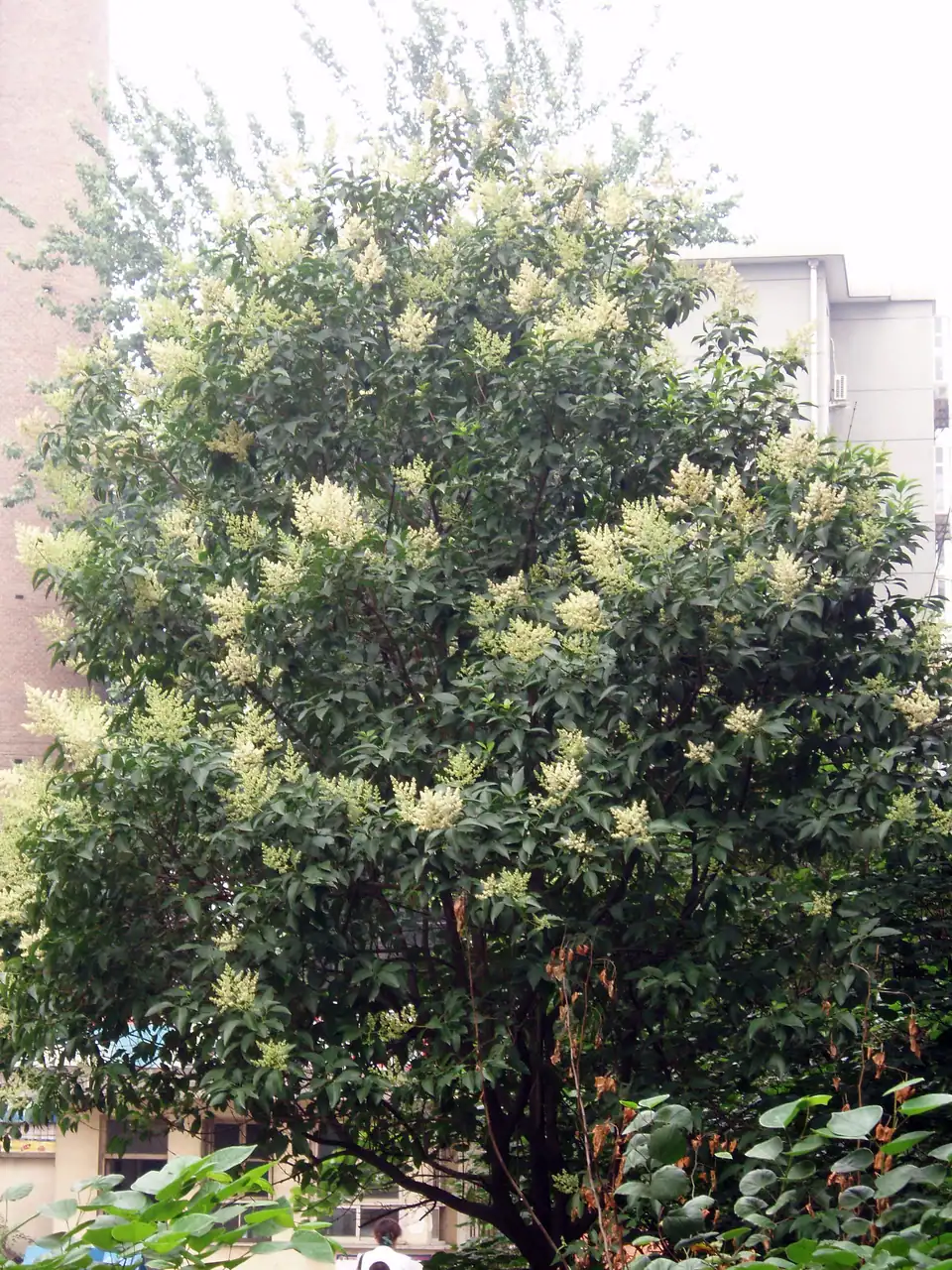
Glossy privet is a perennial that grows happily in full sun or partial shade. Given room, it can rise from 15 to 50 feet tall, making a bold presence in the garden. Just be a good neighbor: it can spread into moist, wild areas, so clip off and throw away the fruit so birds don't carry the seeds away.
- Sun
Full sun to partial shade
What the sources say (2)
Light: Full sun to partial shade
Full sun (6 or more hours of direct sunlight a day)
— Ligustrum lucidum (Glossy Privet, Tall-glossy Privet, Waxleaf Privet) | North Carolina Extension Gardener Plant Toolbox [1] Partial Shade (Direct sunlight only part of the day, 2-6 hours)
— Ligustrum lucidum (Glossy Privet, Tall-glossy Privet, Waxleaf Privet) | North Carolina Extension Gardener Plant Toolbox [1] - Cold
Survives winters down to 0 °F (−17.8 °C)
Hardy in very cold winters · USDA 7a · RHS H6 · Z7
What the sources say (2)
Hardiness, coldest zone: 7a [winter low −17.8 to −15 °C (0 to 5 °F)]
7a, 7b, 8a, 8b, 9a, 9b, 10a, 10b
— Ligustrum lucidum (Glossy Privet, Tall-glossy Privet, Waxleaf Privet) | North Carolina Extension Gardener Plant Toolbox [1] Hardiness, warmest zone: 10b [winter low 1.7 to 4.4 °C (35 to 40 °F)]
7a, 7b, 8a, 8b, 9a, 9b, 10a, 10b
— Ligustrum lucidum (Glossy Privet, Tall-glossy Privet, Waxleaf Privet) | North Carolina Extension Gardener Plant Toolbox [1] - Feeding
Prone to copper deficiency
What the sources say (1)
Micronutrients: Copper: the species is susceptible to copper deficiency
Anthracnose, twig blight, cankers, powdery mildew, and root rot are common disease problems. Susceptible to copper deficiency.
— Ligustrum lucidum (Glossy Privet, Tall-glossy Privet, Waxleaf Privet) | North Carolina Extension Gardener Plant Toolbox [1] - Pests
Whiteflies, weevils, scale and mites; also powdery mildew, twig blight and root rot
What the sources say (2)
Pests: whiteflies, Japanese weevils, ligustrum weevils, white peach scale, privet rust mites
Whiteflies, Japanese and ligustrum weevils, white peach scale, and privet rust mites are common insect problems.
— Ligustrum lucidum (Glossy Privet, Tall-glossy Privet, Waxleaf Privet) | North Carolina Extension Gardener Plant Toolbox [1] Diseases: anthracnose, twig blight, cankers, powdery mildew, root rot
Anthracnose, twig blight, cankers, powdery mildew, and root rot are common disease problems.
— Ligustrum lucidum (Glossy Privet, Tall-glossy Privet, Waxleaf Privet) | North Carolina Extension Gardener Plant Toolbox [1] - Watch out
Can turn invasive: clip off and throw away the fruit so birds don't spread the seeds
- Size
15 to 50 ft tall
What the sources say (1)
Mature height: 457-1524 cm (15-50 ft)
Height: 15 ft. 0 in. - 50 ft. 0 in. Width: 8 ft. 0 in. - 15 ft. 0 in.
— Ligustrum lucidum (Glossy Privet, Tall-glossy Privet, Waxleaf Privet) | North Carolina Extension Gardener Plant Toolbox [1] - Safety
Toxic if eaten: causes stomach pain and vomiting; berries and leaves harm dogs
Overview
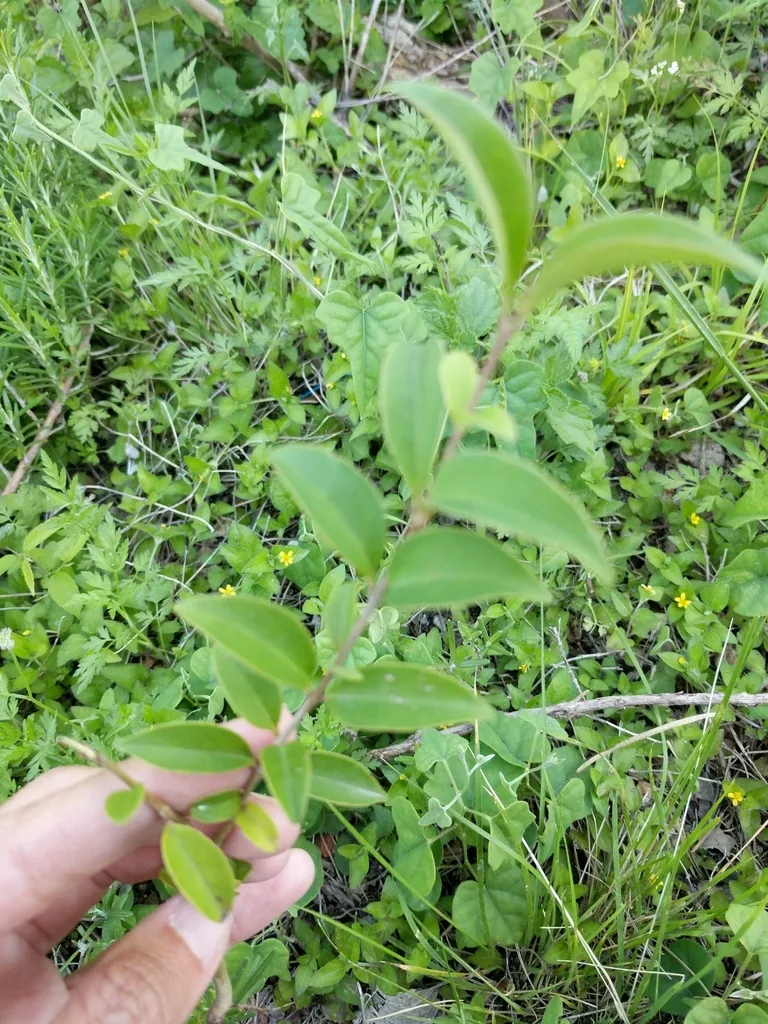
Glossy privet is a broadleaf evergreen shrub in the olive family, native to southern China and Korea. [1] It is drought-tolerant and tolerates severe pruning. [1] It is considered invasive in North Carolina and its berries are toxic. [1]
This record is incomplete: the sources we read do not cover every field yet.
Not yet covered by our sources: Propagation
Glossy Privet care
How to water Glossy Privet
The sources give different values depending on region, zone or growing conditions.
What each source says
According to NC State Extension (dry conditions and alkaline soil): Drought-tolerant
According to Clemson HGIC (Ligustrum shrubs, South Carolina): Water weekly during the growing season if rainfall is insufficient
What the sources say (3)
According to NC State Extension (dry conditions and alkaline soil): This shrub is drought-tolerant in dry conditions and alkaline soil.According to Clemson HGIC (Ligustrum shrubs, South Carolina): Water shrubs weekly during the growing season if insufficient rainfall occursThis shrub is drought-tolerant in dry conditions and alkaline soil.How much light Glossy Privet needs
Full sun to partial shade
What the sources say (2)
Full sun (6 or more hours of direct sunlight a day)Partial Shade (Direct sunlight only part of the day, 2-6 hours)How much cold Glossy Privet can take
Hardiness, coldest zone
7a [winter low −17.8 to −15 °C (0 to 5 °F)]
What the sources say (1)
7a, 7b, 8a, 8b, 9a, 9b, 10a, 10bHardiness, warmest zone
10b [winter low 1.7 to 4.4 °C (35 to 40 °F)]
What the sources say (1)
7a, 7b, 8a, 8b, 9a, 9b, 10a, 10bHow to propagate Glossy Privet
Not stated in the sources we read.
How to grow Glossy Privet
The plant
Life cycle
perennial
What the sources say (1)
Plant Type: Perennial Poisonous Shrub Tree Weed Woody Plant Leaf Characteristics: Broadleaf EvergreenFamily
Oleaceae
What the sources say (1)
Glossy privet is a broadleaf evergreen shrub in the olive (Oleaceae) family native to southern China and Korea.Mature height
457-1524 cm (15-50 ft)
What the sources say (1)
Height: 15 ft. 0 in. - 50 ft. 0 in. Width: 8 ft. 0 in. - 15 ft. 0 in.Pests and diseases
Pests
whiteflies, Japanese weevils, ligustrum weevils, white peach scale, privet rust mites
What the sources say (1)
Whiteflies, Japanese and ligustrum weevils, white peach scale, and privet rust mites are common insect problems.Diseases
anthracnose, twig blight, cankers, powdery mildew, root rot
What the sources say (1)
Anthracnose, twig blight, cankers, powdery mildew, and root rot are common disease problems.Fertilizing
Micronutrients
Copper: the species is susceptible to copper deficiency
What the sources say (1)
Anthracnose, twig blight, cankers, powdery mildew, and root rot are common disease problems. Susceptible to copper deficiency.Glossy Privet pests and problems
Invasive spread
Symptom: Weedy in disturbed areas; escapes and naturalizes in moist areas
What to do: Remove where feasible; if not, clip off and dispose of the fruit structures so birds do not spread the seeds
What the sources say (2)
It can be weedy in disturbed areas and has escaped and naturalized in moist areas.
— Ligustrum lucidum (Glossy Privet, Tall-glossy Privet, Waxleaf Privet) | North Carolina Extension Gardener Plant Toolbox [1] If removal is not in the forecast for a particular site, then clipping off and disposing of the fruit structures
— Ligustrum Lucidum - Just Another Invasive Privet - Craven County Center | N.C. Cooperative Extension [2] Insect pests
Symptom: Whiteflies, Japanese and ligustrum weevils, white peach scale, and privet rust mites
What the sources say (1)
Whiteflies, Japanese and ligustrum weevils, white peach scale, and privet rust mites are common insect problems.
— Ligustrum lucidum (Glossy Privet, Tall-glossy Privet, Waxleaf Privet) | North Carolina Extension Gardener Plant Toolbox [1] Diseases
Symptom: Anthracnose, twig blight, cankers, powdery mildew, and root rot
What the sources say (1)
Anthracnose, twig blight, cankers, powdery mildew, and root rot are common disease problems.
— Ligustrum lucidum (Glossy Privet, Tall-glossy Privet, Waxleaf Privet) | North Carolina Extension Gardener Plant Toolbox [1]
Remedies
Each remedy shows what official sources say about it; traditional remedies without an official source are marked as such. Harmful ones are listed so you know to avoid them.
Treating the plant
anthracnose
raking up fallen leaves Not verified
Traditional remedy, not verified by an official source.
How: promptly rake up and dispose of fallen leaves and debris, avoid wetting foliage with sprinklers or other splashing water and prune off infected branches in fall or winter, if possible
leaf-feeding larvae
insecticidal soap spray Works
How: Monitor foliage for skeletonized leaves; prune affected branches; apply neem oil or insecticidal soap in spring when larvae appear; encourage natural predators
Monitor foliage for skeletonized leaves; prune affected branches; apply neem oil or insecticidal soap in spring when larvae appear; encourage natural predators
— lizplants.com [5] What the evidence says For example, insecticidal soap is a safe, effective organic insecticide with minimal environmental impact.
— extension.psu.edu [6] neem oil spray Partly works
How: Monitor foliage for skeletonized leaves; prune affected branches; apply neem oil or insecticidal soap in spring when larvae appear; encourage natural predators
Monitor foliage for skeletonized leaves; prune affected branches; apply neem oil or insecticidal soap in spring when larvae appear; encourage natural predators
— lizplants.com [5] What the evidence says However, neem oil is not effective against every insect and disease, and often must be frequently reapplied to reach the desired outcome.
— extension.unh.edu [7]
Getting rid of it
invasive spread
hand pulling Works
Because privet has a shallow fibrous root system, pulling may severely disturb the soil and is not recommended along stream banks or steeply sloped areas where erosion may occur.
— aces.edu [9] Twisting the privet can cause the roots to break, and if any roots remain in the soil, the plant can regrow.
— wikihow.com [8] How: Grab the privet stem at its base. Firmly pull it straight up and without twisting it.
Grab the privet stem at its base. Firmly pull it straight up and without twisting it.
— wikihow.com [8] What the evidence says Hand pulling is a good option for privet seedlings and small saplings.
— aces.edu [9] weed wrench uprooting Works
Because privet has a shallow fibrous root system, pulling may severely disturb the soil and is not recommended along stream banks or steeply sloped areas where erosion may occur.
— aces.edu [9] How: Weed wrenches are effective for removing privet saplings up to 2 inches in diameter.
Weed wrenches are effective for removing privet saplings up to 2 inches in diameter.
— aces.edu [9] What the evidence says Weed wrenches are effective for removing privet saplings up to 2 inches in diameter.
— aces.edu [9] mowing or cutting Partly works
How: Small infestations can be mowed or cut to control spread, though this will not eradicate a population.
Small infestations can be mowed or cut to control spread, though this will not eradicate a population.
— Invasive Privet | Invasives | Illinois Extension | Illinois [3] What the evidence says Cutting, when used alone, does not provide satisfactory control because of rapid stump sprouting.
— aces.edu [9] bark wounding Not verified
Traditional remedy, not verified by an official source.
How: Throughout the remaining growing period, continue wounding the bark to maintain this blank patch. Within a year or less, the privet should lose its foliage and gradually die off.
Is Glossy Privet toxic to pets?
Reported by the source, quoted verbatim. This is not medical or veterinary advice: if a person or an animal may have eaten this plant, contact a poison control centre or a veterinarian.
Animals
Dogs can be adversely affected by eating the berries or leaves of privet.
[1]- Poisonous parts
The berries produced by this plant are toxic.
[1]
People
Ingestion causes abdominal pain, nausea, vomiting, diarrhea, headache, weakness, low blood pressure, cold and clammy skin possibly lasting 48 to 72 hours
[1]- Poisonous parts
Poison Part: Fruits Leaves
[1]- Toxic principle
Poison Toxic Principle: Glycosides: syringin (ligustrin), a glycoside; shikimic acid (lowest toxic dose 4,000mg); and others
[1]- Symptoms
Ingestion causes abdominal pain, nausea, vomiting, diarrhea, headache, weakness, low blood pressure, cold and clammy skin possibly lasting 48 to 72 hours
[1]- Severity
Poison Severity: Medium
[1]
Indicative values
Values from a secondary source, not checked word for word like the rest of this page. Use them as a starting point.
- Hours of sun
- 6-8 hoursIndicative value, adapt it to your climate · Secondary source
- Drought tolerant
- yesIndicative value, adapt it to your climate · Secondary source
- Soil pH
- 6-7.5Indicative value, adapt it to your climate · Secondary source
- Care level
- MediumIndicative value, adapt it to your climate · Secondary source
- Growth rate
- HighIndicative value, adapt it to your climate · Secondary source
- Pruning
- March, April, May, June, July, August, March, April, May, June, July, AugustIndicative value, adapt it to your climate · Secondary source
- Propagation
- Cutting, Layering Propagation, Grafting Propagation, Seed Propagation, DivisionIndicative value, adapt it to your climate · Secondary source
Similar plants
- Amur privet Ligustrum amurense
- Chinese Privet Ligustrum sinense
- Privet Ligustrum japonicum
- Privet Ligustrum vulgare
- California privet Ligustrum ovalifolium
- Black ash Fraxinus nigra
- Blue Ash Fraxinus quadrangulata
- Chinese Fringetree Chionanthus retusus
Sources
Every value above is quoted from these documents. Links lead to the original publisher.
- Ligustrum lucidum (Glossy Privet, Tall-glossy Privet, Waxleaf Privet) | North Carolina Extension Gardener Plant Toolbox · plants.ces.ncsu.edu, consulted
- Ligustrum Lucidum - Just Another Invasive Privet - Craven County Center | N.C. Cooperative Extension · craven.ces.ncsu.edu, consulted
- Invasive Privet | Invasives | Illinois Extension | Illinois · extension.illinois.edu, consulted
- Ligustrum | Home & Garden Information Center · hgic.clemson.edu, consulted
- lizplants.com · lizplants.com
- extension.psu.edu · extension.psu.edu
- extension.unh.edu · extension.unh.edu
- wikihow.com · wikihow.com
- aces.edu · aces.edu
Written by Emilio Marruso · last checked