

How to Grow and Care for Privet
Ligustrum vulgare
Written by Emilio Marruso · last checked
Toxic to: Cats, Dogs, Horses, People · Why
At a glance
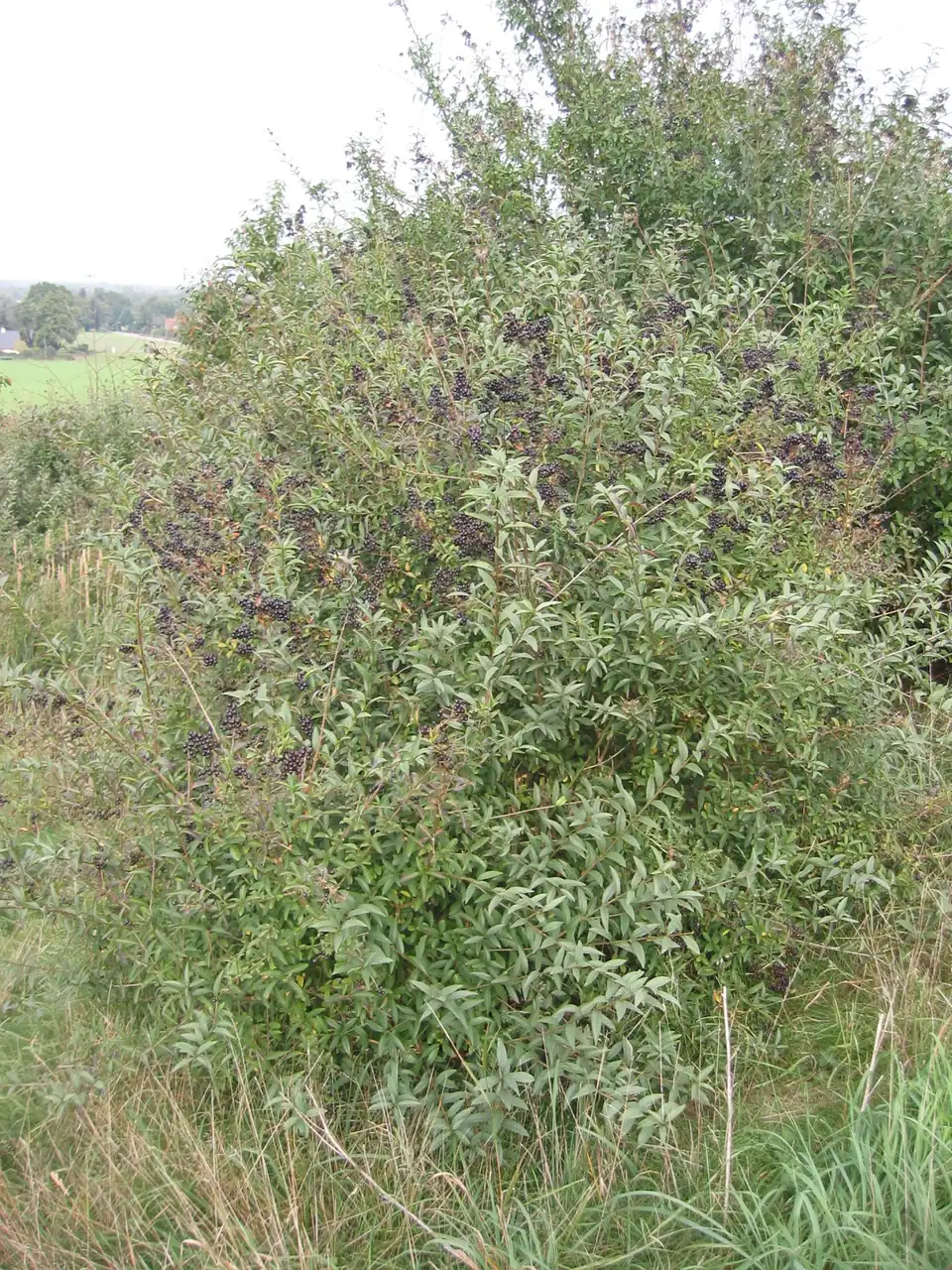
Privet is an easygoing perennial shrub that grows in full sun or partial shade and handles dry spells, though it does best in moist, well-drained soil. Its dark black berries delight birds, but birds also spread the seeds far and wide, so snip off the flowers right away and you'll keep this tough, forgiving plant exactly where you want it.
- Sun
Full sun to partial shade
What the sources say (3)
Light: Full sun to partial shade
Common privet tolerates full sun or partial shade very well.
— Ligustrum vulgare (Amur, Common Privet, Ligustrum, Privet, Wax-leaf) | North Carolina Extension Gardener Plant Toolbox [1] Full sun to partial shade; moist, well-drained soils are best; tolerates alkaline soils.
— Common Privet (Ligustrum vulgare)-Hort Answers - University of Illinois Extension [2] Privet grows best in full sun, but tolerates some shade and occasional drought.
— Privet | University of Maryland Extension [5] - Water
Handles drought well, but grows best with steady moisture
What the sources say (2)
Watering: Drought tolerant; moist, well-drained soils are best
Common privet tolerates full sun or partial shade very well. Common privet is considered drought- and pollution-tolerant.
— Ligustrum vulgare (Amur, Common Privet, Ligustrum, Privet, Wax-leaf) | North Carolina Extension Gardener Plant Toolbox [1] Full sun to partial shade; moist, well-drained soils are best; tolerates alkaline soils.
— Common Privet (Ligustrum vulgare)-Hort Answers - University of Illinois Extension [2] - Cold
Survives winters down to −30 °F (−34.4 °C)
Very hardy · USDA 4a · RHS H7 · Z4
What the sources say (2)
Hardiness, coldest zone: 4a [winter low −34.4 to −31.7 °C (−30 to −25 °F)]
USDA Plant Hardiness Zone: 4a, 4b, 5a, 5b, 6a, 6b, 7a, 7b
— Ligustrum vulgare (Amur, Common Privet, Ligustrum, Privet, Wax-leaf) | North Carolina Extension Gardener Plant Toolbox [1] Hardiness, warmest zone: 7b [winter low −15 to −12.2 °C (5 to 10 °F)]
USDA Plant Hardiness Zone: 4a, 4b, 5a, 5b, 6a, 6b, 7a, 7b
— Ligustrum vulgare (Amur, Common Privet, Ligustrum, Privet, Wax-leaf) | North Carolina Extension Gardener Plant Toolbox [1] - Soil
Moist, well-drained soil is best
What the sources say (2)
Watering: Drought tolerant; moist, well-drained soils are best
Common privet tolerates full sun or partial shade very well. Common privet is considered drought- and pollution-tolerant.
— Ligustrum vulgare (Amur, Common Privet, Ligustrum, Privet, Wax-leaf) | North Carolina Extension Gardener Plant Toolbox [1] Full sun to partial shade; moist, well-drained soils are best; tolerates alkaline soils.
— Common Privet (Ligustrum vulgare)-Hort Answers - University of Illinois Extension [2] - Feeding
Watch for copper shortage: this shrub is prone to it
What the sources say (1)
Micronutrients: Copper: the species is susceptible to copper deficiency
Anthracnose, twig blight, cankers, powdery mildew, and root rot are common disease problems. Susceptible to copper deficiency.
— Ligustrum vulgare (Amur, Common Privet, Ligustrum, Privet, Wax-leaf) | North Carolina Extension Gardener Plant Toolbox [1] - Pruning
Cut off the flowers right away so no berries form
What the sources say (1)
Pruning: Prune off flowers immediately to avoid fruit set
Birds tend to spread the seeds around so prune off flowers immediately to avoid setting fruit.
— Ligustrum vulgare (Amur, Common Privet, Ligustrum, Privet, Wax-leaf) | North Carolina Extension Gardener Plant Toolbox [1] - Pests
Whiteflies, weevils, scale, aphids and mites; can get powdery mildew and root rot
What the sources say (5)
Pests: whiteflies, Japanese weevils, ligustrum weevils, white peach scale, privet rust mites, oystershell scale, thrips, uglynest caterpillar, twospotted spider mite, aphids, leaf miners, mealybugs
Whiteflies, Japanese and ligustrum weevils, white peach scale, and privet rust mites are common insect problems.
— Ligustrum vulgare (Amur, Common Privet, Ligustrum, Privet, Wax-leaf) | North Carolina Extension Gardener Plant Toolbox [1] Insect Damage - Oystershell Scale ( Lepidosaphes ulmi ) - Thrips ( Many ) - Uglynest Caterpillar ( Archips cerasivorana )
— Common Privet (Ligustrum vulgare)-Hort Answers - University of Illinois Extension [2] A number of problems are common, most of which are not serious. These include leaf spots, powdery mildew, aphids, leaf miners, scale, mealybugs and mites.
— Common Privet (Ligustrum vulgare)-Hort Answers - University of Illinois Extension [2] Diseases: anthracnose, twig blight, cankers, powdery mildew, root rot, gray mold, verticillium wilt, wood rots, leaf spots
Anthracnose, twig blight, cankers, powdery mildew, and root rot are common disease problems.
— Ligustrum vulgare (Amur, Common Privet, Ligustrum, Privet, Wax-leaf) | North Carolina Extension Gardener Plant Toolbox [1] Fungal Disease - Gray Mold [Trees and Shrubs] ( Botrytis cinerea and other species ) - Verticillium Wilt [Shrubs and Trees] ( Verticillium albo-atrum and V. dahliae ) - Wood Rots and Decays ( Many genus and species involved )
— Common Privet (Ligustrum vulgare)-Hort Answers - University of Illinois Extension [2] - Watch out
Invasive: birds spread the seeds; pull young plants with every root, as bits regrow
- Safety
Poisonous to people, cats, dogs and horses: causes stomach pain, vomiting and diarrhea
Overview
Common privet is a vigorous, semi-evergreen shrub that grows up to 10 to 15 feet [3–4.6 m] tall and is a popular choice for hedges. [1] It tolerates full sun or partial shade and is considered drought-tolerant. [1] It is listed as invasive in North Carolina and other states, and its fruits and leaves are poisonous. [1]
This record is incomplete: the sources we read do not cover every field yet.
Not yet covered by our sources: Propagation
Privet care
Measurements in square brackets are our conversion into the other unit system; the quoted text is unchanged.
How to water Privet
Drought tolerant; moist, well-drained soils are best
What the sources say (2)
Common privet tolerates full sun or partial shade very well. Common privet is considered drought- and pollution-tolerant.Full sun to partial shade; moist, well-drained soils are best; tolerates alkaline soils.How much light Privet needs
Full sun to partial shade
What the sources say (3)
Common privet tolerates full sun or partial shade very well.Full sun to partial shade; moist, well-drained soils are best; tolerates alkaline soils.Privet grows best in full sun, but tolerates some shade and occasional drought.How much cold Privet can take
Hardiness, coldest zone
4a [winter low −34.4 to −31.7 °C (−30 to −25 °F)]
What the sources say (1)
USDA Plant Hardiness Zone: 4a, 4b, 5a, 5b, 6a, 6b, 7a, 7bHardiness, warmest zone
7b [winter low −15 to −12.2 °C (5 to 10 °F)]
What the sources say (1)
USDA Plant Hardiness Zone: 4a, 4b, 5a, 5b, 6a, 6b, 7a, 7bHow to propagate Privet
Not stated in the sources we read.
How to grow Privet
The plant
Life cycle
perennial
What the sources say (1)
Common privet is a vigorous, semi-evergreen, perennial shrub in the olive family (Oleaceae) native to Eurasia.Family
Oleaceae
What the sources say (1)
Common privet is a vigorous, semi-evergreen, perennial shrub in the olive family (Oleaceae) native to Eurasia.Mature height
Pests and diseases
Pests
whiteflies, Japanese weevils, ligustrum weevils, white peach scale, privet rust mites, oystershell scale, thrips, uglynest caterpillar, twospotted spider mite, aphids, leaf miners, mealybugs
What the sources say (3)
Whiteflies, Japanese and ligustrum weevils, white peach scale, and privet rust mites are common insect problems.Insect Damage
- Oystershell Scale ( Lepidosaphes ulmi )
- Thrips ( Many )
- Uglynest Caterpillar ( Archips cerasivorana )A number of problems are common, most of which are not serious. These include leaf spots, powdery mildew, aphids, leaf miners, scale, mealybugs and mites.Diseases
anthracnose, twig blight, cankers, powdery mildew, root rot, gray mold, verticillium wilt, wood rots, leaf spots
What the sources say (2)
Anthracnose, twig blight, cankers, powdery mildew, and root rot are common disease problems.Fungal Disease
- Gray Mold [Trees and Shrubs] ( Botrytis cinerea and other species )
- Verticillium Wilt [Shrubs and Trees] ( Verticillium albo-atrum and V. dahliae )
- Wood Rots and Decays ( Many genus and species involved )Fertilizing
Micronutrients
Copper: the species is susceptible to copper deficiency
What the sources say (1)
Anthracnose, twig blight, cankers, powdery mildew, and root rot are common disease problems. Susceptible to copper deficiency.Privet pests and problems
Invasive spread
Symptom: Birds eat the berries and disperse the seed; the shrub forms dense thickets in natural areas and impedes native plants
What to do: Individual small plants can be pulled by hand, removing all roots because fragments can resprout
What the sources say (2)
Birds eat the berries and aid in seed dispersal. Border privet and European privet in particular can form dense thickets in natural areas
— Privet | University of Maryland Extension [5] Individual small plants can be pulled by hand. However, all roots must be removed, as fragments have the possibility of resprouting.
— Privet [7] Insect and disease problems
Symptom: Whiteflies, Japanese and ligustrum weevils, white peach scale and privet rust mites; anthracnose, twig blight, cankers, powdery mildew and root rot
What to do: Not specified in the documents
What the sources say (2)
Whiteflies, Japanese and ligustrum weevils, white peach scale, and privet rust mites are common insect problems.
— Ligustrum vulgare (Amur, Common Privet, Ligustrum, Privet, Wax-leaf) | North Carolina Extension Gardener Plant Toolbox [1] Anthracnose twig blight can be a serious problem on this species.
— Common Privet (Ligustrum vulgare)-Hort Answers - University of Illinois Extension [2]
Remedies
Each remedy shows what official sources say about it; traditional remedies without an official source are marked as such. Harmful ones are listed so you know to avoid them.
Treating the plant
whiteflies
insecticidal soap Works
Foliar injury from soaps and oils may occur on plants under drought stress. Therefore, water the plants well the day before spraying.
— Ligustrum | Home & Garden Information Center [6] How: Spray thoroughly so that the soap contacts the insects on the underside of leaves.
Insecticidal soap or horticultural oil sprays are effective against whiteflies, but the plant must be sprayed thoroughly so that the soap or oil contacts the insects on the underside of leaves.
— Ligustrum | Home & Garden Information Center [6] What the evidence says Insecticidal soap or horticultural oil sprays are effective against whiteflies, but the plant must be sprayed thoroughly so that the soap or oil contacts the insects on the underside of leaves.
— Ligustrum | Home & Garden Information Center [6]
fungal leaf spots
hand removing spotted leaves Works
How: Hand remove spotted leaves on lightly diseased plants; rake up and destroy infected fallen leaves.
Hand remove spotted leaves on lightly diseased plants. Rake up and destroy infected fallen leaves. The removal of this leaf material will minimize the chances of the disease reoccurring the next season.
— Ligustrum | Home & Garden Information Center [6] What the evidence says Many insect and disease issues can be solved in the home garden by hand-picking insects or clipping and disposing of diseased plant parts.
— extension.unh.edu [9]
Getting rid of it
invasive privet
hand-pulling Partly works
How: Pull small plants by hand, removing all roots because fragments can resprout; uprooting is viable for trunks under 1 inch in diameter.
Privet tends to have shallow roots, making uprooting an easy method of control. Some woody invasive trees and shrubs have deeper tap roots that make hand pulling difficult. If the trunk has a diameter of less than 1” hand pulling could be a viable option.
— treesatlanta.org [10] What the evidence says Individual small plants can be pulled by hand. However, all roots must be removed, as fragments have the possibility of resprouting.
— Privet [7] mowed or cut Partly works
How: Small infestations can be mowed or cut; the plants will readily resprout.
Cutting or mowing effectively eliminates the shrub canopy and provides access to overgrown sites, but the plants will readily resprout.
— Privet [7] What the evidence says Small infestations can be mowed or cut to control spread, though this will not eradicate a population.
— Invasive Privet | Invasives | Illinois Extension | Illinois [4] digging out the root crown Official source, not independently tested
How: Larger plants can be dug or pulled using a grubbing tool; remove the root crown to prevent sprouting.
Larger plants can be dug or pulled using a grubbing tool. Care should be taken to remove the root crown to prevent sprouting.
— Invasive Privet | Invasives | Illinois Extension | Illinois [4]
Is Privet toxic to pets?
Reported by the source, quoted verbatim. This is not medical or veterinary advice: if a person or an animal may have eaten this plant, contact a poison control centre or a veterinarian.
Animals
#poisonous #problem for cats #problem for dogs #problem for horses
[1]The source flags the risk for this animal but does not explain why.
People
Poison Severity: Medium Poison Symptoms: Abdominal pain, nausea, vomiting, drooling, diarrhea, headache, weakness, low blood pressure
[1]- Poisonous parts
Poison Part: Fruits Leaves
[1]- Toxic principle
Glycosides: syringin (ligustrin), a glycoside; shikimic acid (lowest toxic dose 4,000mg); saponins, protoanemonin and others
[1]- Symptoms
Abdominal pain, nausea, vomiting, drooling, diarrhea, headache, weakness, low blood pressure, cold and clammy skin possibly lasting 48 to 72 hours, colic, depression.
[1]- Severity
This plant has medium severity poison characteristics.
[1]
Calendar
Pruning
Prune off flowers immediately to avoid fruit set
What the sources say (1)
Birds tend to spread the seeds around so prune off flowers immediately to avoid setting fruit.Months as given by the sources, which are mostly from the United States (northern hemisphere). In the southern hemisphere they shift by about six months.
Edibility
Reported by the source, quoted verbatim. Do not eat a plant on the basis of this page alone: identification mistakes can be dangerous.
followed by dark black fleshy berries that are enjoyed by birds
[1]
Indicative values
Values from a secondary source, not checked word for word like the rest of this page. Use them as a starting point.
- Drought tolerant
- yesIndicative value, adapt it to your climate · Secondary source
- Soil pH
- 6-7.5Indicative value, adapt it to your climate · Secondary source
- Growth rate
- HighIndicative value, adapt it to your climate · Secondary source
- Propagation
- Cutting, Layering Propagation, Grafting Propagation, Division, Seed PropagationIndicative value, adapt it to your climate · Secondary source
Similar plants
- Amur privet Ligustrum amurense
- Chinese Privet Ligustrum sinense
- Glossy Privet Ligustrum lucidum
- Privet Ligustrum japonicum
- California privet Ligustrum ovalifolium
- Black ash Fraxinus nigra
- Blue Ash Fraxinus quadrangulata
- Chinese Fringetree Chionanthus retusus
Sources
Every value above is quoted from these documents. Links lead to the original publisher.
- Ligustrum vulgare (Amur, Common Privet, Ligustrum, Privet, Wax-leaf) | North Carolina Extension Gardener Plant Toolbox · plants.ces.ncsu.edu, consulted
- Common Privet (Ligustrum vulgare)-Hort Answers - University of Illinois Extension · web.extension.illinois.edu, consulted
- Wax-leaf - Ligustrum vulgare | North Carolina Extension Gardener Plant Toolbox · plants.ces.ncsu.edu, consulted
- Invasive Privet | Invasives | Illinois Extension | Illinois · extension.illinois.edu, consulted
- Privet | University of Maryland Extension · extension.umd.edu, consulted
- Ligustrum | Home & Garden Information Center · hgic.clemson.edu, consulted
- Privet · extension.psu.edu, consulted
- Common Privet - Ligustrum vulgare | North Carolina Extension Gardener Plant Toolbox · plants.ces.ncsu.edu, consulted
- extension.unh.edu · extension.unh.edu
- treesatlanta.org · treesatlanta.org
Written by Emilio Marruso · last checked