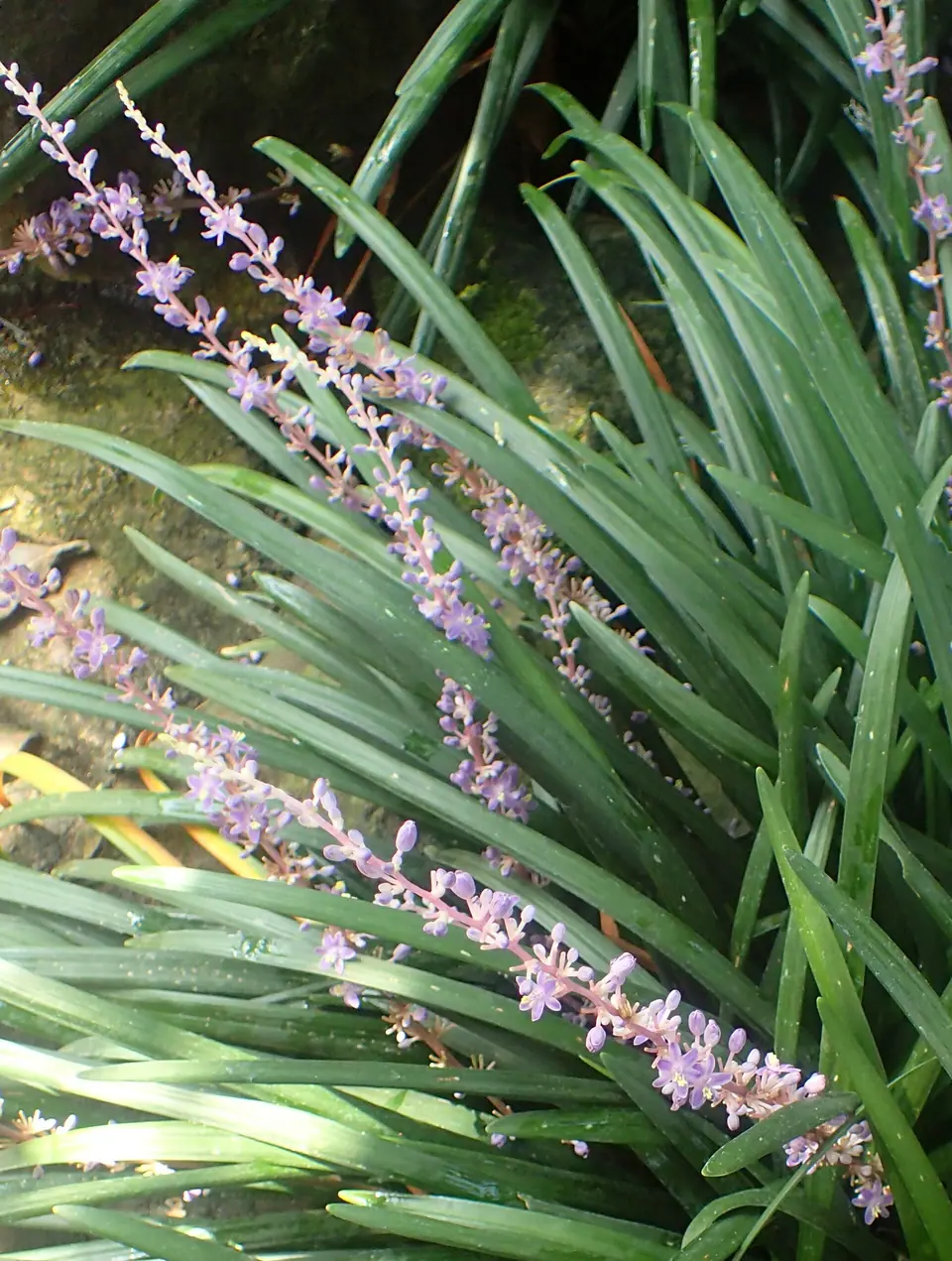
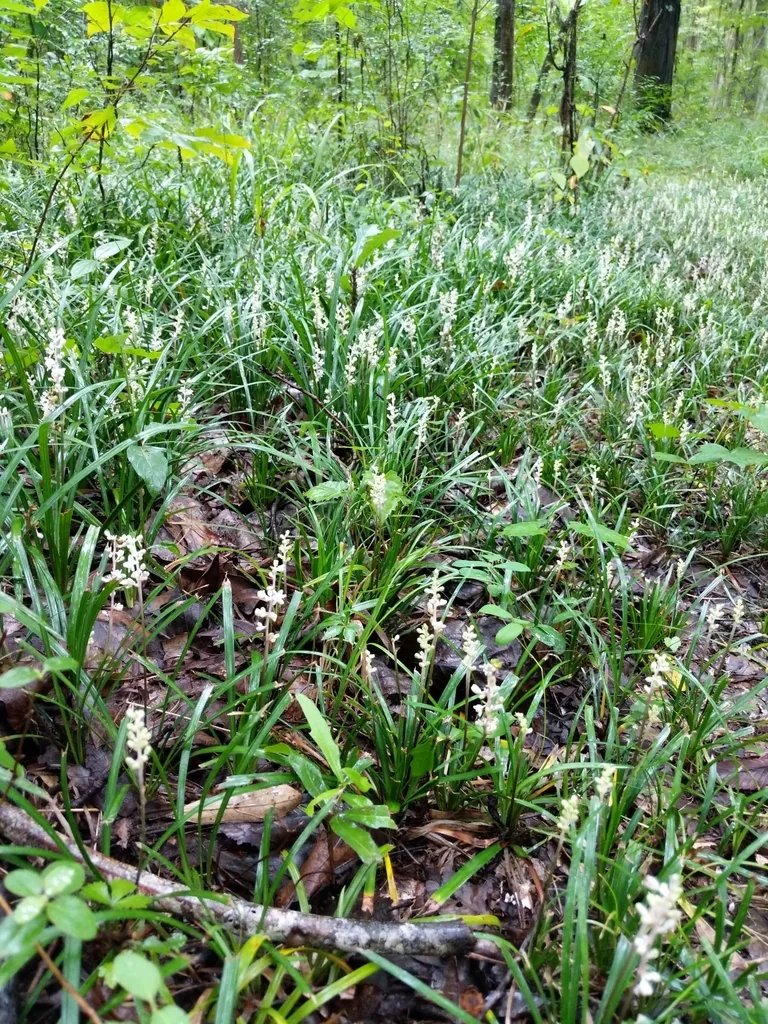

Cómo cultivar y cuidar Lilyturf
Liriope spicata
Escrito por Emilio Marruso · última revisión
Tóxica para: Personas · Por qué
De un vistazo
La liriope spicata es una vivaz resistente que aguanta la sequía y pide muy poco: basta con segar el macizo cada primavera, antes de que empiece a brotar. Se extiende rápido por tallos subterráneos, así que cubre el espacio enseguida, y también crece en maceta. Ponle un borde profundo y se quedará justo donde tú quieras.
- Riego
Aguanta bien la sequía
Qué dicen las fuentes (1)
Riego: Tolerante a la sequía.
Drought tolerant. Small light blue flowers in late summer followed by black, bead-like fruit.
— Creeping Lily Turf | Landscaping | Illinois Extension | Illinois [2] - Frío
Aguanta inviernos de hasta −34,4 °C (−30 °F)
Muy rústica · USDA 4a · RHS H7 · Z4
Qué dicen las fuentes (2)
Rusticidad, zona más fría: 4a [mínima invernal de −34,4 a −31,7 °C (de −30 a −25 °F)]
USDA Plant Hardiness Zone: 4a, 4b, 5a, 5b, 6a, 6b, 7a, 7b, 8a, 8b, 9a, 9b, 10a, 10b
— Liriope spicata (Creeping Lilyturf, Creeping Liriope, Lilyturf, Monkey Grass) | North Carolina Extension Gardener Plant Toolbox [1] Rusticidad, zona más cálida: 10b [mínima invernal de 1,7 a 4,4 °C (de 35 a 40 °F)]
USDA Plant Hardiness Zone: 4a, 4b, 5a, 5b, 6a, 6b, 7a, 7b, 8a, 8b, 9a, 9b, 10a, 10b
— Liriope spicata (Creeping Lilyturf, Creeping Liriope, Lilyturf, Monkey Grass) | North Carolina Extension Gardener Plant Toolbox [1] - Distancia
20–30 cm entre plantas
Qué dicen las fuentes (1)
Distancia de plantación: 20.3-30.5 cm (8-12 pulgadas)
Evergreen foliage. Space 8-12 inches apart. Perennial. Hardy in Zone 4.
— Creeping Lily Turf | Landscaping | Illinois Extension | Illinois [2] - Abonado
No abones en exceso; esparce el abono junto a las plantas, no entre las hojas
Qué dicen las fuentes (2)
Evitar: Exceso de abono y gránulos que quedan entre las hojas: esparce el abono junto a las plantas
When fertilizing, scatter fertilizer around plants but don’t let fertilizer granules become wedged between leaves.
— Liriope | Home & Garden Information Center [3] Keep liriope healthy by watering weekly as needed during summer droughts, don’t over-apply mulch next to plants, and don’t over-fertilize.
— Liriope | Home & Garden Information Center [3] - Poda
Siega el macizo cada primavera, antes de que empiece a brotar
Qué dicen las fuentes (1)
Poda: Siega los lechos cada primavera antes de que comience el nuevo crecimiento
However, lilyturf beds can be mowed each spring before the new growth begins to eliminate last year's unsightly foliage.
— Liriope spicata (Creeping Lilyturf, Creeping Liriope, Lilyturf, Monkey Grass) | North Carolina Extension Gardener Plant Toolbox [1] - Plagas
Cochinillas, babosas y caracoles; puede sufrir antracnosis y podredumbre de hojas y cuello
Qué dicen las fuentes (3)
Plagas: cochinillas, babosas, caracoles
It is susceptible to scale, slugs and snails.
— Liriope spicata (Creeping Lilyturf, Creeping Liriope, Lilyturf, Monkey Grass) | North Carolina Extension Gardener Plant Toolbox [1] Enfermedades: antracnosis, pudrición de hojas y corona
Reddish-brown spots that appear along leaf margins and leaf tips are caused by a fungal disease known as anthracnose, which is caused by Colletotrichum species.
— Liriope | Home & Garden Information Center [3] Leaf and crown rot is caused by Phytophthora palmivora (a water mold pathogen).
— Liriope | Home & Garden Information Center [3] - Atención
Se extiende rápido e invade el césped; ponle un borde de 46 cm de profundidad o rodéala de pavimento
- Tamaño
15–46 cm de alto y 30–61 cm de ancho
Qué dicen las fuentes (2)
Altura adulta: 15.2-45.7 cm (6-18 pulgadas)
This plant grows 6 to 18 inches tall with a spread of 1 to 2 feet.
— Liriope spicata (Creeping Lilyturf, Creeping Liriope, Lilyturf, Monkey Grass) | North Carolina Extension Gardener Plant Toolbox [1] Anchura adulta: 30.5-61 cm (1-2 pies)
This plant grows 6 to 18 inches tall with a spread of 1 to 2 feet.
— Liriope spicata (Creeping Lilyturf, Creeping Liriope, Lilyturf, Monkey Grass) | North Carolina Extension Gardener Plant Toolbox [1] - Multiplicación
Multiplícala dividiendo las matas
Qué dicen las fuentes (1)
Propagación: División.
Life Cycle: Perennial Recommended Propagation Strategy: Division Country Or Region Of Origin: China and Vietnam
— Liriope spicata (Creeping Lilyturf, Creeping Liriope, Lilyturf, Monkey Grass) | North Carolina Extension Gardener Plant Toolbox [1] - Maceta
Crece también en maceta
Qué dicen las fuentes (1)
En maceta: Sí
Lilyturf may be best suited for planting in containers or a bed surrounded by hardscape or confined with an edging that is 18 inches deep.
— Liriope spicata (Creeping Lilyturf, Creeping Liriope, Lilyturf, Monkey Grass) | North Carolina Extension Gardener Plant Toolbox [1] - Seguridad
Ligeramente tóxica para las personas si se ingiere
Resumen
El liriope rastrero es una cubierta vegetal perenne, de hoja perenne, rizomatosa, que se extiende rápidamente por rizomas. [1] Tolera el rocío de sal, el calor y la sequía y se propaga por división. [1] Se describe como un propagador agresivo y una especie invasora en Tennessee y Georgia. [1]
Citado en inglés, como en la fuente.
Cuidados
Riego
Tolerante a la sequía.
Qué dicen las fuentes (1)
Drought tolerant. Small light blue flowers in late summer followed by black, bead-like fruit.Luz
Las fuentes dan valores distintos según la región, la zona o las condiciones de cultivo.
Lo que dice cada fuente
Según NC State Extension: Semisombra o sombra profunda
Según Illinois Extension: Pleno sol a semisombra muy ligera
Qué dicen las fuentes (2)
Según NC State Extension: Creeping lilyturf prefers partial or deep shade and soil with good drainage.Según Illinois Extension: Grows 8-12 inches tall and prefers full sun to very light shade.Clima y frío
Rusticidad, zona más fría
4a [mínima invernal de −34,4 a −31,7 °C (de −30 a −25 °F)]
Qué dicen las fuentes (1)
USDA Plant Hardiness Zone:
4a, 4b, 5a, 5b, 6a, 6b, 7a, 7b, 8a, 8b, 9a, 9b, 10a, 10bRusticidad, zona más cálida
10b [mínima invernal de 1,7 a 4,4 °C (de 35 a 40 °F)]
Qué dicen las fuentes (1)
USDA Plant Hardiness Zone:
4a, 4b, 5a, 5b, 6a, 6b, 7a, 7b, 8a, 8b, 9a, 9b, 10a, 10bDónde cultivarla
En maceta
Sí
Qué dicen las fuentes (1)
Lilyturf may be best suited for planting in containers or a bed surrounded by hardscape or confined with an edging that is 18 inches deep.Distancia de plantación
20.3-30.5 cm (8-12 pulgadas)
Qué dicen las fuentes (1)
Evergreen foliage. Space 8-12 inches apart. Perennial. Hardy in Zone 4.Propagación
División.
Qué dicen las fuentes (1)
Life Cycle:
Perennial
Recommended Propagation Strategy:
Division
Country Or Region Of Origin:
China and VietnamCultivo
La planta
Ciclo de vida
perenne
Qué dicen las fuentes (1)
Creeping lilyturf is a perennial, evergreen, rhizomatous groundcover in the asparagus family (Asparagaceae).Familia
Asparagáceas
Qué dicen las fuentes (1)
Creeping lilyturf is a perennial, evergreen, rhizomatous groundcover in the asparagus family (Asparagaceae).Altura adulta
15.2-45.7 cm (6-18 pulgadas)
Qué dicen las fuentes (1)
This plant grows 6 to 18 inches tall with a spread of 1 to 2 feet.Anchura adulta
30.5-61 cm (1-2 pies)
Qué dicen las fuentes (1)
This plant grows 6 to 18 inches tall with a spread of 1 to 2 feet.Plagas y enfermedades
Plagas
cochinillas, babosas, caracoles
Qué dicen las fuentes (1)
It is susceptible to scale, slugs and snails.Enfermedades
antracnosis, pudrición de hojas y corona
Qué dicen las fuentes (2)
Reddish-brown spots that appear along leaf margins and leaf tips are caused by a fungal disease known as anthracnose, which is caused by Colletotrichum species.Leaf and crown rot is caused by Phytophthora palmivora (a water mold pathogen).Abonado
Evitar
Exceso de abono y gránulos que quedan entre las hojas: esparce el abono junto a las plantas
Qué dicen las fuentes (2)
When fertilizing, scatter fertilizer around plants but don’t let fertilizer granules become wedged between leaves.Keep liriope healthy by watering weekly as needed during summer droughts, don’t over-apply mulch next to plants, and don’t over-fertilize.Problemas
Propagación agresiva
Síntoma: Se extiende rápidamente por rizomas, invade el césped adyacente y los lechos de cubresuelos, es maleza y difícil de eliminar una vez establecida
Qué hacer: Confina con un borde de 18 pulgadas de profundidad o planta en un lecho rodeado de superficies duras
Qué dicen las fuentes (2)
This plant spreads quickly by rhizomes and can invade adjacent turf areas
— Liriope spicata (Creeping Lilyturf, Creeping Liriope, Lilyturf, Monkey Grass) | North Carolina Extension Gardener Plant Toolbox [1] Lilyturf may be best suited for planting in containers or a bed surrounded by hardscape or confined with an edging that is 18 inches deep.
— Liriope spicata (Creeping Lilyturf, Creeping Liriope, Lilyturf, Monkey Grass) | North Carolina Extension Gardener Plant Toolbox [1] Cochinillas, babosas y caracoles
Síntoma: Susceptible a cochinillas, babosas y caracoles
Qué hacer: No se indica en los documentos
Qué dicen las fuentes (1)
It is susceptible to scale, slugs and snails.
— Liriope spicata (Creeping Lilyturf, Creeping Liriope, Lilyturf, Monkey Grass) | North Carolina Extension Gardener Plant Toolbox [1]
Remedios
Cada remedio indica qué dicen las fuentes oficiales; los remedios tradicionales sin fuente oficial aparecen marcados. Los perjudiciales están para que sepas evitarlos.
Cuidar la planta
babosas
trampa de cerveza No verificado
Remedio tradicional, no verificado por una fuente oficial.
Cómo: Llena una trampa para babosas o un plato poco profundo con cerveza y colócalo en el jardín; coloca las trampas de 3 a 4 semanas después de la última helada en primavera y añade más cuando se capture la primera babosa o caracol.
cochinilla
raspando con un hisopo empapado en alcohol No verificado
Remedio tradicional, no verificado por una fuente oficial.
Cómo: Raspa las infestaciones menores de cochinillas de las superficies de las plantas con una uña o un hisopo de algodón empapado en alcohol isopropílico.
cortando el follaje y retirando los recortes Fuente oficial, sin prueba independiente
Cómo: Corta el follaje a fines del invierno y limpia los recortes.
Cut back the foliage in the late winter and clean up the clippings to significantly help in scale control.
— Liriope | Home & Garden Information Center [3]
antracnosis
recortando las hojas viejas y retirando los restos Fuente oficial, sin prueba independiente
Cómo: Corta o recorta las hojas del año pasado a fines del invierno a una altura de aproximadamente 3 pulgadas y retira la mayor cantidad de restos posible; evita regar en exceso o regar tarde en el día.
Mow or trim off last year’s leaves in late winter to a height of about 3 inches and remove as much of the debris as possible.
— Liriope | Home & Garden Information Center [3]
Cómo eliminarla
propagación agresiva
desenterrando y cortando repetidamente Funciona en parte
Cómo: Desentierra la mayor parte de la planta que puedas y/o córtala, luego vigila el rebrote y vuelve a desenterrar o cortar.
Your best bet would be to dig up as much of the plant as you can and/or cut it back.
— ask.extension.org [6] Qué dicen las pruebas The creeping form of Liriope is pretty tough, though, so any treatment - digging or herbicide - may take awhile with repeated efforts to be able to finally eradicate it.
— ask.extension.org [7] sofocando la zona Fuente oficial, sin prueba independiente
Cómo: Sofoca la zona (solo es viable si no hay plantas deseables mezcladas con el liriope).
The only other option if you wish to avoid herbicide and the rigor of digging would be to smother the patch.
— ask.extension.org [7]
Toxicidad
Según la fuente, citada textualmente. No es un consejo médico ni veterinario: si una persona o un animal pudo haber ingerido esta planta, contacta con un centro de toxicología o con un veterinario.
Calendario
Poda
Siega los lechos cada primavera antes de que comience el nuevo crecimiento
Qué dicen las fuentes (1)
However, lilyturf beds can be mowed each spring before the new growth begins to eliminate last year's unsightly foliage.Meses tal como los dan las fuentes, en su mayoría de Estados Unidos (hemisferio norte). En el hemisferio sur se desplazan unos seis meses.
Valores orientativos
Valores de una fuente secundaria, no comprobados palabra por palabra como el resto de esta página. Úselos como punto de partida.
- Resiste la sequía
- SíValor orientativo, adáptalo a tu clima · Fuente secundaria
- pH del suelo
- 6-7Valor orientativo, adáptalo a tu clima · Fuente secundaria
- Nivel de cuidado
- BajoValor orientativo, adáptalo a tu clima · Fuente secundaria
- Crecimiento
- AltaValor orientativo, adáptalo a tu clima · Fuente secundaria
Plantas similares
- Lilyturf Liriope muscari
- Palma de aguja Yucca flaccida
- Alpine squill Scilla bifolia
- American Agave Agave virginica
- Esparraguera Asparagus officinalis
- Helecho plumoso Asparagus setaceus
- Beaked Yucca Yucca rostrata
- Beschorneria Beschorneria yuccoides
Fuentes
Cada valor anterior se cita de estos documentos. Los enlaces llevan al editor original.
- Liriope spicata (Creeping Lilyturf, Creeping Liriope, Lilyturf, Monkey Grass) | North Carolina Extension Gardener Plant Toolbox · plants.ces.ncsu.edu, consultado
- Creeping Lily Turf | Landscaping | Illinois Extension | Illinois · extension.illinois.edu, consultado
- Liriope | Home & Garden Information Center · hgic.clemson.edu, consultado
- Creeping Liriope - Liriope spicata | North Carolina Extension Gardener Plant Toolbox · plants.ces.ncsu.edu, consultado
- Liriope (Lilyturf) · uaex.uada.edu, consultado
- ask.extension.org · ask.extension.org
- ask.extension.org · ask.extension.org
Escrito por Emilio Marruso · última revisión