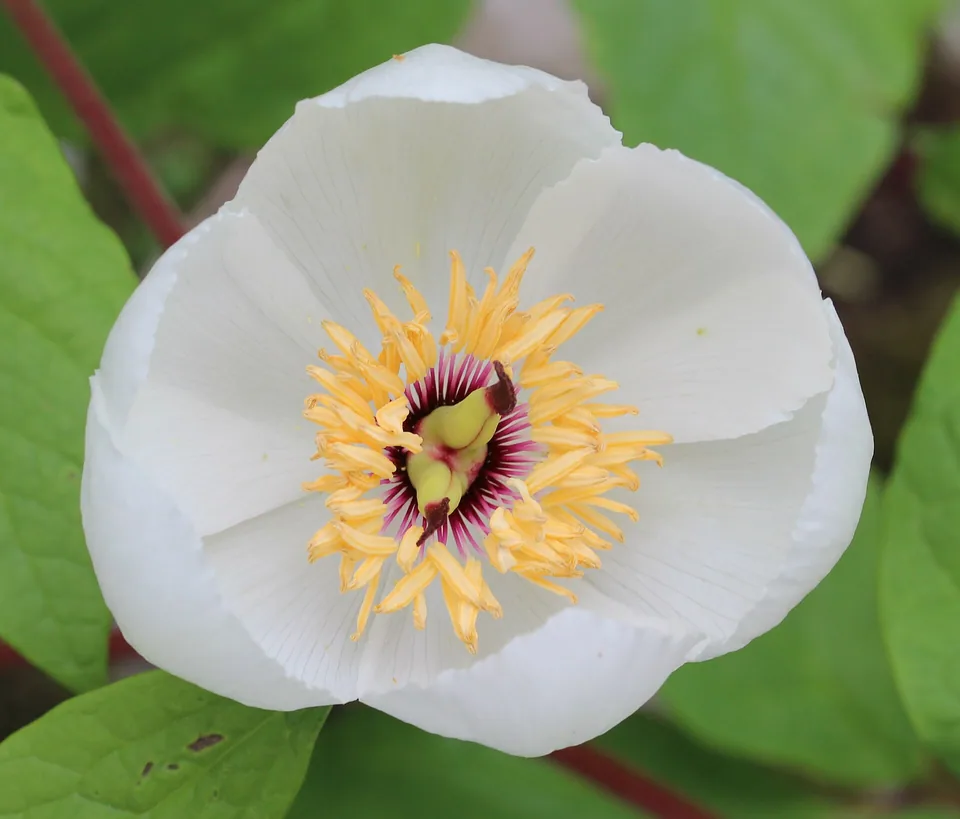

Cómo cultivar y cuidar Paeonia obovata
Paeonia japonica
Escrito por Emilio Marruso · última revisión
De un vistazo
Esta peonía es una planta perenne de larga vida que puedes compartir fácilmente: divide la mata en primavera u otoño, o siembra las semillas en cuanto maduren. Dale un riego moderado y constante, sin encharcar y sin dejar que se seque demasiado, y volverá año tras año. Incluso sus hojas jóvenes se comen cocinadas.
- Riego
Riego moderado: muere si la tierra se encharca o se seca demasiado
Qué dicen las fuentes (2)
Riego: Moderado
Water moderate Hardiness Zone 7+ Soil textures sandy, loamy, clay, heavy clay
— Yama-Shakuyaku (Paeonia japonica) — Practical Plants [2] Notas sobre el riego: No sobrevivirá si el suelo se encharca o está demasiado seco
Plants are tolerant of a wide range of soil conditions, but will not survive if the soil becomes waterlogged or is too dry
— Yama-Shakuyaku (Paeonia japonica) — Practical Plants [2] - Frío
Aguanta inviernos de hasta −17,8 °C (0 °F)
Rústica en inviernos muy fríos · USDA 7 · RHS H6 · Z7
Qué dicen las fuentes (1)
Rusticidad, zona más fría: 7 [mínima invernal de −17,8 a −12,2 °C (de 0 a 10 °F)]
Water moderate Hardiness Zone 7+ Soil textures sandy, loamy, clay, heavy clay
— Yama-Shakuyaku (Paeonia japonica) — Practical Plants [2] - Plantación
Planta en primavera, cuando esté creciendo; las plántulas, tras al menos dos temporadas en cajonera fría
Qué dicen las fuentes (1)
Plantación: Primavera, cuando está en crecimiento (plántulas después de al menos dos temporadas de crecimiento en un semillero en frío)
grow them on in a cold frame for at least two growing seasons before planting them out when they are in growth in the spring
— Yama-Shakuyaku (Paeonia japonica) — Practical Plants [2] - Cosecha
Las hojas jóvenes se comen cocinadas; la raíz se puede masticar
- Plagas
Vigila la podredumbre gris, el oídio, las manchas en las hojas, las cochinillas y los trips
Qué dicen las fuentes (10)
Plagas: nematodos foliares, cochinillas, trips
Foliar nematodes are microscopic worm-like pathogens that feed within the leaf tissue.
— Peony | Home Garden Education Office | College of Agriculture, Health and Natural Resources | University of Connecticut [4] Scale insects look like little raised bumps on the plant.
— Peony | Home Garden Education Office | College of Agriculture, Health and Natural Resources | University of Connecticut [4] Thrips are narrow, tiny insects which may damage buds and leaves with their piercing and sucking mouthparts.
— Peony | Home Garden Education Office | College of Agriculture, Health and Natural Resources | University of Connecticut [4] Enfermedades: tizón por Botrytis (moho gris), manchas foliares, tizón por Phytophthora, mildiu polvoriento, moho blanco, tizón sureño, marchitez por Verticillium, virus
Botrytis blight (a.k.a. gray mold) is caused by a couple of species of fungi in the genus Botrytis.
— Peony | Home Garden Education Office | College of Agriculture, Health and Natural Resources | University of Connecticut [4] A number of fungi and a bacterial pathogen can sometimes cause leaf spots or blotches on peony.
— Peony | Home Garden Education Office | College of Agriculture, Health and Natural Resources | University of Connecticut [4] If peonies are planted in a poorly drained soil, Phytophthora blight, caused by the water mold Phytophthora cactorum , can cause trouble.
— Peony | Home Garden Education Office | College of Agriculture, Health and Natural Resources | University of Connecticut [4] Peonies are susceptible to the common problem of powdery mildew.
— Peony | Home Garden Education Office | College of Agriculture, Health and Natural Resources | University of Connecticut [4] These diseases, white mold ( Sclerotinia sclerotiorum ) and southern blight ( Sclerotium rolfsii ) both result in stem wilt and death.
— Peony | Home Garden Education Office | College of Agriculture, Health and Natural Resources | University of Connecticut [4] Peonies are hosts of Verticillium wilt caused by the fungi Verticllium albo-atrum and V. dahlia .
— Peony | Home Garden Education Office | College of Agriculture, Health and Natural Resources | University of Connecticut [4] There are several viruses that can infect peony. The symptoms may include dwarfing, abnormal growth forms
— Peony | Home Garden Education Office | College of Agriculture, Health and Natural Resources | University of Connecticut [4] - Multiplicación
Por semilla o dividiendo la mata en primavera u otoño
Qué dicen las fuentes (2)
Propagación: Semilla; división en primavera u otoño
Seed - best sown as soon as it is ripe in a cold frame
— Yama-Shakuyaku (Paeonia japonica) — Practical Plants [2] Division with great care in spring or autumn. Each portion must have a leaf bud.
— Yama-Shakuyaku (Paeonia japonica) — Practical Plants [2] - Siembra
Siembra las semillas en cuanto maduren, en una cajonera fría
Qué dicen las fuentes (1)
Siembra: En cuanto la semilla esté madura, en un marco frío
Seed - best sown as soon as it is ripe in a cold frame
— Yama-Shakuyaku (Paeonia japonica) — Practical Plants [2]
Resumen
Paeonia japonica (peonía de bosque) es uno de los tipos de peonía que se cultivan en el jardín doméstico. [4] La semilla se siembra mejor tan pronto como esté madura en un marco frío, y las plantas se pueden dividir en primavera u otoño. [2]
Citado en inglés, como en la fuente.
Esta ficha está incompleta: las fuentes consultadas aún no cubren todos los campos.
Aún no cubierto por nuestras fuentes: Rusticidad, zona más cálida, Poda
Cuidados
Riego
Riego
Moderado
Qué dicen las fuentes (1)
Water
moderate
Hardiness
Zone 7+
Soil textures
sandy, loamy, clay, heavy clayNotas sobre el riego
No sobrevivirá si el suelo se encharca o está demasiado seco
Qué dicen las fuentes (1)
Plants are tolerant of a wide range of soil conditions, but will not survive if the soil becomes waterlogged or is too dryLuz
Las fuentes dan valores distintos según la región, la zona o las condiciones de cultivo.
Lo que dice cada fuente
Según The Peony Society (Burrell): Se da bien en la sombra
Qué dicen las fuentes (3)
Según The Peony Society (Burrell): Some peonies that do well in shade: most of the species, especially P. japonicaLight
full sun
Shade tolerance
light shade
Water
moderatedoing quite well in sun or light shadeClima y frío
Rusticidad, zona más fría
7 [mínima invernal de −17,8 a −12,2 °C (de 0 a 10 °F)]
Qué dicen las fuentes (1)
Water
moderate
Hardiness
Zone 7+
Soil textures
sandy, loamy, clay, heavy clayRusticidad, zona más cálida
No figura en las fuentes consultadas.
Propagación
Semilla; división en primavera u otoño
Cultivo
La planta
Ciclo de vida
perenne
Qué dicen las fuentes (1)
Family Paeoniaceae Peonies are herbaceous perennials that have few rivals for their floral display and foliage.Familia
Paeoniaceae
Qué dicen las fuentes (1)
Family Paeoniaceae Peonies are herbaceous perennials that have few rivals for their floral display and foliage.Plagas y enfermedades
Plagas
nematodos foliares, cochinillas, trips
Qué dicen las fuentes (3)
Foliar nematodes are microscopic worm-like pathogens that feed within the leaf tissue.Scale insects look like little raised bumps on the plant.Thrips are narrow, tiny insects which may damage buds and leaves with their piercing and sucking mouthparts.Enfermedades
tizón por Botrytis (moho gris), manchas foliares, tizón por Phytophthora, mildiu polvoriento, moho blanco, tizón sureño, marchitez por Verticillium, virus
Qué dicen las fuentes (7)
Botrytis blight (a.k.a. gray mold) is caused by a couple of species of fungi in the genus Botrytis.A number of fungi and a bacterial pathogen can sometimes cause leaf spots or blotches on peony.If peonies are planted in a poorly drained soil, Phytophthora blight, caused by the water mold Phytophthora cactorum , can cause trouble.Peonies are susceptible to the common problem of powdery mildew.These diseases, white mold ( Sclerotinia sclerotiorum ) and southern blight ( Sclerotium rolfsii ) both result in stem wilt and death.Peonies are hosts of Verticillium wilt caused by the fungi Verticllium albo-atrum and V. dahlia .There are several viruses that can infect peony. The symptoms may include dwarfing, abnormal growth formsRemedios
Cada remedio indica qué dicen las fuentes oficiales; los remedios tradicionales sin fuente oficial aparecen marcados. Los perjudiciales están para que sepas evitarlos.
Cuidar la planta
tizón de botrytis
saneamiento y limpieza de residuos Funciona en parte
Cómo: Elimina las partes de plantas gravemente infectadas o las plantas y limpia bien los residuos al final de la temporada.
Sanitation includes removal of severely infected plant parts or plants and a thorough clean-up of debris at the end of the season.
— Peony | Home Garden Education Office | College of Agriculture, Health and Natural Resources | University of Connecticut [4] Qué dicen las pruebas Control practices for this and other fungal diseases of above ground plant parts include sanitation, moisture management and fungicides.
— Peony | Home Garden Education Office | College of Agriculture, Health and Natural Resources | University of Connecticut [4] riego temprano en la mañana Funciona en parte
Cómo: Evita el riego por aspersión o, si lo usas, riega temprano en la mañana; separa las plantas para una buena circulación de aire.
Avoid overhead irrigation or, if used, water early in the morning. Space plants to allow for good air circulation between them.
— Peony | Home Garden Education Office | College of Agriculture, Health and Natural Resources | University of Connecticut [4] Qué dicen las pruebas Minimizing humidity and leaf wetness reduces opportunities for spores to germinate and infect the plant. Avoid overhead irrigation or, if used, water early in the morning.
— Peony | Home Garden Education Office | College of Agriculture, Health and Natural Resources | University of Connecticut [4]
manchas foliares
limpieza de residuos enfermos Fuente oficial, sin prueba independiente
Cómo: Limpia bien los residuos enfermos al final de la temporada y no los agregues a la pila de compost.
Clean up diseased debris well at the end of the season and do not add to your compost pile.
— Peony | Home Garden Education Office | College of Agriculture, Health and Natural Resources | University of Connecticut [4]
mildiu polvoriento
pleno sol y espaciamiento amplio Fuente oficial, sin prueba independiente
Cómo: Planta a pleno sol y separa las plantas para permitir el flujo de aire que mantenga baja la humedad.
Discourage disease by planting in full sun and spacing plants to allow for air flow that minimizes humidity.
— Peony | Home Garden Education Office | College of Agriculture, Health and Natural Resources | University of Connecticut [4]
tizón de phytophthora
Elimina las plantas infectadas Funciona en parte
Cómo: Una vez infectadas, elimina las plantas; evita plantar en sitios con mal drenaje.
Once infected, the only solution is removal of the plants. Avoid planting in poorly drained sites.
— Peony | Home Garden Education Office | College of Agriculture, Health and Natural Resources | University of Connecticut [4] Qué dicen las pruebas Once infected, the only solution is removal of the plants. Avoid planting in poorly drained sites.
— Peony | Home Garden Education Office | College of Agriculture, Health and Natural Resources | University of Connecticut [4]
pudrición del tallo
eliminación de plantas infectadas y replantación de no hospedantes Fuente oficial, sin prueba independiente
Cómo: Elimina las plantas infectadas y elige plantas no hospedantes como reemplazo.
Remove infected plants and select non-hosts as replacements. Fungicides are not typically recommended in the landscape.
— Peony | Home Garden Education Office | College of Agriculture, Health and Natural Resources | University of Connecticut [4]
marchitez por verticillium
desechando las plantas infectadas Fuente oficial, sin prueba independiente
Cómo: Retira y desecha las plantas infectadas y reemplázalas por una que no sea hospedera.
Check for Verticillium wilt by cutting a symptomatic stem longitudinally and looking for streaks of brown discoloration. Remove and discard infected plants and replace with a non-host.
— Peony | Home Garden Education Office | College of Agriculture, Health and Natural Resources | University of Connecticut [4]
nematodos foliares
eliminando las hojas infestadas Funciona en parte
Cómo: Mantén las hojas lo más secas posible y retira las hojas infestadas.
Control measures include keeping leaves dry as much as possible, removing infested leaves, and using insecticidal soap products.
— Peony | Home Garden Education Office | College of Agriculture, Health and Natural Resources | University of Connecticut [4] Qué dicen las pruebas Control measures include keeping leaves dry as much as possible, removing infested leaves, and using insecticidal soap products.
— Peony | Home Garden Education Office | College of Agriculture, Health and Natural Resources | University of Connecticut [4]
trips
jabón insecticida Funciona en parte
To preserve these beneficials, only use insecticides when absolutely necessary and never during bloom to protect pollinators.
— Peony | Home Garden Education Office | College of Agriculture, Health and Natural Resources | University of Connecticut [4] Cómo: Rocía jabón insecticida cubriendo bien el envés de las hojas y los recovecos: el producto debe cubrir la plaga para matarla.
Insecticidal soap can be used for thrips but thorough coverage of leaf undersides and crevices is needed because these products must coat the pest to kill it.
— Peony | Home Garden Education Office | College of Agriculture, Health and Natural Resources | University of Connecticut [4] Qué dicen las pruebas Insecticidal soap can be used for thrips but thorough coverage of leaf undersides and crevices is needed because these products must coat the pest to kill it.
— Peony | Home Garden Education Office | College of Agriculture, Health and Natural Resources | University of Connecticut [4] chorro de agua fuerte Funciona en parte
Cómo: Una fuerte pulverización de agua puede eliminar muchos trips.
A strong spray of water may remove many thrips. In addition, many naturally occurring predators help keep populations under control.
— Peony | Home Garden Education Office | College of Agriculture, Health and Natural Resources | University of Connecticut [4] Qué dicen las pruebas A strong spray of water may remove many thrips. In addition, many naturally occurring predators help keep populations under control.
— Peony | Home Garden Education Office | College of Agriculture, Health and Natural Resources | University of Connecticut [4]
Calendario
Siembra
En cuanto la semilla esté madura, en un marco frío
Qué dicen las fuentes (1)
Seed - best sown as soon as it is ripe in a cold framePlantación
Primavera, cuando está en crecimiento (plántulas después de al menos dos temporadas de crecimiento en un semillero en frío)
Qué dicen las fuentes (1)
grow them on in a cold frame for at least two growing seasons before planting them out when they are in growth in the springPoda
No figura en las fuentes consultadas.
Meses tal como los dan las fuentes, en su mayoría de Estados Unidos (hemisferio norte). En el hemisferio sur se desplazan unos seis meses.
Comestibilidad
Según la fuente, citada textualmente. No comas una planta basándote solo en esta página: los errores de identificación pueden ser peligrosos.
Valores orientativos
Valores de una fuente secundaria, no comprobados palabra por palabra como el resto de esta página. Úselos como punto de partida.
- Altura adulta
- 30.5-45.7 cm (1-1.5 pies)Valor orientativo, adáptalo a tu clima · Fuente secundaria
- pH del suelo
- 6-7Valor orientativo, adáptalo a tu clima · Fuente secundaria
- Nivel de cuidado
- MedioValor orientativo, adáptalo a tu clima · Fuente secundaria
- Crecimiento
- BajoValor orientativo, adáptalo a tu clima · Fuente secundaria
- Poda
- Febrero, marzo, abrilValor orientativo, adáptalo a tu clima · Fuente secundaria
Plantas similares
- Common peony Paeonia officinalis
- Mudanpi Paeonia suffruticosa
- Paeonia tenuifolia Paeonia tenuifolia
- Paeonia mascula Paeonia mascula
- Hipérico rastrero Hypericum calycinum
- Abeto de Vancuver Abies grandis
- Abraham Trachystemon orientalis
- Bananero de Etiopía Ensete ventricosum
Fuentes
Cada valor anterior se cita de estos documentos. Los enlaces llevan al editor original.
- Paeonia japonica - Useful Temperate Plants · temperate.theferns.info, consultado
- Yama-Shakuyaku (Paeonia japonica) — Practical Plants · practicalplants.org, consultado
- Growing species peonies (Galen Burrell) – The Peony Society · peonysociety.eu, consultado
- Peony | Home Garden Education Office | College of Agriculture, Health and Natural Resources | University of Connecticut · homegarden.cahnr.uconn.edu, consultado
- · paeon.de, consultado
- How to grow peonies – The Peony Society · peonysociety.eu, consultado
Escrito por Emilio Marruso · última revisión