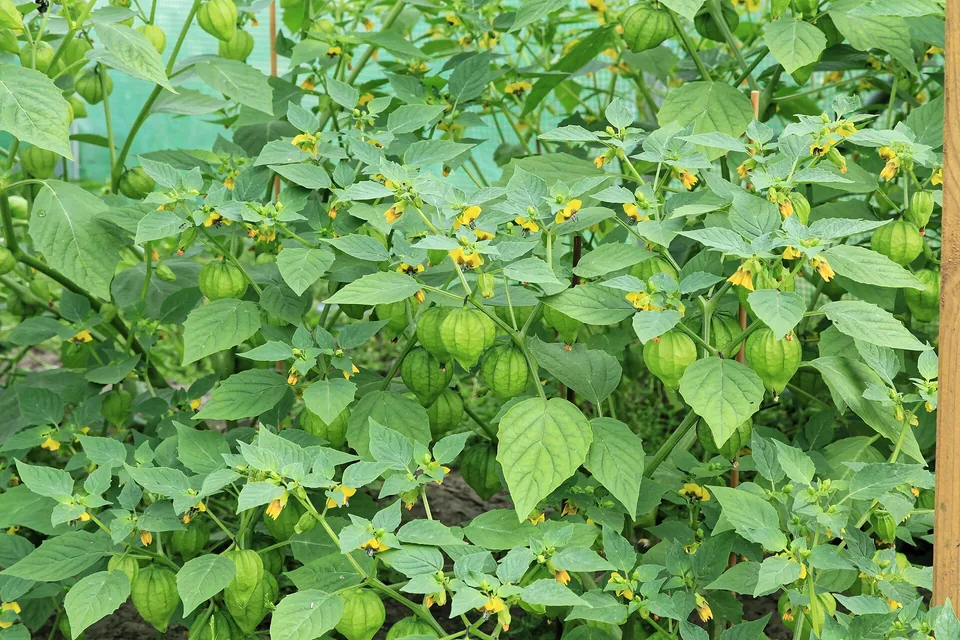


Cómo cultivar y cuidar Tomate verde
Physalis philadelphica
Escrito por Emilio Marruso · última revisión
Tóxica para: Personas · Por qué
De un vistazo
El tomatillo es un cultivo muy agradecido: plántalo a pleno sol cuando ya no haya riesgo de heladas y la tierra se haya templado, a finales de primavera. Dale 2,5–4 cm de agua a la semana y un buen acolchado. Cósechalo cuando el fruto llene su envoltura de papel y se suelte con facilidad; se come crudo, sin pelar ni quitar semillas.
- Sol
Sol pleno
Qué dicen las fuentes (2)
Luz: Pleno sol
Full sun (6 or more hours of direct sunlight a day)
— Physalis philadelphica (Husk Tomato, Jamberries, Mexican Green Tomato, Mexican Husk Tomato, Miltomates, Strawberry Tomato, Tomatillo) | North Carolina Extension Gardener Plant Toolbox [1] Like most vegetables, tomatillos need 8 hours of sun per day.
— Tomatillo: How to Grow It [4] - Riego
2,5–4 cm a la semana, mojando 15 cm de hondo; riega la tierra, no las hojas, y pon acolchado
Qué dicen las fuentes (5)
Riego: 1 a 1.5 pulgadas [2,5–3,8 cm] de agua por semana, humedeciendo toda la zona de raíces al menos 6 pulgadas [15 cm] de profundidad
Apply enough water at each application so that the whole root area is moistened – at least 6-inches deep. Water about 1 to 1.5 inches per week
— Tomatillo: How to Grow It [4] Tomatillos need about 1 to 1.5 inches of water per week to maximize production
— Tomatillos: Harvest and Storage [5] Notas sobre el riego: Relativamente tolerante a la sequía; el mantillo ayuda a mantener constante la humedad del suelo; evita el riego por aspersión desde arriba
ready for harvest about 60 to 75 days from transplanting. Tomatillos are relatively drought tolerant.
— Physalis philadelphica (Husk Tomato, Jamberries, Mexican Green Tomato, Mexican Husk Tomato, Miltomates, Strawberry Tomato, Tomatillo) | North Carolina Extension Gardener Plant Toolbox [1] a mulch can help keep the soil moisture levels consistent over time
— Tomatillo: How to Grow It [4] Avoid overhead sprinkling, as this can make plants more disease-prone.
— Tomatillo: How to Grow It [4] - Frío
Por debajo de 13 °C o por encima de 32 °C, las flores caen y no da frutos
- Distancia
91 cm entre plantas
Qué dicen las fuentes (1)
Distancia de plantación: 91 cm (3 pies) entre plantas
Tomatillos have a bushy habit and should be transplanted with 3 feet between plants.
— Tomatillo: How to Grow It [4] - Plantación
A finales de primavera, sin riesgo de heladas y con la tierra ya templada
Qué dicen las fuentes (2)
Plantación: Después de que pase todo peligro de heladas y el suelo se haya calentado (finales de primavera)
They are not frost-tolerant, so wait to transplant them until all danger of frost has passed and the soil has warmed
— Tomatillo: How to Grow It [4] as transplants after the threat of frost in the late spring
— Physalis philadelphica (Husk Tomato, Jamberries, Mexican Green Tomato, Mexican Husk Tomato, Miltomates, Strawberry Tomato, Tomatillo) | North Carolina Extension Gardener Plant Toolbox [1] - Abonado
Abono universal mezclado con la tierra; demasiado nitrógeno da hojas y no frutos
Qué dicen las fuentes (4)
Abonos minerales: Un fertilizante de jardín de uso general incorporado a los 10.2-15.2 cm [4–6 in] superiores del suelo
cuando un análisis del suelo indica que solo se necesita nitrógeno: In that case, a lawn fertilizer such as 26-0-0 (be sure it is not a “weed and feed” product, which also contains herbicide) can be used, at a rate of about ¼ pound (4 ounces) per 100 square feet.
— Tomatillo: How to Grow It [4] Any all-purpose garden fertilizer incorporated into the top 4 to 6 inches of soil should be enough to maximize production.
— Tomatillos: Harvest and Storage [5] Evitar: Exceso de nitrógeno y sobrefertilización, que producen hojas en lugar de flores y frutos
Beware that too much nitrogen can cause a plant to grow more leaves than flowers.
— Tomatillo: How to Grow It [4] Be careful not to over-fertilize, as this will cause an abundance of vegetative growth and no fruit production.
— Tomatillos: Harvest and Storage [5] - Cosecha
Cosecha cuando el fruto llene la envoltura y se suelte fácil; quítala y lávalo antes de comerlo
Qué dicen las fuentes (2)
Cómo cosechar: Corta el fruto de la planta con una podadora o tijeras, o gíralo y tira suavemente. El fruto está listo cuando llena completamente la cáscara y se desprende fácilmente de la planta al recogerlo.
Tomatillos can be harvested using a pruner or scissors and snipping the fruit from the plant, or by simply twisting the fruit and gently pulling.
— Tomatillos: Harvest and Storage [5] The fruit is ready to harvest when it completely fills the husk and easily falls off the plant when picked.
— Tomatillos: Harvest and Storage [5] - Plagas
Pulguillas, gusanos grises, gusanos del tomate, babosas y caracoles; también alternariosis y mildiu
Qué dicen las fuentes (4)
Plagas: escarabajo de la papa de tres líneas, pulgas de tierra, gusanos cortadores, gusanos del tomate, babosas, caracoles
Three-lined potato beetles are interesting, because they rarely do much damage or are considered a pest—unless you have a tomatillo plant!
— Tomatillo: How to Grow It [4] Other insects that can feed on tomatillo plants are flea beetles, cutworms, and tomato hornworms.
— Tomatillo: How to Grow It [4] Insects are not common tomatillo pests due to the papery sheath around the fruit, but keep the fruit off the ground to avoid slug and snail damage.
— Tomatillos: Harvest and Storage [5] Enfermedades: tizón temprano, antracnosis, tizón tardío, virus del mosaico del tabaco
Early blight, anthracnose, late blight, and tobacco mosaic virus can affect tomatillos.
— Tomatillo: How to Grow It [4] - Multiplicación
Se cultiva de semilla o con plantones
Qué dicen las fuentes (1)
Propagación: Semilla; trasplantes
Tomatillos are easily grown from seed, or you can purchase a transplant.
— Tomatillo: How to Grow It [4] - Maceta
Crece también en maceta
Qué dicen las fuentes (1)
En maceta: Sí
They do not do well in heavy, wet, clay soils so plant them in raised beds or containers if necessary.
— Physalis philadelphica (Husk Tomato, Jamberries, Mexican Green Tomato, Mexican Husk Tomato, Miltomates, Strawberry Tomato, Tomatillo) | North Carolina Extension Gardener Plant Toolbox [1] - Seguridad
Come solo el fruto maduro: el fruto verde, las hojas y los tallos son venenosos
Resumen
El tomatillo es una hortaliza similar al tomate de la familia de las solanáceas, originaria de México y América Central. [1] Se planta a pleno sol en suelo húmedo, rico y bien drenado después de la amenaza de heladas. [1] Se necesita más de una planta para una buena producción de frutos porque las plantas no son muy buenas para autopolinizarse. [1]
Citado en inglés, como en la fuente.
Cuidados
Las medidas entre corchetes son nuestra conversión al otro sistema de unidades; el texto citado no cambia.
Riego
Riego
1 a 1.5 pulgadas [2,5–3,8 cm] de agua por semana, humedeciendo toda la zona de raíces al menos 6 pulgadas [15 cm] de profundidad
Qué dicen las fuentes (2)
Apply enough water at each application so that the whole root area is moistened – at least 6-inches deep. Water about 1 to 1.5 inches per weekTomatillos need about 1 to 1.5 inches of water per week to maximize productionNotas sobre el riego
Relativamente tolerante a la sequía; el mantillo ayuda a mantener constante la humedad del suelo; evita el riego por aspersión desde arriba
Qué dicen las fuentes (3)
ready for harvest about 60 to 75 days from transplanting. Tomatillos are relatively drought tolerant.a mulch can help keep the soil moisture levels consistent over timeAvoid overhead sprinkling, as this can make plants more disease-prone.Luz
Pleno sol
Qué dicen las fuentes (2)
Full sun (6 or more hours of direct sunlight a day)Like most vegetables, tomatillos need 8 hours of sun per day.Dónde cultivarla
En maceta
Sí
Qué dicen las fuentes (1)
They do not do well in heavy, wet, clay soils so plant them in raised beds or containers if necessary.Distancia de plantación
91 cm (3 pies) entre plantas
Qué dicen las fuentes (1)
Tomatillos have a bushy habit and should be transplanted with 3 feet between plants.Propagación
Semilla; trasplantes
Qué dicen las fuentes (1)
Tomatillos are easily grown from seed, or you can purchase a transplant.Cultivo
La planta
Ciclo de vida
anual
Qué dicen las fuentes (1)
Tomatillos are an annual, warm-season crop with requirements similar to tomatoes, except that they tend to be more drought and heat tolerant.Familia
Solanáceas
Qué dicen las fuentes (1)
The tomatillo is a tomato-like vegetable in the Solanaceae (nightshade) family native to Meixco and Central America.Altura adulta
Siembra y crecimiento
Cosecha y conservación
Cómo cosechar
Corta el fruto de la planta con una podadora o tijeras, o gíralo y tira suavemente. El fruto está listo cuando llena completamente la cáscara y se desprende fácilmente de la planta al recogerlo.
Qué dicen las fuentes (2)
Tomatillos can be harvested using a pruner or scissors and snipping the fruit from the plant, or by simply twisting the fruit and gently pulling.The fruit is ready to harvest when it completely fills the husk and easily falls off the plant when picked.Conservación
Guárdalo en una bolsa de papel en el refrigerador con las cáscaras puestas durante 1 a 2 semanas (nunca en una bolsa hermética). Puedes congelarlo hasta 8 a 12 meses después de quitar las cáscaras y de lavar y secar el fruto.
Plagas y enfermedades
Plagas
escarabajo de la papa de tres líneas, pulgas de tierra, gusanos cortadores, gusanos del tomate, babosas, caracoles
Qué dicen las fuentes (3)
Three-lined potato beetles are interesting, because they rarely do much damage or are considered a pest—unless you have a tomatillo plant!Other insects that can feed on tomatillo plants are flea beetles, cutworms, and tomato hornworms.Insects are not common tomatillo pests due to the papery sheath around the fruit, but keep the fruit off the ground to avoid slug and snail damage.Enfermedades
tizón temprano, antracnosis, tizón tardío, virus del mosaico del tabaco
Qué dicen las fuentes (1)
Early blight, anthracnose, late blight, and tobacco mosaic virus can affect tomatillos.Abonado
Abonos minerales
Un fertilizante de jardín de uso general incorporado a los 10.2-15.2 cm [4–6 in] superiores del suelo
Lo que dice cada fuente
cuando un análisis del suelo indica que solo se necesita nitrógeno: Fertilizante de nitrógeno 26-0-0 (no un producto de herbicida y fertilizante) a 12.2 g/m²
Qué dicen las fuentes (2)
cuando un análisis del suelo indica que solo se necesita nitrógeno: In that case, a lawn fertilizer such as 26-0-0 (be sure it is not a “weed and feed” product, which also contains herbicide) can be used, at a rate of about ¼ pound (4 ounces) per 100 square feet.Any all-purpose garden fertilizer incorporated into the top 4 to 6 inches of soil should be enough to maximize production.Evitar
Exceso de nitrógeno y sobrefertilización, que producen hojas en lugar de flores y frutos
Signos de exceso
Abundancia de crecimiento frondoso con pocas flores y ningún fruto
Problemas
Escarabajo de tres líneas de la papa
Síntoma: Los escarabajos se alimentan de las plantas de tomatillo, dañando principalmente las hojas.
Qué hacer: Recoge a mano los adultos, las larvas y los grupos de huevos; rota los cultivos; instala una cubierta flotante para hileras al plantar.
Qué dicen las fuentes (2)
If you only have a few plants, the best management is to handpick adults (Figure 2), larvae, and egg clusters (Figure 3) and squish them, or drop into soapy water.
— Tomatillo: How to Grow It [4] Rotate crops. Do not plant nightshades where you planted nightshades last year.
— Tomatillo: How to Grow It [4] Enfermedades de la familia de las solanáceas
Síntoma: El tizón temprano, la antracnosis, el tizón tardío y el virus del mosaico del tabaco pueden afectar a los tomatillos.
Qué hacer: No se indica en la fuente.
Qué dicen las fuentes (1)
Early blight, anthracnose, late blight, and tobacco mosaic virus can affect tomatillos.
— Tomatillo: How to Grow It [4] Caída de flores por calor o frío
Síntoma: Temperaturas superiores a 90 grados Fahrenheit o inferiores a 55 grados Fahrenheit pueden causar la caída de las flores y que no produzcan fruto.
Qué hacer: No se indica en la fuente.
Qué dicen las fuentes (1)
Be aware that temperatures above 90 degrees Fahrenheit or below 55 degrees Fahrenheit can cause flowers to drop and not produce fruit.
— Tomatillo: How to Grow It [4]
Remedios
Cada remedio indica qué dicen las fuentes oficiales; los remedios tradicionales sin fuente oficial aparecen marcados. Los perjudiciales están para que sepas evitarlos.
Cuidar la planta
pulgones
chorro de agua fuerte No verificado
Remedio tradicional, no verificado por una fuente oficial.
Cómo: Elimínalos con un chorro fuerte de agua
spray de jabón insecticida Funciona
Cómo: Aplica aceite de neem o jabón insecticida a primera hora de la tarde.
Apply neem oil or insecticidal soap early in the evening
— harvesttotable.com [6] Qué dicen las pruebas insecticidal soap is a safe, effective organic insecticide with minimal environmental impact.
— extension.psu.edu [7] spray de aceite de neem Funciona en parte
Despite these being biological pesticides, it is important to read the directions on the label and wear safety equipment.
— extension.illinois.edu [9] Cómo: Aplica aceite de neem o jabón insecticida a primera hora de la tarde.
Apply neem oil or insecticidal soap early in the evening
— harvesttotable.com [6] Qué dicen las pruebas However, neem oil is not effective against every insect and disease, and often must be frequently reapplied to reach the desired outcome.
— extension.unh.edu [8]
escarabajos de la pulga
cultivo trampa de rábano No verificado
Remedio tradicional, no verificado por una fuente oficial.
Cómo: Planta rábanos cerca como cultivo trampa.
cobertura flotante de hileras No verificado
Remedio tradicional, no verificado por una fuente oficial.
Cómo: Usa cubiertas flotantes de hileras para proteger las plantas jóvenes.
tierra de diatomeas No verificado
Remedio tradicional, no verificado por una fuente oficial.
Cómo: Aplica tierra de diatomeas.
gusanos del tomate
recogida a mano a primera hora de la mañana Funciona
Cómo: Recoge a mano a primera hora de la mañana.
Handpick in early morning (my most effective method)
— harvesttotable.com [6] Qué dicen las pruebas Many insect and disease issues can be solved in the home garden by hand-picking insects or clipping and disposing of diseased plant parts.
— extension.unh.edu [8] siembra complementaria con borraja y rábanos daikon No verificado
Remedio tradicional, no verificado por una fuente oficial.
Cómo: Los gusanos del tomate se pueden disuadir cultivando tomatillos con plantas complementarias como borraja y rábanos daikon. Las infestaciones establecidas se manejan mejor con la recolección manual.
moscas blancas
trampas amarillas pegajosas No verificado
Remedio tradicional, no verificado por una fuente oficial.
Cómo: Trampas adhesivas amarillas
chorro de agua fuerte No verificado
Remedio tradicional, no verificado por una fuente oficial.
Cómo: Chorro de agua fuerte para desbaratar las colonias.
gusanos cortadores
collares de cartón o papel de aluminio No verificado
Remedio tradicional, no verificado por una fuente oficial.
Cómo: Usa collares de cartón o papel de aluminio alrededor de las plántulas
escarabajo de la papa de tres líneas
Recoge a mano y usa agua jabonosa Funciona
Cómo: Si solo tienes unas pocas plantas, recoge a mano los adultos, las larvas y los grupos de huevos y aplástalos, o sumérgelos en agua jabonosa. Revisa tus plantas con regularidad.
If you only have a few plants, the best management is to handpick adults (Figure 2), larvae, and egg clusters (Figure 3) and squish them, or drop into soapy water.
— Tomatillo: How to Grow It [4] Qué dicen las pruebas If you only have a few plants, the best management is to handpick adults (Figure 2), larvae, and egg clusters (Figure 3) and squish them, or drop into soapy water.
— Tomatillo: How to Grow It [4] cobertura flotante de fila al plantar Fuente oficial, sin prueba independiente
Cómo: Instala una cobertura flotante de fila en el momento de la siembra y rota los cultivos para que las solanáceas no se planten donde crecieron solanáceas el año pasado.
Install a floating row cover at the time of planting.
— Tomatillo: How to Grow It [4]
mildiu polvoriento
spray de aceite de neem Funciona en parte
Despite these being biological pesticides, it is important to read the directions on the label and wear safety equipment.
— extension.illinois.edu [9] Cómo: Rocía con aceite de neem cada 7–10 días
Spray with neem oil every 7–10 days
— harvesttotable.com [6] Qué dicen las pruebas However, neem oil is not effective against every insect and disease, and often must be frequently reapplied to reach the desired outcome.
— extension.unh.edu [8] rociado con leche No verificado
Remedio tradicional, no verificado por una fuente oficial.
Mixing household products to make homemade pesticides can also be dangerous.
— pubs.ext.vt.edu [10] Cómo: Aplica un rocío de leche (dilución 1:10) en casos leves
rociado con bicarbonato de sodio No verificado
Remedio tradicional, no verificado por una fuente oficial.
Mixing household products to make homemade pesticides can also be dangerous.
— pubs.ext.vt.edu [10] Cómo: Mezcla 1 cucharada de bicarbonato de sodio con un galón de agua y añade unas gotas de jabón líquido. Rocía esta solución sobre las hojas cada semana.
enfermedades fúngicas
rociado de bicarbonato de sodio y aceite vegetal No verificado
Remedio tradicional, no verificado por una fuente oficial.
Mixing household products to make homemade pesticides can also be dangerous.
— pubs.ext.vt.edu [10] Cómo: Mezcla una cucharada de bicarbonato de sodio con 2.5 cucharadas de aceite vegetal y un galón de agua. Rocía sobre las plantas afectadas cada 7-10 días para ayudar a controlar las enfermedades fúngicas.
tizón temprano
Poda y desecha las partes enfermas de la planta. Funciona
Cómo: Rota los cultivos, aplica mantillo para reducir las salpicaduras de agua, y poda y destruye el follaje afectado; así puedes manejar este problema de forma natural.
Rotating crops, installing mulch to reduce water splashing, and pruning and destroying affected foliage can help you manage this problem naturally.
— almanac.com [11] Qué dicen las pruebas Many insect and disease issues can be solved in the home garden by hand-picking insects or clipping and disposing of diseased plant parts.
— extension.unh.edu [8] rotación de cultivos y mantillo No verificado
Remedio tradicional, no verificado por una fuente oficial.
Cómo: Rota los cultivos, aplica mantillo para reducir las salpicaduras de agua, y poda y destruye el follaje afectado; así puedes manejar este problema de forma natural.
Toxicidad
Según la fuente, citada textualmente. No es un consejo médico ni veterinario: si una persona o un animal pudo haber ingerido esta planta, contacta con un centro de toxicología o con un veterinario.
All parts are toxic except the ripe fruits. Headache, stomach pain, lowered temperature, dilated pupils, vomiting, diarrhea, circulatory and respiratory depression, loss of sensation; may be fatal.
[1]- Partes venenosas
Poison Part: Flowers Fruits Leaves Stems
[1]- Principio tóxico
Poison Toxic Principle: Solanine and other solanidine alkaloids.
[1]- Síntomas
Headache, stomach pain, lowered temperature, dilated pupils, vomiting, diarrhea, circulatory and respiratory depression, loss of sensation; may be fatal.
[1]- Gravedad
Poison Severity: High
[1]
only eat ripe fruits that fall to the ground in their papery husks. Unripe fruits and other plant parts are poisonous and should not be eaten.
[4]
Calendario
Siembra
Las fuentes dan valores distintos según la región, la zona o las condiciones de cultivo.
Lo que dice cada fuente
Según SDSU Extension (Tomatillo: How to Grow It): Comienza en interiores 4 a 5 semanas antes del trasplante
Según SDSU Extension (Tomatillos: Harvest and Storage): Comienza en interiores 6 a 8 semanas antes del trasplante
Qué dicen las fuentes (2)
Según SDSU Extension (Tomatillo: How to Grow It): If starting indoors, plant them 4 to 5 weeks before transplanting (a week or 2 later than tomatoes).Según SDSU Extension (Tomatillos: Harvest and Storage): Tomatillos should be started indoors 6 to 8 weeks before transplantingPlantación
Después de que pase todo peligro de heladas y el suelo se haya calentado (finales de primavera)
Qué dicen las fuentes (2)
They are not frost-tolerant, so wait to transplant them until all danger of frost has passed and the soil has warmedas transplants after the threat of frost in the late springCosecha
Las fuentes dan valores distintos según la región, la zona o las condiciones de cultivo.
Lo que dice cada fuente
Según NC State Extension: Alrededor de 60 a 75 días desde el trasplante
Según SDSU Extension (Tomatillo: How to Grow It): 65 a 100 días después del trasplante
Según SDSU Extension (Tomatillos: Harvest and Storage): 75 a 100 días después del trasplante
Qué dicen las fuentes (3)
Según NC State Extension: they will be ready for harvest about 60 to 75 days from transplantingSegún SDSU Extension (Tomatillo: How to Grow It): Tomatillos will be ready to harvest 65 to 100 days after transplanting.Según SDSU Extension (Tomatillos: Harvest and Storage): Tomatillos will be ready to harvest 75 to 100 days after transplanting.Meses tal como los dan las fuentes, en su mayoría de Estados Unidos (hemisferio norte). En el hemisferio sur se desplazan unos seis meses.
Respecto a las heladas
Estimación menos precisa: no hay ninguna estación meteorológica a menos de 300 km.
Busca las fechas de heladas por código postal o ciudad
Trasplante: hacia la última helada
They are not frost-tolerant, so wait to transplant them until all danger of frost has passed and the soil has warmed (Figure 1).
— Tomatillo: How to Grow It [4]
Cuenta desde las fechas medias de las heladas de tu zona.
Comestibilidad
Según la fuente, citada textualmente. No comas una planta basándote solo en esta página: los errores de identificación pueden ser peligrosos.
Plantas similares
- Clammy Ground Cherry Physalis heterophylla
- Uchuva Physalis peruviana
- Bufera Withania somnifera
- Belladona Atropa belladonna
- Dulcamara Solanum dulcamara
- Alquequenje Alkekengi officinarum
- Brazilian nightshade Solanum seaforthianum
- Brunfelsia Brunfelsia pauciflora
Fuentes
Cada valor anterior se cita de estos documentos. Los enlaces llevan al editor original.
- Physalis philadelphica (Husk Tomato, Jamberries, Mexican Green Tomato, Mexican Husk Tomato, Miltomates, Strawberry Tomato, Tomatillo) | North Carolina Extension Gardener Plant Toolbox · plants.ces.ncsu.edu, consultado
- Tomatillo - Physalis philadelphica | North Carolina Extension Gardener Plant Toolbox · plants.ces.ncsu.edu, consultado
- Miltomates - Physalis philadelphica | North Carolina Extension Gardener Plant Toolbox · plants.ces.ncsu.edu, consultado
- Tomatillo: How to Grow It · extension.sdstate.edu, consultado
- Tomatillos: Harvest and Storage · extension.sdstate.edu, consultado
- harvesttotable.com · harvesttotable.com
- extension.psu.edu · extension.psu.edu
- extension.unh.edu · extension.unh.edu
- extension.illinois.edu · extension.illinois.edu
- pubs.ext.vt.edu · pubs.ext.vt.edu
- almanac.com · almanac.com
Escrito por Emilio Marruso · última revisión