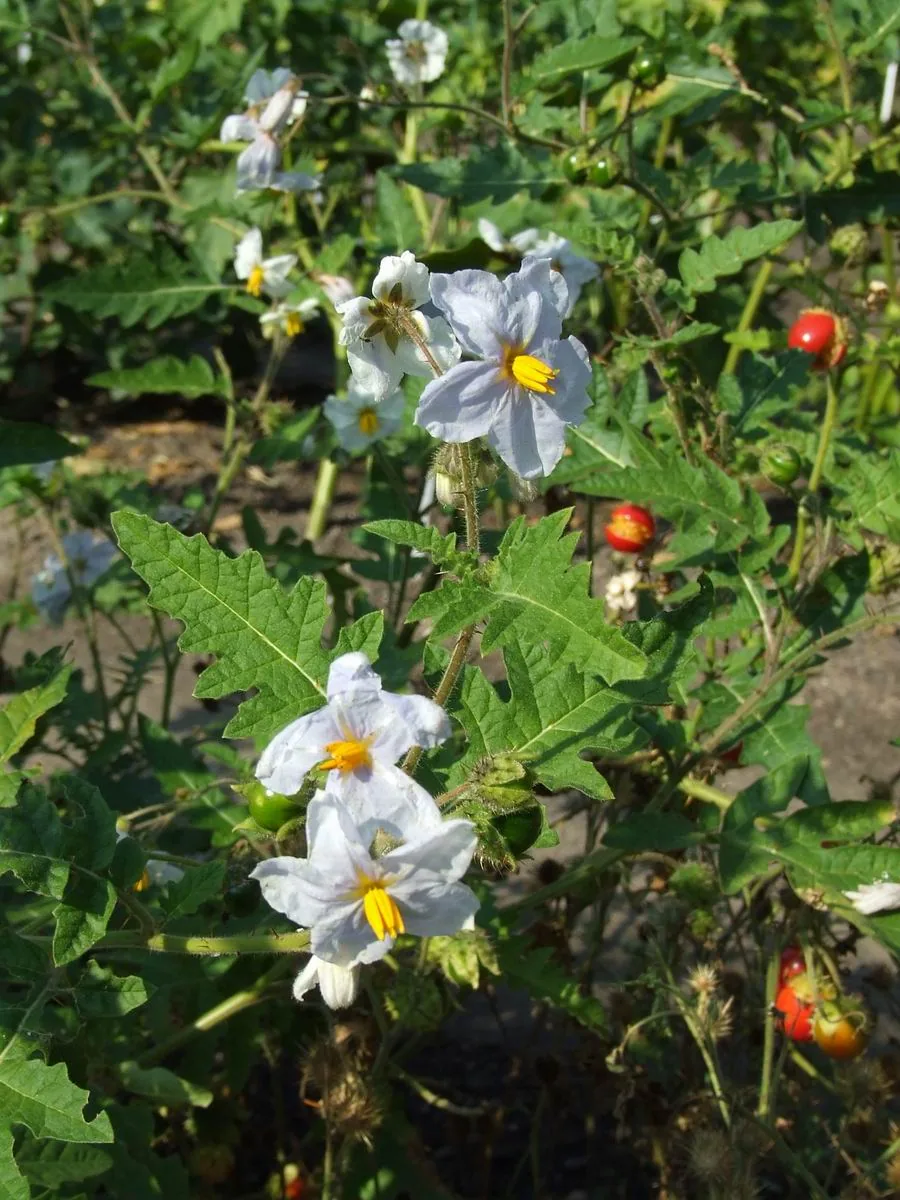
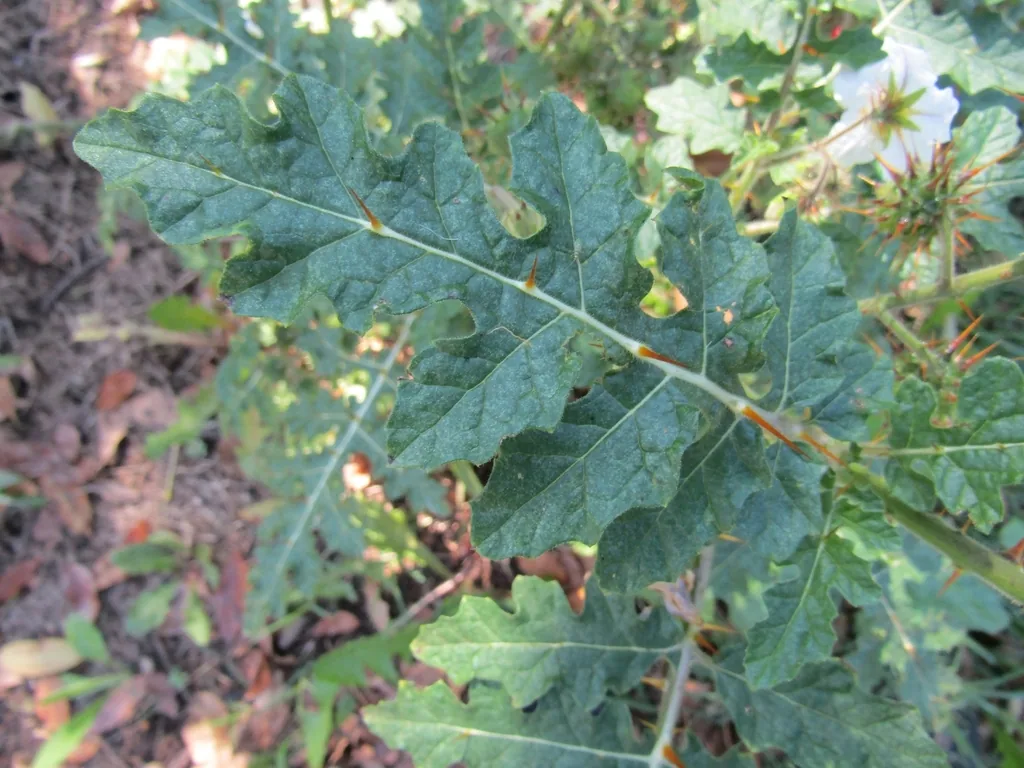

Cómo cultivar y cuidar Sticky nightshade
Solanum sisymbriifolium
Escrito por Emilio Marruso · última revisión
Tóxica para: Ganado vacuno, Ganado · Por qué
De un vistazo
El tomate litchi es pariente del tomate, se conforma con sol pleno o semisombra y adora la tierra húmeda. Siembra en interior 6–8 semanas antes de la última helada y trasplanta cuando hayan pasado las heladas. A partir de 90 días después podrás recoger frutos para tartas, ensaladas, salsas y conservas, y una hilera de plantas puede incluso servirte de barrera.
- Sol
Sol pleno o semisombra
Qué dicen las fuentes (2)
Luz: Pleno sol a semisombra
Sticky nightshade grows in full sun and semi shade. It can grow in a wide variety of soil types and environments
— NSW WeedWise [1] These thorny tomato plants have little cold tolerance and thrive in hot, sunny locations.
— Learn About Growing Litchi Tomatoes | Gardening Know How [5] - Riego
Le gusta la tierra húmeda; no dejes nunca que las plántulas se sequen
Qué dicen las fuentes (2)
Notas sobre el riego: Mantén las plántulas moderadamente húmedas hasta la germinación y luego ligeramente más húmedas; nunca dejes que las plántulas se sequen. Crece mejor en suelo húmedo.
Keep soil moderately moist until germination, then increase moisture levels slightly for seedlings and never let them dry out.
— Learn About Growing Litchi Tomatoes | Gardening Know How [5] It can grow in a wide variety of soil types and environments but grows best in moist soil conditions.
— NSW WeedWise [1] - Frío
Trasplanta solo cuando hayan pasado las últimas heladas
Qué dicen las fuentes (1)
Plantación: Después de las últimas heladas esperadas
prick the seedlings out into individual pots and plant them out after the last expected frosts.
— Solanum sisymbriifolium - Useful Temperate Plants [4] - Distancia
91 cm entre plantas
Qué dicen las fuentes (1)
Distancia de plantación: 91.4 cm (3 pies)
Transplant them out at least 3 feet (1 m.) apart in well-drained soil in a sunny, protected area of the garden.
— Learn About Growing Litchi Tomatoes | Gardening Know How [5] - Cosecha
Cosecha a partir de 90 días tras el trasplante; usa los frutos en tartas, ensaladas, salsas y conservas
Qué dicen las fuentes (1)
Cosecha: A partir de 90 días después del trasplante.
The plant isn't ready to produce until 90 days after transplant, so start it early enough for your zone.
— Learn About Growing Litchi Tomatoes | Gardening Know How [5] - Plagas
Las mismas plagas que el tomate, como el escarabajo de la patata y el gusano del tomate: vigílala igual
- Atención
Se resiembra y se extiende con pájaros, agua y tierra; retira los frutos que sobren
- Multiplicación
Por semilla o con trozos de raíz
Qué dicen las fuentes (2)
Propagación: Semilla; fragmentos de raíz o rizoma.
Seed - sow early spring in a warm greenhouse. When they are large enough to handle, prick the seedlings out into individual pots
— Solanum sisymbriifolium - Useful Temperate Plants [4] Sticky nightshade can grow from root or rhizome fragments. Branches develop roots where they touch moist soil.
— NSW WeedWise [1] - Siembra
Siembra en interior a principios de primavera, 6–8 semanas antes de la última helada
Qué dicen las fuentes (4)
Siembra: A principios de primavera, en interiores o en un invernadero cálido, de 6 a 8 semanas antes de la última helada.
Según Gardening Know How: Litchi tomatoes are best started indoors six to eight weeks before the last frost. They require a long growing season and soil temperatures at least 60 degrees F. (16 C.).
— Learn About Growing Litchi Tomatoes | Gardening Know How [5] Según Useful Temperate Plants (Ken Fern): Seed - sow early spring in a warm greenhouse. When they are large enough to handle, prick the seedlings out into individual pots
— Solanum sisymbriifolium - Useful Temperate Plants [4] Litchi tomatoes are best started indoors six to eight weeks before the last frost. They require a long growing season and soil temperatures at least 60 degrees F. (16 C.).
— Learn About Growing Litchi Tomatoes | Gardening Know How [5] Seed - sow early spring in a warm greenhouse. When they are large enough to handle, prick the seedlings out into individual pots
— Solanum sisymbriifolium - Useful Temperate Plants [4] - Seguridad
Hojas y tallos son tóxicos para los animales; se sospecha que ha matado ganado
Resumen
El tomate de litchi o solanáceo pegajoso es una solanácea sudamericana espinosa, anual o perenne de vida corta, considerada maleza invasora en varias regiones. [1] Su fruto rojo se come, y la planta también se cultiva como cultivo trampa contra los nematodos del quiste de la papa. [4][5] No es muy resistente al frío y se cultiva como anual sembrada en primavera en regiones templadas. [4]
Citado en inglés, como en la fuente.
Esta ficha está incompleta: las fuentes consultadas aún no cubren todos los campos.
Aún no cubierto por nuestras fuentes: Rusticidad, zona más fría, Rusticidad, zona más cálida
Cuidados
Riego
Mantén las plántulas moderadamente húmedas hasta la germinación y luego ligeramente más húmedas; nunca dejes que las plántulas se sequen. Crece mejor en suelo húmedo.
Qué dicen las fuentes (2)
Keep soil moderately moist until germination, then increase moisture levels slightly for seedlings and never let them dry out.It can grow in a wide variety of soil types and environments but grows best in moist soil conditions.Luz
Pleno sol a semisombra
Qué dicen las fuentes (2)
Sticky nightshade grows in full sun and semi shade. It can grow in a wide variety of soil types and environmentsThese thorny tomato plants have little cold tolerance and thrive in hot, sunny locations.Clima y frío
Rusticidad, zona más fría
No figura en las fuentes consultadas.
Rusticidad, zona más cálida
No figura en las fuentes consultadas.
Dónde cultivarla
91.4 cm (3 pies)
Qué dicen las fuentes (1)
Transplant them out at least 3 feet (1 m.) apart in well-drained soil in a sunny, protected area of the garden.Propagación
Semilla; fragmentos de raíz o rizoma.
Qué dicen las fuentes (2)
Seed - sow early spring in a warm greenhouse. When they are large enough to handle, prick the seedlings out into individual potsSticky nightshade can grow from root or rhizome fragments. Branches develop roots where they touch moist soil.Cultivo
La planta
Familia
Solanáceas
Qué dicen las fuentes (1)
Weed Risk Assessment for Solanum sisymbriifolium Lam. (Solanaceae) – Sticky nightshade Solanum sisymbriifolium leaves and fruitProblemas
Plagas del tomate.
Síntoma: Las mismas plagas y enfermedades que el tomate, como el escarabajo de la patata y el gusano del tomate.
Qué hacer: Supervisa las plantas como lo harías con los tomates.
Qué dicen las fuentes (1)
Watch for similar pests and diseases that afflict tomato plants, such as potato beetles and tomato worms .
— Learn About Growing Litchi Tomatoes | Gardening Know How [5] Auto-siembra y propagación
Síntoma: Las plantas se resiembran y pueden pasar el invierno en zonas cálidas; las semillas se dispersan por pájaros, agua y suelo
Qué hacer: Guarda semillas y replanta cada año; retira los frutos para evitar añadir al banco de semillas del suelo
Qué dicen las fuentes (2)
In warm zones, the plant will tend to reseed itself and may even overwinter, but gets a woody stem and even thicker thorns.
— Learn About Growing Litchi Tomatoes | Gardening Know How [5] Spraying will kill the plant but not the viable seeds. Remove the fruit from each plant and dispose of appropriately to avoid adding to the seed bank in the soil.
— NSW WeedWise [1]
Remedios
Cada remedio indica qué dicen las fuentes oficiales; los remedios tradicionales sin fuente oficial aparecen marcados. Los perjudiciales están para que sepas evitarlos.
Cómo eliminarla
hierba mora pegajosa
Excavación de plantas pequeñas con todas las raíces Fuente oficial, sin prueba independiente
Wear appropriate protective clothing, boots and gloves to avoid injury from the prickles.
— NSW WeedWise [1] Cómo: Corta o arranca las plantas pequeñas y retira todas las raíces, usando ropa protectora, botas y guantes contra las espinas.
Chip or dig out small plants and remove all of the roots.
— NSW WeedWise [1] Eliminación de los frutos Fuente oficial, sin prueba independiente
Cómo: Retira los frutos de cada planta y deséchalos adecuadamente para que no aumenten el banco de semillas del suelo.
Remove the fruit from each plant and dispose of appropriately to avoid adding to the seed bank in the soil.
— NSW WeedWise [1] Labranza antes de la producción de frutos Fuente oficial, sin prueba independiente
Cómo: Donde se cultiva como cultivo trampa para nematodos, cosecha o labra las plantas antes de que produzcan frutos.
To reduce the risk of naturalization where they are grown as nematode trap crops, growers should harvest or till plants prior to fruit production.
— United States [3] segado No demostrado
Cómo: Se desaconseja el segado: propaga la maleza y deja bayas que crecen por debajo de la altura de corte.
Avoid slashing as it can spread the weed. Slashing does not control it because the berries can grow close to the ground below the slash height.
— NSW WeedWise [1] Qué dicen las pruebas Avoid slashing as it can spread the weed. Slashing does not control it because the berries can grow close to the ground below the slash height.
— NSW WeedWise [1] cultivo de suelo infestado Perjudicial
Cómo: Se desaconseja cultivar áreas infestadas porque traslada fragmentos de raíces a zonas limpias; si es inevitable, limpia todos los fragmentos de plantas y la tierra de la maquinaria.
Avoid cultivating infested areas as it will move root pieces to clean areas.
— NSW WeedWise [1] Qué dicen las pruebas Avoid cultivating infested areas as it will move root pieces to clean areas. If it is unavoidable, remove all plant fragments and soil from cultivation machinery
— NSW WeedWise [1]
Venenosa para los animales
Según la fuente, citada textualmente. No es un consejo médico ni veterinario: si una persona o un animal pudo haber ingerido esta planta, contacta con un centro de toxicología o con un veterinario.
Sticky nightshade contains steroidal glycoalkaloids toxins. It is suspected to have caused cattle deaths in the Greater Sydney Region.
[1]- Principio tóxico
Sticky nightshade contains steroidal glycoalkaloids toxins. It is suspected to have caused cattle deaths in the Greater Sydney Region.
[1]
While the vegetative parts of this plant are toxic, it is not clear that they would be consumed by animals, so answering "unknown."
[3]- Partes venenosas
While the vegetative parts of this plant are toxic, it is not clear that they would be consumed by animals, so answering "unknown."
[3]
Calendario
Siembra
A principios de primavera, en interiores o en un invernadero cálido, de 6 a 8 semanas antes de la última helada.
Lo que dice cada fuente
Según Gardening Know How: En interiores, de 6 a 8 semanas antes de la última helada.
Según Useful Temperate Plants (Ken Fern): A principios de primavera en un invernadero cálido.
Qué dicen las fuentes (4)
Según Gardening Know How: Litchi tomatoes are best started indoors six to eight weeks before the last frost. They require a long growing season and soil temperatures at least 60 degrees F. (16 C.).Según Useful Temperate Plants (Ken Fern): Seed - sow early spring in a warm greenhouse. When they are large enough to handle, prick the seedlings out into individual potsLitchi tomatoes are best started indoors six to eight weeks before the last frost. They require a long growing season and soil temperatures at least 60 degrees F. (16 C.).Seed - sow early spring in a warm greenhouse. When they are large enough to handle, prick the seedlings out into individual potsPlantación
Después de las últimas heladas esperadas
Qué dicen las fuentes (1)
prick the seedlings out into individual pots and plant them out after the last expected frosts.Cosecha
A partir de 90 días después del trasplante.
Qué dicen las fuentes (1)
The plant isn't ready to produce until 90 days after transplant, so start it early enough for your zone.Meses tal como los dan las fuentes, en su mayoría de Estados Unidos (hemisferio norte). En el hemisferio sur se desplazan unos seis meses.
Comestibilidad
Según la fuente, citada textualmente. No comas una planta basándote solo en esta página: los errores de identificación pueden ser peligrosos.
Try growing litchi tomatoes as a barrier and use the fruits in pies, salads, sauces, and preserves.
[5]
Plantas similares
- Dulcamara Solanum dulcamara
- Brazilian nightshade Solanum seaforthianum
- Berenjena Solanum melongena
- Patata Solanum tuberosum
- Tomate Solanum lycopersicum
- Manzana de sodoma Solanum mammosum
- Natre Solanum crispum
- Bufera Withania somnifera
Fuentes
Cada valor anterior se cita de estos documentos. Los enlaces llevan al editor original.
- NSW WeedWise · weeds.dpi.nsw.gov.au, consultado
- GISD · iucngisd.org, consultado
- United States · aphis.usda.gov, consultado
- Solanum sisymbriifolium - Useful Temperate Plants · temperate.theferns.info, consultado
- Learn About Growing Litchi Tomatoes | Gardening Know How · gardeningknowhow.com, consultado
- Establishing propagation protocols and assessing weed risk of litchi tomato, Solanum sisymbriifolium - SARE Grant Management System · projects.sare.org, consultado
- Mid-Western Regional Council, weeds fact sheet: sticky nightshade · midwestern.nsw.gov.au, consultado
Escrito por Emilio Marruso · última revisión