
How to Grow and Care for Sticky nightshade
Solanum sisymbriifolium
Written by Emilio Marruso · last checked
Toxic to: Cattle, Livestock · Why
At a glance
Litchi tomato is a tomato relative that is happy in full sun or partial shade and loves moist soil. Start the seeds indoors 6–8 weeks before the last frost and plant out once the frosts are over. From 90 days later, you can pick fruit for pies, salads, sauces and preserves, and a row of plants can even work as a barrier.
- Sun
Full sun to partial shade
What the sources say (2)
Light: Full sun to semi-shade
Sticky nightshade grows in full sun and semi shade. It can grow in a wide variety of soil types and environments
— NSW WeedWise [1] These thorny tomato plants have little cold tolerance and thrive in hot, sunny locations.
— Learn About Growing Litchi Tomatoes | Gardening Know How [5] - Water
Likes moist soil; never let the seedlings dry out
What the sources say (2)
Watering notes: Keep seedlings moderately moist until germination, then slightly moister; never let seedlings dry out. Grows best in moist soil.
Keep soil moderately moist until germination, then increase moisture levels slightly for seedlings and never let them dry out.
— Learn About Growing Litchi Tomatoes | Gardening Know How [5] It can grow in a wide variety of soil types and environments but grows best in moist soil conditions.
— NSW WeedWise [1] - Cold
Plant out only after the last frosts
What the sources say (1)
Planting: After the last expected frosts
prick the seedlings out into individual pots and plant them out after the last expected frosts.
— Solanum sisymbriifolium - Useful Temperate Plants [4] - Spacing
3 ft between plants
What the sources say (1)
Spacing: 91.4 cm (3 ft)
Transplant them out at least 3 feet (1 m.) apart in well-drained soil in a sunny, protected area of the garden.
— Learn About Growing Litchi Tomatoes | Gardening Know How [5] - Harvest
Pick from 90 days after transplanting; use the fruit in pies, salads, sauces and preserves
What the sources say (1)
Harvest: From 90 days after transplanting
The plant isn't ready to produce until 90 days after transplant, so start it early enough for your zone.
— Learn About Growing Litchi Tomatoes | Gardening Know How [5] - Pests
Same pests as tomatoes, like potato beetles and hornworms: check it as you would tomatoes
- Watch out
It reseeds and spreads with birds, water and soil; remove leftover fruit
- Propagation
From seed or from pieces of root
What the sources say (2)
Propagation: Seed; root or rhizome fragments
Seed - sow early spring in a warm greenhouse. When they are large enough to handle, prick the seedlings out into individual pots
— Solanum sisymbriifolium - Useful Temperate Plants [4] Sticky nightshade can grow from root or rhizome fragments. Branches develop roots where they touch moist soil.
— NSW WeedWise [1] - Sowing
Sow indoors in early spring, 6–8 weeks before the last frost
What the sources say (4)
Sowing: Early spring, indoors or in a warm greenhouse, 6-8 weeks before the last frost
According to Gardening Know How: Litchi tomatoes are best started indoors six to eight weeks before the last frost. They require a long growing season and soil temperatures at least 60 degrees F. (16 C.).
— Learn About Growing Litchi Tomatoes | Gardening Know How [5] According to Useful Temperate Plants (Ken Fern): Seed - sow early spring in a warm greenhouse. When they are large enough to handle, prick the seedlings out into individual pots
— Solanum sisymbriifolium - Useful Temperate Plants [4] Litchi tomatoes are best started indoors six to eight weeks before the last frost. They require a long growing season and soil temperatures at least 60 degrees F. (16 C.).
— Learn About Growing Litchi Tomatoes | Gardening Know How [5] Seed - sow early spring in a warm greenhouse. When they are large enough to handle, prick the seedlings out into individual pots
— Solanum sisymbriifolium - Useful Temperate Plants [4] - Safety
Leaves and stems are toxic to animals; it is suspected of killing cattle
Overview
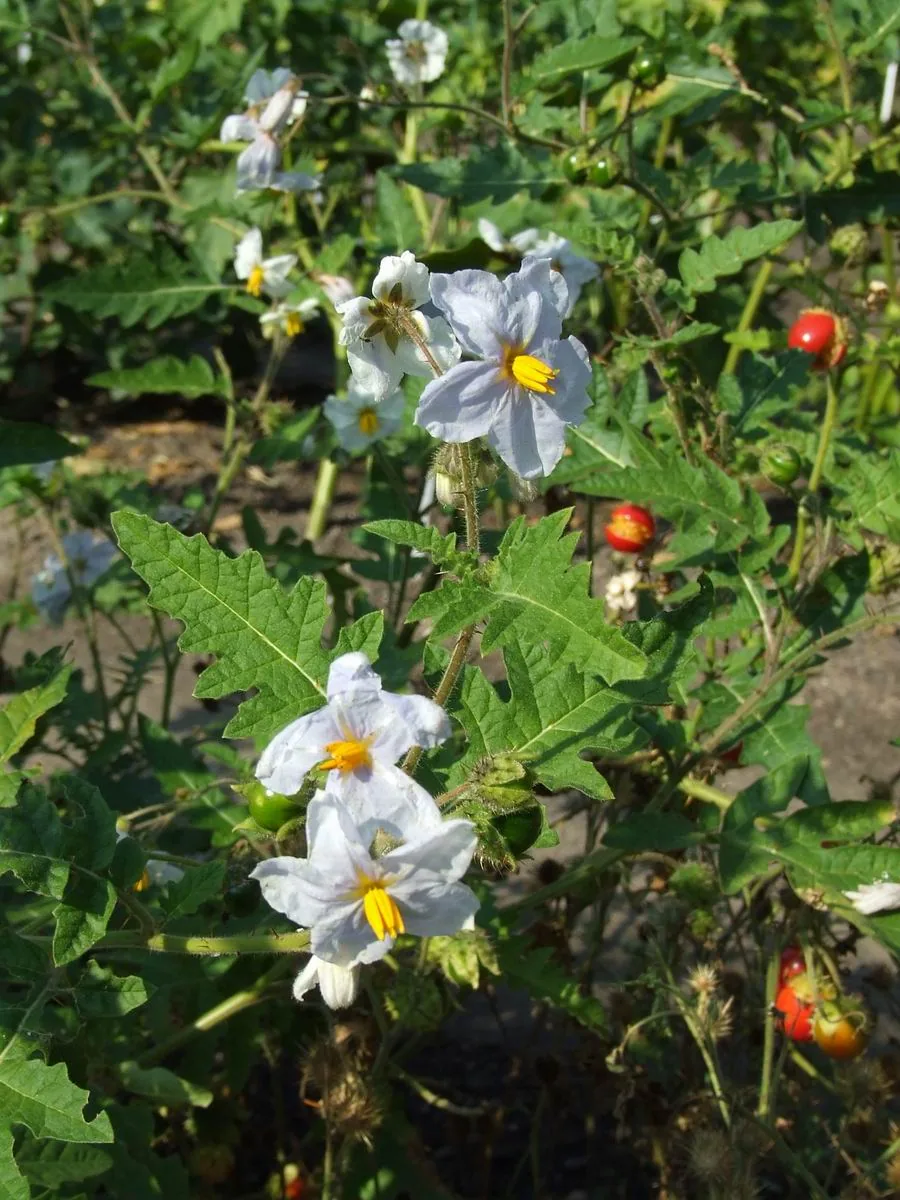
Sticky nightshade or litchi tomato is a prickly South American nightshade, annual or short-lived perennial, regarded as an invasive weed in several regions. [1] Its red fruit is eaten, and the plant is also grown as a trap crop against potato cyst nematodes. [4][5] It is not very cold-hardy and is grown as a spring-sown annual in temperate regions. [4]
This record is incomplete: the sources we read do not cover every field yet.
Not yet covered by our sources: Hardiness, coldest zone, Hardiness, warmest zone
Sticky nightshade care
How to water Sticky nightshade
Keep seedlings moderately moist until germination, then slightly moister; never let seedlings dry out. Grows best in moist soil.
What the sources say (2)
Keep soil moderately moist until germination, then increase moisture levels slightly for seedlings and never let them dry out.It can grow in a wide variety of soil types and environments but grows best in moist soil conditions.How much light Sticky nightshade needs
Full sun to semi-shade
What the sources say (2)
Sticky nightshade grows in full sun and semi shade. It can grow in a wide variety of soil types and environmentsThese thorny tomato plants have little cold tolerance and thrive in hot, sunny locations.How much cold Sticky nightshade can take
Hardiness, coldest zone
Not stated in the sources we read.
Hardiness, warmest zone
Not stated in the sources we read.
Where to grow Sticky nightshade
91.4 cm (3 ft)
What the sources say (1)
Transplant them out at least 3 feet (1 m.) apart in well-drained soil in a sunny, protected area of the garden.How to propagate Sticky nightshade
Seed; root or rhizome fragments
What the sources say (2)
Seed - sow early spring in a warm greenhouse. When they are large enough to handle, prick the seedlings out into individual potsSticky nightshade can grow from root or rhizome fragments. Branches develop roots where they touch moist soil.How to grow Sticky nightshade
The plant
Family
Solanaceae
What the sources say (1)
Weed Risk Assessment for Solanum sisymbriifolium Lam. (Solanaceae) – Sticky nightshade Solanum sisymbriifolium leaves and fruitSticky nightshade pests and problems
Tomato pests
Symptom: Same pests and diseases as tomato, such as potato beetles and tomato worms
What to do: Monitor plants as for tomatoes
What the sources say (1)
Watch for similar pests and diseases that afflict tomato plants, such as potato beetles and tomato worms .
— Learn About Growing Litchi Tomatoes | Gardening Know How [5] Self-seeding and spread
Symptom: Plants reseed and may overwinter in warm zones; seeds are spread by birds, water and soil
What to do: Save seed and replant annually; remove fruit to avoid adding to the soil seed bank
What the sources say (2)
In warm zones, the plant will tend to reseed itself and may even overwinter, but gets a woody stem and even thicker thorns.
— Learn About Growing Litchi Tomatoes | Gardening Know How [5] Spraying will kill the plant but not the viable seeds. Remove the fruit from each plant and dispose of appropriately to avoid adding to the seed bank in the soil.
— NSW WeedWise [1]
Remedies
Each remedy shows what official sources say about it; traditional remedies without an official source are marked as such. Harmful ones are listed so you know to avoid them.
Getting rid of it
sticky nightshade
digging out small plants with all roots Official source, not independently tested
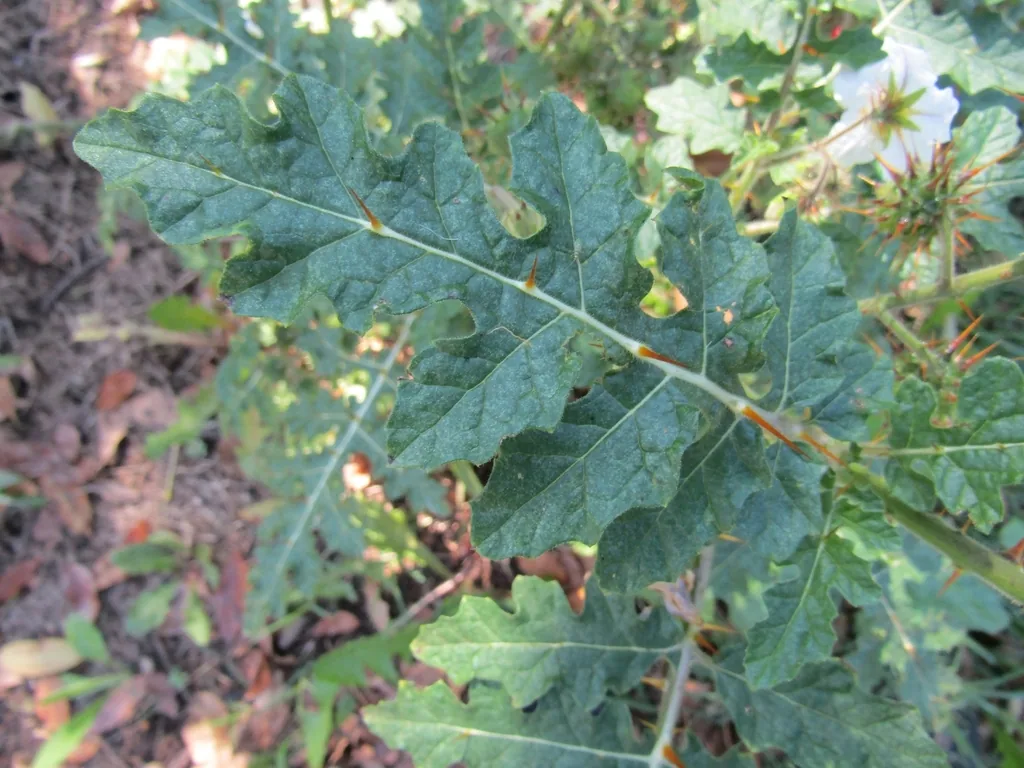
Wear appropriate protective clothing, boots and gloves to avoid injury from the prickles.
— NSW WeedWise [1] How: Chip or dig out small plants and remove all of the roots, wearing protective clothing, boots and gloves against the prickles.
Chip or dig out small plants and remove all of the roots.
— NSW WeedWise [1] removing the fruit Official source, not independently tested
How: Remove the fruit from each plant and dispose of it appropriately so it does not add to the seed bank in the soil.
Remove the fruit from each plant and dispose of appropriately to avoid adding to the seed bank in the soil.
— NSW WeedWise [1] tilling before fruit production Official source, not independently tested
How: Where it is grown as a nematode trap crop, harvest or till the plants before they produce fruit.
To reduce the risk of naturalization where they are grown as nematode trap crops, growers should harvest or till plants prior to fruit production.
— United States [3] slashing Not proven
How: Slashing is advised against: it spreads the weed and misses berries growing below the cutting height.
Avoid slashing as it can spread the weed. Slashing does not control it because the berries can grow close to the ground below the slash height.
— NSW WeedWise [1] What the evidence says Avoid slashing as it can spread the weed. Slashing does not control it because the berries can grow close to the ground below the slash height.
— NSW WeedWise [1] cultivating infested ground Harmful
How: Cultivating infested areas is advised against because it moves root pieces to clean areas; if unavoidable, clean all plant fragments and soil off the machinery.
Avoid cultivating infested areas as it will move root pieces to clean areas.
— NSW WeedWise [1] What the evidence says Avoid cultivating infested areas as it will move root pieces to clean areas. If it is unavoidable, remove all plant fragments and soil from cultivation machinery
— NSW WeedWise [1]
Is Sticky nightshade toxic to pets?
Reported by the source, quoted verbatim. This is not medical or veterinary advice: if a person or an animal may have eaten this plant, contact a poison control centre or a veterinarian.
Sticky nightshade contains steroidal glycoalkaloids toxins. It is suspected to have caused cattle deaths in the Greater Sydney Region.
[1]- Toxic principle
Sticky nightshade contains steroidal glycoalkaloids toxins. It is suspected to have caused cattle deaths in the Greater Sydney Region.
[1]
While the vegetative parts of this plant are toxic, it is not clear that they would be consumed by animals, so answering "unknown."
[3]- Poisonous parts
While the vegetative parts of this plant are toxic, it is not clear that they would be consumed by animals, so answering "unknown."
[3]
Calendar
Sowing
Early spring, indoors or in a warm greenhouse, 6-8 weeks before the last frost
What each source says
According to Gardening Know How: Indoors, 6-8 weeks before the last frost
According to Useful Temperate Plants (Ken Fern): Early spring in a warm greenhouse
What the sources say (4)
According to Gardening Know How: Litchi tomatoes are best started indoors six to eight weeks before the last frost. They require a long growing season and soil temperatures at least 60 degrees F. (16 C.).According to Useful Temperate Plants (Ken Fern): Seed - sow early spring in a warm greenhouse. When they are large enough to handle, prick the seedlings out into individual potsLitchi tomatoes are best started indoors six to eight weeks before the last frost. They require a long growing season and soil temperatures at least 60 degrees F. (16 C.).Seed - sow early spring in a warm greenhouse. When they are large enough to handle, prick the seedlings out into individual potsPlanting
After the last expected frosts
What the sources say (1)
prick the seedlings out into individual pots and plant them out after the last expected frosts.Harvest
From 90 days after transplanting
What the sources say (1)
The plant isn't ready to produce until 90 days after transplant, so start it early enough for your zone.Months as given by the sources, which are mostly from the United States (northern hemisphere). In the southern hemisphere they shift by about six months.
Edibility
Reported by the source, quoted verbatim. Do not eat a plant on the basis of this page alone: identification mistakes can be dangerous.
Try growing litchi tomatoes as a barrier and use the fruits in pies, salads, sauces, and preserves.
[5]
Similar plants
- Bittersweet Solanum dulcamara
- Brazilian nightshade Solanum seaforthianum
- Eggplant Solanum melongena
- Potato Solanum tuberosum
- Tomato Solanum lycopersicum
- Apple of Sodom Solanum mammosum
- Chilean Nightshade Chilean Solanum crispum
- Ashwagandha Withania somnifera
Sources
Every value above is quoted from these documents. Links lead to the original publisher.
- NSW WeedWise · weeds.dpi.nsw.gov.au, consulted
- GISD · iucngisd.org, consulted
- United States · aphis.usda.gov, consulted
- Solanum sisymbriifolium - Useful Temperate Plants · temperate.theferns.info, consulted
- Learn About Growing Litchi Tomatoes | Gardening Know How · gardeningknowhow.com, consulted
- Establishing propagation protocols and assessing weed risk of litchi tomato, Solanum sisymbriifolium - SARE Grant Management System · projects.sare.org, consulted
- Mid-Western Regional Council, weeds fact sheet: sticky nightshade · midwestern.nsw.gov.au, consulted
Written by Emilio Marruso · last checked