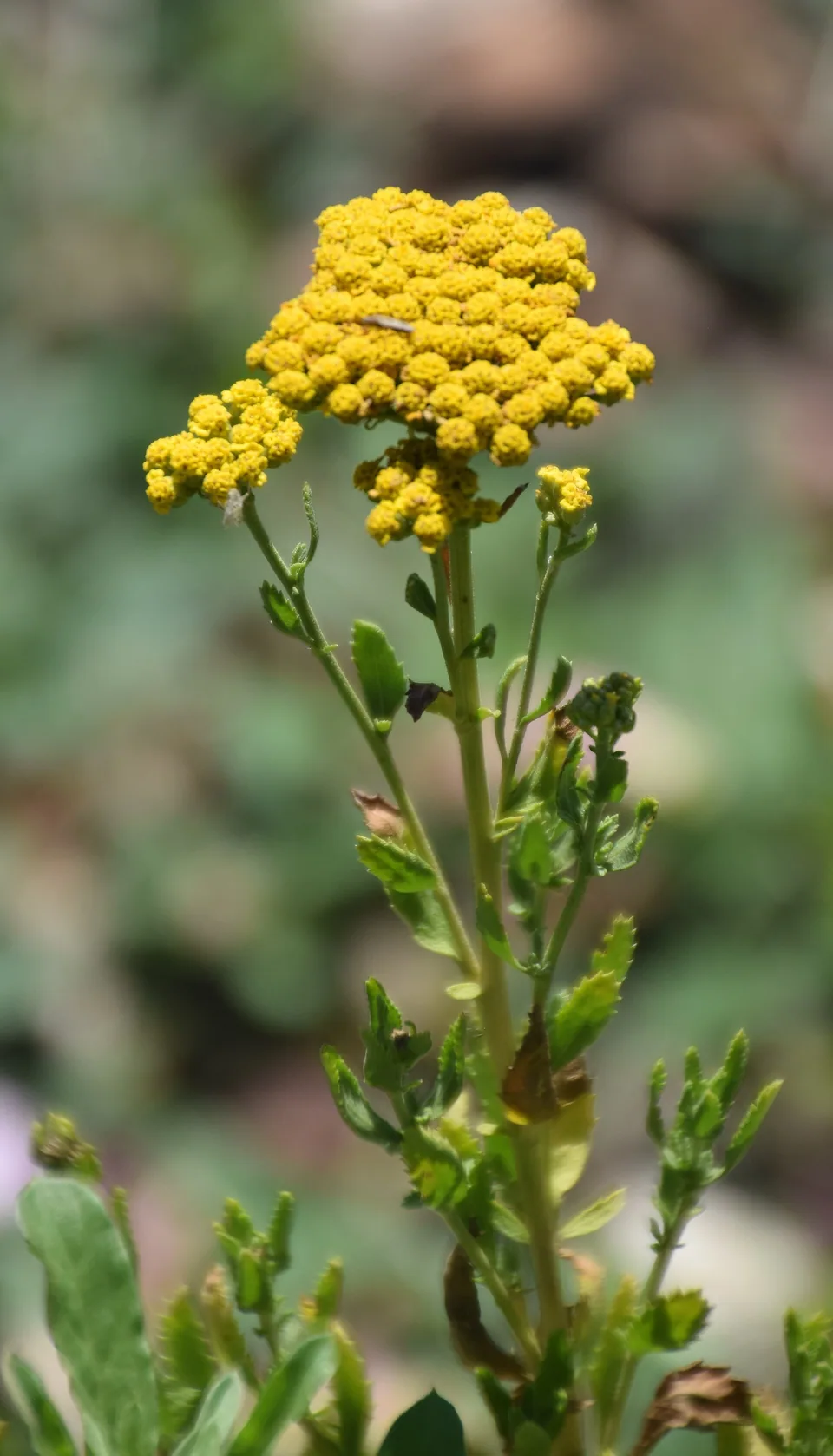

How to Grow and Care for Sweet-Nancy
Achillea ageratum
Written by Emilio Marruso · last checked
At a glance
This perennial has a tasty secret: its leaves are edible raw or cooked, mild at first and then aromatic, with a tingly feel in the mouth. Add them to soups, stews and potato salad, or brew them as a tea substitute. Give it well-drained soil and moderate water; once established, it handles drought very well.
- Water
Moderate water; once established it handles drought very well
What the sources say (3)
Watering: Moderate water; established plants are very drought tolerant
According to Practical Plants: Established plants are very drought tolerant, they can show distress in very severe droughts but usually recover
— Mace (Achillea ageratum) — Practical Plants [3] Light full sun Shade tolerance no shade Water moderate
— Mace (Achillea ageratum) — Practical Plants [3] Established plants are very drought tolerant, they can show distress in very severe droughts but usually recover
— Mace (Achillea ageratum) — Practical Plants [3] - Cold
Survives winters down to 0 °F (−17.8 °C)
Hardy in very cold winters · USDA 7 · RHS H6 · Z7
What the sources say (2)
- Soil
Likes well-drained soil
What the sources say (1)
Watering notes: Prefers well-drained soil
Succeeds in most soils but prefers a well-drained soil in a sunny position [1] [6] . It also succeeds in partial shade [4]
— Mace (Achillea ageratum) — Practical Plants [3] - Planting
Plant seedlings in summer; plant divisions in spring or fall
What the sources say (4)
Planting: Summer for seedlings; divisions in spring or autumn
According to Practical Plants (seedlings): When large enough to handle, prick the seedlings out into individual pots and plant them out in the summer.
— Mace (Achillea ageratum) — Practical Plants [3] According to Practical Plants (divisions): Division in spring or autumn. Very easy, the divisions can be planted direct into their permanent positions.
— Mace (Achillea ageratum) — Practical Plants [3] When large enough to handle, prick the seedlings out into individual pots and plant them out in the summer.
— Mace (Achillea ageratum) — Practical Plants [3] Division in spring or autumn. Very easy, the divisions can be planted direct into their permanent positions.
— Mace (Achillea ageratum) — Practical Plants [3] - Harvest
Edible leaves, raw or cooked; good in soups or as a tea substitute
- Propagation
From seed, by dividing the clump, or from cuttings taken at the base
What the sources say (3)
Propagation: Seed, division, basal cuttings
Seed - sow spring or early autumn in a cold frame [2] . The seed usually germinates in 1 - 3 months
— Mace (Achillea ageratum) — Practical Plants [3] Division in spring or autumn. Very easy, the divisions can be planted direct into their permanent positions.
— Mace (Achillea ageratum) — Practical Plants [3] Basal cuttings of new shoots in spring. Very easy, collect the shoots when they are about 10cm tall
— Mace (Achillea ageratum) — Practical Plants [3] - Sowing
Sow in spring or early fall in a cold frame
What the sources say (1)
Sowing: Spring or early autumn, in a cold frame
Seed - sow spring or early autumn in a cold frame [2] . The seed usually germinates in 1 - 3 months
— Mace (Achillea ageratum) — Practical Plants [3] - Containers
Grows in containers too
What the sources say (1)
In containers: Yes
An excellent plant to grow in a large pot, the long stems will tend to arch down and continue to flower for a long time
— Mace (Achillea ageratum) — Practical Plants [3]
Overview
Achillea ageratum is an aromatic herbaceous perennial with a slightly woody base and small yellow button-like flower heads. [1] It prefers well-drained soil and established plants are very drought tolerant. [3] The leaves are eaten raw or cooked, used as a flavouring and as a tea substitute. [3]
This record is incomplete: the sources we read do not cover every field yet.
Not yet covered by our sources: Hardiness, warmest zone, Pruning
Sweet-Nancy care
How to water Sweet-Nancy
Watering
Moderate water; established plants are very drought tolerant
What each source says
According to Practical Plants: Moderate water; established plants are very drought tolerant
What the sources say (3)
According to Practical Plants: Established plants are very drought tolerant, they can show distress in very severe droughts but usually recoverLight
full sun
Shade tolerance
no shade
Water
moderateEstablished plants are very drought tolerant, they can show distress in very severe droughts but usually recoverWatering notes
Prefers well-drained soil
What the sources say (1)
Succeeds in most soils but prefers a well-drained soil in a sunny position [1] [6] . It also succeeds in partial shade [4]How much light Sweet-Nancy needs
The sources give different values depending on region, zone or growing conditions.
What each source says
According to Practical Plants (scheda): Full sun, no shade
According to Practical Plants (coltivazione, note PFAF): Sunny position; also succeeds in partial shade
What the sources say (2)
According to Practical Plants (scheda): Light
full sun
Shade tolerance
no shade
Water
moderateAccording to Practical Plants (coltivazione, note PFAF): Succeeds in most soils but prefers a well-drained soil in a sunny position [1] [6] . It also succeeds in partial shade [4]How much cold Sweet-Nancy can take
Hardiness, coldest zone
7 [winter low −17.8 to −12.2 °C (0 to 10 °F)]
What each source says
According to Practical Plants: 7 [winter low −17.8 to −12.2 °C (0 to 10 °F)]
Hardiness, warmest zone
Not stated in the sources we read.
Where to grow Sweet-Nancy
Yes
What the sources say (1)
An excellent plant to grow in a large pot, the long stems will tend to arch down and continue to flower for a long timeHow to propagate Sweet-Nancy
Seed, division, basal cuttings
What the sources say (3)
Seed - sow spring or early autumn in a cold frame [2] . The seed usually germinates in 1 - 3 monthsDivision in spring or autumn. Very easy, the divisions can be planted direct into their permanent positions.Basal cuttings of new shoots in spring. Very easy, collect the shoots when they are about 10cm tallHow to grow Sweet-Nancy
The plant
Life cycle
perennial
What the sources say (1)
Perennial herbacous plant, although the base is slightly woody. Has elongate leaves that gradually transform into a petioleFamily
Asteraceae (Compositae)
What the sources say (1)
Family:
COMPOSITAE (ASTERACEAE)
Genus:
Achillea
Catalan common name:
Agèrat. Alè de bou.Remedies
The sources we checked give no remedies for this plant.
Calendar
Sowing
Spring or early autumn, in a cold frame
What the sources say (1)
Seed - sow spring or early autumn in a cold frame [2] . The seed usually germinates in 1 - 3 monthsPlanting
Summer for seedlings; divisions in spring or autumn
What each source says
According to Practical Plants (seedlings): Summer
According to Practical Plants (divisions): Spring or autumn
What the sources say (4)
According to Practical Plants (seedlings): When large enough to handle, prick the seedlings out into individual pots and plant them out in the summer.According to Practical Plants (divisions): Division in spring or autumn. Very easy, the divisions can be planted direct into their permanent positions.When large enough to handle, prick the seedlings out into individual pots and plant them out in the summer.Division in spring or autumn. Very easy, the divisions can be planted direct into their permanent positions.Pruning
Not stated in the sources we read.
Months as given by the sources, which are mostly from the United States (northern hemisphere). In the southern hemisphere they shift by about six months.
Edibility
Reported by the source, quoted verbatim. Do not eat a plant on the basis of this page alone: identification mistakes can be dangerous.
Leaves - raw or cooked. The initial flavour is mild and pleasant, though it becomes stronger and aromatic when the leaves are chewed, and leaves a tingly sensation in the mouth
[3]They are also used in soups, stews etc., and as a flavouring in potato salad etc [3] . The aromatic leaves are used as a tea substitute
[3]
Similar plants
- Fernleaf Yarrow Achillea filipendulina
- Noble yarrow Achillea nobilis
- Woolly Yarrow Achillea tomentosa
- Yarrow Achillea millefolium
- Aaron's Beard Hypericum calycinum
- Abies grandis Abies grandis
- Abraham Trachystemon orientalis
- Abyssinian banana Ensete ventricosum
Sources
Every value above is quoted from these documents. Links lead to the original publisher.
- Achillea ageratum L. - Herbari Virtual del Mediterrani Occidental · herbarivirtual.uib.cat, consulted
- Achillea ageratum - Useful Temperate Plants · temperate.theferns.info, consulted
- Mace (Achillea ageratum) — Practical Plants · practicalplants.org, consulted
Written by Emilio Marruso · last checked