
How to Grow and Care for Queen Victoria Agave
Agave victoriae-reginae
Written by Emilio Marruso · last checked
At a glance
This agave is happy to share your home: it grows well in containers and even indoors. In winter it rests, so it needs little to no water, just good airflow around it. You can make new plants from its offsets or from seed, and its flowering stems and flowers are edible, roasted or boiled.
- Water
Little to no water in winter; too much water then makes it rot
What the sources say (2)
Watering notes: Dormant in winter, so it needs little to no water; avoid over-watering and provide good ventilation
The succulent goes dormant in the winter, so it needs little to no water.
— Queen Victoria Agave (Agave victoriae-reginae) Growing & Care Guide for Gardeners [6] In cold climates it is adviseable to cultivate these plants in pots in order to protect them during the winter in dry, fresh rooms. Requires good ventilation and avoid over-watering.
— Agave victoriae-reginae [5] - Cold
Survives winters down to 20 °F (−6.7 °C)
Hardy in average winters · USDA 9 · RHS H4 · Z9
What the sources say (2)
Hardiness, coldest zone: 9 [winter low −6.7 to −1.1 °C (20 to 30 °F)]
It is able to grow well in USDA hardiness zones 9 to 11
— Queen Victoria Agave (Agave victoriae-reginae) Growing & Care Guide for Gardeners [6] Hardiness, warmest zone: 11 [winter low 4.4 to 10 °C (40 to 50 °F)]
It is able to grow well in USDA hardiness zones 9 to 11
— Queen Victoria Agave (Agave victoriae-reginae) Growing & Care Guide for Gardeners [6] - Harvest
Flowering stems and flowers are edible, roasted or boiled
- Pests
Mealybugs and scale; check any new plant for pests before bringing it home
- Propagation
From offsets or from seed
What the sources say (3)
Propagation: Offsets (suckers) and seed
the easiest way to do so is to look for the offsets this plant naturally produces.
— Queen Victoria Agave Care: A Complete Grower's Guide | Gardening Know How [3] It reproduces thanks to the seeds or by the suckers produced at the base of the stems in the spring.
— Agave victoriae-reginae [5] Propagation Method | Seed, Sucker
— NParks | Agave victoriae-reginae [1] - Containers
Grows in containers and indoors
What the sources say (2)
In containers: Yes
This species grows well in shallow containers under full sun.
— NParks | Agave victoriae-reginae [1] Indoors: Yes
It can easily grow inside when placed on a sunny windowsill.
— Queen Victoria Agave (Agave victoriae-reginae) Growing & Care Guide for Gardeners [6]
Overview
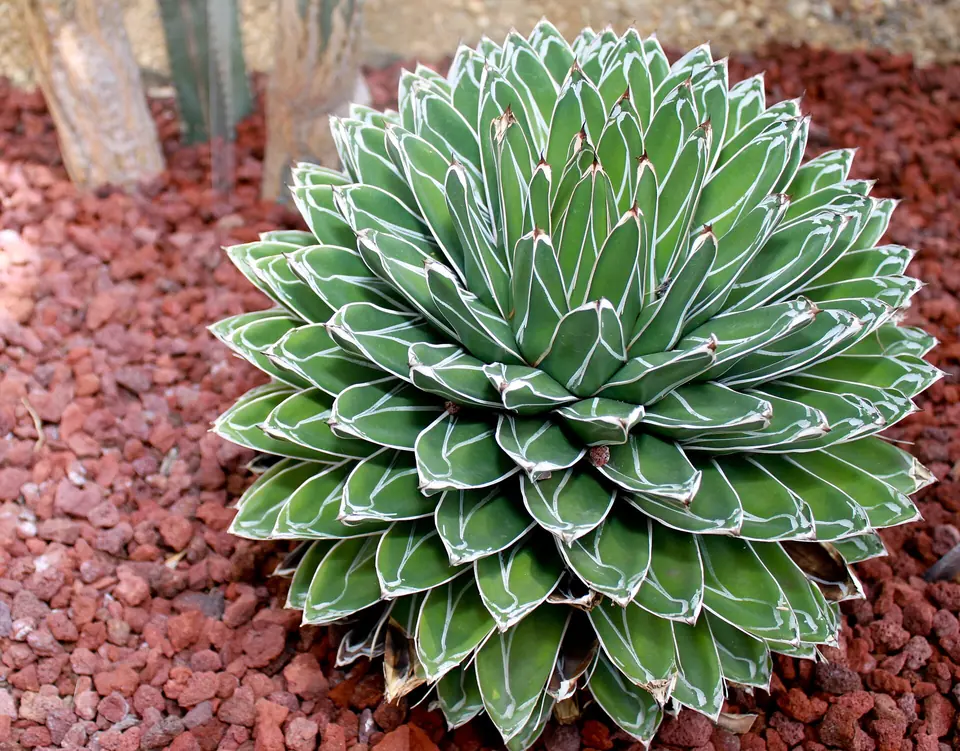
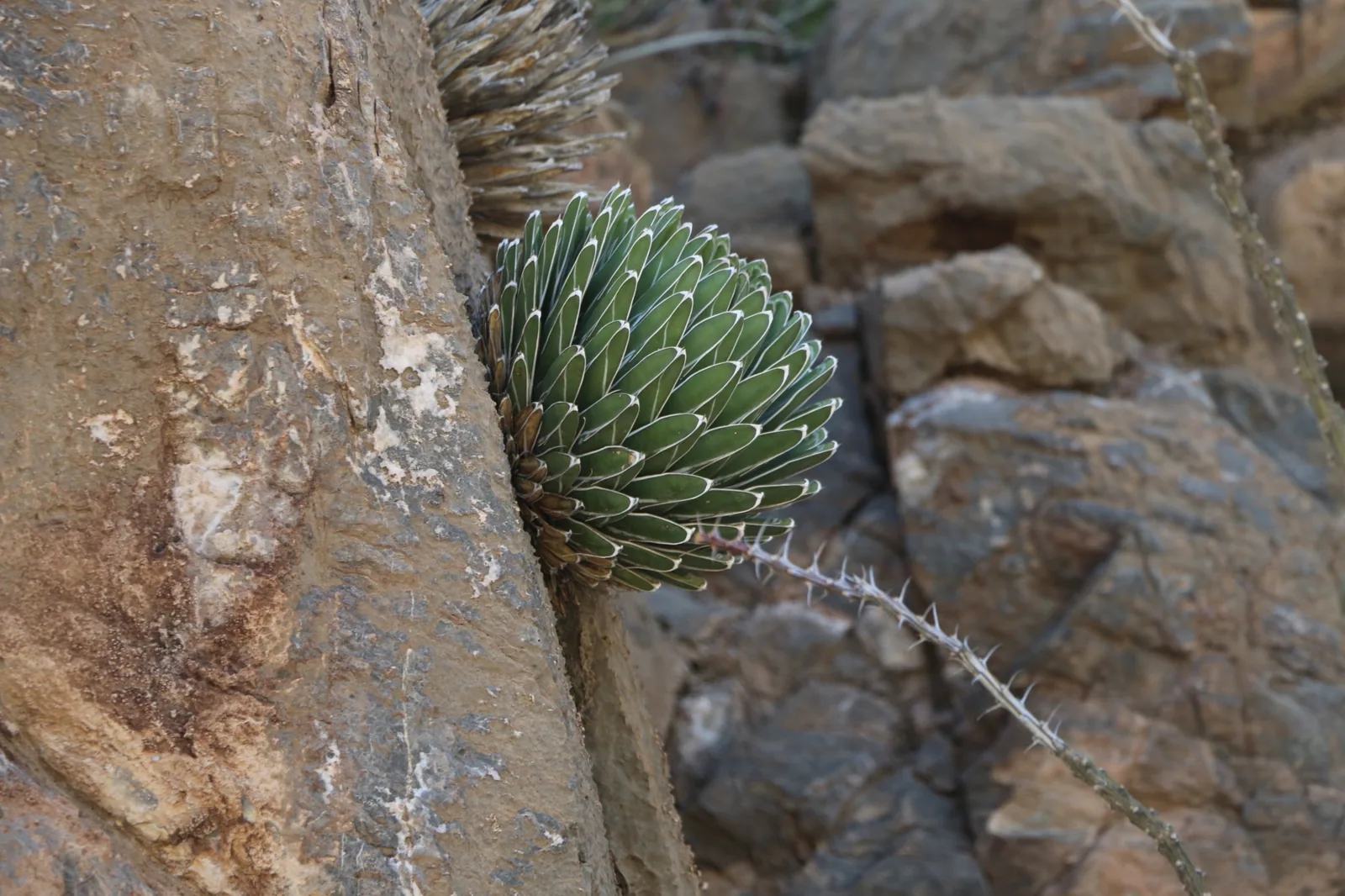
Agave victoriae-reginae is a slow-growing, compact rosette succulent endemic to north-eastern Mexico. [4] Each rosette flowers once, after many years, and dies shortly after. [1]
This record is incomplete: the sources we read do not cover every field yet.
Not yet covered by our sources: Pruning
Queen Victoria Agave care
How to water Queen Victoria Agave
Watering
The sources disagree:
It is very drought tolerant and develops the tightest form when watered sparingly.
[4]
What the sources say (2)
Provide water as soon as the soil goes dry, which can be multiple times a week in very dry climates. During wintertime this species goes dormant, which means waterings should be reduced drastically to prevent rot.water well during spring and summer and let it become barely moist between waterings.Watering notes
Dormant in winter, so it needs little to no water; avoid over-watering and provide good ventilation
What the sources say (2)
The succulent goes dormant in the winter, so it needs little to no water.In cold climates it is adviseable to cultivate these plants in pots in order to protect them during the winter in dry, fresh rooms. Requires good ventilation and avoid over-watering.How much light Queen Victoria Agave needs
The sources give different values depending on region, zone or growing conditions.
What each source says
outdoors: Protect from the blasting afternoon sun to prevent burning
hottest summer month: Some afternoon shade
What the sources say (4)
outdoors: When grown outdoors, it should be protected from the blasting afternoon sun to prevent burning.hottest summer month: but they prefer some afternoon shade during the hottest summer month to avoid being fried by sun.Prefers full sun to light shade and well-drained soil.It requires well-drained soil and light shade to full sun exposureHow much cold Queen Victoria Agave can take
Hardiness, coldest zone
9 [winter low −6.7 to −1.1 °C (20 to 30 °F)]
What the sources say (1)
It is able to grow well in USDA hardiness zones 9 to 11Hardiness, warmest zone
11 [winter low 4.4 to 10 °C (40 to 50 °F)]
What the sources say (1)
It is able to grow well in USDA hardiness zones 9 to 11Where to grow Queen Victoria Agave
Indoors
Yes
What the sources say (1)
It can easily grow inside when placed on a sunny windowsill.In containers
Yes
What the sources say (1)
This species grows well in shallow containers under full sun.How to propagate Queen Victoria Agave
Offsets (suckers) and seed
What the sources say (3)
the easiest way to do so is to look for the offsets this plant naturally produces.It reproduces thanks to the seeds or by the suckers produced at the base of the stems in the spring.Propagation Method
| Seed, SuckerQueen Victoria Agave pests and problems
Mealybugs and scale
Symptom: Prone to mealy bugs and scale
What to do: Always inspect any new plant for pests before introducing it to your home or greenhouse
What the sources say (1)
Prone to mealy bugs and scale. Always inspect any new plant for pests before introducing it to your home or greenhouse.
— Agave victoriae-reginae [5] Rot from overwatering
Symptom: Rot in winter if watering is not reduced
What to do: Reduce waterings drastically in winter
What the sources say (1)
During wintertime this species goes dormant, which means waterings should be reduced drastically to prevent rot.
— Queen Victoria Agave Care: A Complete Grower's Guide | Gardening Know How [3]
Remedies
The sources we checked give no remedies for this plant.
Calendar
Pruning
Not stated in the sources we read.
Months as given by the sources, which are mostly from the United States (northern hemisphere). In the southern hemisphere they shift by about six months.
Edibility
Reported by the source, quoted verbatim. Do not eat a plant on the basis of this page alone: identification mistakes can be dangerous.
Indicative values
Values from a secondary source, not checked word for word like the rest of this page. Use them as a starting point.
- Life cycle
- Herbaceous PerennialIndicative value, adapt it to your climate · Secondary source
- Mature height
- 22.9-30.5 cm (0.75-1 ft)Indicative value, adapt it to your climate · Secondary source
- Hours of sun
- 6-8 hoursIndicative value, adapt it to your climate · Secondary source
- Drought tolerant
- yesIndicative value, adapt it to your climate · Secondary source
- Soil pH
- 6-7.5Indicative value, adapt it to your climate · Secondary source
- Care level
- LowIndicative value, adapt it to your climate · Secondary source
- Growth rate
- LowIndicative value, adapt it to your climate · Secondary source
- Pruning
- May, June, JulyIndicative value, adapt it to your climate · Secondary source
Similar plants
- Agave ovatifolia Agave ovatifolia
- American Agave Agave virginica
- Century Plant Agave americana
- Century Plant Agave salmiana
- Coastal agave Agave shawii
- Foxtail agave Agave attenuata
- Henequen Agave fourcroydes
- Parry's Agave Agave parryi
Sources
Every value above is quoted from these documents. Links lead to the original publisher.
- NParks | Agave victoriae-reginae · nparks.gov.sg, consulted
- Agave victoriae-reginae - The Ruth Bancroft Garden & Nursery · ruthbancroftgarden.org, consulted
- Queen Victoria Agave Care: A Complete Grower's Guide | Gardening Know How · gardeningknowhow.com, consulted
- ARIZONA-SONORA DESERT MUSEUM · desertmuseum.org, consulted
- Agave victoriae-reginae · llifle.com, consulted
- Queen Victoria Agave (Agave victoriae-reginae) Growing & Care Guide for Gardeners · gardenershq.com, consulted
Written by Emilio Marruso · last checked