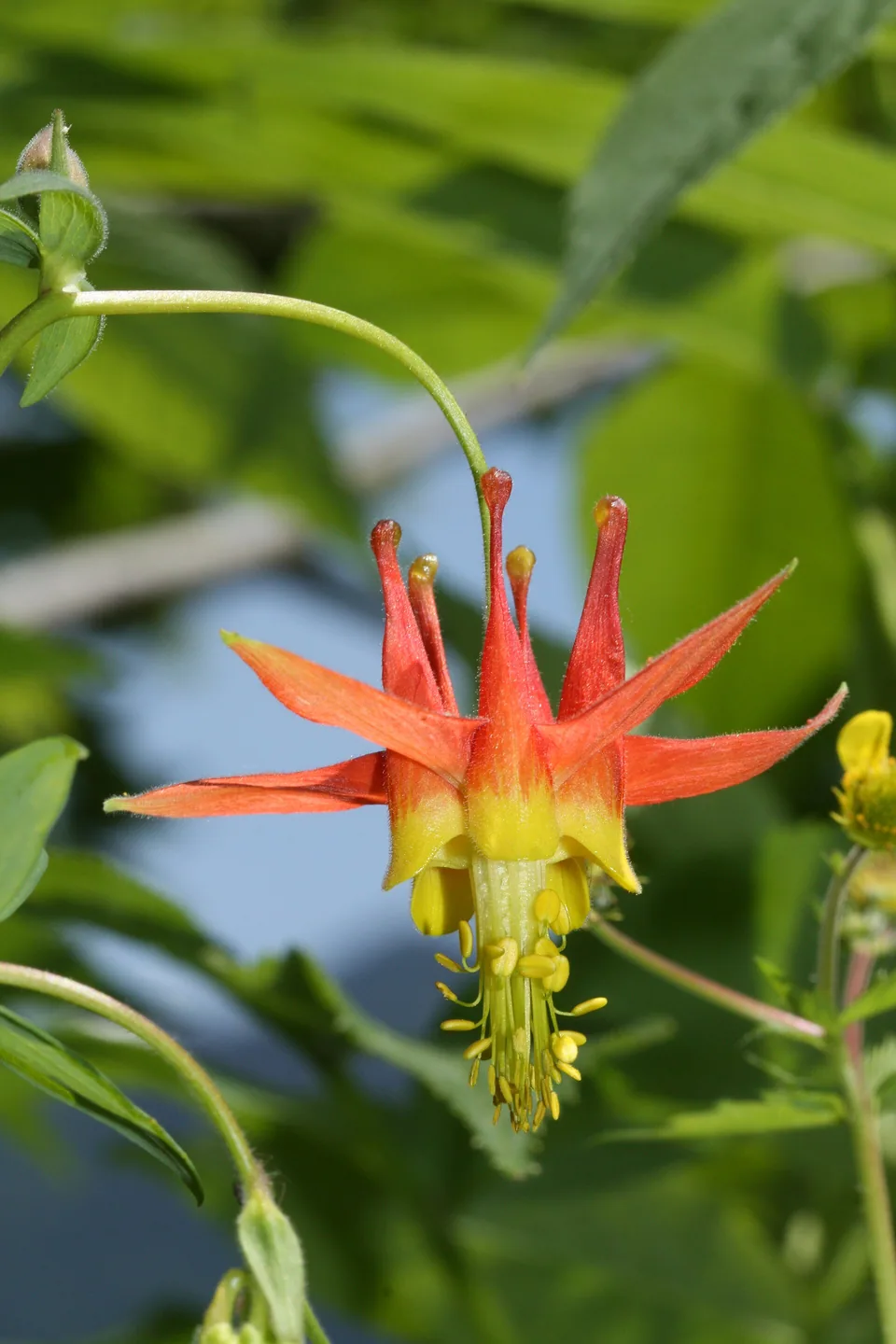
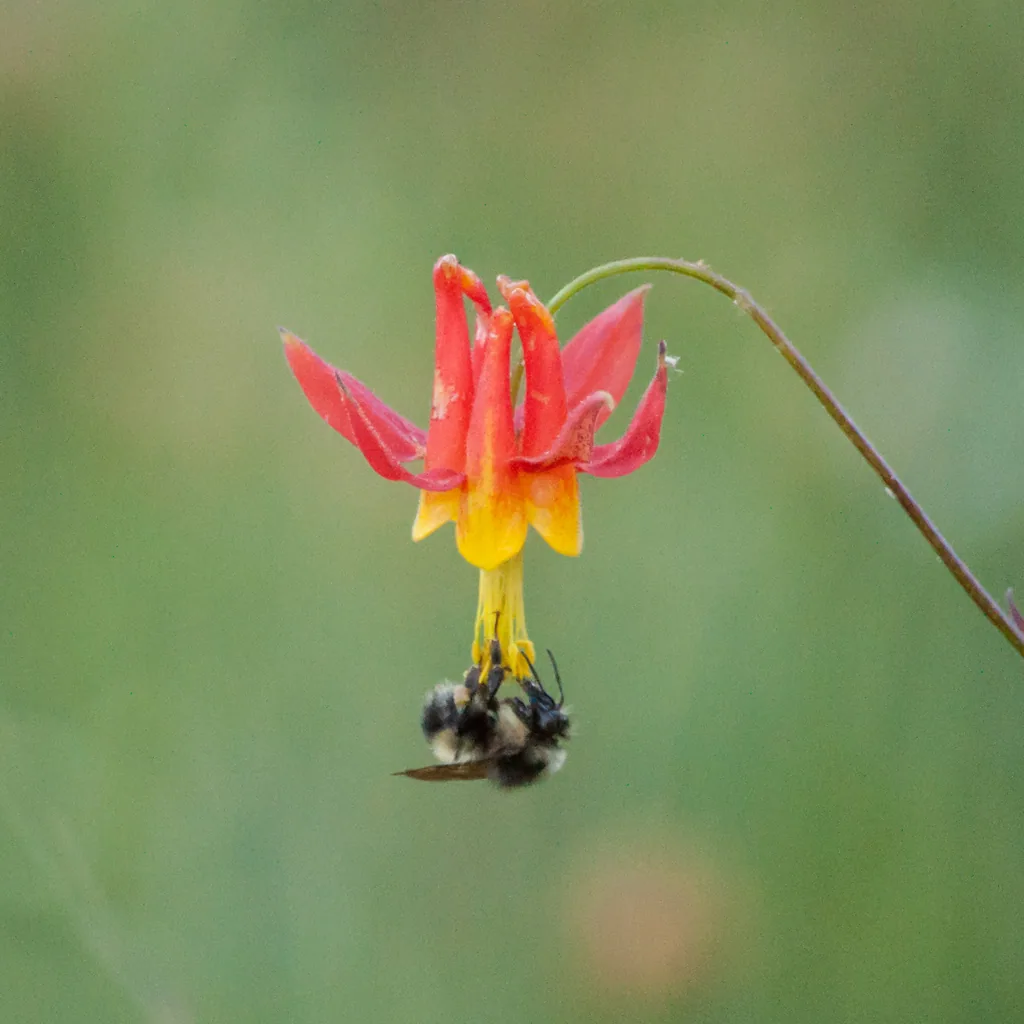

How to Grow and Care for Western columbine
Aquilegia formosa
Written by Emilio Marruso · last checked
At a glance
Western red columbine is easy to love: give it sun or part shade and soil that stays moist but never soggy, with water through the summer. Its flowers are rich in sweet nectar and can even be eaten raw. Once it finishes blooming, cut it down to the ground and fresh new leaves will soon replace the tired ones.
- Sun
Sun to part shade
What the sources say (2)
- Water
Keep the soil moist but not wet, and water in summer too
What the sources say (3)
Watering: Medium water use; prefers moist locations and needs summer water
Water Use: Medium Light Requirement: Sun , Part Shade Soil Moisture: Dry , Moist
— Lady Bird Johnson Wildflower Center - The University of Texas at Austin [2] It prefers moist locations such as stream banks and needs summer water.
— Plant Propagation Protocol for Aquilegia formosa [7] Watering notes: Prefers a moist but not wet soil
Succeeds in ordinary garden soil, preferring a moist but not wet soil and a sheltered sunny position
— Western Columbine (Aquilegia formosa) — Practical Plants [3] - Pruning
After flowering, cut it down to the ground
What the sources say (1)
Pruning: After flowering (cut down to the ground)
When plants are finished blooming cut down to the ground to rejuvenate plant with new growth.
— Aquilegia formosa - WESTERN COLUMBINE [6] - Harvest
Flowers can be eaten raw, sweet with nectar; young spring leaves only cooked, and with caution
- Pests
Leaf miners, spider mites and powdery mildew; cutting back old leaves after bloom helps
- Size
1 to 3 ft tall
What the sources say (1)
Mature height: 30-100 cm [12–39 in]
Aquilegia formosa ranges in height from 30 to 100 cm. The stems are pubescent above with the leaves glabrous or pubescent on either surface.
— Aquilegia formosa, western columbine [1] - Propagation
From seed, or divide the plant in spring
What the sources say (3)
Propagation: Seed; division in spring
Seed - best sown as soon as it is ripe in a cold frame. The seed can be slow to germinate [4] . Stored seed can be sown in late winter in a cold frame.
— Western Columbine (Aquilegia formosa) — Practical Plants [3] Description: Easily propagated by seed. Seedlings around parent plant appear in summer and can be moved the following spring.
— Lady Bird Johnson Wildflower Center - The University of Texas at Austin [2] Division in spring [4] . ## Cultivation This section contains historical Plants For A Future notes marked noncommercial
— Western Columbine (Aquilegia formosa) — Practical Plants [3] - Sowing
Sow fresh seed as soon as it ripens, stored seed in late winter, in a cold frame
What the sources say (1)
Sowing: As soon as the seed is ripe, in a cold frame; stored seed in late winter, in a cold frame
Seed - best sown as soon as it is ripe in a cold frame. The seed can be slow to germinate [4] . Stored seed can be sown in late winter in a cold frame.
— Western Columbine (Aquilegia formosa) — Practical Plants [3]
Overview
Western columbine is a short-lived perennial native to western North America, 30 to 100 cm [12–39 in] tall. [1][6] It grows in moist areas in forests, woodlands and alpine and subalpine meadows. [1] It is easily propagated by seed and readily maintains itself from seed. [2]
Western columbine care
Measurements in square brackets are our conversion into the other unit system; the quoted text is unchanged.
How to water Western columbine
Watering
Medium water use; prefers moist locations and needs summer water
What the sources say (2)
Water Use: Medium Light Requirement: Sun , Part Shade Soil Moisture: Dry , MoistIt prefers moist locations such as stream banks and needs summer water.Watering notes
Prefers a moist but not wet soil
What the sources say (1)
Succeeds in ordinary garden soil, preferring a moist but not wet soil and a sheltered sunny positionHow much light Western columbine needs
Sun to part shade
How much cold Western columbine can take
Hardiness, coldest zone
The sources give different values depending on region, zone or growing conditions.
What each source says
According to Rainy Side Gardens: 4 [winter low −34.4 to −28.9 °C (−30 to −20 °F)]
According to University of Washington ESRM 412: 3 [winter low −40 to −34.4 °C (−40 to −30 °F)]
According to Practical Plants: 3 [winter low −40 to −34.4 °C (−40 to −30 °F)]
What the sources say (3)
According to Rainy Side Gardens: Hardiness: Sunset zones: All (Western). USDA zones: 4-8. Heat zones: 7-1.According to University of Washington ESRM 412: Hardiness: 3-9 Heat Zones: 1-7 Climate Zones: 1, 2, 3, 4, 5, 6, 7, 8, 9, 10, 11According to Practical Plants: Hardiness Zone 3+ Soil textures sandy, loamy Soil pH acid, neutral, alkalineHardiness, warmest zone
The sources give different values depending on region, zone or growing conditions.
What each source says
According to Rainy Side Gardens: 8 [winter low −12.2 to −6.7 °C (10 to 20 °F)]
According to University of Washington ESRM 412: 9 [winter low −6.7 to −1.1 °C (20 to 30 °F)]
What the sources say (2)
According to Rainy Side Gardens: Hardiness: Sunset zones: All (Western). USDA zones: 4-8. Heat zones: 7-1.According to University of Washington ESRM 412: Hardiness: 3-9 Heat Zones: 1-7 Climate Zones: 1, 2, 3, 4, 5, 6, 7, 8, 9, 10, 11How to propagate Western columbine
Seed; division in spring
What the sources say (3)
Seed - best sown as soon as it is ripe in a cold frame. The seed can be slow to germinate [4] . Stored seed can be sown in late winter in a cold frame.Description: Easily propagated by seed. Seedlings around parent plant appear in summer and can be moved the following spring.Division in spring [4] . ## Cultivation This section contains historical Plants For A Future notes marked noncommercialHow to grow Western columbine
The plant
Mature height
30-100 cm [12–39 in]
What the sources say (1)
Aquilegia formosa ranges in height from 30 to 100 cm. The stems are pubescent above with the leaves glabrous or pubescent on either surface.Western columbine pests and problems
Leaf miners
Symptom: Leaf miners tunnel through the surface of the leaves in spring, leaving unsightly foliage.
What to do: Cut the stems down to the ground when plants finish flowering to rejuvenate the foliage.
What the sources say (1)
In spring, leaf miners tunnel through the surface of the leaves, leaving unsightly foliage. To remedy this, cut the stems down to the ground when plants finish flowering to rejuvenate the foliage.
— Aquilegia formosa - WESTERN COLUMBINE [6] Spider mites and powdery mildew
Symptom: Common problems on most columbine species, including western red columbine.
What to do: Cut back the old, damaged foliage and let younger, more tolerant leaves take its place.
What the sources say (2)
Spider mites and powdery mildew are common problems on most columbine species, including western red columbine.
— Plant Propagation Protocol for Aquilegia formosa [7] it may be preferable to simply cut back the old, damaged foliage and allow younger, more tolerant leaves to take their place.
— Plant Propagation Protocol for Aquilegia formosa [7]
Remedies
Each remedy shows what official sources say about it; traditional remedies without an official source are marked as such. Harmful ones are listed so you know to avoid them.
Treating the plant
leaf miners
cut stems to the ground after flowering Not verified
Traditional remedy, not verified by an official source.
How: Cut the stems down to the ground when plants finish flowering to rejuvenate the foliage; the leaf miner larvae are gone by the time the second growth begins.
Calendar
Sowing
As soon as the seed is ripe, in a cold frame; stored seed in late winter, in a cold frame
What the sources say (1)
Seed - best sown as soon as it is ripe in a cold frame. The seed can be slow to germinate [4] . Stored seed can be sown in late winter in a cold frame.Pruning
After flowering (cut down to the ground)
What the sources say (1)
When plants are finished blooming cut down to the ground to rejuvenate plant with new growth.Months as given by the sources, which are mostly from the United States (northern hemisphere). In the southern hemisphere they shift by about six months.
Edibility
Reported by the source, quoted verbatim. Do not eat a plant on the basis of this page alone: identification mistakes can be dangerous.
Indicative values
Values from a secondary source, not checked word for word like the rest of this page. Use them as a starting point.
- Hours of sun
- 4-6 hoursIndicative value, adapt it to your climate · Secondary source
- Drought tolerant
- yesIndicative value, adapt it to your climate · Secondary source
- Soil pH
- 6-7Indicative value, adapt it to your climate · Secondary source
- Care level
- MediumIndicative value, adapt it to your climate · Secondary source
- Growth rate
- LowIndicative value, adapt it to your climate · Secondary source
Similar plants
- Alpine Columbine Aquilegia alpina
- Columbine Aquilegia canadensis
- Columbine Aquilegia viridiflora
- Common columbine Aquilegia vulgaris
- Golden Columbine Aquilegia chrysantha
- Utah Columbine Aquilegia scopulorum
- Columbine Aquilegia caerulea
- Fan columbine Aquilegia flabellata
Sources
Every value above is quoted from these documents. Links lead to the original publisher.
- Aquilegia formosa, western columbine · fs.usda.gov, consulted
- Lady Bird Johnson Wildflower Center - The University of Texas at Austin · wildflower.org, consulted
- Western Columbine (Aquilegia formosa) — Practical Plants · practicalplants.org, consulted
- Aquilegia formosa - Useful Temperate Plants · temperate.theferns.info, consulted
- Aquilegia formosa - Calflora · calflora.org, consulted
- Aquilegia formosa - WESTERN COLUMBINE · rainyside.com, consulted
- Plant Propagation Protocol for Aquilegia formosa · courses.washington.edu, consulted
- Columbine - Gardening at USask - College of Agriculture and Bioresources | University of Saskatchewan · gardening.usask.ca, consulted
Written by Emilio Marruso · last checked