
How to Grow and Care for Greek milkweed
Asclepias speciosa
Written by Emilio Marruso · last checked
Toxic to: People · Why
At a glance
Showy milkweed is a plant full of surprises: it grows in sun or very light shade, even in a container, and starts from seeds sown outdoors in fall or early winter. Its flower buds taste a bit like peas, and cooked young shoots stand in for asparagus. Just handle it with care: its sap is toxic, so be sure of the plant before eating it.
- Sun
Sun to very light shade
- Water
In hot, dry climates it likes regular watering from April through September
What the sources say (1)
Watering notes: Responds well to regular watering from April through September (Arizona)
responds well to regular watering from April through September.
— ARIZONA-SONORA DESERT MUSEUM [1] - Planting
Plant in late spring or early summer, while the seedlings are growing well
What the sources say (1)
Planting: Late spring or early summer, when seedlings are in active growth
Plant out when they are in active growth in late spring or early summer
— Showy Milkweed (Asclepias speciosa) — Practical Plants [4] - Pruning
Cut it back to the ground in late fall, when it goes to rest for winter
What the sources say (1)
Pruning: Cut back to the ground in late fall (plant is winter dormant)
Showy Milkweed is winter dormant and can be cut back to the ground in late fall.
— ARIZONA-SONORA DESERT MUSEUM [1] - Harvest
Flower buds, raw or cooked, taste a bit like peas; cooked young shoots replace asparagus
- Propagation
From seeds given a cold spell, by dividing it in spring, or from base cuttings in late spring
What the sources say (2)
Propagation: Seed (cold stratified), division in spring, basal cuttings in late spring
Division in spring. With great care since the plant resents root disturbance.
— Showy Milkweed (Asclepias speciosa) — Practical Plants [4] Basal cuttings in late spring.
— Showy Milkweed (Asclepias speciosa) — Practical Plants [4] - Sowing
Sow outdoors in fall or early winter: the seeds need a cold spell
What the sources say (3)
Sowing: Fall or early winter, outdoors
Showy milkweed seeds are often planted outdoors in fall or early winter.
— How To Grow Asclepias Speciosa Showy Milkweed | Gardening Know How [5] Propagation: Seed (cold stratified), division in spring, basal cuttings in late spring
Division in spring. With great care since the plant resents root disturbance.
— Showy Milkweed (Asclepias speciosa) — Practical Plants [4] Basal cuttings in late spring.
— Showy Milkweed (Asclepias speciosa) — Practical Plants [4] - Containers
Grows in containers too
What the sources say (1)
In containers: Yes
It can be contained by keeping it in a pot
— ARIZONA-SONORA DESERT MUSEUM [1] - Safety
Toxic sap, dangerous to people and animals; be sure of the plant before eating any part
Overview
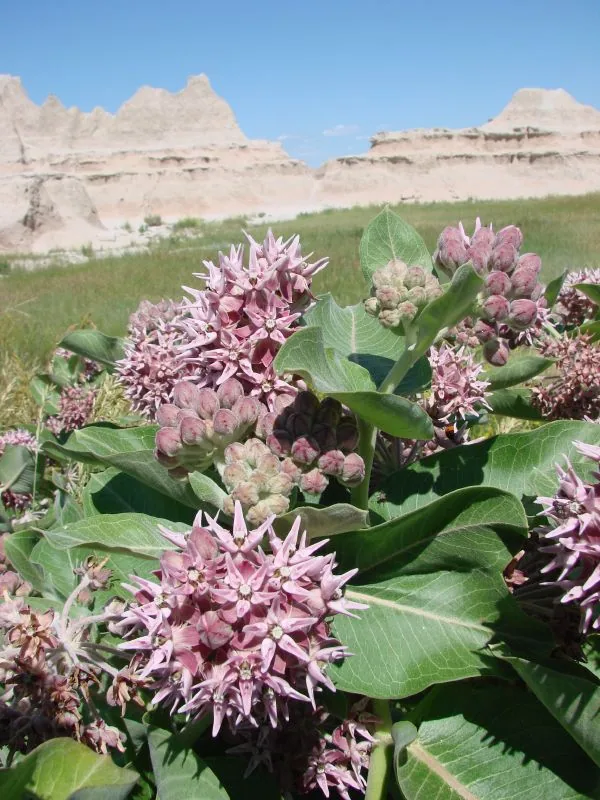
Showy milkweed is a hairy perennial native to western North America, with rose-colored flower clusters, and is a larval host for the monarch. [1][2] It needs sun, tolerates clay and alkaline soils, and spreads by rhizomes. [1] Milkweeds contain toxic compounds, and the plants should be positively identified before any use as food. [2]
Greek milkweed care
How to water Greek milkweed
Watering
The sources give different values depending on region, zone or growing conditions.
What each source says
According to Practical Plants: Drought intolerant; moderate water
According to Arizona-Sonora Desert Museum: Fairly drought tolerant once established
Watering notes
Responds well to regular watering from April through September (Arizona)
What the sources say (1)
responds well to regular watering from April through September.How much light Greek milkweed needs
How much cold Greek milkweed can take
Hardiness, coldest zone
The sources give different values depending on region, zone or growing conditions.
What each source says
According to Practical Plants: 2 [winter low −45.6 to −40 °C (−50 to −40 °F)]
According to Gardening Know How: 3 [winter low −40 to −34.4 °C (−40 to −30 °F)]
Hardiness, warmest zone
9 [winter low −6.7 to −1.1 °C (20 to 30 °F)]
What the sources say (1)
showy milkweed plants are hardy to USDA growing zones 3-9Where to grow Greek milkweed
Yes
What the sources say (1)
It can be contained by keeping it in a potHow to propagate Greek milkweed
Seed (cold stratified), division in spring, basal cuttings in late spring
Remedies
Each remedy shows what official sources say about it; traditional remedies without an official source are marked as such. Harmful ones are listed so you know to avoid them.
First aid
First aid: not a substitute for a doctor
sap on skin
wash with soap and water Official source, not independently tested
If there is any persistent skin or eye pain, seek medical examination and treatment.
— poison.org [7] How: wash the affected area thoroughly with soap and water immediately
If your skin comes into contact with milkweed sap, you should immediately wash the affected area thoroughly with soap and water.
— poison.org [7]
sap in eye
rinse eye with water Official source, not independently tested
If there is any persistent skin or eye pain, seek medical examination and treatment.
— poison.org [7] How: gently rinse the eye with room-temperature water for 10–15 minutes
If someone experiences eye irritation after getting sap in their eye, gently rinse the eye with room-temperature water for 10–15 minutes.
— poison.org [7]
Treating the plant
aphids
wash off with water Official source, not independently tested
How: wash off the aphids with a stream of water, ensuring there are no desirable insects like monarch caterpillars, or even squish the masses
you can wash off the aphids with a stream of water (ensuring there are no desirable insects like monarch caterpillars), or even squish the masses.
— extension.colostate.edu [8] insecticidal soap Works
You could also use an insecticidal soap on the aphids, but be very careful to check for desirable insects.
— extension.colostate.edu [8] How: use an insecticidal soap on the aphids, being very careful to check for desirable insects
You could also use an insecticidal soap on the aphids, but be very careful to check for desirable insects.
— extension.colostate.edu [8] What the evidence says Aphids are mostly controlled using horticultural oil and insecticidal soap, which are usually considered acceptable in organically-managed systems.
— lee.ces.ncsu.edu [9] cut off infested tips Official source, not independently tested
How: cut the infested tips off; the plant will generally sprout back in a couple of weeks with fresh, new growth
If you notice aphids on your milkweed, just cut the infested tips off! The plant will generally sprout back in a couple of weeks with fresh, new growth.
— lee.ces.ncsu.edu [9]
Is Greek milkweed poisonous?
Reported by the source, quoted verbatim. This is not medical or veterinary advice: if a person or an animal may have eaten this plant, contact a poison control centre or a veterinarian.
the plants should be positively identified as some of the milkweeds are highly poisonous, and eating them can result in death.
[2]Exposure to or accidental ingestion of this toxic sap can be quite dangerous to both humans and animals.
[5]- Poisonous parts
Milkweed is known for its milky latex-like sap.
[5]
Calendar
Sowing
Fall or early winter, outdoors
What the sources say (1)
Showy milkweed seeds are often planted outdoors in fall or early winter.Planting
Late spring or early summer, when seedlings are in active growth
What the sources say (1)
Plant out when they are in active growth in late spring or early summerPruning
Cut back to the ground in late fall (plant is winter dormant)
What the sources say (1)
Showy Milkweed is winter dormant and can be cut back to the ground in late fall.Months as given by the sources, which are mostly from the United States (northern hemisphere). In the southern hemisphere they shift by about six months.
Edibility
Reported by the source, quoted verbatim. Do not eat a plant on the basis of this page alone: identification mistakes can be dangerous.
Indicative values
Values from a secondary source, not checked word for word like the rest of this page. Use them as a starting point.
- Life cycle
- Herbaceous PerennialIndicative value, adapt it to your climate · Secondary source
- Mature height
- 30.5-91.4 cm (1-3 ft)Indicative value, adapt it to your climate · Secondary source
- Drought tolerant
- yesIndicative value, adapt it to your climate · Secondary source
- Soil
- Sandy Loamy Clay Humus RockyIndicative value, adapt it to your climate · Secondary source
- Soil pH
- 6-7Indicative value, adapt it to your climate · Secondary source
- Care level
- MediumIndicative value, adapt it to your climate · Secondary source
- Growth rate
- HighIndicative value, adapt it to your climate · Secondary source
Similar plants
- Butterfly Weed Asclepias tuberosa
- Clasping Milkweed Asclepias amplexicaulis
- Common Milkweed Asclepias syriaca
- Few-flower Milkweed Asclepias lanceolata
- Four-Leaved Milkweed Asclepias quadrifolia
- Green Antelopehorn Asclepias viridis
- Green Comet Milkweed Asclepias viridiflora
- Poke Milkweed Asclepias exaltata
Sources
Every value above is quoted from these documents. Links lead to the original publisher.
- ARIZONA-SONORA DESERT MUSEUM · desertmuseum.org, consulted
- Lady Bird Johnson Wildflower Center - The University of Texas at Austin · wildflower.org, consulted
- Asclepias speciosa page · missouriplants.com, consulted
- Showy Milkweed (Asclepias speciosa) — Practical Plants · practicalplants.org, consulted
- How To Grow Asclepias Speciosa Showy Milkweed | Gardening Know How · gardeningknowhow.com, consulted
- Milkweed · uaex.uada.edu, consulted
- poison.org · poison.org
- extension.colostate.edu · extension.colostate.edu
- lee.ces.ncsu.edu · lee.ces.ncsu.edu
Written by Emilio Marruso · last checked