

How to Grow and Care for Jelly Palm
Butia odorata
Written by Emilio Marruso · last checked
At a glance
This sun-loving palm grows 15–20 feet tall and carries yellow to red fruit, 1 inch across, that you can turn into jellies or even wine. Its deep roots give it some drought tolerance, so it forgives a missed watering. Give it full sun and soil that drains well, and this perennial will keep growing year after year.
- Sun
Full sun
What the sources say (1)
Light: Full sun
Light: Full sun (6 or more hours of direct sunlight a day)
— Butia odorata (Brazilian Butia Palm, Jelly Palm, Pindo Palm, South American jelly palm, Yatay palm) | North Carolina Extension Gardener Plant Toolbox [1] - Water
Handles some drought; never leave the soil soggy
What the sources say (2)
Watering: Some drought tolerance due to deep root system
It has some drought tolerance due to its deep root system.
— Butia odorata (Brazilian Butia Palm, Jelly Palm, Pindo Palm, South American jelly palm, Yatay palm) | North Carolina Extension Gardener Plant Toolbox [1] Watering notes: Intolerant of wet soil; needs good drainage
It is moderately salt tolerant but intolerant of full shade, prolonged cold, and wet soil.
— Butia odorata (Brazilian Butia Palm, Jelly Palm, Pindo Palm, South American jelly palm, Yatay palm) | North Carolina Extension Gardener Plant Toolbox [1] - Cold
Survives winters down to 10 °F (−12.2 °C)
Hardy in cold winters · USDA 8a · RHS H5 · Z8
What the sources say (2)
Hardiness, coldest zone: 8a [winter low −12.2 to −9.4 °C (10 to 15 °F)]
USDA Plant Hardiness Zone: 8a, 8b, 9a, 9b, 10a, 10b
— Butia odorata (Brazilian Butia Palm, Jelly Palm, Pindo Palm, South American jelly palm, Yatay palm) | North Carolina Extension Gardener Plant Toolbox [1] Hardiness, warmest zone: 10b [winter low 1.7 to 4.4 °C (35 to 40 °F)]
USDA Plant Hardiness Zone: 8a, 8b, 9a, 9b, 10a, 10b
— Butia odorata (Brazilian Butia Palm, Jelly Palm, Pindo Palm, South American jelly palm, Yatay palm) | North Carolina Extension Gardener Plant Toolbox [1] - Soil
Soil that drains well
What the sources say (1)
Watering notes: Intolerant of wet soil; needs good drainage
It is moderately salt tolerant but intolerant of full shade, prolonged cold, and wet soil.
— Butia odorata (Brazilian Butia Palm, Jelly Palm, Pindo Palm, South American jelly palm, Yatay palm) | North Carolina Extension Gardener Plant Toolbox [1] - Feeding
In poor soil, feed it with a palm fertilizer
What the sources say (1)
Mineral fertilizers: Palm-specific fertilizer when grown in low-nutrient soil
Insects, Diseases, and Other Plant Problems: Use a palm-specific fertilizer when growing in low-nutrient soil.
— Butia odorata (Brazilian Butia Palm, Jelly Palm, Pindo Palm, South American jelly palm, Yatay palm) | North Carolina Extension Gardener Plant Toolbox [1] - Harvest
Yellow to red fruit, 1 inch across, for jellies and wine
- Size
15–20 ft tall and 10–15 ft wide
What the sources say (2)
Mature height: 457.2-609.6 cm (15-20 ft)
Dimensions: Height: 15 ft. 0 in. - 20 ft. 0 in. Width: 10 ft. 0 in. - 15 ft. 0 in.
— Butia odorata (Brazilian Butia Palm, Jelly Palm, Pindo Palm, South American jelly palm, Yatay palm) | North Carolina Extension Gardener Plant Toolbox [1] Mature width: 304.8-457.2 cm (10-15 ft)
Dimensions: Height: 15 ft. 0 in. - 20 ft. 0 in. Width: 10 ft. 0 in. - 15 ft. 0 in.
— Butia odorata (Brazilian Butia Palm, Jelly Palm, Pindo Palm, South American jelly palm, Yatay palm) | North Carolina Extension Gardener Plant Toolbox [1] - Propagation
Grows from seed
What the sources say (1)
Propagation: Seed
Recommended Propagation Strategy: Seed
— Butia odorata (Brazilian Butia Palm, Jelly Palm, Pindo Palm, South American jelly palm, Yatay palm) | North Carolina Extension Gardener Plant Toolbox [1]
Overview
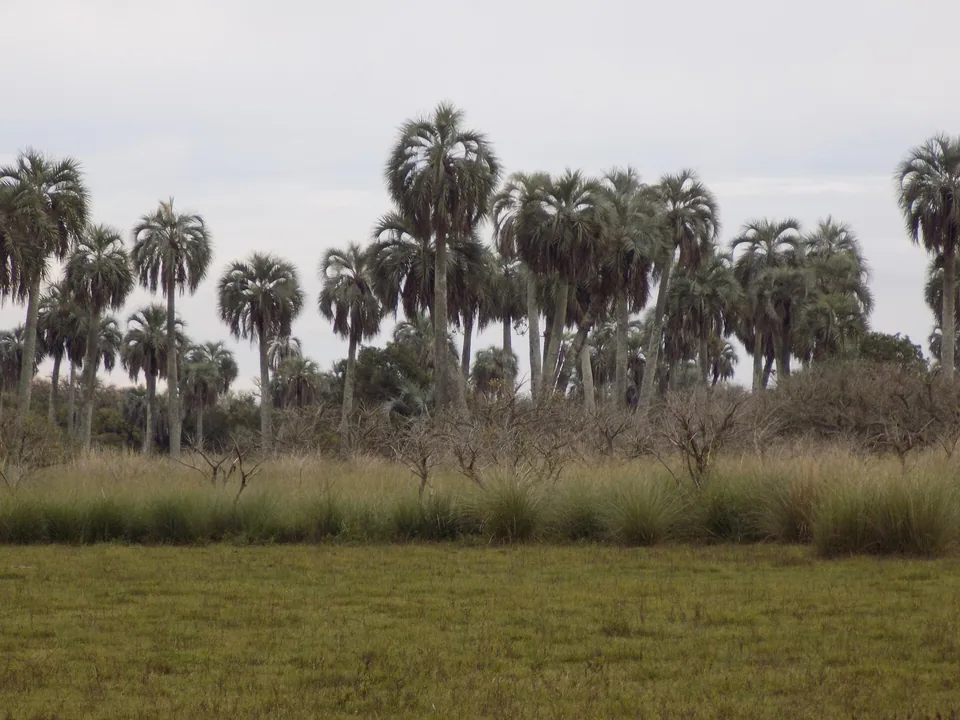
Butia odorata is a cold-hardy, single-stemmed feather-leaved palm native to southern Brazil and Uruguay. [1] It prefers a warm, sunny location and has some drought tolerance due to its deep root system. [1] The fruits are edible and used to make jellies and wine. [1]
This record is incomplete: the sources we read do not cover every field yet.
Not yet covered by our sources: Pruning
Jelly Palm care
How to water Jelly Palm
Watering
Some drought tolerance due to deep root system
What the sources say (1)
It has some drought tolerance due to its deep root system.Watering notes
Intolerant of wet soil; needs good drainage
What the sources say (1)
It is moderately salt tolerant but intolerant of full shade, prolonged cold, and wet soil.How much light Jelly Palm needs
Full sun
What the sources say (1)
Light:
Full sun (6 or more hours of direct sunlight a day)How much cold Jelly Palm can take
Hardiness, coldest zone
8a [winter low −12.2 to −9.4 °C (10 to 15 °F)]
What the sources say (1)
USDA Plant Hardiness Zone:
8a, 8b, 9a, 9b, 10a, 10bHardiness, warmest zone
10b [winter low 1.7 to 4.4 °C (35 to 40 °F)]
What the sources say (1)
USDA Plant Hardiness Zone:
8a, 8b, 9a, 9b, 10a, 10bHow to propagate Jelly Palm
Seed
What the sources say (1)
Recommended Propagation Strategy:
SeedHow to grow Jelly Palm
The plant
Life cycle
perennial
What the sources say (1)
Genus: Butia Species: odorata Family: Arecaceae Life Cycle: Perennial Recommended Propagation Strategy: SeedFamily
Arecaceae
What the sources say (1)
Genus: Butia Species: odorata Family: Arecaceae Life Cycle: Perennial Recommended Propagation Strategy: SeedMature height
457.2-609.6 cm (15-20 ft)
What the sources say (1)
Dimensions: Height: 15 ft. 0 in. - 20 ft. 0 in. Width: 10 ft. 0 in. - 15 ft. 0 in.Mature width
304.8-457.2 cm (10-15 ft)
What the sources say (1)
Dimensions: Height: 15 ft. 0 in. - 20 ft. 0 in. Width: 10 ft. 0 in. - 15 ft. 0 in.Fertilizing
Mineral fertilizers
Palm-specific fertilizer when grown in low-nutrient soil
What the sources say (1)
Insects, Diseases, and Other Plant Problems: Use a palm-specific fertilizer when growing in low-nutrient soil.Remedies
Each remedy shows what official sources say about it; traditional remedies without an official source are marked as such. Harmful ones are listed so you know to avoid them.
Treating the plant
scale insects
horticultural oil spray Works
Consult the labels for dosage rates and safety precautions.
— portal.ct.gov [2] How: Spray palms with ultrafine horticultural oil to suffocate scales (not on coconut palms).
Except for coconut palms, palms can be sprayed with ultrafine horticultural oil to suffocate scales.
— portal.ct.gov [2] What the evidence says Except for coconut palms, palms can be sprayed with ultrafine horticultural oil to suffocate scales.
— portal.ct.gov [2] insecticidal soap spray Partly works
Consult the labels for dosage rates and safety precautions.
— portal.ct.gov [2] How: Spray the fronds and trunk with insecticidal soap and reapply as directed on the label.
Spray the fronds and trunk with horticulture oil or insecticidal soap which can be purchased at most garden centers.
— blogs.ifas.ufl.edu [3] What the evidence says Otherwise, repeated application of insecticidal soap may be necessary to control crawlers.
— portal.ct.gov [2] wiping off scale with a damp paper towel Official source, not independently tested
How: Take a clean, damp paper towel and wipe off as much of the scale as possible; dispose of the used towels in a plastic bag.
Take a clean, damp paper towel and wipe off as much of it as possible – dispose of the used towels in a plastic bag before tossing them in the trash.
— blogs.ifas.ufl.edu [3]
mealybugs
mealybug destroyer ladybeetle Official source, not independently tested
How: Release the mealybug destroyer ladybeetle against egg-laying mealybugs.
For egg-laying mealybugs, such as P. citri , releases of the mealybug destroyer ladybeetle may be useful.
— portal.ct.gov [2]
bud rot
prompt removal of infected palms Partly works
How: Remove and destroy severely infected palms promptly to limit spread to nearby palms.
Prompt removal of infected palms may help reduce disease spread to nearby susceptible palms.
— hgic.clemson.edu [4] What the evidence says Prompt removal of infected palms may help reduce disease spread to nearby susceptible palms.
— hgic.clemson.edu [4]
Calendar
Pruning
Not stated in the sources we read.
Months as given by the sources, which are mostly from the United States (northern hemisphere). In the southern hemisphere they shift by about six months.
Edibility
Reported by the source, quoted verbatim. Do not eat a plant on the basis of this page alone: identification mistakes can be dangerous.
The fruit is spherical to ovoid, yellow to red, and 1 inch. It is used to make jellies and fermented for wine.
[1]
Similar plants
- South American jelly palm Butia capitata
- Areca Palm Chrysalidocarpus lutescens
- Bismark Palm Bismarckia nobilis
- California fan palm Washingtonia filifera
- Canary Island Date Palm Phoenix canariensis
- Christmas Palm Adonidia merrillii
- Double coconut Lodoicea maldivica
- Dwarf Date Palm Phoenix acaulis
Sources
Every value above is quoted from these documents. Links lead to the original publisher.
- Butia odorata (Brazilian Butia Palm, Jelly Palm, Pindo Palm, South American jelly palm, Yatay palm) | North Carolina Extension Gardener Plant Toolbox · plants.ces.ncsu.edu, consulted
- portal.ct.gov · portal.ct.gov
- blogs.ifas.ufl.edu · blogs.ifas.ufl.edu
- hgic.clemson.edu · hgic.clemson.edu
Written by Emilio Marruso · last checked