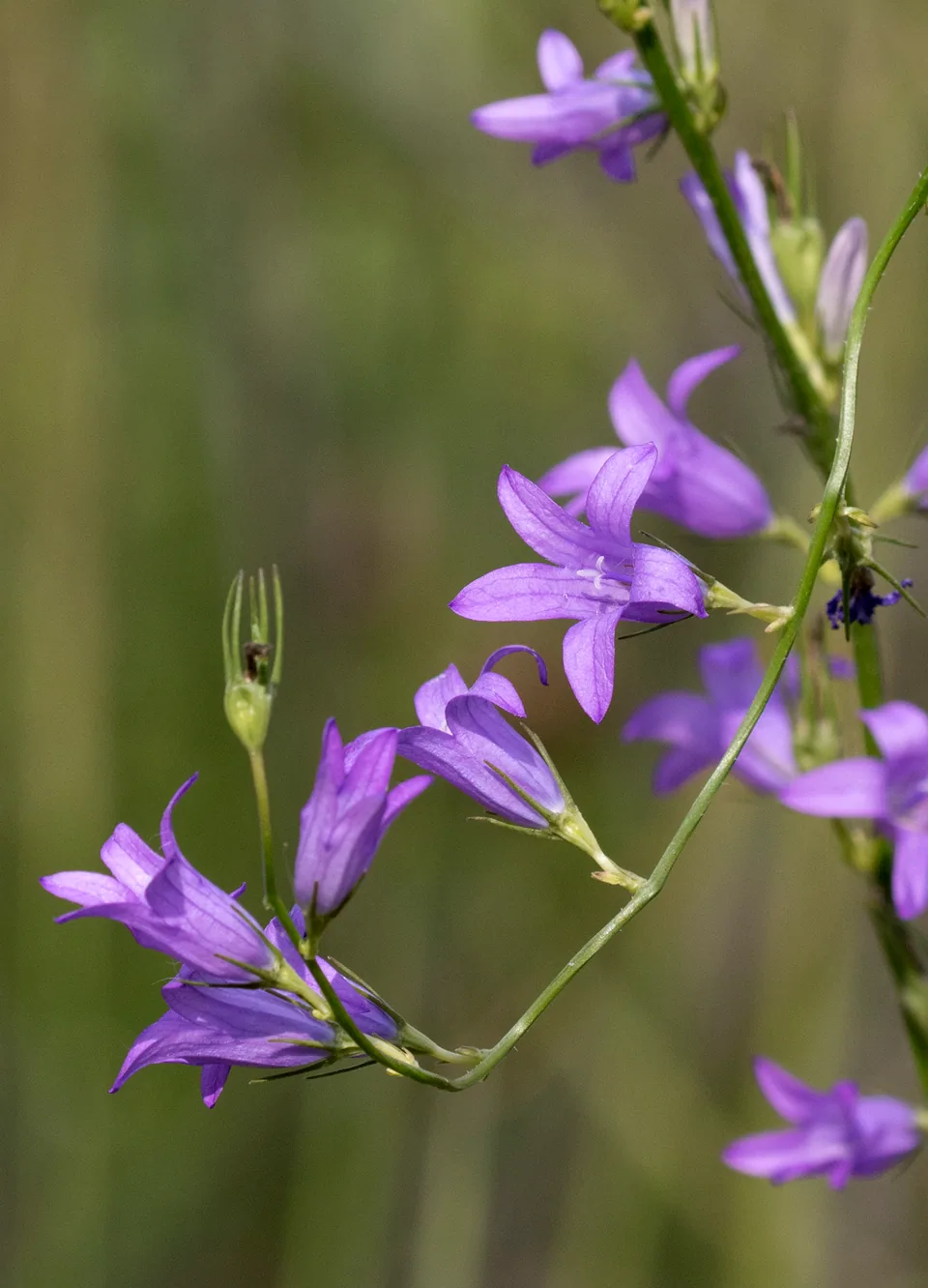
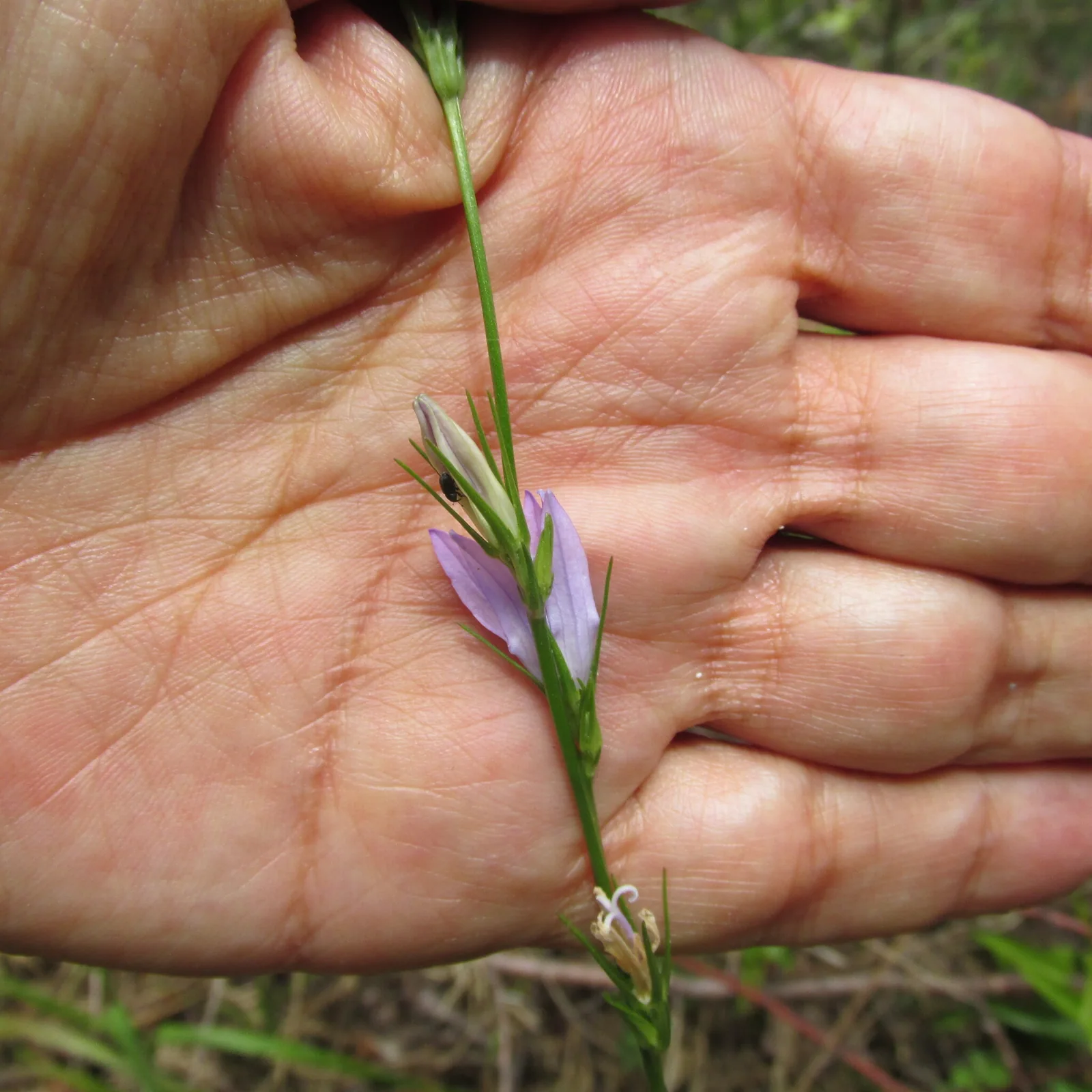

How to Grow and Care for Rampion
Campanula rapunculus
Written by Emilio Marruso · last checked
At a glance
Rampion is a charming old-fashioned vegetable that gives you plenty: tender leaves, young spring shoots you can cook like asparagus, and roots to eat raw in salads or cooked like turnips. Sow it on the surface from May to early summer, in sun or partial shade, then lift the roots in November and store them somewhere safe from frost.
- Sun
Sun to partial shade
What the sources say (1)
Light: Sun to partial shade
An easily cultivated plant, it prefers a moist but well-drained, rich sandy loam and a neutral or alkaline soil in sun or partial shade
— Campanula rapunculus - Useful Temperate Plants [1] - Water
Keep the soil moist but well drained; water young plants moderately
What the sources say (2)
Watering: Moist but well-drained soil
An easily cultivated plant, it prefers a moist but well-drained, rich sandy loam and a neutral or alkaline soil in sun or
— Campanula rapunculus - Useful Temperate Plants [1] Watering notes: Young plants should be moderately watered at first
The young plants should be moderately watered at first.
— Know your Vegetables - How to grow Rampion [2] - Cold
Survives winters down to −30 °F (−34.4 °C)
Very hardy · USDA 4 · RHS H7 · Z4
- Soil
Soil from acidic to slightly alkaline, pH 4.8–7.5
What the sources say (2)
Soil pH, minimum: 4.8
Tolerates a pH in the range 4.8 to 7.5. Plants often self-sow in the
— Campanula rapunculus - Useful Temperate Plants [1] Soil pH, maximum: 7.5
Tolerates a pH in the range 4.8 to 7.5. Plants often self-sow in the
— Campanula rapunculus - Useful Temperate Plants [1] - Spacing
5–6 in between plants, 1 ft between rows
What the sources say (1)
Spacing: 13-15 cm (5 to 6 in) in the rows; rows 30 cm (1 ft) apart
Seeds should be sown in shallow drills, 30 cm (1 foot) apart, and thinned out to 13 to 15cm (5 to 6 inches) in the rows.
— Know your Vegetables - How to grow Rampion [2] - Harvest
Lift the roots in November and store them frost-free; eat them raw in salads or cooked like turnips
What the sources say (1)
Harvest: November (lifted and stored in a frost-proof place)
They are fit for use in November, and should be lifted then and stored in a frost-proof place.
— Know your Vegetables - How to grow Rampion [2] - Watch out
Don't let it flower if you want the roots: once it goes to seed it can become a weed
- Propagation
From seed; it often self-sows
- Sowing
Sow on the soil surface where it will grow, from May to early summer
What the sources say (2)
Sowing: May to early summer, surface sown in situ
Seed - surface sow May/early summer in situ. The seed usually germinates in 2 - 4 weeks
— Campanula rapunculus - Useful Temperate Plants [1] Surface sow May/June in situ. - The seed usually germinates in 2 - 4
— Know your Vegetables - How to grow Rampion [2]
Overview
Campanula rapunculus (rampion) is an erect biennial with a thick rootstock, cultivated for its edible root and leaves. [1] It prefers a moist but well-drained, rich sandy loam in sun or partial shade and withstands winter temperatures down to -15 C. [1] The seed is surface sown in situ in May or early summer and germinates in two to four weeks. [1]
Rampion care
How to water Rampion
Watering
Moist but well-drained soil
What the sources say (1)
An easily cultivated plant, it prefers a moist but well-drained, rich sandy loam and a neutral or alkaline soil in sun orWatering notes
Young plants should be moderately watered at first
What the sources say (1)
The young plants should be moderately watered at first.How much light Rampion needs
Sun to partial shade
What the sources say (1)
An easily cultivated plant, it prefers a moist but well-drained, rich sandy loam and a neutral or alkaline soil in sun or partial shadeHow much cold Rampion can take
Best soil for Rampion
Soil pH, minimum
4.8
What the sources say (1)
Tolerates a pH in the range 4.8 to 7.5.
Plants often self-sow in theSoil pH, maximum
7.5
What the sources say (1)
Tolerates a pH in the range 4.8 to 7.5.
Plants often self-sow in theWhere to grow Rampion
13-15 cm (5 to 6 in) in the rows; rows 30 cm (1 ft) apart
What the sources say (1)
Seeds should be sown in shallow drills, 30 cm (1 foot) apart, and thinned out to 13 to 15cm (5 to 6 inches) in the rows.How to propagate Rampion
Rampion pests and problems
Self-seeding as a garden pest
Symptom: Once gone to seed the plant can become a garden pest
What to do: When grown for the edible root, do not allow the plant to flower
Remedies
The sources we checked give no remedies for this plant.
Calendar
May to early summer, surface sown in situ
November (lifted and stored in a frost-proof place)
What the sources say (1)
They are fit for use in November, and should be lifted then and stored in a frost-proof place.Months as given by the sources, which are mostly from the United States (northern hemisphere). In the southern hemisphere they shift by about six months.
Edibility
Reported by the source, quoted verbatim. Do not eat a plant on the basis of this page alone: identification mistakes can be dangerous.
Indicative values
Values from a secondary source, not checked word for word like the rest of this page. Use them as a starting point.
- Life cycle
- Herbaceous PerennialIndicative value, adapt it to your climate · Secondary source
- Mature height
- 61-91.4 cm (2-3 ft)Indicative value, adapt it to your climate · Secondary source
- Hours of sun
- 4-6 hoursIndicative value, adapt it to your climate · Secondary source
- Care level
- MediumIndicative value, adapt it to your climate · Secondary source
- Growth rate
- LowIndicative value, adapt it to your climate · Secondary source
- Pruning
- February, March, April, June, July, AugustIndicative value, adapt it to your climate · Secondary source
Similar plants
- Appalachian Bellflower Campanula divaricata
- Bellflower Campanula glomerata
- Campanula cochleariifolia Campanula cochleariifolia
- Campanula poscharskyana Campanula poscharskyana
- Canterbury Bells Campanula medium
- Creeping Bellflower Campanula rapunculoides
- Harebell Campanula rotundifolia
- Italian Bellflower Campanula isophylla
Sources
Every value above is quoted from these documents. Links lead to the original publisher.
- Campanula rapunculus - Useful Temperate Plants · temperate.theferns.info, consulted
- Know your Vegetables - How to grow Rampion · sites.google.com, consulted
- Rampion (Campanula rapunculus) — Practical Plants · practicalplants.org, consulted
- Campanula rapunculus - EcuRed · ecured.cu, consulted
- Ethnobotanical Plant Campanula rapunculus | Dr. Duke's Phytochemical and Ethnobotanical Databases · phytochem.nal.usda.gov, consulted
Written by Emilio Marruso · last checked