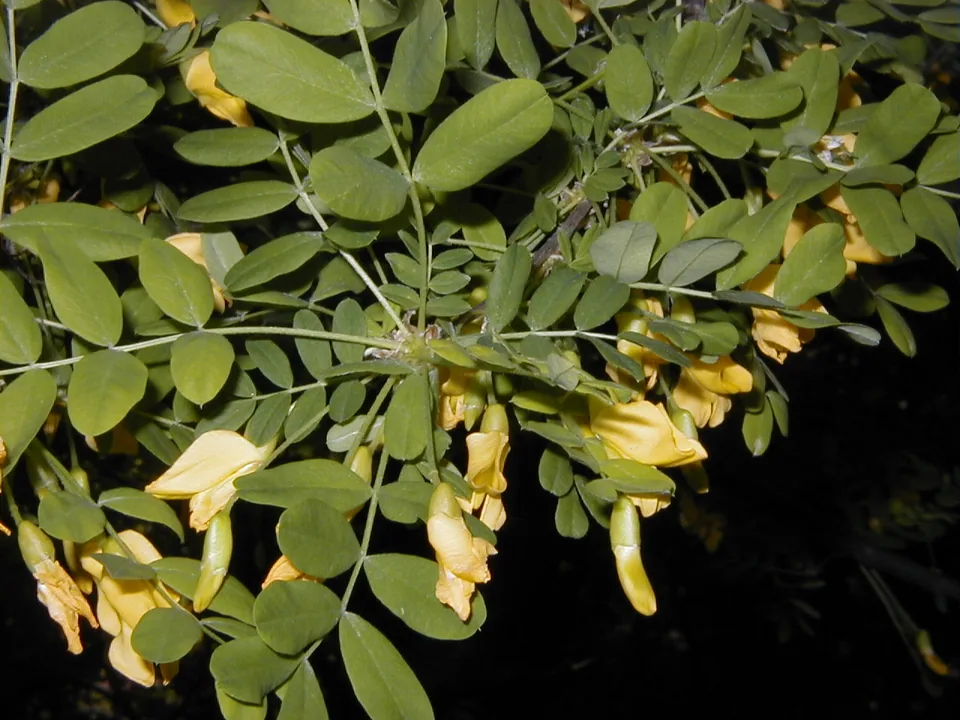
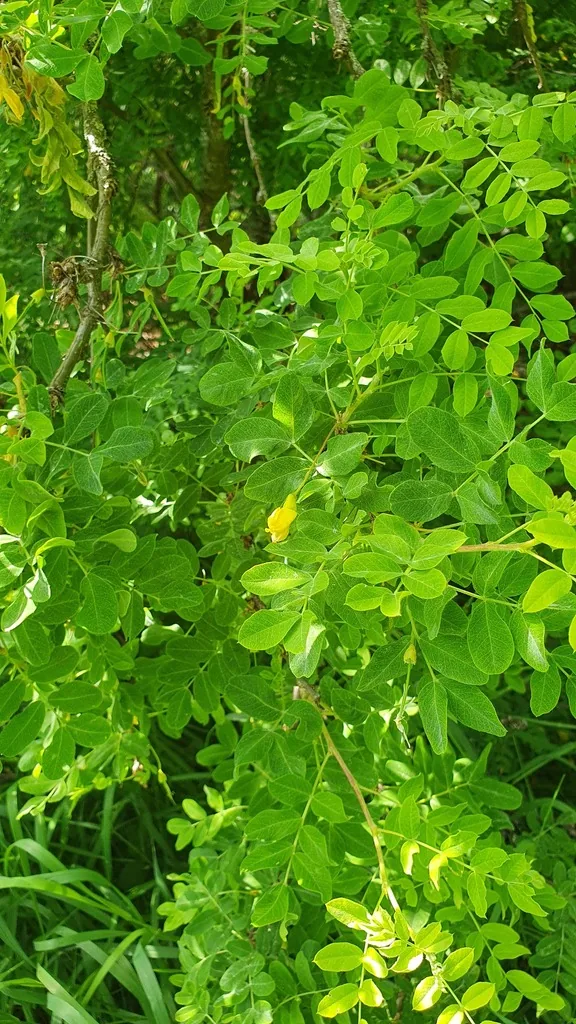

How to Grow and Care for Siberian peashrub
Caragana arborescens
Written by Emilio Marruso · last checked
At a glance
Siberian peashrub is a tough, drought-tolerant shrub that grows 15–20 ft tall and is happy in soils from acidic to alkaline, pH 5.0–8.0. Plant it in late spring or early summer, once the last expected frosts are behind you. As a bonus, its young pods can be cooked as a vegetable, and its mild seeds shine in spicy dishes.
- Water
Likes dry to medium soil and handles drought well
What the sources say (2)
Watering: Dry to medium
Light: Full sun. Water: Dry to medium. Soil: Average to dry soils.
— Carangana-Siberian Peashrub | NDSU Agriculture [1] Watering notes: Drought-tolerant shrub
Caragana is a tall, drought-tolerant legume shrub native to Siberia that is long-lived and tolerant of alkaline sites.
— Carangana-Siberian Peashrub | NDSU Agriculture [1] - Soil
Grows in acidic to alkaline soil, pH 5.0–8.0
- Planting
Plant in late spring or early summer, after the last expected frosts
What the sources say (1)
Planting: Late spring or early summer, after the last expected frosts
Plant them out into their permanent positions in late spring or early summer, after the last expected frosts.
— Caragana arborescens - Useful Temperate Plants [7] - Harvest
Cook young pods as a vegetable; the mild seeds are best in spicy dishes
- Pests
Watch for leafhoppers
What the sources say (1)
Pests: leafhoppers
Liabilities - leaf-hoppers - a canker disease/affliction - not an overwhelming ornamental plant
— Plant Database [2] - Size
15–20 ft tall
What the sources say (1)
Mature height: 457.2-609.6 cm (15-20 ft)
Ultimate Height: 15-20 feet Ultimate Spread: 12-18 feet
— Caragana arborescens (Siberian Peashrub) – Purdue Arboretum Explorer [5] - Propagation
From seed, half-ripe cuttings or layering; named varieties by cuttings or grafting
What the sources say (2)
- Sowing
Sow as soon as the seed is ripe, in a cold frame
What the sources say (1)
Sowing: As soon as the seed is ripe, in a cold frame
Seed - best sown as soon as it is ripe in a cold frame
— Caragana arborescens - Useful Temperate Plants [7] - Containers
Grows in containers too
What the sources say (1)
In containers: Yes
Environmental Other: makes a good windbreak; suitable for container planting; yellow flowers not very showy
— Woody Plants Database [4]
Overview
Caragana arborescens is a tall, drought-tolerant legume shrub that is a major windbreak species. [1]
This record is incomplete: the sources we read do not cover every field yet.
Not yet covered by our sources: Hardiness, warmest zone, Pruning
Siberian peashrub care
How to water Siberian peashrub
Watering
Dry to medium
What the sources say (1)
Light: Full sun. Water: Dry to medium. Soil: Average to dry soils.Watering notes
Drought-tolerant shrub
What the sources say (1)
Caragana is a tall, drought-tolerant legume shrub native to Siberia that is long-lived and tolerant of alkaline sites.How much light Siberian peashrub needs
The sources disagree:
Light Requirements: - Full Sun to Partial Shade - Partial Shade to Full Shade - Sun
[5]
How much cold Siberian peashrub can take
Hardiness, coldest zone
The sources give different values depending on region, zone or growing conditions.
What each source says
According to NDSU Extension: 2 [winter low −45.6 to −40 °C (−50 to −40 °F)]
According to Cornell Woody Plants Database: 3a [winter low −40 to −37.2 °C (−40 to −35 °F)]
What the sources say (2)
According to NDSU Extension: Hardiness: Zone 2 Leaves: Deciduous Plant Type: ShrubAccording to Cornell Woody Plants Database: Hardy To Zone: 3a Soil Ph: Can tolerate acid to alkaline soil (pH 5.0 to 8.0)Hardiness, warmest zone
Not stated in the sources we read.
Best soil for Siberian peashrub
Soil pH, minimum
5.0
What the sources say (1)
Soil Ph: Can tolerate acid to alkaline soil (pH 5.0 to 8.0)Soil pH, maximum
8.0
What the sources say (1)
Soil Ph: Can tolerate acid to alkaline soil (pH 5.0 to 8.0)Where to grow Siberian peashrub
Yes
What the sources say (1)
Environmental Other: makes a good windbreak; suitable for container planting; yellow flowers not very showyHow to propagate Siberian peashrub
Seed; cuttings of half-ripe wood; layering; cultivars by cuttings or grafting
How to grow Siberian peashrub
The plant
Family
Fabaceae
What the sources say (1)
Scientific Name: Caragana arborescens Family: Fabaceae (Legume) Hardiness: Zone 2 Leaves: Deciduous Plant Type: ShrubMature height
457.2-609.6 cm (15-20 ft)
What the sources say (1)
Ultimate Height:
15-20 feet
Ultimate Spread:
12-18 feetPests and diseases
Pests
leafhoppers
What the sources say (1)
Liabilities - leaf-hoppers - a canker disease/affliction - not an overwhelming ornamental plantRemedies
Each remedy shows what official sources say about it; traditional remedies without an official source are marked as such. Harmful ones are listed so you know to avoid them.
Treating the plant
blister beetles
picking the beetles off by hand Not verified
Traditional remedy, not verified by an official source.
How: If an infestation occurs in a garden or on a few trees, control can be achieved by picking the beetles off the plants.
Getting rid of it
invasive shrub removal
repeated prescribed burning Partly works
How: Mechanical control can be done with repeated prescribed burning; the shrub resprouts from the base but is weakened.
Mechanical control can be done with repeated prescribed burning. Siberian peashrub will resprout from the base, but be weakened with repeated burning and may eventually die.
— dnr.state.mn.us [8] What the evidence says Burning may be effective for killing seedlings but will not kill mature plants.
— mda.state.mn.us [9] hand pulling small plants and seedlings Partly works
How: Small plants can be hand pulled or mowed.
Small plants can be hand pulled or mowed.
— mda.state.mn.us [9] What the evidence says Siberian peashrub will resprout from the base, but be weakened with repeated burning and may eventually die. Pulling seedlings can also be effective.
— dnr.state.mn.us [8]
Calendar
Sowing
As soon as the seed is ripe, in a cold frame
What the sources say (1)
Seed - best sown as soon as it is ripe in a cold framePlanting
Late spring or early summer, after the last expected frosts
What the sources say (1)
Plant them out into their permanent positions in late spring or early summer, after the last expected frosts.Pruning
Not stated in the sources we read.
Months as given by the sources, which are mostly from the United States (northern hemisphere). In the southern hemisphere they shift by about six months.
Edibility
Reported by the source, quoted verbatim. Do not eat a plant on the basis of this page alone: identification mistakes can be dangerous.
Indicative values
Values from a secondary source, not checked word for word like the rest of this page. Use them as a starting point.
- Life cycle
- PerennialIndicative value, adapt it to your climate · Secondary source
- Drought tolerant
- yesIndicative value, adapt it to your climate · Secondary source
- Soil
- Alkaline, Rocky, gravelly, dry, Well-drainedIndicative value, adapt it to your climate · Secondary source
- Care level
- MediumIndicative value, adapt it to your climate · Secondary source
- Growth rate
- ModerateIndicative value, adapt it to your climate · Secondary source
- Pruning
- February, June, July, February, June, JulyIndicative value, adapt it to your climate · Secondary source
Similar plants
- Russian Peashrub Caragana frutex
- Afghan Redbud Cercis griffithii
- Alpine Laburnum Laburnum alpinum
- American Groundnut Apios americana
- American Wisteria Wisteria frutescens
- Amur Maackia Maackia amurensis
- Bauhinia Bauhinia blakeana
- Bicolor Lespedeza Lespedeza bicolor
Sources
Every value above is quoted from these documents. Links lead to the original publisher.
- Carangana-Siberian Peashrub | NDSU Agriculture · ndsu.edu, consulted
- Plant Database · plantdatabase.uconn.edu, consulted
- NORTH DAKOTA STATE UNIVERSITY · ag.ndsu.edu, consulted
- Woody Plants Database · woodyplants.cals.cornell.edu, consulted
- Caragana arborescens (Siberian Peashrub) – Purdue Arboretum Explorer · arboretum.purdue.edu, consulted
- Caragana - Gardening at USask - College of Agriculture and Bioresources | University of Saskatchewan · gardening.usask.ca, consulted
- Caragana arborescens - Useful Temperate Plants · temperate.theferns.info, consulted
- dnr.state.mn.us · dnr.state.mn.us
- mda.state.mn.us · mda.state.mn.us
Written by Emilio Marruso · last checked