
How to Grow and Care for Hardy orange
Citrus trifoliata
Written by Emilio Marruso · last checked
Toxic to: People · Why
At a glance
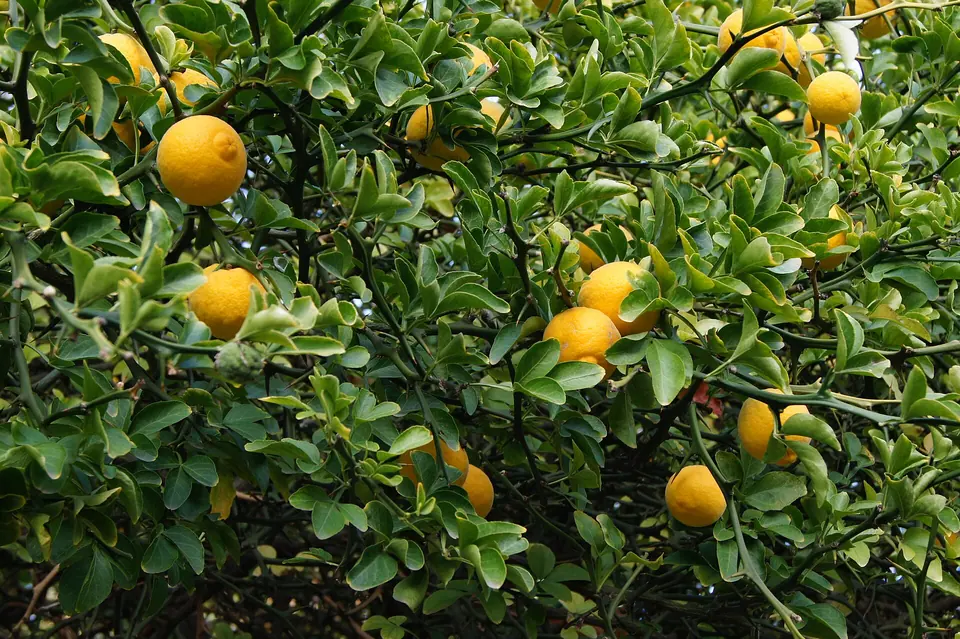
Trifoliate orange is a citrus armed with sharp, numerous thorns, perfect for a security hedge. In fall it fills with lightly fuzzy orange fruits: bitter, but the peel and pulp make marmalade and the sour juice flavors drinks. Give it well-drained, acidic soil, and it will grow happily even in a container on your patio.
- Cold
Suffers in especially cold winters
- Soil
Well-drained, acidic soil, pH 6.0 or lower
What the sources say (3)
Watering notes: Well-drained soil
It prefers well-drained, acidic soil in a sunny location and grows up to nearly 20 feet tall.
— Citrus trifoliata (Hardy Orange, Trifoliate Orange) | North Carolina Extension Gardener Plant Toolbox [1] Soil pH: Acid (<6.0) Soil Drainage: Good Drainage
— Citrus trifoliata (Hardy Orange, Trifoliate Orange) | North Carolina Extension Gardener Plant Toolbox [1] Soil pH, maximum: 6.0
Soil pH: Acid (<6.0) Soil Drainage: Good Drainage
— Citrus trifoliata (Hardy Orange, Trifoliate Orange) | North Carolina Extension Gardener Plant Toolbox [1] - Harvest
Pick in fall; bitter fruit for marmalade, sour juice to flavor drinks
What the sources say (1)
Harvest: Fall
Fruit Value To Gardener: Edible Fragrant Showy Display/Harvest Time: Fall
— Citrus trifoliata (Hardy Orange, Trifoliate Orange) | North Carolina Extension Gardener Plant Toolbox [1] - Watch out
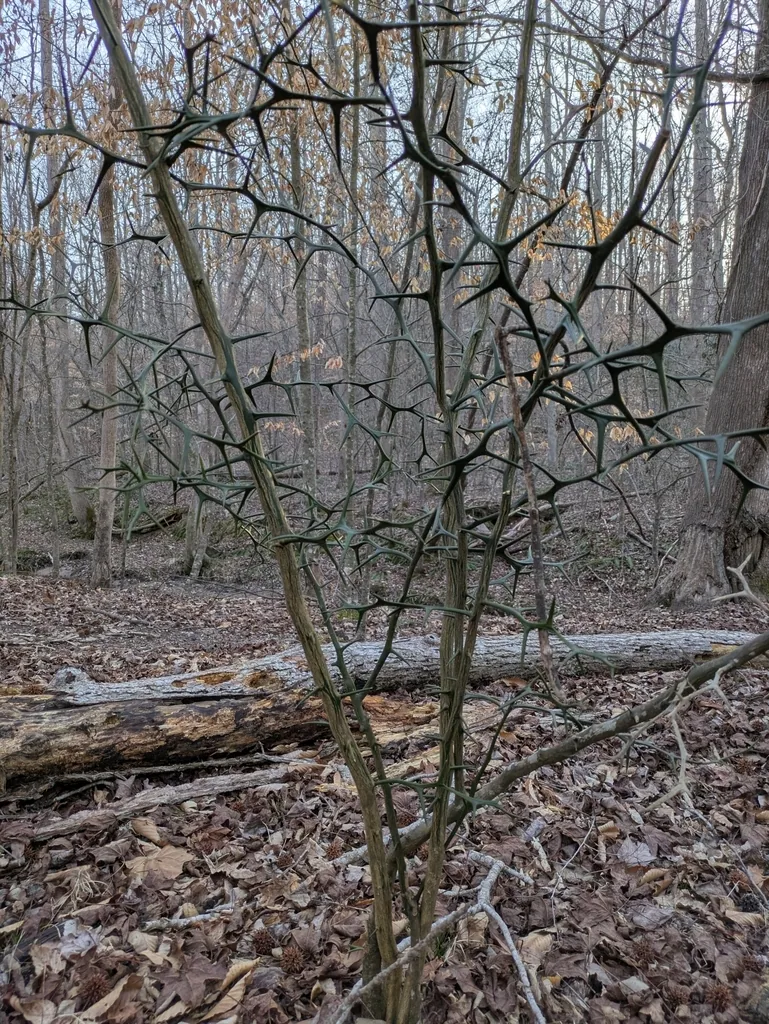
Sharp, numerous thorns: keep it away from busy paths; it can spread like a weed
- Propagation
From seed, after a cool, moist rest period
What the sources say (1)
Propagation: Seed (needs a cool, moist stratification period)
It grows readily from seed, but the seed must go through a cool, moist storage period called stratification.
— Trifoliate Orange [6] - Containers
Grows in containers too
What the sources say (1)
In containers: Yes
It can also grow well in a large container.
— Citrus trifoliata (Hardy Orange, Trifoliate Orange) | North Carolina Extension Gardener Plant Toolbox [1] - Safety
Eating a lot of fruit causes stomach pain and nausea; leaves and fruit can irritate skin in the sun
Overview
Trifoliate orange is a deciduous thorny shrub or small tree native to China. [1] It prefers well-drained, acidic soil in a sunny location. [1] The fruit is exceedingly sour and full of seeds. [1]
This record is incomplete: the sources we read do not cover every field yet.
Not yet covered by our sources: Watering, Pruning
Hardy orange care
Measurements in square brackets are our conversion into the other unit system; the quoted text is unchanged.
How to water Hardy orange
Watering
Not stated in the sources we read.
Watering notes
Well-drained soil
What the sources say (2)
It prefers well-drained, acidic soil in a sunny location and grows up to nearly 20 feet tall.Soil pH:
Acid (<6.0)
Soil Drainage:
Good DrainageHow much light Hardy orange needs
The sources give different values depending on region, zone or growing conditions.
What each source says
According to NC State Extension: Full sun; intolerant of shady sites
According to University of Arkansas (Q&A): Full sun to partial shade
According to University of Arkansas (Plant of the Week): Full sun or light shade
What the sources say (5)
According to NC State Extension: It is intolerant of shady sites and suffers in especially cold winters.According to University of Arkansas (Q&A): Plant the plants in full sun to partial shade, away from heavy traffic areasAccording to University of Arkansas (Plant of the Week): Grow it in full sun or light shade in any reasonable soil.Light:
Full sun (6 or more hours of direct sunlight a day)
Soil pH:
Acid (<6.0)It prefers well-drained, acidic soil in a sunny location and grows up to nearly 20 feet tall.How much cold Hardy orange can take
Hardiness, coldest zone
The sources give different values depending on region, zone or growing conditions.
What each source says
According to NC State Extension: 5a [winter low −28.9 to −26.1 °C (−20 to −15 °F)]
According to LSU AgCenter: 6 [winter low −23.3 to −17.8 °C (−10 to 0 °F)]
According to University of Arkansas Division of Agriculture: -10 [winter low −1.1 to 4.4 °C (30 to 40 °F)] degrees Fahrenheit
What the sources say (3)
According to NC State Extension: USDA Plant Hardiness Zone:
5a, 5b, 6a, 6b, 7a, 7b, 8a, 8b, 9a, 9bAccording to LSU AgCenter: trifoliate orange, also known as hardy orange, is cold-hardy to USDA zone 6, allowing it to tolerate lower temperatures, moderate frosts and light snow.According to University of Arkansas Division of Agriculture: Poncirus is winter hardy to -10 degrees Fahrenheit so can be used throughout Arkansas.Hardiness, warmest zone
9b [winter low −3.9 to −1.1 °C (25 to 30 °F)]
What the sources say (1)
USDA Plant Hardiness Zone:
5a, 5b, 6a, 6b, 7a, 7b, 8a, 8b, 9a, 9bBest soil for Hardy orange
6.0
What the sources say (1)
Soil pH:
Acid (<6.0)
Soil Drainage:
Good DrainageWhere to grow Hardy orange
Yes
What the sources say (1)
It can also grow well in a large container.How to propagate Hardy orange
Seed (needs a cool, moist stratification period)
What the sources say (1)
It grows readily from seed, but
the seed must go through a cool, moist storage period called stratification.How to grow Hardy orange
The plant
Family
Rutaceae
What the sources say (1)
Trifoliate orange is a deciduous thorny shrub or small tree in the citrus family (Rutaceae) native to China.Mature height
Fertilizing
When
The sources give different values depending on region, zone or growing conditions.
What each source says
Citrus in general: Late winter just before bloom (January–February), then May and possibly June
Citrus in general, newly planted trees: Not until growth begins in spring
What the sources say (2)
Citrus in general: Nitrogen should be applied in January or February just prior to bloom. The second application then can be applied in May and perhaps a third in June.Citrus in general, newly planted trees: Newly planted trees should not be fertilized until growth begins in the spring. If possible, use a complete fertilizer such as an 8-8-8 or 10-10-10 that contains micronutrients.How often
The sources give different values depending on region, zone or growing conditions.
What each source says
Citrus in general: Three applications a year: early bud break (late February–March), fruit swell (May) and June
What the sources say (1)
Citrus in general: but other complete fertilizers can also be used. The total annual recommendation should be split evenly into three applications: early bud break (late February through March), fruit swell (May), and when fruit reaches 1 inch in diameter (June).Natural fertilizers
The sources give different values depending on region, zone or growing conditions.
What each source says
Citrus in general: Composted cow manure (45.4 kg [100 lb] a year supplies 454 g of nitrogen), blood meal or other manures, applied in fall under the canopy
What the sources say (1)
Citrus in general: 1 pound of actual nitrogen equals about 5 lb of ammonium sulfate per year, or 100 lb of composted cow manure each year. Organic fertilizers such as manure, bloodmeal, etc. could be applied in the fall under the tree canopy.Mineral fertilizers
The sources give different values depending on region, zone or growing conditions.
What each source says
Citrus in general, young trees: Complete fertilizer such as 6-6-6 or 8-8-8
Citrus in general, mature trees: Complete fertilizer such as 10-10-10
What the sources say (2)
Citrus in general, young trees: Fertilizer formulations such as 6-6-6 or 8-8-8 (for young trees) and 10-10-10 (for mature trees) are suggested, but other complete fertilizers can also be used.Citrus in general, mature trees: Fertilizer formulations such as 6-6-6 or 8-8-8 (for young trees) and 10-10-10 (for mature trees) are suggested, but other complete fertilizers can also be used.Micronutrients
The sources give different values depending on region, zone or growing conditions.
What each source says
Citrus in general: Zinc and iron: chelated micronutrient foliar spray as new growth emerges in spring
Citrus in general, older trees: Chelated iron to the soil when iron deficiency symptoms develop
What the sources say (2)
Citrus in general: Citrus occasionally suffers from micronutrient deficiencies such as zinc or iron. These deficiencies can be corrected by applying a foliar application of a liquid chelated micronutrient solution as the new growth emerges in the spring.Citrus in general, older trees: Boron deficiencies may be corrected with foliar sprays or soil applications. When iron deficiency symptoms develop, chelated forms should be applied to the soil.Avoid
The sources give different values depending on region, zone or growing conditions.
What each source says
Citrus in general, at planting: No fertilizer in the planting hole
Citrus in general: No fertilizer between August 1 and February 15, to avoid untimely winter growth flushes
Citrus in general: Fertilizer placed next to the trunk
What the sources say (3)
Citrus in general, at planting: Do not apply any fertilizer in the planting hole, as root damage may result.Citrus in general: Fertilizer applications should not be made between August 1 and February 15 to avoid inducing untimely growth flushes during the winter.Citrus in general: For established trees, a general rule of thumb is to spread fertilizer twice the diameter of the canopy. Never apply fertilizer next to the trunk.Signs of excess
The sources give different values depending on region, zone or growing conditions.
What each source says
Citrus in general: Excessive new growth, susceptible to disorders such as bacterial blast
What the sources say (1)
Citrus in general: Be careful not to overfertilize as this will cause excessive new growth, which makes trees susceptible to other disorders such as bacterial blast.Hardy orange pests and problems
Invasiveness
Symptom: Weedy; considered invasive in some states
What the sources say (1)
It can be weedy and is considered invasive in some states, including in NC by the NC Invasive Plant Council.
— Citrus trifoliata (Hardy Orange, Trifoliate Orange) | North Carolina Extension Gardener Plant Toolbox [1] Cold winters
Symptom: Suffers in especially cold winters
What the sources say (1)
It is intolerant of shady sites and suffers in especially cold winters.
— Citrus trifoliata (Hardy Orange, Trifoliate Orange) | North Carolina Extension Gardener Plant Toolbox [1] Thorns
Symptom: Sharp and numerous thorns
What to do: Not for high-traffic areas; can be used as a security hedge
What the sources say (1)
The thorns of the trifoliate orange are sharp and numerous. The plant is not for high-traffic areas, but it can make a very effective security hedge.
— Citrus trifoliata (Hardy Orange, Trifoliate Orange) | North Carolina Extension Gardener Plant Toolbox [1]
Remedies
Each remedy shows what official sources say about it; traditional remedies without an official source are marked as such. Harmful ones are listed so you know to avoid them.
First aid
First aid: not a substitute for a doctor
skin contact with sap or fruit
washing the skin with soap and cool water Official source, not independently tested
The rash spreads to your eyes, mouth, genital area, or covers more than one-fourth of your skin area.
— fda.gov [11] How: Wash your skin in soap and cool water as soon as possible if you come in contact with a poisonous plant.
Wash your skin in soap and cool water as soon as possible if you come in contact with a poisonous plant. The sooner you cleanse the skin, the greater the chance that you can remove the plant oil or help prevent further spread.
— fda.gov [11]
Getting rid of it
invasiveness
pulling seedlings by hand Not verified
Traditional remedy, not verified by an official source.
Wear gloves to protect your hands from thorns.
— weekand.com [12] How: Pull any seedlings from the ground as soon as you see them. Trifoliate is easiest to eliminate before it produces seeds and fruit. Wear gloves to protect your hands from thorns.
cutting large specimens down to a low stump Not verified
Traditional remedy, not verified by an official source.
Wear gloves to protect your hands from thorns.
— weekand.com [12] How: Cut specimens that are too large to pull with pruning shears or a saw, depending on the diameter of the trunk. Leave only a few inches of the stump.
disposing of the fruit in a heavy trash bag Not verified
Traditional remedy, not verified by an official source.
How: Dispose of any fruit that may be on the tree and place it in a heavy trash bag.
Is Hardy orange poisonous?
Reported by the source, quoted verbatim. This is not medical or veterinary advice: if a person or an animal may have eaten this plant, contact a poison control centre or a veterinarian.
Causes only low toxicity if eaten in quantity. Skin irritation minor or lasting only for a few minutes.
[1]If eaten in large quantities, the high acidity can cause severe stomach pain and nausea.
[1]Like many plants in the citrus family, it has chemicals in the leaves and fruits that can cause photodermatitis.
[1]- Poisonous parts
Poison Part: Fruits
[1]- Toxic principle
Furanocoumarins are responsible for photodermatitis, which occurs when the compound is applied to the skin in the presence of sunlight (UV).
[1]- Symptoms
Some people experience minor skin irritation after handling the fruits or other plant parts in sunlight.
[1]- Severity
Poison Severity: Low
[1]
Calendar
Harvest
Fall
What the sources say (1)
Fruit Value To Gardener:
Edible
Fragrant
Showy
Display/Harvest Time:
FallPruning
Not stated in the sources we read.
Months as given by the sources, which are mostly from the United States (northern hemisphere). In the southern hemisphere they shift by about six months.
Edibility
Reported by the source, quoted verbatim. Do not eat a plant on the basis of this page alone: identification mistakes can be dangerous.
Indicative values
Values from a secondary source, not checked word for word like the rest of this page. Use them as a starting point.
- Life cycle
- PerennialIndicative value, adapt it to your climate · Secondary source
- Hours of sun
- 6-8 hoursIndicative value, adapt it to your climate · Secondary source
- Watering
- AverageIndicative value, adapt it to your climate · Secondary source
- Drought tolerant
- yesIndicative value, adapt it to your climate · Secondary source
- Care level
- MediumIndicative value, adapt it to your climate · Secondary source
- Growth rate
- LowIndicative value, adapt it to your climate · Secondary source
- Pruning
- March, April, May, June, July, August, September, March, April, February, March, AprilIndicative value, adapt it to your climate · Secondary source
Similar plants
- Bitter orange Citrus × aurantium
- Lemon Citrus limon
- Sweet orange Citrus × sinensis
- Meyer lemon Citrus meyeri
- Pomelo Citrus maxima
- Amur Cork Tree Phellodendron amurense
- Bee-Bee Tree Tetradium daniellii
- Curry tree Murraya koenigii
Sources
Every value above is quoted from these documents. Links lead to the original publisher.
- Citrus trifoliata (Hardy Orange, Trifoliate Orange) | North Carolina Extension Gardener Plant Toolbox · plants.ces.ncsu.edu, consulted
- Trifoliate Orange - Citrus trifoliata | North Carolina Extension Gardener Plant Toolbox · plants.ces.ncsu.edu, consulted
- Hardy Orange - Citrus trifoliata | North Carolina Extension Gardener Plant Toolbox · plants.ces.ncsu.edu, consulted
- Trifoliate Orange - Chatham County Center | N.C. Cooperative Extension · chatham.ces.ncsu.edu, consulted
- Citrus chat · lsuagcenter.com, consulted
- Trifoliate Orange · uaex.uada.edu, consulted
- Trifoliate Orange (Hardy Orange) · uaex.uada.edu, consulted
- ipm.ucanr.edu · ipm.ucanr.edu
- fieldreport.caes.uga.edu · fieldreport.caes.uga.edu
- aces.edu · aces.edu
- fda.gov · fda.gov
- weekand.com · weekand.com
Written by Emilio Marruso · last checked