
How to Grow and Care for Bitter orange
Citrus × aurantium
Written by Emilio Marruso · last checked
Toxic to: People · Why
At a glance
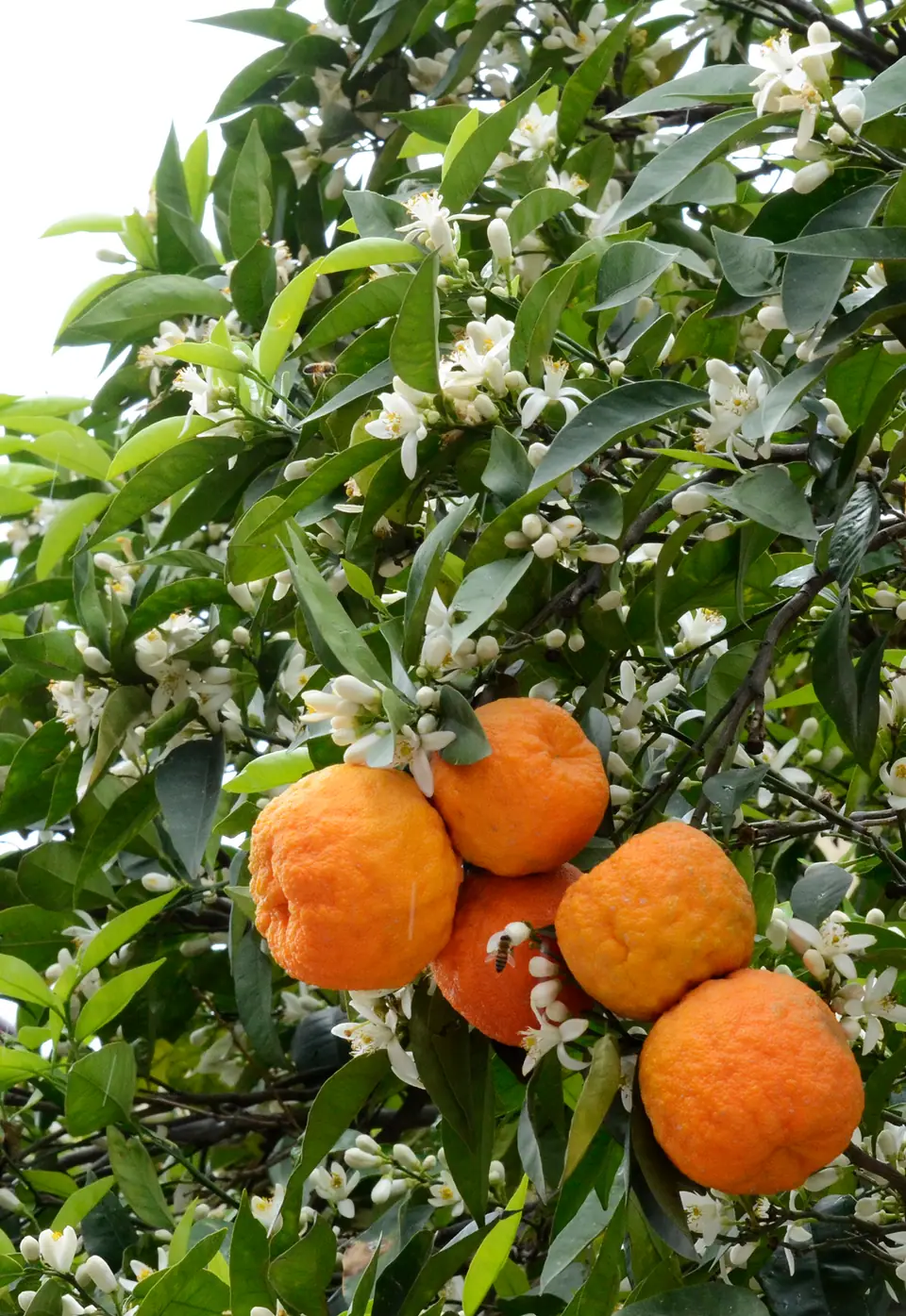
Bitter orange brings sunshine to the kitchen: its very bitter fruit is the favorite for marmalade, the rind flavors cakes, and the flowers scent tea. Give it full sun and moderate watering, and it can grow 16 feet tall or live happily in a pot. You can even start your own tree from seed in a greenhouse.
- Sun
Full sun
- Water
Moderate; in pots, water when the soil is almost dry, but never let it dry out completely
What the sources say (2)
Watering: Moderate; for pot plants water only when the compost is almost dry, but do not let it become completely dry
Water moderate Hardiness Zone 9+ Soil textures loamy, clay Soil pH acid, neutral, very alkaline Drainage well drained Tolerates Nutritionally Poor Soil No Drought intolerant
— Bitter Orange (Citrus aurantium) — Practical Plants [6] Water only when the compost is almost dry, but do not allow it to become completely dry
— Citrus aurantium - Useful Temperate Plants [5] - Cold
Survives winters down to 20 °F (−6.7 °C)
Hardy in average winters · USDA 9 · RHS H4 · Z9
What the sources say (1)
Hardiness, coldest zone: 9 [winter low −6.7 to −1.1 °C (20 to 30 °F)]
Hardiness Zone 9+
— Bitter Orange (Citrus aurantium) — Practical Plants [6] - Soil
Best in acidic soil, pH 5.0–6.0; it puts up with pH 4.8–8.3
- Planting
Plant out in summer, after at least three growing seasons in a greenhouse
What the sources say (1)
Planting: Summer (seedlings grown on in the greenhouse for at least three growing seasons)
Plant them out in the summer and give them some protection from the cold for their first few winters outdoors.
— Citrus aurantium - Useful Temperate Plants [5] - Harvest
Very bitter fruit, best for marmalade; the rind flavors cakes and the flowers scent tea
- Pests
Seedlings can rot at the base: water with care and keep the air moving
- Watch out
Too much or too little water turns potted plants yellow and can kill them
- Size
Grows 16 ft (5 m) tall
What the sources say (1)
Mature height: 500 cm (5 m)
also known as sour orange, bitter orange, Seville orange, or biga-rade, is an evergreen tree that can grow up to 5 meters tall.
— Citrus aurantium L. Active Constituents, Biological Effects [1] - Propagation
From seed, half-ripe cuttings in July–August, or layering in October
What the sources say (3)
Propagation: Seed (often polyembryonic); cuttings of half-ripe wood in mid summer (July/August); layering in early autumn (October)
Cuttings of half-ripe wood, mid summer in a frame.
— Citrus aurantium - Useful Temperate Plants [5] Layering in early autumn.
— Citrus aurantium - Useful Temperate Plants [5] The seed is usually polyembrionic, two or more seedlings arise from each seed
— Citrus aurantium - Useful Temperate Plants [5] - Sowing
Sow fresh seed right away in a greenhouse; stored seed in March
What the sources say (2)
Sowing: As soon as the seed is ripe (greenhouse); stored seed in early spring (March) in a greenhouse
The seed is best sown in a greenhouse as soon as it ripe after thoroughly rinsing it
— Citrus aurantium - Useful Temperate Plants [5] Sow stored seed in early spring in a greenhouse
— Citrus aurantium - Useful Temperate Plants [5] - Containers
Grows in containers too
What the sources say (1)
In containers: Yes
In Britain it can be grown in a pot that is placed outdoors in the summer and brought into a greenhouse during the winter
— Citrus aurantium - Useful Temperate Plants [5] - Safety
Contains a substance that makes skin sensitive to sunlight and can cause rashes in some people
Overview
Sour orange is an evergreen tree 5-6 m [16.4–19.7 ft] high with a rounded crown, thorny branches and very fragrant white flowers. [2] It is mostly used as an ornamental and as a rootstock, and its bitter fruit is used for marmalade. [3][4] It prefers a very sunny position and a well-drained soil, and dislikes waterlogging. [5]
This record is incomplete: the sources we read do not cover every field yet.
Not yet covered by our sources: Hardiness, warmest zone, Pruning
Bitter orange care
Measurements in square brackets are our conversion into the other unit system; the quoted text is unchanged.
How to water Bitter orange
Watering
Moderate; for pot plants water only when the compost is almost dry, but do not let it become completely dry
What the sources say (2)
Water
moderate
Hardiness
Zone 9+
Soil textures
loamy, clay
Soil pH
acid, neutral, very alkaline
Drainage
well drained
Tolerates Nutritionally Poor Soil
No
Drought
intolerantWater only when the compost is almost dry, but do not allow it to become completely dryWatering notes
The sources give different values depending on region, zone or growing conditions.
What each source says
According to Useful Temperate Plants: Intolerant of water logging
According to University of Arizona Cooperative Extension: Resistant to cold, overwatering and neglect
How much light Bitter orange needs
How much cold Bitter orange can take
Hardiness, coldest zone
9 [winter low −6.7 to −1.1 °C (20 to 30 °F)]
What the sources say (1)
Hardiness
Zone 9+Hardiness, warmest zone
Not stated in the sources we read.
Best soil for Bitter orange
Soil pH, minimum
4.8
What each source says
preferred range: 5.0
Where to grow Bitter orange
Yes
What the sources say (1)
In Britain it can be grown in a pot that is placed outdoors in the summer and brought into a greenhouse during the winterHow to propagate Bitter orange
Seed (often polyembryonic); cuttings of half-ripe wood in mid summer (July/August); layering in early autumn (October)
What the sources say (3)
Cuttings of half-ripe wood, mid summer in a frame.Layering in early autumn.The seed is usually polyembrionic, two or more seedlings arise from each seedHow to grow Bitter orange
The plant
Family
Rutaceae
What the sources say (1)
Citrus, genus of the family Rutaceae, includes various species of diverse sizes and forms, commonly known as lemons, limes, oranges, mandarins, citrons and grapefruitsMature height
500 cm (5 m)
What the sources say (1)
also known as sour orange, bitter orange, Seville orange, or biga-rade, is an evergreen tree that can grow up to 5 meters tall.Bitter orange pests and problems
Seedling damping off
Symptom: Seedlings are liable to damp off
What to do: Water with care and keep well ventilated
What the sources say (1)
Seedlings are liable to damp off so they must be watered with care and kept well ventilated.
— Citrus aurantium - Useful Temperate Plants [5] Over- or under-watering of pot plants
Symptom: Plant turns yellow and dies
What to do: Water only when the compost is almost dry, but do not allow it to become completely dry
What the sources say (1)
it is important to neither overwater or underwater since the plant will soon complain by turning yellow and dying
— Citrus aurantium - Useful Temperate Plants [5]
Remedies
Each remedy shows what official sources say about it; traditional remedies without an official source are marked as such. Harmful ones are listed so you know to avoid them.
First aid
First aid: not a substitute for a doctor
skin reaction to citrus peel and sun (phytophotodermatitis)
washing the skin with mild soap and warm water Official source, not independently tested
Sun exposure within hours of plant contact triggers the reaction. If you wash your skin quickly after touching plants, you may be able to prevent some symptoms.
— my.clevelandclinic.org [8] How: Wash your skin with mild soap and warm water and pat it dry with a clean towel; keep the area out of sunlight and cover it with clothing or use sunscreen.
Wash your skin with mild soap and warm water. Pat it dry with a clean towel. - Apply a thin layer of plain petroleum ointment. Cover it with a clean bandage. - Keep the area out of sunlight.
— my.clevelandclinic.org [8]
Is Bitter orange poisonous?
Reported by the source, quoted verbatim. This is not medical or veterinary advice: if a person or an animal may have eaten this plant, contact a poison control centre or a veterinarian.
They also contain coumarins such as bergapten which sensitizes the skin to sunlight. Bergapten is sometimes added to tanning preparations since it promotes pigmentation in the skin, though it can cause dermatitis or allergic responses in some people
[5]
Calendar
Sowing
As soon as the seed is ripe (greenhouse); stored seed in early spring (March) in a greenhouse
Planting
Summer (seedlings grown on in the greenhouse for at least three growing seasons)
What the sources say (1)
Plant them out in the summer and give them some protection from the cold for their first few winters outdoors.Pruning
Not stated in the sources we read.
Months as given by the sources, which are mostly from the United States (northern hemisphere). In the southern hemisphere they shift by about six months.
Edibility
Reported by the source, quoted verbatim. Do not eat a plant on the basis of this page alone: identification mistakes can be dangerous.
Its fruit is sour and inedible but is used for making marmalades and liquor.
[4]Sour orange oil is found in perfume and its peel is the preferred ingredient in marmalade.
[3]Fruit - raw or cooked [1] [13] . Very bitter [15] . It is used in making marmalade and other preserves
[6]The rind of the fruit is often used as a flavouring in cakes etc [1] [14] . Used in 'bouquet garni'
[6]The flowers are used for scenting tea [6] .
[6]
Similar plants
- Lemon Citrus limon
- Sweet orange Citrus × sinensis
- Hardy orange Citrus trifoliata
- Meyer lemon Citrus meyeri
- Pomelo Citrus maxima
- Amur Cork Tree Phellodendron amurense
- Bee-Bee Tree Tetradium daniellii
- Dittany Dictamnus albus
Sources
Every value above is quoted from these documents. Links lead to the original publisher.
- Citrus aurantium L. Active Constituents, Biological Effects · hal.inrae.fr, consulted
- Citrus aurantium L. - Herbari Virtual del Mediterrani Occidental · herbarivirtual.uib.cat, consulted
- Revised 7/21 · extension.arizona.edu, consulted
- | Center for Aquatic and Invasive Plants | University of Florida, IFAS · plant-directory.ifas.ufl.edu, consulted
- Citrus aurantium - Useful Temperate Plants · temperate.theferns.info, consulted
- Bitter Orange (Citrus aurantium) — Practical Plants · practicalplants.org, consulted
- NARANJO AMARGO. Guía de especies. Ayuntamiento de Zaragoza · zaragoza.es, consulted
- my.clevelandclinic.org · my.clevelandclinic.org
Written by Emilio Marruso · last checked