
How to Grow and Care for Closed bottle gentian
Gentiana andrewsii
Written by Emilio Marruso · last checked
At a glance
This gentian is easy to love if you give it steady moisture: keep the soil moist all season, never soggy, and it will thrive. Sow the seeds in midwinter, then set the young plants in their permanent spot in late spring or early summer. Its one real danger is drought, so choose a spot where the soil stays damp.
- Water
Likes plenty of water: keep the soil moist all season, but never soggy
What the sources say (3)
Watering: Maintain moisture throughout the growing season without letting the soil get soggy
Plant in soil that is not too acidic and maintain moisture throughout the growing season, without letting soil get soggy.
— Lady Bird Johnson Wildflower Center - The University of Texas at Austin [2] - Cold
Survives winters down to −40 °F (−40 °C)
Very hardy · USDA 3 · RHS H7 · Z3
What the sources say (3)
Hardiness, coldest zone: 3 [winter low −40 to −34.4 °C (−40 to −30 °F)]
USDA Zone | 3 thru 7
— Gentiana andrewsii (bottle gentian) - Lurie Garden [6] USDA Hardiness Zone 3
— Closed Bottle Gentian | Cornell Botanic Gardens [7] Hardiness, warmest zone: 7 [winter low −17.8 to −12.2 °C (0 to 10 °F)]
USDA Zone | 3 thru 7
— Gentiana andrewsii (bottle gentian) - Lurie Garden [6] - Planting
Set young plants in their permanent spot in late spring or early summer
What the sources say (1)
Planting: Late spring or early summer (seed-raised plants set in their permanent positions)
When the plants are of sufficient size, place them out into their permanent positions in late spring or early summer.
— Gentiana andrewsii - Useful Temperate Plants [3] - Watch out
Drought is its worst enemy: plant it where the soil stays moist
- Propagation
From seed, by dividing clumps in early spring, or from base shoot cuttings in late spring
What the sources say (3)
Propagation: Seed; division in early spring; cuttings of basal shoots in late spring
Seed - sow in mid winter in a standard seed compost
— Gentiana andrewsii - Useful Temperate Plants [3] Division in early spring
— Gentiana andrewsii - Useful Temperate Plants [3] Cuttings of basal shoots in late spring
— Gentiana andrewsii - Useful Temperate Plants [3] - Sowing
Sow the seeds in midwinter
What the sources say (1)
Sowing: Mid winter
Seed - sow in mid winter in a standard seed compost
— Gentiana andrewsii - Useful Temperate Plants [3]
Overview
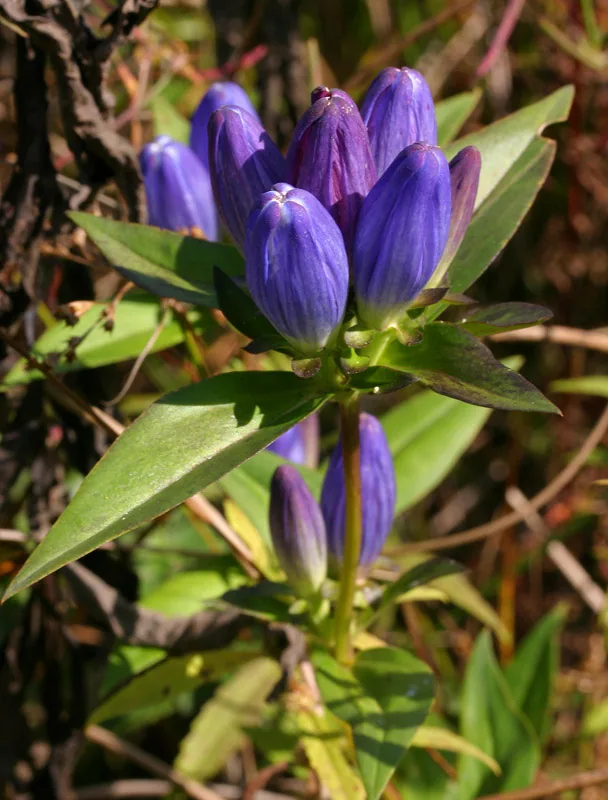
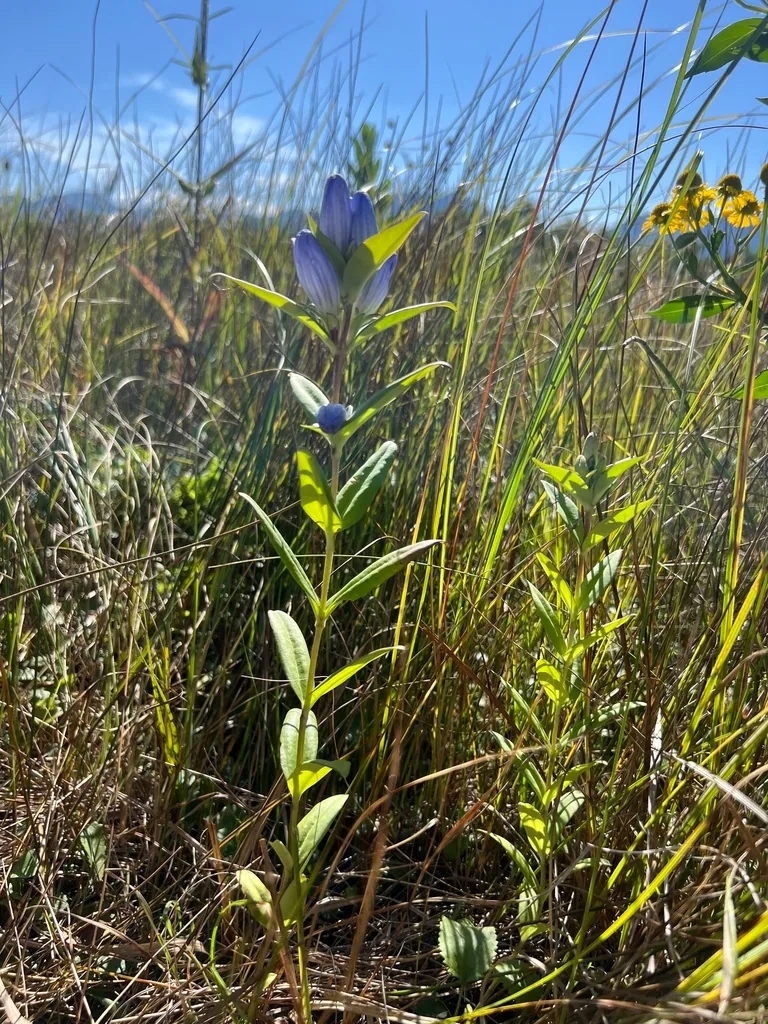
Closed bottle gentian is a perennial of moist meadows and damp prairies whose flowers stay closed and look like buds. [2] It is described as the easiest perennial gentian to grow in a moist wildflower garden. [2]
This record is incomplete: the sources we read do not cover every field yet.
Not yet covered by our sources: Pruning
Closed bottle gentian care
How to water Closed bottle gentian
Watering
Maintain moisture throughout the growing season without letting the soil get soggy
What the sources say (1)
Plant in soil that is not too acidic and maintain moisture throughout the growing season, without letting soil get soggy.How much light Closed bottle gentian needs
The sources disagree:
What the sources say (3)
Best grown in moist, rich, cool, humusy, acidic, well-drained soils in part shadeClosed gentian is a stunning choice for native wildflower gardening, especially in partly shady, moist, well-drained, rich-soil areas.Light Requirement: Part Shade , ShadeHow much cold Closed bottle gentian can take
Hardiness, coldest zone
3 [winter low −40 to −34.4 °C (−40 to −30 °F)]
Hardiness, warmest zone
7 [winter low −17.8 to −12.2 °C (0 to 10 °F)]
What the sources say (1)
USDA Zone
| 3 thru 7How to propagate Closed bottle gentian
Seed; division in early spring; cuttings of basal shoots in late spring
Closed bottle gentian pests and problems
Drought stress
Symptom: The worst threat to mature plants is droughty conditions.
What to do: Appropriate placement of plants mitigates the problem.
What the sources say (1)
The worst threat is droughty conditions, but appropriate placement of plants will mitigate this problem.
— Bottle Gentian (Gentiana andrewsii) [8]
Remedies
The sources we checked give no remedies for this plant.
Calendar
Sowing
Mid winter
What the sources say (1)
Seed - sow in mid winter in a standard seed compostPlanting
Late spring or early summer (seed-raised plants set in their permanent positions)
What the sources say (1)
When the plants are of sufficient size, place them out into their permanent positions in late spring or early summer.Pruning
Not stated in the sources we read.
Months as given by the sources, which are mostly from the United States (northern hemisphere). In the southern hemisphere they shift by about six months.
Indicative values
Values from a secondary source, not checked word for word like the rest of this page. Use them as a starting point.
- Life cycle
- Herbaceous PerennialIndicative value, adapt it to your climate · Secondary source
- Mature height
- 30.5-61 cm (1-2 ft)Indicative value, adapt it to your climate · Secondary source
- Soil
- Sandy Loamy ClayIndicative value, adapt it to your climate · Secondary source
- Soil pH
- 5.5-6.5Indicative value, adapt it to your climate · Secondary source
- Care level
- MediumIndicative value, adapt it to your climate · Secondary source
- Growth rate
- LowIndicative value, adapt it to your climate · Secondary source
- Pruning
- March, AprilIndicative value, adapt it to your climate · Secondary source
Similar plants
- Gentian Gentiana acaulis
- Gentiana clusii Gentiana clusii
- Great Yellow Gentian Gentiana lutea
- Spring gentian Gentiana verna
- Willow Gentian Gentiana asclepiadea
- Aaron's Beard Hypericum calycinum
- Abies grandis Abies grandis
- Abraham Trachystemon orientalis
Sources
Every value above is quoted from these documents. Links lead to the original publisher.
- Gentiana andrewsii (Bottle Gentian): Minnesota Wildflowers · minnesotawildflowers.info, consulted
- Lady Bird Johnson Wildflower Center - The University of Texas at Austin · wildflower.org, consulted
- Gentiana andrewsii - Useful Temperate Plants · temperate.theferns.info, consulted
- Closed Gentian (Bottle Gentian) | Missouri Department of Conservation · mdc.mo.gov, consulted
- Gentiana andrewsii page · missouriplants.com, consulted
- Gentiana andrewsii (bottle gentian) - Lurie Garden · luriegarden.org, consulted
- Closed Bottle Gentian | Cornell Botanic Gardens · cornellbotanicgardens.org, consulted
- Bottle Gentian (Gentiana andrewsii) · conditions.illinoiswildflowers.info, consulted
Written by Emilio Marruso · last checked