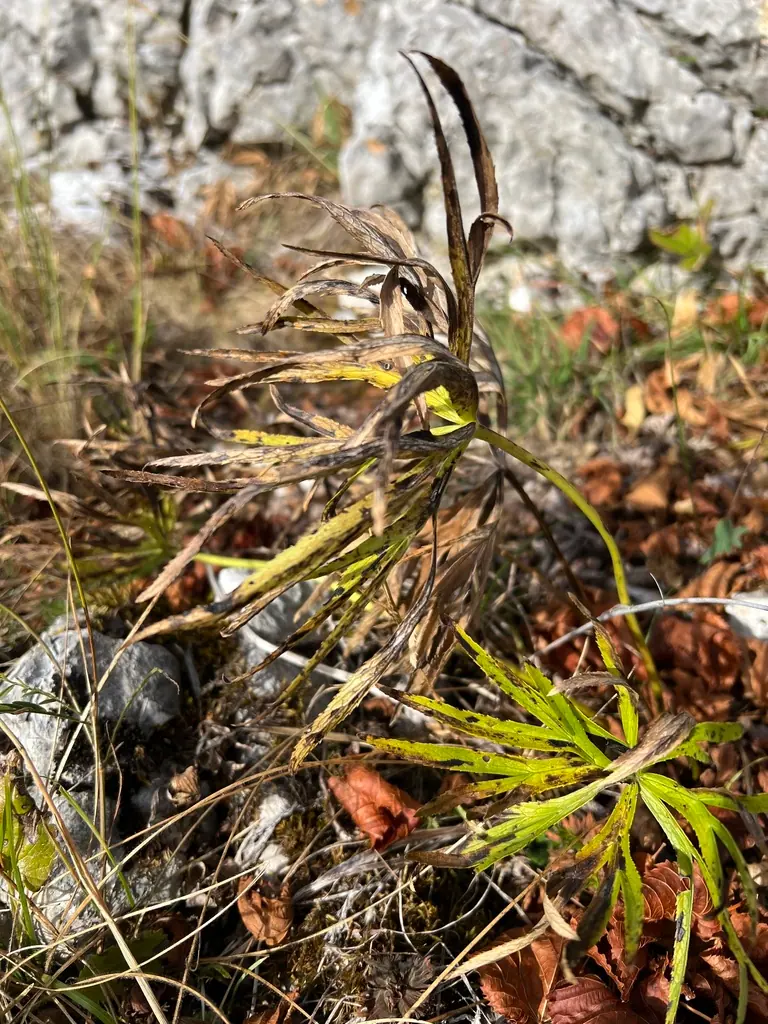
How to Grow and Care for Helleborus multifidus
Helleborus multifidus
Written by Emilio Marruso · last checked
At a glance
This hellebore is a perennial, so it comes back year after year to brighten a lightly shaded corner of your garden. Give it partial shade and soil that stays moist, and it will feel right at home. You can sow its seeds in winter, or divide a plant after flowering or in fall to get new clumps to share with friends.
- Sun
Partial shade
- Water
Keep the soil moist
What the sources say (1)
Watering: Moist soil
alpine house, moist, rich, drained soil, semi-shade
— Helleborus multifidus Vis. [3] - Propagation
Grow it from seed, or divide the plant after flowering or in fall
- Sowing
Sow the seeds in winter
What the sources say (1)
Sowing: Winter
seed in winter, germ. 3-12 months, 16-18°C
— Helleborus multifidus Vis. [3]
Overview
Helleborus multifidus is a perennial native to the north-western Balkan Peninsula (coastal mountains), growing 20-30 cm [8–12 in] tall in grassland and thickets. [3][1] Rock Garden Plants lists a moist, rich, drained soil in semi-shade and propagation by seed or by division after flowering and in fall. [3]
This record is incomplete: the sources we read do not cover every field yet.
Not yet covered by our sources: Hardiness, coldest zone, Hardiness, warmest zone, Pruning
Helleborus multifidus care
Measurements in square brackets are our conversion into the other unit system; the quoted text is unchanged.
How to water Helleborus multifidus
Moist soil
What the sources say (1)
alpine house, moist, rich, drained soil, semi-shadeHow much light Helleborus multifidus needs
How much cold Helleborus multifidus can take
Hardiness, coldest zone
Not stated in the sources we read.
Hardiness, warmest zone
Not stated in the sources we read.
How to propagate Helleborus multifidus
How to grow Helleborus multifidus
The plant
Life cycle
perennial
What the sources say (1)
The native range of this subspecies is NW. Balkan Peninsula (coastal Mountains). It is a perennial and grows primarily in the temperate biome.Fertilizing
When
The sources give different values depending on region, zone or growing conditions.
What each source says
Helleborus in general: Late winter or early spring
What the sources say (1)
Helleborus in general: Use a slow-release fertilizer high in potassium in late winter or early spring to encourage flowering.How often
The sources give different values depending on region, zone or growing conditions.
What each source says
Helleborus in general, in borders: Seldom needed
Helleborus in general, in containers: Regular feeding
What the sources say (2)
Helleborus in general, in borders: Feeding - Hellebores in borders seldom need additional feedingHelleborus in general, in containers: Plants in containers have less access to nutrients, so need regular feeding with a balanced liquid fertiliser.Natural fertilizers
The sources give different values depending on region, zone or growing conditions.
What each source says
Helleborus in general, at planting: 5.08-7.62 cm [2–3 in] of organic compost worked gently into the top layer of soil
What the sources say (1)
Helleborus in general, at planting: The hellebore is best planted with a topping of two or three inches of organic compost worked gently into the top layer of soil.Mineral fertilizers
The sources give different values depending on region, zone or growing conditions.
What each source says
Helleborus in general: Slow-release fertilizer high in potassium
Helleborus in general, in containers: Balanced liquid fertilizer; a potassium-rich fertilizer to encourage flowering
What the sources say (2)
Helleborus in general: Use a slow-release fertilizer high in potassium in late winter or early spring to encourage flowering.Helleborus in general, in containers: need regular feeding with a balanced liquid fertiliser. To encourage flowering, use a potassium-rich fertiliser, such as tomato feedAvoid
The sources give different values depending on region, zone or growing conditions.
What each source says
Helleborus in general: High-nitrogen fertilizers
Helleborus in general: Overloading the plant with nitrogen
Signs of excess
The sources give different values depending on region, zone or growing conditions.
What each source says
Helleborus in general: Too much nitrogen gives lush foliage and few blooms
What the sources say (1)
Helleborus in general: Too much nitrogen will cause the plant to produce lush foliage, but will leave you disappointed with a shortage of blooms.Remedies
The sources we checked give no remedies for this plant.
Calendar
Sowing
Winter
What the sources say (1)
seed in winter, germ. 3-12 months, 16-18°CPruning
Not stated in the sources we read.
Months as given by the sources, which are mostly from the United States (northern hemisphere). In the southern hemisphere they shift by about six months.
Similar plants
- Corsican Hellebore Helleborus argutifolius
- Green hellebore Helleborus viridis
- Hellebore Helleborus niger
- Helleborus dumetorum Helleborus dumetorum
- Lenten Rose Helleborus orientalis
- Stinking Hellebore Helleborus foetidus
- Aaron's Beard Hypericum calycinum
- Abies grandis Abies grandis
Sources
Every value above is quoted from these documents. Links lead to the original publisher.
- Helleborus multifidus subsp. multifidus | Plants of the World Online | Kew Science · powo.science.kew.org, consulted
- Discover everything you need to know about species hellebores · gardensillustrated.com, consulted
- Helleborus multifidus Vis. · flora.kadel.cz, consulted
- beaufort.ces.ncsu.edu · beaufort.ces.ncsu.edu
- rhs.org.uk · rhs.org.uk
- union.ces.ncsu.edu · union.ces.ncsu.edu
Written by Emilio Marruso · last checked