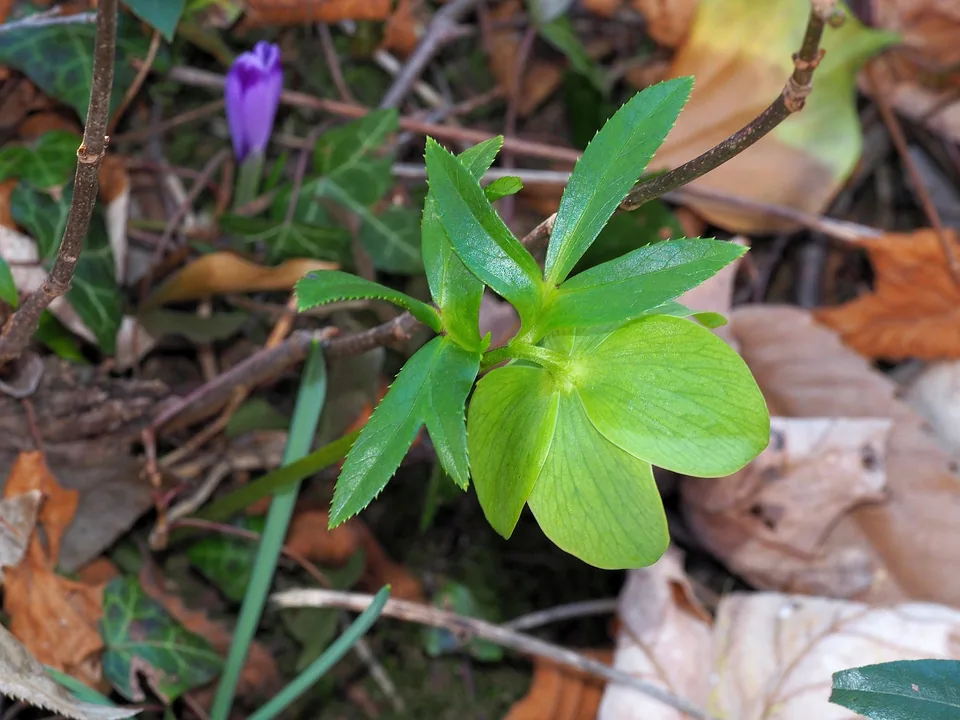
How to Grow and Care for Green hellebore
Helleborus viridis
Written by Emilio Marruso · last checked
Toxic to: People · Why
At a glance
Green hellebore is happy in partial shade, in a rich, moist, well-drained soil that never dries out. Plant the seedlings in late spring or early summer, after the last frosts, 18 inches apart to cover the ground. You can make more plants from seed or by dividing clumps after flowering or in autumn; just keep slugs away and handle it with care.
- Sun
Partial shade
- Water
Keep the soil moist: it does not like drought
What the sources say (3)
Watering: Well drained moist soil; not drought resistant
Watering Needs: Well drained moist soil, prefers some lime in the soil, not drought resistant
— Green Hellebore (Helleborus viridis) [3] - Cold
Survives winters down to −10 °F (−23.3 °C)
Very hardy · USDA 6 · RHS H7 · Z6
What the sources say (1)
Hardiness, coldest zone: 6 [winter low −23.3 to −17.8 °C (−10 to 0 °F)]
Hardiness Zone 6+
— Green Hellebore (Helleborus viridis) — Practical Plants [1] - Soil
Rich, moist soil that drains well
What the sources say (3)
Watering notes: Dislikes drought; prefers a moist, well-drained rich loam
Dislikes drought.
— Green Hellebore (Helleborus viridis) — Practical Plants [1] preferring a moist well-drained rich loam in a sheltered position in partial shade
— Green Hellebore (Helleborus viridis) — Practical Plants [1] Watering: Well drained moist soil; not drought resistant
Watering Needs: Well drained moist soil, prefers some lime in the soil, not drought resistant
— Green Hellebore (Helleborus viridis) [3] - Spacing
18 in apart each way to cover the ground
What the sources say (1)
Spacing: 45 cm (45cm apart each way, for ground cover)
Plants are suitable for ground cover when spaced about 45cm apart each way
— Green Hellebore (Helleborus viridis) — Practical Plants [1] - Planting
Plant seedlings in late spring or early summer, after the last frosts
What the sources say (1)
Planting: Late spring or early summer, after the last expected frosts (seedlings)
Plant them out into their permanent positions in late spring or early summer, after the last expected frosts.
— Green Hellebore (Helleborus viridis) — Practical Plants [1] - Pests
Slugs love it: protect the plant from them
- Propagation
From seed, or divide clumps after flowering or in autumn
What the sources say (2)
Propagation: Seed; division after flowering or in autumn
Division after flowering or in autumn. Take care since the plant resents disturbance
— Green Hellebore (Helleborus viridis) — Practical Plants [1] Propagation: Seeds, division in the fall, the plants resent being disturbed
— Green Hellebore (Helleborus viridis) [3] - Sowing
Sow fresh seed as soon as it is ripe in a cold frame; stored seed early in the year
What the sources say (2)
Sowing: As soon as ripe (cold frame); stored seed as early in the year as possible
Seed - best sown as soon as it is ripe in a cold frame
— Green Hellebore (Helleborus viridis) — Practical Plants [1] Sow stored seed as early in the year as possible
— Green Hellebore (Helleborus viridis) — Practical Plants [1] - Safety
Every part is poisonous, and the poison may pass through the skin
Overview
Green hellebore is a perennial with green, chalice-like flowers, grown in partial shade. [2][1] It prefers moist, well-drained soil, tolerates lime and dislikes drought. [1] All parts of the plant are poisonous. [1][3]
This record is incomplete: the sources we read do not cover every field yet.
Not yet covered by our sources: Hardiness, warmest zone, Pruning
Green hellebore care
How to water Green hellebore
Watering
Well drained moist soil; not drought resistant
What the sources say (1)
Watering Needs: Well drained moist soil, prefers some lime in the soil, not drought resistantWatering notes
Dislikes drought; prefers a moist, well-drained rich loam
How much light Green hellebore needs
How much cold Green hellebore can take
Hardiness, coldest zone
6 [winter low −23.3 to −17.8 °C (−10 to 0 °F)]
What the sources say (1)
Hardiness
Zone 6+Hardiness, warmest zone
Not stated in the sources we read.
Where to grow Green hellebore
45 cm (45cm apart each way, for ground cover)
What the sources say (1)
Plants are suitable for ground cover when spaced about 45cm apart each wayHow to propagate Green hellebore
Seed; division after flowering or in autumn
How to grow Green hellebore
Fertilizing
When
The sources give different values depending on region, zone or growing conditions.
What each source says
Helleborus in general: Late winter or early spring
What the sources say (1)
Helleborus in general: Use a slow-release fertilizer high in potassium in late winter or early spring to encourage flowering.How often
The sources give different values depending on region, zone or growing conditions.
What each source says
Helleborus in general, in borders: Seldom needed
Helleborus in general, in containers: Regular feeding
What the sources say (2)
Helleborus in general, in borders: Feeding - Hellebores in borders seldom need additional feedingHelleborus in general, in containers: Plants in containers have less access to nutrients, so need regular feeding with a balanced liquid fertiliser.Natural fertilizers
The sources give different values depending on region, zone or growing conditions.
What each source says
Helleborus in general, at planting: 5.08-7.62 cm [2–3 in] of organic compost worked gently into the top layer of soil
What the sources say (1)
Helleborus in general, at planting: The hellebore is best planted with a topping of two or three inches of organic compost worked gently into the top layer of soil.Mineral fertilizers
The sources give different values depending on region, zone or growing conditions.
What each source says
Helleborus in general: Slow-release fertilizer high in potassium
Helleborus in general, in containers: Balanced liquid fertilizer; a potassium-rich fertilizer to encourage flowering
What the sources say (2)
Helleborus in general: Use a slow-release fertilizer high in potassium in late winter or early spring to encourage flowering.Helleborus in general, in containers: need regular feeding with a balanced liquid fertiliser. To encourage flowering, use a potassium-rich fertiliser, such as tomato feedAvoid
The sources give different values depending on region, zone or growing conditions.
What each source says
Helleborus in general: High-nitrogen fertilizers
Helleborus in general: Overloading the plant with nitrogen
Signs of excess
The sources give different values depending on region, zone or growing conditions.
What each source says
Helleborus in general: Too much nitrogen gives lush foliage and few blooms
What the sources say (1)
Helleborus in general: Too much nitrogen will cause the plant to produce lush foliage, but will leave you disappointed with a shortage of blooms.Green hellebore pests and problems
Slugs
Symptom: Slugs are very fond of the plant
What to do: Protect the plant from slugs
What the sources say (1)
Slugs are very fond of this plant and it will probably require some protection from them
— Green Hellebore (Helleborus viridis) — Practical Plants [1]
Remedies
The sources we checked give no remedies for this plant.
Is Green hellebore poisonous?
Reported by the source, quoted verbatim. This is not medical or veterinary advice: if a person or an animal may have eaten this plant, contact a poison control centre or a veterinarian.
Calendar
Sowing
As soon as ripe (cold frame); stored seed as early in the year as possible
Planting
Late spring or early summer, after the last expected frosts (seedlings)
What the sources say (1)
Plant them out into their permanent positions in late spring or early summer, after the last expected frosts.Pruning
Not stated in the sources we read.
Months as given by the sources, which are mostly from the United States (northern hemisphere). In the southern hemisphere they shift by about six months.
Similar plants
- Lenten Rose Helleborus orientalis
- Corsican Hellebore Helleborus argutifolius
- Hellebore Helleborus niger
- Helleborus dumetorum Helleborus dumetorum
- Helleborus multifidus Helleborus multifidus
- Stinking Hellebore Helleborus foetidus
- Abies grandis Abies grandis
- Acanthus hungaricus Acanthus hungaricus
Sources
Every value above is quoted from these documents. Links lead to the original publisher.
- Green Hellebore (Helleborus viridis) — Practical Plants · practicalplants.org, consulted
- Hellebore: Plant, Grow and Care for Hellebores | BBC Gardeners World Magazine · gardenersworld.com, consulted
- Green Hellebore (Helleborus viridis) · desert-tropicals.com, consulted
- Green Hellebore - Dig Delve – An online magazine about gardens, landscape, growing & making. Dig Delve – An online magazine about gardens, landscape, growing & making. · digdelve.com, consulted
- beaufort.ces.ncsu.edu · beaufort.ces.ncsu.edu
- rhs.org.uk · rhs.org.uk
- union.ces.ncsu.edu · union.ces.ncsu.edu
Written by Emilio Marruso · last checked