
How to Grow and Care for Gold rayed lily
Lilium auratum
Written by Emilio Marruso · last checked
At a glance
This lily is happy in full sun or partial shade, so it fits many corners of the garden. Give it even moisture while it grows, never standing water, and it asks little else. You can multiply it from seed, bulbils, bulb scales or by dividing young bulbs, and its bulbs are even eaten as a vegetable, boiled or sweetened.
- Sun
Full sun to partial shade
What the sources say (1)
Light: Full sun to partial shade
Su rendimiento será mejor si se ubican en un área a pleno sol o sombra parcial
— Lilium auratum - EcuRed [4] - Water
Keep the soil evenly moist while it grows, but never let water stand
- Cold
Survives winters down to −20 °F (−28.9 °C)
Very hardy · USDA 5 · RHS H7 · Z5
What the sources say (2)
Hardiness, coldest zone: 5 [winter low −28.9 to −23.3 °C (−20 to −10 °F)]
crimson spots and gold stripes on each petal. Blooms in late summer. Grows 3 to 9 feet tall in Zones 5-10.
— How to Grow Lilium - Lily [5] Hardiness, warmest zone: 10 [winter low −1.1 to 4.4 °C (30 to 40 °F)]
crimson spots and gold stripes on each petal. Blooms in late summer. Grows 3 to 9 feet tall in Zones 5-10.
— How to Grow Lilium - Lily [5] - Harvest
The bulbs are eaten as a vegetable: boiled, sweetened or powdered for dumplings
- Propagation
From seed, bulbils, bulb scales or by dividing young bulbs
What the sources say (4)
Propagation: Seed, bulbils, bulb scales, division of young bulbs
Root bulbils - dig up in autumn and pot up in a cold frame for the first year
— Lilium auratum - Useful Temperate Plants [3] Bulb scales can be removed from the bulbs in early autumn.
— Lilium auratum - Useful Temperate Plants [3] Divide the young bulbs when they are dormant, putting 2 - 3 in each pot
— Lilium auratum - Useful Temperate Plants [3] Stored seed will require a warm/cold/warm cycle of stratification, each period being about 2 months long
— Lilium auratum - Useful Temperate Plants [3]
Overview
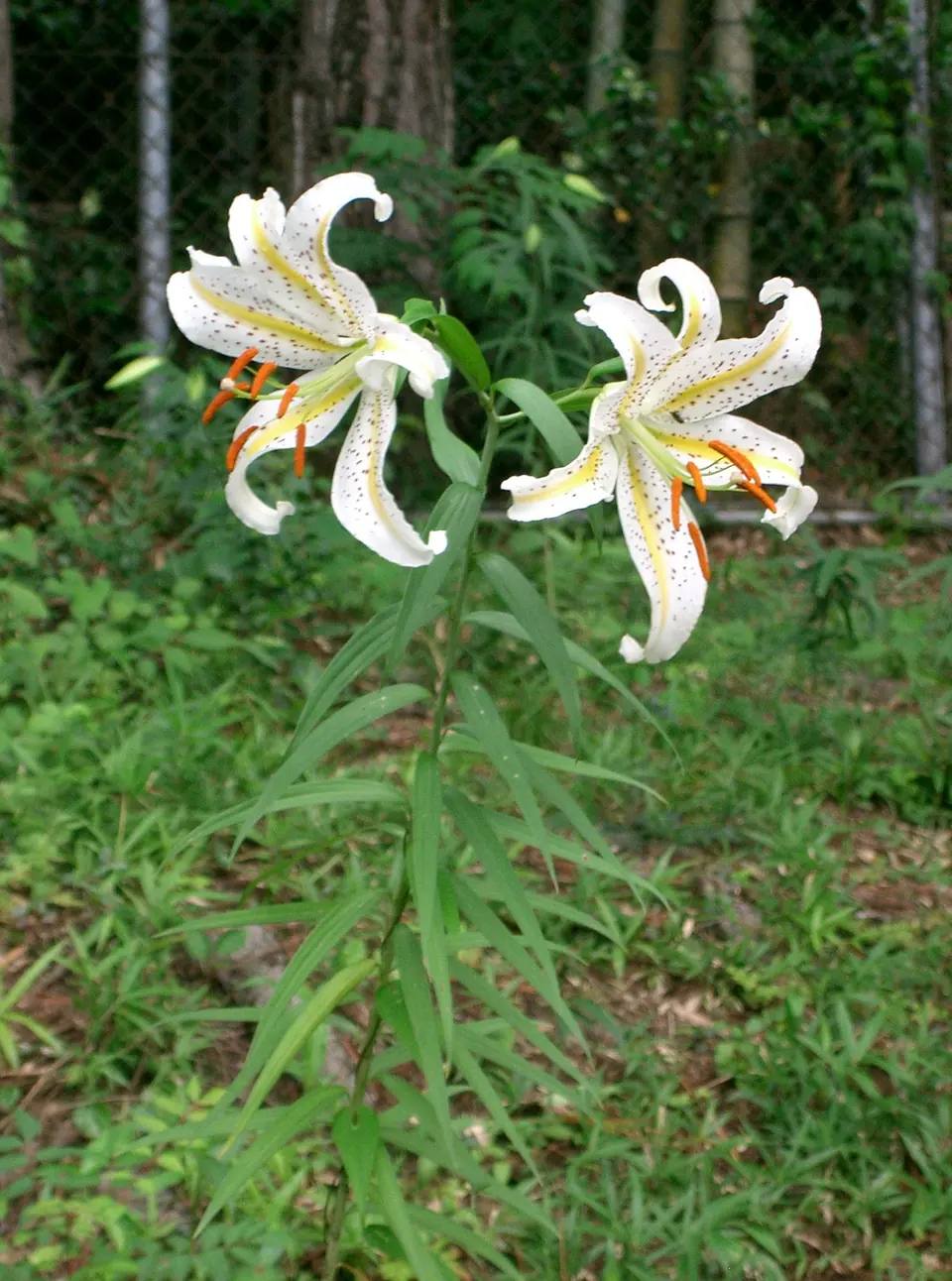
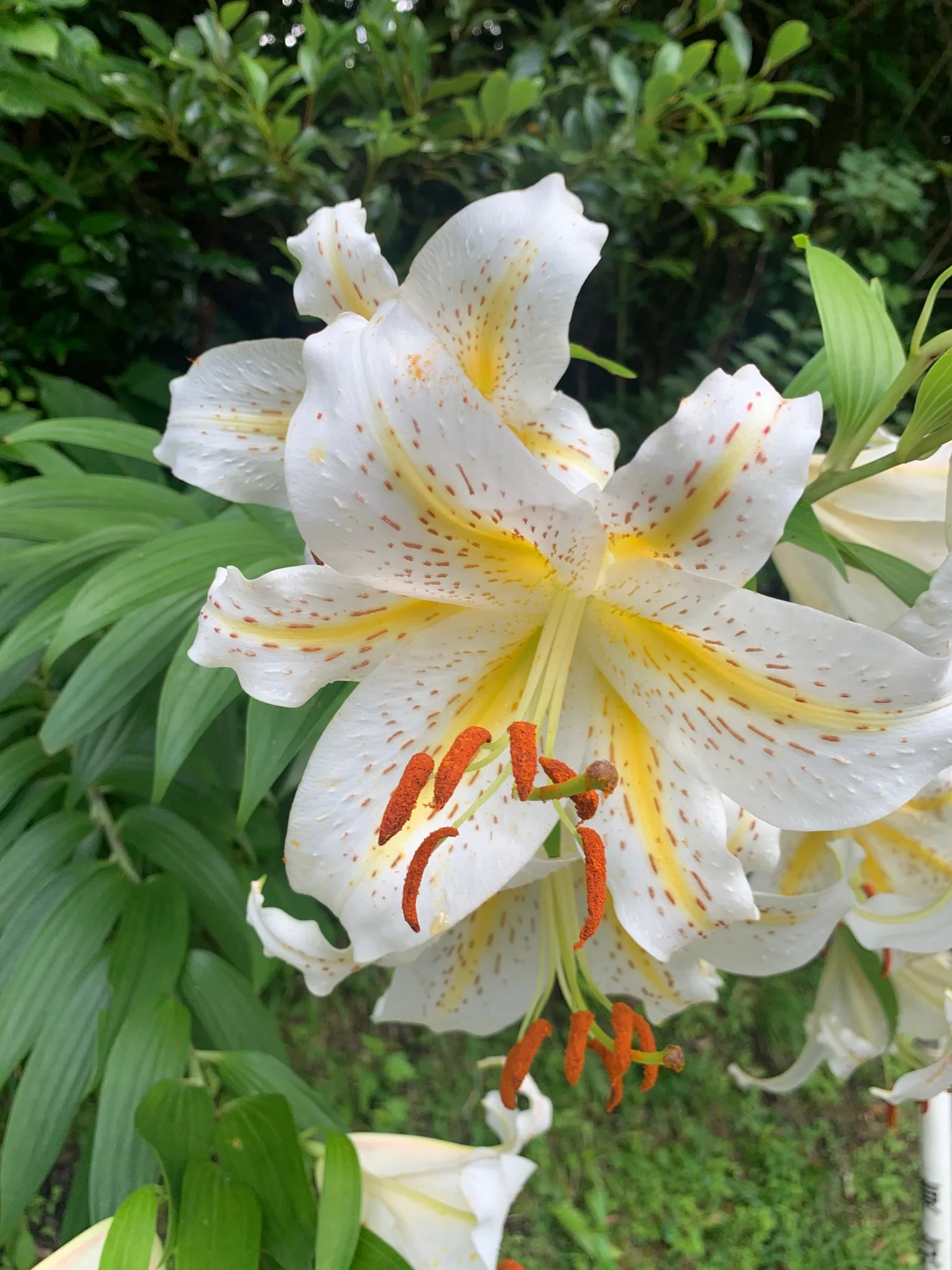
Lilium auratum is a Japanese lily grown for very large, strongly fragrant white flowers with a golden band and crimson spots. [2] It needs well-drained, humus-rich soil with even moisture during growth but no standing water. [2]
This record is incomplete: the sources we read do not cover every field yet.
Not yet covered by our sources: Pruning
Gold rayed lily care
How to water Gold rayed lily
How much light Gold rayed lily needs
Full sun to partial shade
What the sources say (1)
Su rendimiento será mejor si se ubican en un área a pleno sol o sombra parcialHow much cold Gold rayed lily can take
Hardiness, coldest zone
5 [winter low −28.9 to −23.3 °C (−20 to −10 °F)]
What the sources say (1)
crimson spots and gold stripes on each petal. Blooms in late summer. Grows 3 to 9 feet tall in Zones 5-10.Hardiness, warmest zone
10 [winter low −1.1 to 4.4 °C (30 to 40 °F)]
What the sources say (1)
crimson spots and gold stripes on each petal. Blooms in late summer. Grows 3 to 9 feet tall in Zones 5-10.How to propagate Gold rayed lily
Seed, bulbils, bulb scales, division of young bulbs
What the sources say (4)
Root bulbils - dig up in autumn and pot up in a cold frame for the first yearBulb scales can be removed from the bulbs in early autumn.Divide the young bulbs when they are dormant, putting 2 - 3 in each potStored seed will require a warm/cold/warm cycle of stratification, each period being about 2 months longHow to grow Gold rayed lily
Fertilizing
When
The sources give different values depending on region, zone or growing conditions.
What each source says
in containers: At planting
What the sources say (1)
in containers: Lilies are heavy feeders, so add granules of a controlled-release fertiliser when planting.Natural fertilizers
The sources give different values depending on region, zone or growing conditions.
What each source says
in containers, second season in the same pot: Well-rotted manure or fertiliser added to the fresh compost that replaces the top 5 cm [2 in]
What the sources say (1)
in containers, second season in the same pot: In larger containers, lilies can be grown on for a second season in the same pot, but ensure that the top 5cm (2in) of compost is replaced with fresh compost with some added fertiliser or well rotted manure.Mineral fertilizers
The sources give different values depending on region, zone or growing conditions.
What each source says
in containers: Controlled-release fertilizer granules at planting
What the sources say (1)
in containers: Lilies are heavy feeders, so add granules of a controlled-release fertiliser when planting.Remedies
The sources we checked give no remedies for this plant.
Calendar
Planting
The sources give different values depending on region, zone or growing conditions.
What each source says
cool temperate areas: Early to mid autumn
warmer areas: As late as late autumn
What the sources say (4)
cool temperate areas: Early to mid autumn is the best time to plant out the bulbs in cool temperate areaswarmer areas: in warmer areas they can be planted out as late as late autumnEarly to mid autumn is the best time to plant out the bulbs in cool temperate areas, in warmer areas they can be planted out as late as late autumnEs recomendable plantar el Lilium auratum en primavera y otoñoPruning
Not stated in the sources we read.
Months as given by the sources, which are mostly from the United States (northern hemisphere). In the southern hemisphere they shift by about six months.
Edibility
Reported by the source, quoted verbatim. Do not eat a plant on the basis of this page alone: identification mistakes can be dangerous.
The bulbs are used as a vegetable, and can also be boiled, sweetened, powdered and used in dumplings
[3]
Indicative values
Values from a secondary source, not checked word for word like the rest of this page. Use them as a starting point.
- Life cycle
- PerennialIndicative value, adapt it to your climate · Secondary source
- Mature height
- 61-152.4 cm (2-5 ft)Indicative value, adapt it to your climate · Secondary source
- Drought tolerant
- yesIndicative value, adapt it to your climate · Secondary source
- Soil pH
- 5.5-6.5Indicative value, adapt it to your climate · Secondary source
- Care level
- MediumIndicative value, adapt it to your climate · Secondary source
- Growth rate
- HighIndicative value, adapt it to your climate · Secondary source
- Pruning
- December, January, FebruaryIndicative value, adapt it to your climate · Secondary source
Similar plants
- Carolina Lily Lilium michauxii
- Easter Lily Lilium longiflorum
- Formosan Lily Lilium formosanum
- Gray's Lily Lilium grayi
- Henry's lily Lilium henryi
- Lilium carniolicum Lilium carniolicum
- Lilium pomponium Lilium pomponium
- Lilium pumilum Lilium pumilum
Sources
Every value above is quoted from these documents. Links lead to the original publisher.
- Lilies - Lilium | North Carolina Extension Gardener Plant Toolbox · plants.ces.ncsu.edu, consulted
- Lilium auratum – Lilium Species Foundation · liliumspeciesfoundation.org, consulted
- Lilium auratum - Useful Temperate Plants · temperate.theferns.info, consulted
- Lilium auratum - EcuRed · ecured.cu, consulted
- How to Grow Lilium - Lily · harvesttotable.com, consulted
- Lilium auratum · pacificbulbsociety.org, consulted
- rhs.org.uk · rhs.org.uk
Written by Emilio Marruso · last checked