
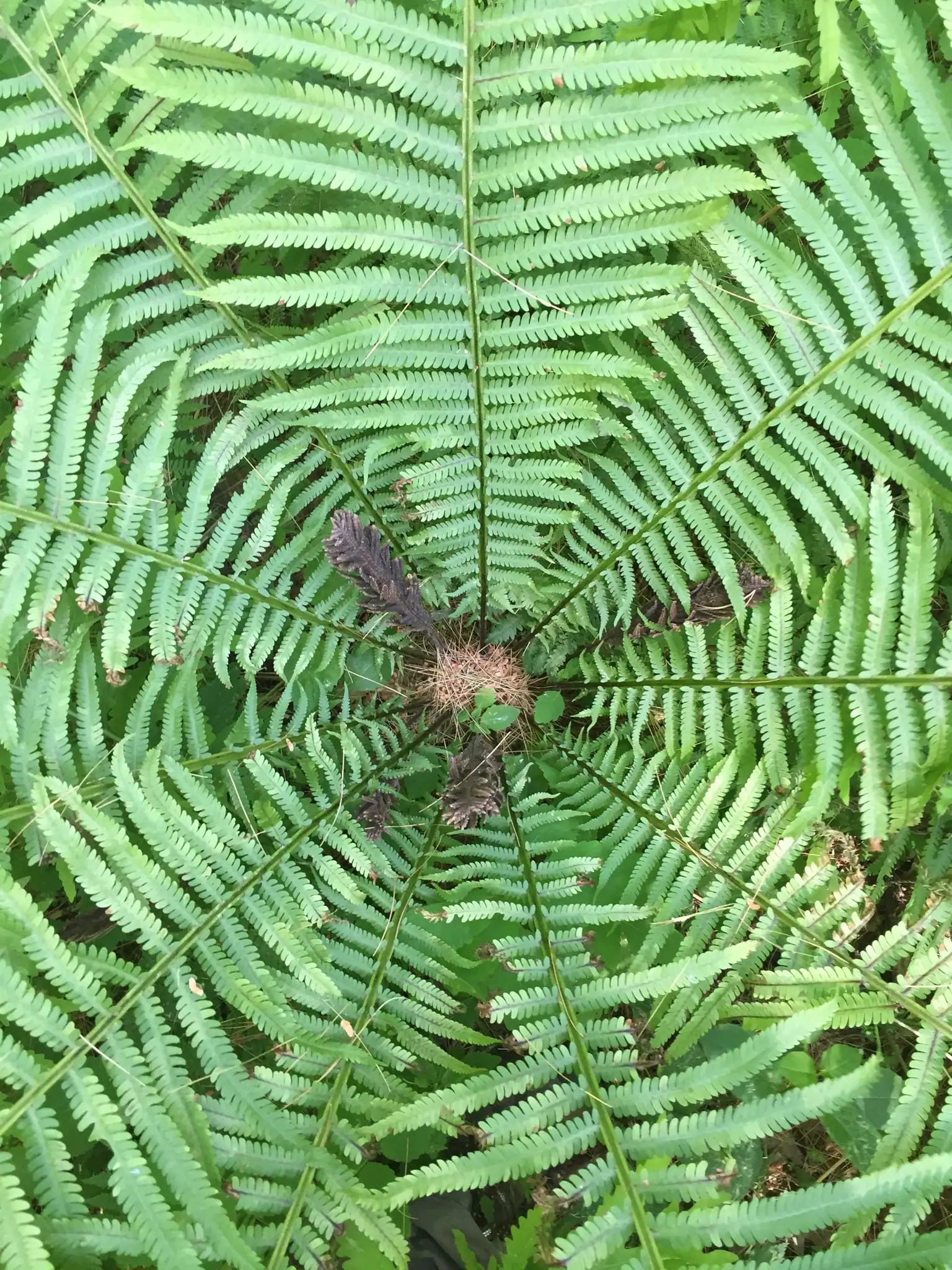
How to Grow and Care for Ostrich fern
Matteuccia struthiopteris
Written by Emilio Marruso · last checked
Toxic to: People · Why
At a glance
The ostrich fern loves the shady corners other plants dislike: give it partial to full shade and soil that stays moist, even too wet rather than too dry. It grows 3–5 feet tall and comes back every year. In spring, its curled young fronds, called fiddleheads, can be picked and eaten, as long as they are always cooked.
- Sun
Partial to full shade; takes sun only where it stays cool and moist
What the sources say (2)
Light: Partial to full shade; tolerates sun with cool temperatures and adequate moisture
Plant in partial to full shade but it will tolerate sun with cool temperatures and adequate moisture.
— Onoclea struthiopteris (Fiddlehead Fern, Ostrich-Feather Fern, Ostrich Fern, Shuttlecock Fern) | North Carolina Extension Gardener Plant Toolbox [1] Exposure from part to full shade will work.
— Learn How to Grow Ostrich Ferns | Gardener's Path [4] - Water
Keep the soil moist at all times; too wet is better than too dry
What the sources say (3)
Watering: Keep the soil consistently moist at all times; do not let it dry out completely
It naturally occurs in heavy, moist soil but adapts to light, rich soil and prefers constant moisture.
— Onoclea struthiopteris (Fiddlehead Fern, Ostrich-Feather Fern, Ostrich Fern, Shuttlecock Fern) | North Carolina Extension Gardener Plant Toolbox [1] Maintain consistent moisture in the soil at all times and don’t allow it to fully dry.
— Learn How to Grow Ostrich Ferns | Gardener's Path [4] Watering notes: Prefers soil too wet rather than too dry
They’d rather the soil be too wet than too dry, so take this into account when choosing a planting spot.
— Learn How to Grow Ostrich Ferns | Gardener's Path [4] - Cold
Survives winters down to −40 °F (−40 °C)
Very hardy · USDA 3a · RHS H7 · Z3
What the sources say (2)
Hardiness, coldest zone: 3a [winter low −40 to −37.2 °C (−40 to −35 °F)]
3a, 3b, 4a, 4b, 5a, 5b, 6a, 6b, 7a, 7b, 8a, 8b
— Onoclea struthiopteris (Fiddlehead Fern, Ostrich-Feather Fern, Ostrich Fern, Shuttlecock Fern) | North Carolina Extension Gardener Plant Toolbox [1] this species thrives in cold areas, in USDA Hardiness Zones 3 to 7.
— Learn How to Grow Ostrich Ferns | Gardener's Path [4] - Soil
Slightly acidic to neutral soil, pH 6.0–7.0
- Harvest
Pick the young curled fronds in spring and always cook them
What the sources say (1)
Harvest: Spring (fiddleheads, the sterile fronds as they emerge)
In the spring, the sterile vegetative fronds emerge from the ground at the base of the plant. These are the so-called fiddleheads that you can harvest and eat.
— Learn How to Grow Ostrich Ferns | Gardener's Path [4] - Watch out
Spreads by underground runners and can take over like a weed
- Size
3–5 ft tall and 2–4 ft wide
What the sources say (2)
Mature height: 91.44-152.4 cm (3-5 ft)
With an erect rosette crown of bright green fronds reaching a height of 3 to 5 feet and a width of 2 to 4 feet, the ostrich fern makes an interesting addition
— Onoclea struthiopteris (Fiddlehead Fern, Ostrich-Feather Fern, Ostrich Fern, Shuttlecock Fern) | North Carolina Extension Gardener Plant Toolbox [1] Mature width: 60.96-121.92 cm (2-4 ft)
With an erect rosette crown of bright green fronds reaching a height of 3 to 5 feet and a width of 2 to 4 feet, the ostrich fern makes an interesting addition
— Onoclea struthiopteris (Fiddlehead Fern, Ostrich-Feather Fern, Ostrich Fern, Shuttlecock Fern) | North Carolina Extension Gardener Plant Toolbox [1] - Propagation
Divide the clumps in spring, or use young plantlets, spores or cuttings
What the sources say (2)
Propagation: Division of crowns (spring); plantlets; spores; cuttings
Divide the crowns in the spring to propagate.
— Onoclea struthiopteris (Fiddlehead Fern, Ostrich-Feather Fern, Ostrich Fern, Shuttlecock Fern) | North Carolina Extension Gardener Plant Toolbox [1] ferns can be propagated in the same ways as other plants. Namely: by division, from plantlets, spores (seeds), and cuttings.
— Learn How to Grow Ostrich Ferns | Gardener's Path [4] - Safety
Never eat it raw: it can cause nausea and stomach upset
Overview
Ostrich fern is a deciduous fern that prefers partial to full shade and constantly moist soil. [1][4] It spreads by underground runners that form colonies and can become weedy. [1] The fiddleheads are edible but should always be cooked. [1][4]
This record is incomplete: the sources we read do not cover every field yet.
Not yet covered by our sources: Hardiness, warmest zone, Pruning
Ostrich fern care
How to water Ostrich fern
Watering
Keep the soil consistently moist at all times; do not let it dry out completely
What the sources say (2)
It naturally occurs in heavy, moist soil but adapts to light, rich soil and prefers constant moisture.Maintain consistent moisture in the soil at all times and don’t allow it to fully dry.Watering notes
Prefers soil too wet rather than too dry
What the sources say (1)
They’d rather the soil be too wet than too dry, so take this into account when choosing a planting spot.How much light Ostrich fern needs
Partial to full shade; tolerates sun with cool temperatures and adequate moisture
What the sources say (2)
Plant in partial to full shade but it will tolerate sun with cool temperatures and adequate moisture.Exposure from part to full shade will work.How much cold Ostrich fern can take
Hardiness, coldest zone
3a [winter low −40 to −37.2 °C (−40 to −35 °F)]
What the sources say (2)
3a, 3b, 4a, 4b, 5a, 5b, 6a, 6b, 7a, 7b, 8a, 8bthis species thrives in cold areas, in USDA Hardiness Zones 3 to 7.Hardiness, warmest zone
Not stated in the sources we read.
Best soil for Ostrich fern
Soil pH, minimum
6.0
What the sources say (1)
A pH between 6.0 to 7.0 is about right.Soil pH, maximum
7.0
What the sources say (1)
A pH between 6.0 to 7.0 is about right.How to propagate Ostrich fern
Division of crowns (spring); plantlets; spores; cuttings
What the sources say (2)
Divide the crowns in the spring to propagate.ferns can be propagated in the same ways as other plants. Namely: by division, from plantlets, spores (seeds), and cuttings.How to grow Ostrich fern
The plant
Life cycle
perennial
What the sources say (1)
Ostrich fern is an easy-to-grow, herbaceous perennial fern in the spleenwort family (Aspleniaceae) and is native to Eurasia.Family
Aspleniaceae
What the sources say (1)
Ostrich fern is an easy-to-grow, herbaceous perennial fern in the spleenwort family (Aspleniaceae) and is native to Eurasia.Mature height
91.44-152.4 cm (3-5 ft)
What the sources say (1)
With an erect rosette crown of bright green fronds reaching a height of 3 to 5 feet and a width of 2 to 4 feet, the ostrich fern makes an interesting additionMature width
60.96-121.92 cm (2-4 ft)
What the sources say (1)
With an erect rosette crown of bright green fronds reaching a height of 3 to 5 feet and a width of 2 to 4 feet, the ostrich fern makes an interesting additionOstrich fern pests and problems
Aggressive spreading
Symptom: Underground runners form new colonies that can be weedy
What to do: Not stated in the documents
What the sources say (1)
The stout rhizomes send out slender underground runners that form new plant colonies, which can be weedy.
— Onoclea struthiopteris (Fiddlehead Fern, Ostrich-Feather Fern, Ostrich Fern, Shuttlecock Fern) | North Carolina Extension Gardener Plant Toolbox [1]
Remedies
Each remedy shows what official sources say about it; traditional remedies without an official source are marked as such. Harmful ones are listed so you know to avoid them.
Getting rid of it
spreading
cutting the bed edge with a spade Not verified
Traditional remedy, not verified by an official source.
How: Slow the spread by defining the bed perimeter, chopping into the outer edge of the border with a sharp shovel or spade; stones or pavers make a more lasting barrier.
growing in containers Not verified
Traditional remedy, not verified by an official source.
How: Growing ostrich ferns in pots keeps the rhizome spread in check.
removing spore-bearing fronds Not verified
Traditional remedy, not verified by an official source.
How: Check the underside of the leaves for spores; removing and disposing of these fronds reduces spread.
pulling young ferns by hand Not verified
Traditional remedy, not verified by an official source.
How: Unwanted new small ferns are easily removed by hand as they appear.
Is Ostrich fern poisonous?
Reported by the source, quoted verbatim. This is not medical or veterinary advice: if a person or an animal may have eaten this plant, contact a poison control centre or a veterinarian.
Calendar
Harvest
Spring (fiddleheads, the sterile fronds as they emerge)
What the sources say (1)
In the spring, the sterile vegetative fronds emerge from the ground at the base of the plant.
These are the so-called fiddleheads that you can harvest and eat.Pruning
Not stated in the sources we read.
Months as given by the sources, which are mostly from the United States (northern hemisphere). In the southern hemisphere they shift by about six months.
Edibility
Reported by the source, quoted verbatim. Do not eat a plant on the basis of this page alone: identification mistakes can be dangerous.
Indicative values
Values from a secondary source, not checked word for word like the rest of this page. Use them as a starting point.
- Soil
- Sandy Loamy ClayIndicative value, adapt it to your climate · Secondary source
- Care level
- MediumIndicative value, adapt it to your climate · Secondary source
- Growth rate
- HighIndicative value, adapt it to your climate · Secondary source
- Pruning
- February, March, AprilIndicative value, adapt it to your climate · Secondary source
- Pests
- Pest resistant, Disease resistantIndicative value, adapt it to your climate · Secondary source
Similar plants
- Brittle Bladder Fern Cystopteris fragilis
- Broad Beech Fern Phegopteris hexagonoptera
- Bulblet Bladder Fern Cystopteris bulbifera
- Cliff Fern Woodsia obtusa
- Deer Fern Blechnum spicant
- Glade Fern Homalosorus pycnocarpos
- Kunth's Maiden Fern Thelypteris kunthii
- Maidenhair Spleenwort Asplenium trichomanes
Sources
Every value above is quoted from these documents. Links lead to the original publisher.
- Onoclea struthiopteris (Fiddlehead Fern, Ostrich-Feather Fern, Ostrich Fern, Shuttlecock Fern) | North Carolina Extension Gardener Plant Toolbox · plants.ces.ncsu.edu, consulted
- Matteuccia struthiopteris (Ostrich Fern): Minnesota Wildflowers · minnesotawildflowers.info, consulted
- How to Grow Matteuccia - Ostrich Fern · harvesttotable.com, consulted
- Learn How to Grow Ostrich Ferns | Gardener's Path · gardenerspath.com, consulted
Written by Emilio Marruso · last checked