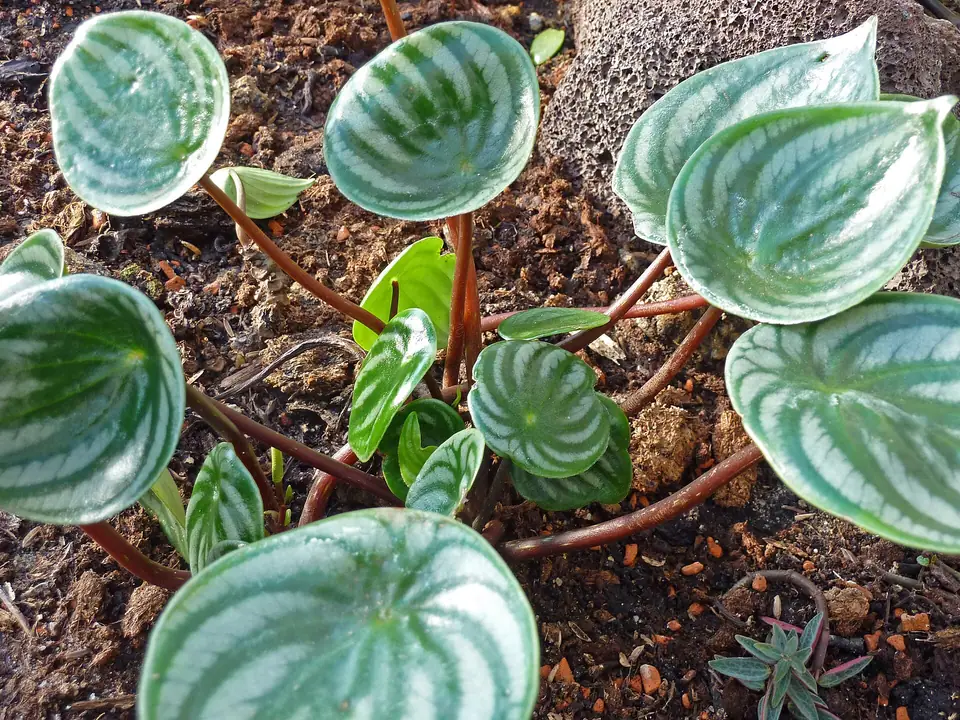

How to Grow and Care for Watermelon Peperomia
Peperomia argyreia
Written by Emilio Marruso · last checked
Not toxic to cats and dogs, according to the sources · Sources
At a glance
This peperomia is an easygoing houseplant: it grows happily indoors and in containers, stays just 8 inches tall, and is not toxic to cats or dogs. Water only when the top of the soil feels dry, and less in winter. You can even make new plants by dividing it or rooting a single leaf.
- Water
Water when the top of the soil feels dry; less in winter, and never with cold water
What the sources say (4)
Watering: Allow the soil to dry to the touch at the top before watering; reduce watering in winter
Allow the soil to dry to the touch at the top before watering and reduce watering in the winter months.
— Peperomia argyraea (Watermelon Begonia, Watermelon Peperomia, Watermelon Plant) | North Carolina Extension Gardener Plant Toolbox [1] Do not let the leaves wilt, but let the soil nearly dry between waterings.
— Home - Watermelon peperomia (Peperomia argyreia) - Research Guides at New York Botanical Garden [4] Watering notes: Over-watering causes root rot and under-watering causes wilting; avoid cold water that shocks the roots
Over-watering will cause root rot and under-watering will cause the plant to wilt.
— Peperomia argyraea (Watermelon Begonia, Watermelon Peperomia, Watermelon Plant) | North Carolina Extension Gardener Plant Toolbox [1] Do not shock the roots by using cold water.
— Home - Watermelon peperomia (Peperomia argyreia) - Research Guides at New York Botanical Garden [4] - Cold
Survives winters down to 30 °F (−1.1 °C)
Half hardy: mild winters or an unheated greenhouse · USDA 10a · RHS H3 · Z10
What the sources say (2)
Hardiness, coldest zone: 10a [winter low −1.1 to 1.7 °C (30 to 35 °F)]
USDA Plant Hardiness Zone: 10a, 10b, 11a, 11b, 12a, 12b
— Peperomia argyraea (Watermelon Begonia, Watermelon Peperomia, Watermelon Plant) | North Carolina Extension Gardener Plant Toolbox [1] Hardiness, warmest zone: 12b [winter low 12.8 to 15.6 °C (55 to 60 °F)]
USDA Plant Hardiness Zone: 10a, 10b, 11a, 11b, 12a, 12b
— Peperomia argyraea (Watermelon Begonia, Watermelon Peperomia, Watermelon Plant) | North Carolina Extension Gardener Plant Toolbox [1] - Pests
Watch for mealybugs, scale and aphids; too much water rots the roots
What the sources say (2)
Pests: mealybugs, scale, aphids
They are susceptible to typical houseplant pests such as mealybugs, scale, and aphids.
— Peperomia argyraea (Watermelon Begonia, Watermelon Peperomia, Watermelon Plant) | North Carolina Extension Gardener Plant Toolbox [1] Diseases: root rot (from over-watering)
Over-watering will cause root rot and under-watering will cause the plant to wilt.
— Peperomia argyraea (Watermelon Begonia, Watermelon Peperomia, Watermelon Plant) | North Carolina Extension Gardener Plant Toolbox [1] - Size
Stays small: 8 inches tall
What the sources say (1)
Mature height: 20 cm (8 in)
The plant grows up to 8 inches tall and can be used as a houseplant in temperate climates.
— Peperomia argyraea (Watermelon Begonia, Watermelon Peperomia, Watermelon Plant) | North Carolina Extension Gardener Plant Toolbox [1] - Propagation
Make new plants by division or from a single leaf cutting
What the sources say (1)
Propagation: Division; leaf cutting
Recommended Propagation Strategy: Division Leaf Cutting
— Peperomia argyraea (Watermelon Begonia, Watermelon Peperomia, Watermelon Plant) | North Carolina Extension Gardener Plant Toolbox [1] - Containers
Grows well in pots and indoors as a houseplant
What the sources say (2)
In containers: Yes
Small Gardens, Indoor Plant, Container Planting
— NParks | Peperomia argyreia [3] Indoors: Yes
can be used as a houseplant in temperate climates
— Peperomia argyraea (Watermelon Begonia, Watermelon Peperomia, Watermelon Plant) | North Carolina Extension Gardener Plant Toolbox [1] - Safety
Not toxic to cats, dogs or horses
Overview
Watermelon peperomia is a tropical evergreen herbaceous plant native to South America that grows up to 8 inches [20 cm] tall. [1] It is not toxic to cats or dogs. [1]
Watermelon Peperomia care
Measurements in square brackets are our conversion into the other unit system; the quoted text is unchanged.
How to water Watermelon Peperomia
Watering
Allow the soil to dry to the touch at the top before watering; reduce watering in winter
What the sources say (2)
Allow the soil to dry to the touch at the top before watering and reduce watering in the winter months.Do not let the leaves wilt, but let the soil nearly dry between waterings.Watering notes
Over-watering causes root rot and under-watering causes wilting; avoid cold water that shocks the roots
What the sources say (2)
Over-watering will cause root rot and under-watering will cause the plant to wilt.Do not shock the roots by using cold water.How much light Watermelon Peperomia needs
The sources disagree:
Although it prefers medium light exposure, it tolerates low light for several months without stress.
[5]
What the sources say (2)
This plant prefers bright indirect sunlight.A spot near a window with bright light for a few hours a day but away from direct sunlight is appropriateHow much cold Watermelon Peperomia can take
Hardiness, coldest zone
10a [winter low −1.1 to 1.7 °C (30 to 35 °F)]
What the sources say (1)
USDA Plant Hardiness Zone:
10a, 10b, 11a, 11b, 12a, 12bHardiness, warmest zone
12b [winter low 12.8 to 15.6 °C (55 to 60 °F)]
What the sources say (1)
USDA Plant Hardiness Zone:
10a, 10b, 11a, 11b, 12a, 12bWhere to grow Watermelon Peperomia
Indoors
Yes
What the sources say (1)
can be used as a houseplant in temperate climatesIn containers
Yes
What the sources say (1)
Small Gardens, Indoor Plant, Container PlantingHow to propagate Watermelon Peperomia
Division; leaf cutting
What the sources say (1)
Recommended Propagation Strategy:
Division
Leaf CuttingHow to grow Watermelon Peperomia
The plant
Family
Piperaceae
What the sources say (1)
It is a member of the Piperaceae or pepper family.Mature height
20 cm (8 in)
What the sources say (1)
The plant grows up to 8 inches tall and can be used as a houseplant in temperate climates.Pests and diseases
Pests
mealybugs, scale, aphids
What the sources say (1)
They are susceptible to typical houseplant pests such as mealybugs, scale, and aphids.Diseases
root rot (from over-watering)
What the sources say (1)
Over-watering will cause root rot and under-watering will cause the plant to wilt.Watermelon Peperomia pests and problems
Root rot
Symptom: Root rot from over-watering
What to do: Allow the soil to dry to the touch at the top before watering
What the sources say (2)
Root rot can quickly occur from overwatering.
— Peperomia argyraea (Watermelon Begonia, Watermelon Peperomia, Watermelon Plant) | North Carolina Extension Gardener Plant Toolbox [1] Allow the soil to dry to the touch at the top before watering
— Peperomia argyraea (Watermelon Begonia, Watermelon Peperomia, Watermelon Plant) | North Carolina Extension Gardener Plant Toolbox [1] Houseplant pests
Symptom: Susceptible to mealybugs, scale and aphids
What the sources say (1)
They are susceptible to typical houseplant pests such as mealybugs, scale, and aphids.
— Peperomia argyraea (Watermelon Begonia, Watermelon Peperomia, Watermelon Plant) | North Carolina Extension Gardener Plant Toolbox [1]
Remedies
The sources we checked give no remedies for this plant.
Is Watermelon Peperomia poisonous?
Reported by the source, quoted verbatim. This is not medical or veterinary advice: if a person or an animal may have eaten this plant, contact a poison control centre or a veterinarian.
Indicative values
Values from a secondary source, not checked word for word like the rest of this page. Use them as a starting point.
- Life cycle
- Herbaceous PerennialIndicative value, adapt it to your climate · Secondary source
- Hours of sun
- 4-6 hoursIndicative value, adapt it to your climate · Secondary source
- Soil
- Well-drainedIndicative value, adapt it to your climate · Secondary source
- Soil pH
- 6-6.6Indicative value, adapt it to your climate · Secondary source
- Care level
- MediumIndicative value, adapt it to your climate · Secondary source
- Growth rate
- ModerateIndicative value, adapt it to your climate · Secondary source
- Pruning
- May, AugustIndicative value, adapt it to your climate · Secondary source
Similar plants
- Baby Rubber Plant Peperomia obtusifolia
- Ivy Leaf Peperomia Peperomia griseoargentea
- Ripple Peperomia Peperomia caperata
- Spoonleaf peperomia Peperomia magnoliifolia
- Aaron's Beard Hypericum calycinum
- Abies grandis Abies grandis
- Abraham Trachystemon orientalis
- Abyssinian banana Ensete ventricosum
Sources
Every value above is quoted from these documents. Links lead to the original publisher.
- Peperomia argyraea (Watermelon Begonia, Watermelon Peperomia, Watermelon Plant) | North Carolina Extension Gardener Plant Toolbox · plants.ces.ncsu.edu, consulted
- HortFlora · hortflora.rbg.vic.gov.au, consulted
- NParks | Peperomia argyreia · nparks.gov.sg, consulted
- Home - Watermelon peperomia (Peperomia argyreia) - Research Guides at New York Botanical Garden · libguides.nybg.org, consulted
- Peperomia: The Plant, not the Pizza // Missouri Environment and Garden News Article // Integrated Pest Management, University of Missouri · ipm.missouri.edu, consulted
Written by Emilio Marruso · last checked