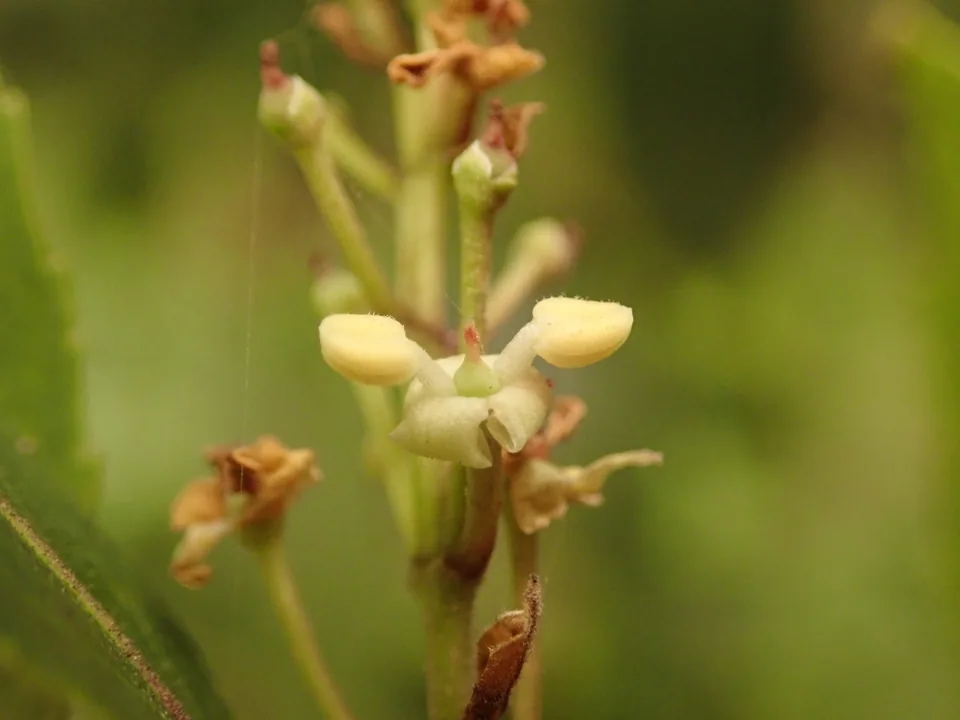
How to Grow and Care for Green Olive Tree
Phillyrea latifolia
Written by Emilio Marruso · last checked
At a glance
Mock privet is an easygoing shrub that's happy in sun or partial shade. In southern Europe, people grow it for its edible fruit, which looks like small olives. You can start new plants from seed in a cold frame or from summer cuttings, then plant the young ones out in late spring or early summer, once the last frosts are over.
- Sun
Sun or partial shade
What the sources say (1)
Light: Sun or semi-shade
]. Succeeds in sun or semi-shade[ 200 Title
— Phillyrea latifolia - Useful Temperate Plants [3] - Planting
Plant young plants out in late spring or early summer, after the last frosts
What the sources say (1)
Planting: Seedlings: late spring or early summer, after the last expected frosts
Plant them out into their permanent positions in late spring or early summer, after the last expected frosts.
— Phillyrea latifolia - Useful Temperate Plants [3] - Harvest
Grown in southern Europe for its edible fruit, which looks like olives
- Propagation
From seed in a cold frame, or from midsummer cuttings of half-ripe wood with a heel
What the sources say (2)
Propagation: Seed (cold frame); cuttings of half-ripe wood with a heel in mid summer
Seed - best sown in a cold frame as soon as it is ripe
— Phillyrea latifolia - Useful Temperate Plants [3] Cuttings of half-ripe wood, 7 - 10cm with a heel, mid summer in a frame.
— Phillyrea latifolia - Useful Temperate Plants [3] - Sowing
Sow fresh seed as soon as it's ripe in a cold frame; stored seed early in the year
What the sources say (2)
Sowing: As soon as the seed is ripe, in a cold frame; stored seed as early in the year as possible
Seed - best sown in a cold frame as soon as it is ripe
— Phillyrea latifolia - Useful Temperate Plants [3] Sow stored seed as early in the year as possible.
— Phillyrea latifolia - Useful Temperate Plants [3]
Overview
Green olive tree is an evergreen shrub or small tree of the Mediterranean regions that has been cultivated in Britain since the 16th century. [4] It succeeds in sun or semi-shade, bears pruning well and can be grown as a hedge. [3] Seed is best sown in a cold frame as soon as it is ripe, and half-ripe cuttings are another propagation method. [3]
This record is incomplete: the sources we read do not cover every field yet.
Not yet covered by our sources: Watering, Hardiness, coldest zone, Hardiness, warmest zone, Pruning
Green Olive Tree care
How to water Green Olive Tree
Not stated in the sources we read.
How much light Green Olive Tree needs
Sun or semi-shade
What the sources say (1)
]. Succeeds in sun or semi-shade[ 200 TitleHow much cold Green Olive Tree can take
Hardiness, coldest zone
Not stated in the sources we read.
Hardiness, warmest zone
Not stated in the sources we read.
How to propagate Green Olive Tree
Seed (cold frame); cuttings of half-ripe wood with a heel in mid summer
How to grow Green Olive Tree
The plant
Family
Oleaceae
What the sources say (1)
Family: OLEACEAE Genus: Phillyrea Sinònims: Phillyrea latifolia L. Province distribution: Alacant. Balearic Islands. Barcelona.Remedies
The sources we checked give no remedies for this plant.
Calendar
Sowing
As soon as the seed is ripe, in a cold frame; stored seed as early in the year as possible
Planting
Seedlings: late spring or early summer, after the last expected frosts
What the sources say (1)
Plant them out into their permanent positions in late spring or early summer, after the last expected frosts.Pruning
Not stated in the sources we read.
Months as given by the sources, which are mostly from the United States (northern hemisphere). In the southern hemisphere they shift by about six months.
Edibility
Reported by the source, quoted verbatim. Do not eat a plant on the basis of this page alone: identification mistakes can be dangerous.
This species is cultivated for its edible olive-like fruit in southern Europe
[3]
Similar plants
- Phillyrea angustifolia Phillyrea angustifolia
- Amur privet Ligustrum amurense
- Black ash Fraxinus nigra
- Blue Ash Fraxinus quadrangulata
- Chinese Fringetree Chionanthus retusus
- Chinese Privet Ligustrum sinense
- Common Jasmine Jasminum officinale
- Common Lilac Syringa vulgaris
Sources
Every value above is quoted from these documents. Links lead to the original publisher.
- Phillyrea latifolia L. var. latifolia - Herbari Virtual del Mediterrani Occidental · herbarivirtual.uib.es, consulted
- Phillyrea latifolia L. var. rodriguezii (P. Monts.) O. Bolòs & Vigo - Herbari Virtual del Mediterrani Occidental · herbarivirtual.uib.cat, consulted
- Phillyrea latifolia - Useful Temperate Plants · temperate.theferns.info, consulted
- Phillyrea latifolia - Trees and Shrubs Online · treesandshrubsonline.org, consulted
- Bean's Trees and Shrubs · beanstreesandshrubs.org, consulted
Written by Emilio Marruso · last checked