
How to Grow and Care for Canary Islands Pine
Pinus canariensis
Written by Emilio Marruso · last checked
Toxic to: People · Why
At a glance
The Canary Island pine is an easygoing tree for sunny spots: it grows in full sun or partial shade, and once established it handles drought with ease. You can start your own from seed, sowing as soon as the seed is ripe or in late winter. It likes soil with a pH between 6.0 and 7.5.
- Sun
Full sun to partial shade
- Water
Once established, it handles drought well
What the sources say (1)
Watering: Established plants are drought tolerant
Established plants are drought tolerant
— Pinus canariensis - Useful Temperate Plants [1] - Cold
Survives winters down to 20 °F (−6.7 °C)
Hardy in average winters · USDA 9 · RHS H4 · Z9
What the sources say (4)
Hardiness, coldest zone: 9 [winter low −6.7 to −1.1 °C (20 to 30 °F)]
Hardy to USDA Zone 9 - cold hardiness limit between 20° and 30°F
— Conifer Database - canariensis [5] Zones: Sunset 8, 9, and 12 – 24, USDA Hardiness 9 - 10.
— Canary Island Pine (Pinus canariensis) | California State University Stanislaus [4] Hardiness, warmest zone:
According to SelecTree / CSU Stanislaus: Zones: Sunset 8, 9, and 12 – 24, USDA Hardiness 9 - 10.
— Canary Island Pine (Pinus canariensis) | California State University Stanislaus [4] According to Gardening Know How: In the United States it is suitable for zones 9 to 11.
— Canary Island Pine – Pinus canariensis [2] - Soil
Soil with a pH of 6.0–7.5
- Propagation
Grows from seed; keep stored seed cold at 39 °F (4 °C) for 6 weeks to help it sprout
What the sources say (1)
Propagation: Seed (a 6-week stratification at 4°C [39 °F] can improve germination of stored seed)
A short stratification of 6 weeks at 4°c can improve the germination of stored seed
— Pinus canariensis - Useful Temperate Plants [1] - Sowing
Sow in a cold frame as soon as the seed is ripe, or else in late winter
What the sources say (1)
Sowing: As soon as the seed is ripe (cold frame), otherwise late winter
It is best to sow the seed in individual pots in a cold frame as soon as it is ripe if this is possible otherwise in late winter.
— Pinus canariensis - Useful Temperate Plants [1] - Safety
Can cause allergies in some people
Overview
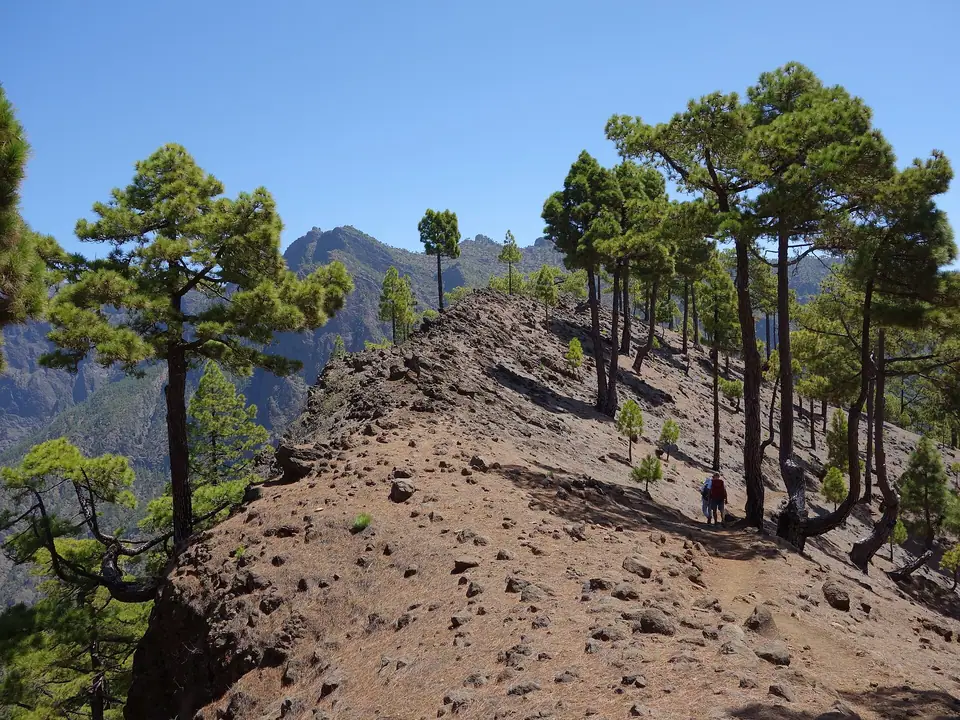
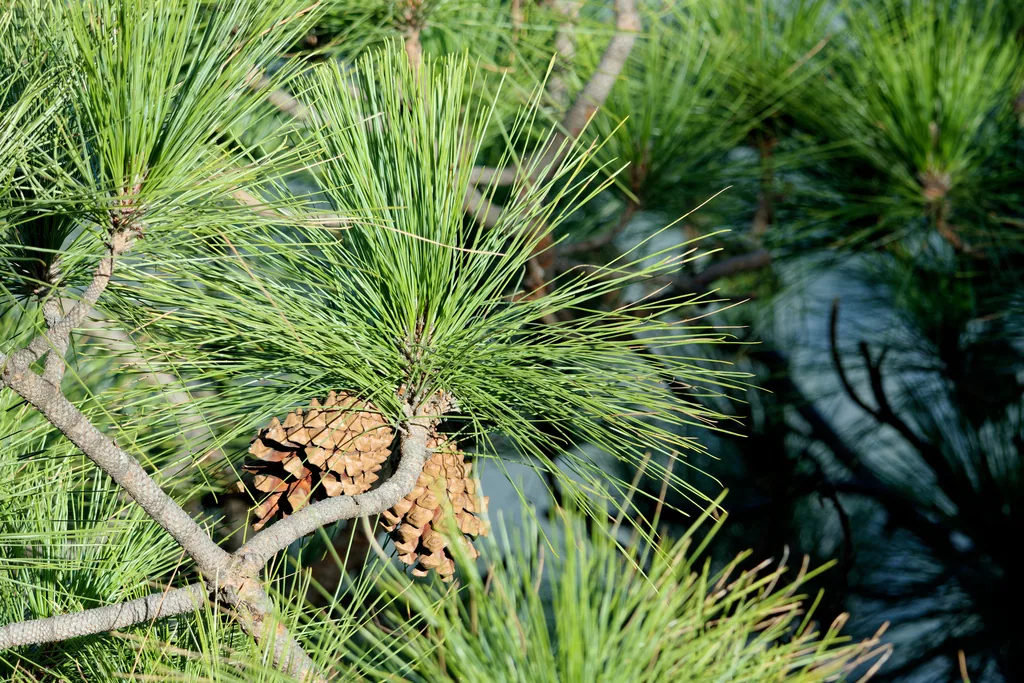
Evergreen conifer from the Canary Islands, usually up to 40 m [131.2 ft] tall and occasionally 60 m [196.9 ft]. [3] It is a subtropical pine that cannot survive hard winter frosts and is widely planted as an ornamental. [3]
This record is incomplete: the sources we read do not cover every field yet.
Not yet covered by our sources: Pruning
Canary Islands Pine care
Measurements in square brackets are our conversion into the other unit system; the quoted text is unchanged.
How to water Canary Islands Pine
Watering
Established plants are drought tolerant
What the sources say (1)
Established plants are drought tolerantWatering notes
Prefers mean annual rainfall of 800-1,500 mm [31.5–59.1 in], tolerates 600-1,750 mm [23.6–68.9 in]
What the sources say (1)
It prefers a mean annual rainfall in the range 800 - 1,500mm, but tolerates 600 - 1,750mmHow much light Canary Islands Pine needs
How much cold Canary Islands Pine can take
Hardiness, coldest zone
9 [winter low −6.7 to −1.1 °C (20 to 30 °F)]
Hardiness, warmest zone
The sources give different values depending on region, zone or growing conditions.
What each source says
According to SelecTree / CSU Stanislaus: 10 [winter low −1.1 to 4.4 °C (30 to 40 °F)]
According to Gardening Know How: 11 [winter low 4.4 to 10 °C (40 to 50 °F)]
What the sources say (2)
According to SelecTree / CSU Stanislaus: Zones: Sunset 8, 9, and 12 – 24, USDA Hardiness 9 - 10.According to Gardening Know How: In the United States it is suitable for zones 9 to 11.Best soil for Canary Islands Pine
Soil pH, minimum
6.0
What the sources say (1)
Prefers a pH in the range 6.5 - 7, tolerating 6 - 7.5Soil pH, maximum
7.5
What the sources say (1)
Prefers a pH in the range 6.5 - 7, tolerating 6 - 7.5How to propagate Canary Islands Pine
Seed (a 6-week stratification at 4°C [39 °F] can improve germination of stored seed)
What the sources say (1)
A short stratification of 6 weeks at 4°c can improve the germination of stored seedRemedies
Each remedy shows what official sources say about it; traditional remedies without an official source are marked as such. Harmful ones are listed so you know to avoid them.
Treating the plant
pine moths
Bacillus thuringiensis spray Works
How: Saturate the tree thoroughly with a product containing Bacillus thuringiensis var. kurstaki as soon as caterpillars are seen crawling on the exterior.
Saturate the tree thoroughly in a product that contains the beneficial bacteria Bacillus thuringiensis var. kurstaki (Btk).
— morningchores.com [8] What the evidence says Diazinon, Bacillus thuringiensis var. kurstaki, or spinosad are among the compounds registered for control of this pest in Connecticut and can be sprayed when needed.
— portal.ct.gov [9]
pine sawflies
hand removal of eggs Not verified
Traditional remedy, not verified by an official source.
How: Inspect in late summer or early autumn for rows of brown eggs on the needles; remove and burn them.
hot water and vinegar solution Not verified
Traditional remedy, not verified by an official source.
How: Prune off the branch with the larvae in springtime and drop the end into a hot water and vinegar solution to kill them.
neem oil, insecticidal soap or Bacillus thuringiensis Not verified
Traditional remedy, not verified by an official source.
How: Treat the trees with neem oil, insecticidal soap, or Bacillus thuringiensis var. kurstaki.
diplodia tip blight
cutting off blighted shoots Works
How: Cut off damaged or blighted shoots immediately; keep the trees watered and fertilized.
Fertilize them to keep them healthy, cut off damaged or blighted shoots immediately, and treat trees with a fungicide if you think the pathogen is spreading.
— morningchores.com [8] What the evidence says Prune and remove blighted twigs, branches, and cones during dry weather in autumn to reduce the amount of fungus available to infect new growth in the spring.
— portal.ct.gov [9]
pine wilt
cutting down and burning the tree Works
How: Cut down the infected tree, burn it immediately, and remove or burn out the stump.
If you see this issue, cut down the tree, burn it immediately, and either remove or burn out the stump.
— morningchores.com [8] What the evidence says Sanitation (the removal of dead, beetle-infested trees), fertilizing, irrigating, and increasing tree vigor are the most effective ways of dealing with this nematode in the U.S.
— portal.ct.gov [9]
Is Canary Islands Pine poisonous?
Reported by the source, quoted verbatim. This is not medical or veterinary advice: if a person or an animal may have eaten this plant, contact a poison control centre or a veterinarian.
Health Hazard: Allergy
[4]
Calendar
Sowing
As soon as the seed is ripe (cold frame), otherwise late winter
What the sources say (1)
It is best to sow the seed in individual pots in a cold frame as soon as it is ripe if this is possible otherwise in late winter.Pruning
Not stated in the sources we read.
Months as given by the sources, which are mostly from the United States (northern hemisphere). In the southern hemisphere they shift by about six months.
Similar plants
- Aleppo Pine Pinus halepensis
- Armand Pine Pinus armandi
- Austrian Pine Pinus nigra
- Bosnian Pine Pinus heldreichii
- Bristlecone Pine Pinus aristata
- Chinese Pine Pinus yunnanensis
- Himalayan Pine Pinus wallichiana
- Jack pine Pinus banksiana
Sources
Every value above is quoted from these documents. Links lead to the original publisher.
- Pinus canariensis - Useful Temperate Plants · temperate.theferns.info, consulted
- Canary Island Pine – Pinus canariensis · plants.gardeningknowhow.com, consulted
- Pinus canariensis (Pino canario, Canary Island pine) description - The Gymnosperm Database · conifers.org, consulted
- Canary Island Pine (Pinus canariensis) | California State University Stanislaus · csustan.edu, consulted
- Conifer Database - canariensis · conifersociety.org, consulted
- VicFlora: Pinus canariensis · vicflora.rbg.vic.gov.au, consulted
- Pinus canariensis Chr. Sm. · miteco.gob.es, consulted
- morningchores.com · morningchores.com
- portal.ct.gov · portal.ct.gov
Written by Emilio Marruso · last checked