
How to Grow and Care for Monterey Pine
Pinus radiata
Written by Emilio Marruso · last checked
At a glance
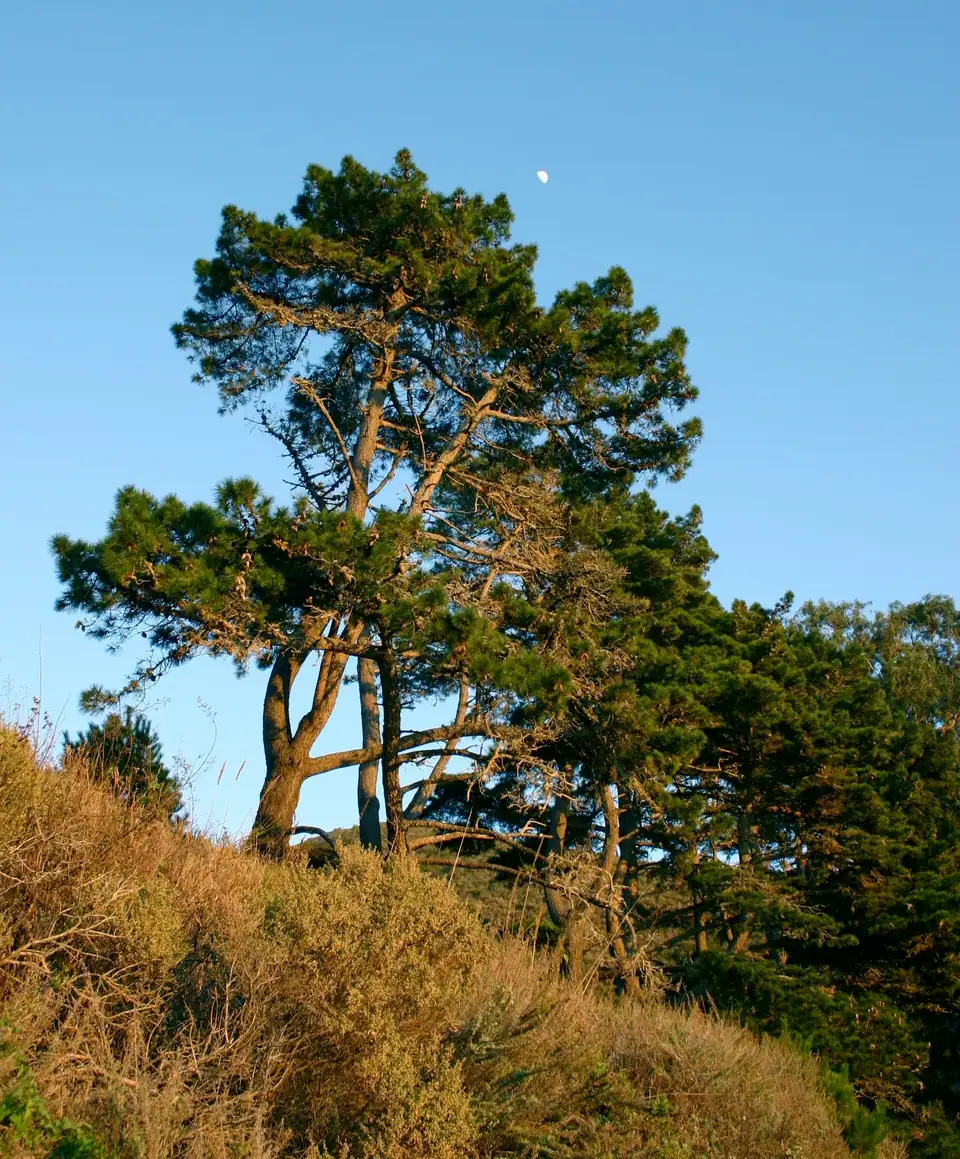
This pine grows into a stately tree 50–100 feet tall, happy in sun or light shade. Once established it shrugs off drought, and it accepts a wide range of soils, from acidic to slightly alkaline. You can even start your own from seed sown in late winter, or from cuttings taken from young trees.
- Sun
Sun or light shade
- Water
Tolerates drought once established; dislikes soggy, poorly drained soil
What the sources say (3)
Watering: Established plants tolerate drought
It is a mainstream plantation species with a high dry-site tolerance and is adaptable to a wide range of sites.
— Radiata pine | Species guides | Farm forestry toolkit | Plantations and farm forestry | Crops and horticulture | Agriculture Victoria [6] Watering notes: Prefers mean annual rainfall of 650-1,200 mm [25.6–47.2 in], tolerates 330-1,600 mm [13–63 in]; poor drainage tolerance low to moderate
It prefers a mean annual rainfall in the range 650 - 1,200mm, but tolerates 330 - 1,600mm
— Pinus radiata - Useful Temperate Plants [4] Poor drainage tolerance | Low–moderate
— Radiata pine | Species guides | Farm forestry toolkit | Plantations and farm forestry | Crops and horticulture | Agriculture Victoria [6] - Cold
Survives winters down to 10 °F (−12.2 °C)
Hardy in cold winters · USDA 8 · RHS H5 · Z8
What the sources say (1)
Hardiness, coldest zone: 8 [winter low −12.2 to −6.7 °C (10 to 20 °F)]
Sun or light shade - Hardy to USDA Zone 8
— Pinus radiata | Landscape Plants | Oregon State University [1] - Soil
Acidic to slightly alkaline soil, pH 4.5–7.5
- Pests
Watch out for pitch canker
What the sources say (1)
Diseases: pitch canker
These populations are under threat from development, forestry and infection, particularly form pitch canker, a fungal disease spread by bark beetles
— Pinus radiata - Cambridge University Botanic Garden [3] - Size
50–100 ft tall
What the sources say (1)
Mature height: 1500-3000 cm (50-100 ft)
Conifer, evergreen tree, fast growing, may reach 50-100 ft (15-30 m) tall and a trunk diameter of 60-90 cm
— Pinus radiata | Landscape Plants | Oregon State University [1] - Propagation
From seed, or from cuttings of trees under 10 years old
What the sources say (2)
Propagation: Seed (sown in pots in a cold frame; 6 weeks stratification at 4 C can improve germination); cuttings from trees under 10 years old
A short stratification of 6 weeks at 4°c can improve the germination of stored seed
— Pinus radiata - Useful Temperate Plants [4] Cuttings. This method only works when taken from very young trees less than 10 years old.
— Pinus radiata - Useful Temperate Plants [4] - Sowing
Sow seed as soon as it ripens or in late winter; 6 weeks at 39 °F (4 °C) helps it sprout
What the sources say (3)
Sowing: As soon as the seed is ripe, otherwise in late winter
It is best to sow the seed in individual pots in a cold frame as soon as it is ripe if this is possible otherwise in late winter.
— Pinus radiata - Useful Temperate Plants [4] Propagation: Seed (sown in pots in a cold frame; 6 weeks stratification at 4 C can improve germination); cuttings from trees under 10 years old
A short stratification of 6 weeks at 4°c can improve the germination of stored seed
— Pinus radiata - Useful Temperate Plants [4] Cuttings. This method only works when taken from very young trees less than 10 years old.
— Pinus radiata - Useful Temperate Plants [4]
Overview
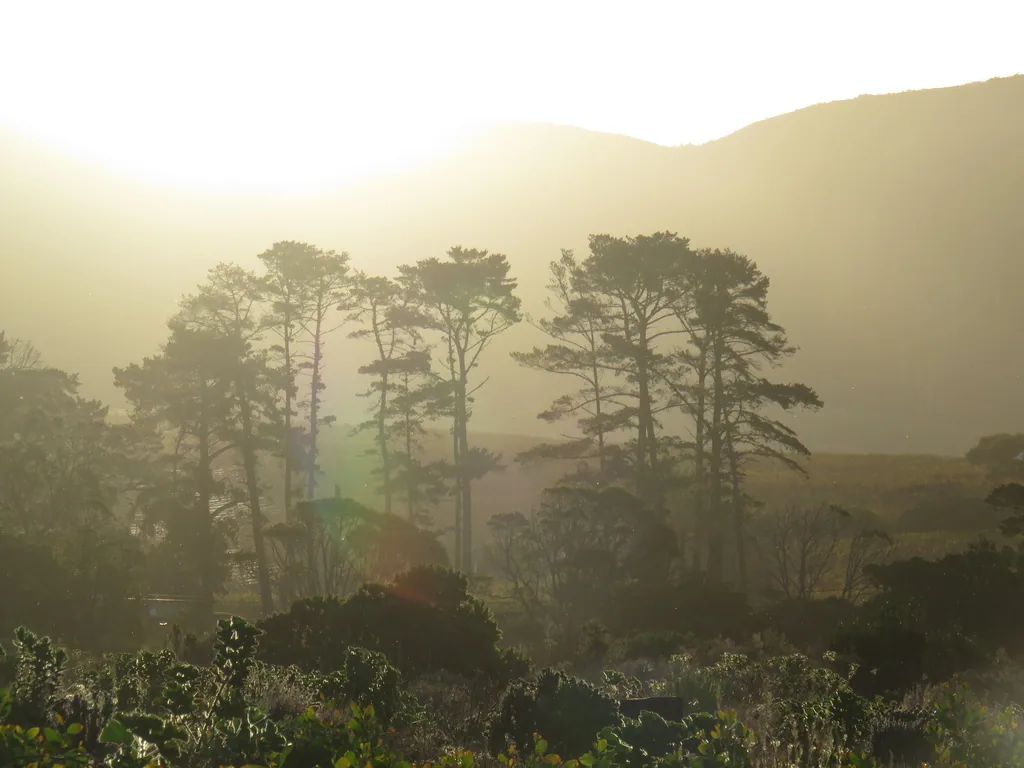
Monterey pine is a fast-growing evergreen conifer native to the California coast, widely planted for timber and ornament. [5][1] It grows best in sun on deep, well-drained, neutral to acid soils. [4] It has escaped cultivation and become invasive in several countries. [4]
This record is incomplete: the sources we read do not cover every field yet.
Not yet covered by our sources: Hardiness, warmest zone, Pruning
Monterey Pine care
Measurements in square brackets are our conversion into the other unit system; the quoted text is unchanged.
How to water Monterey Pine
Watering
Established plants tolerate drought
What the sources say (1)
It is a mainstream plantation species with a high dry-site tolerance and is adaptable to a wide range of sites.Watering notes
Prefers mean annual rainfall of 650-1,200 mm [25.6–47.2 in], tolerates 330-1,600 mm [13–63 in]; poor drainage tolerance low to moderate
What the sources say (2)
It prefers a mean annual rainfall in the range 650 - 1,200mm, but tolerates 330 - 1,600mmPoor drainage tolerance
| Low–moderateHow much light Monterey Pine needs
How much cold Monterey Pine can take
Hardiness, coldest zone
8 [winter low −12.2 to −6.7 °C (10 to 20 °F)]
What the sources say (1)
Sun or light shade
-
Hardy to USDA Zone 8Hardiness, warmest zone
Not stated in the sources we read.
Best soil for Monterey Pine
Soil pH, minimum
4.5
What the sources say (1)
Prefers a pH in the range 5.5 - 6.5, but can tolerate 4.5 - 7.5Soil pH, maximum
7.5
What the sources say (1)
Prefers a pH in the range 5.5 - 6.5, but can tolerate 4.5 - 7.5How to propagate Monterey Pine
Seed (sown in pots in a cold frame; 6 weeks stratification at 4 C can improve germination); cuttings from trees under 10 years old
How to grow Monterey Pine
The plant
Family
Pinaceae
What the sources say (1)
Pronunciation:
PI-nus ra-dee-AH-ta
Family:
Pinaceae
Genus:
Pinus
Type:
ConiferMature height
1500-3000 cm (50-100 ft)
What the sources say (1)
Conifer, evergreen tree, fast growing, may reach 50-100 ft (15-30 m) tall and a trunk diameter of 60-90 cmPests and diseases
Diseases
pitch canker
What the sources say (1)
These populations are under threat from development, forestry and infection, particularly form pitch canker, a fungal disease spread by bark beetlesRemedies
Each remedy shows what official sources say about it; traditional remedies without an official source are marked as such. Harmful ones are listed so you know to avoid them.
Treating the plant
pitch moth
prying off pitch masses Works
Inadequately removing pitch masses allows a larva or pupa to survive and mature into an adult that can reinfest trees.
— ipm.ucanr.edu [7] How: Gently pry or scrape a pitch mass off of the bark using a screwdriver or stiff putty knife, then puncture or crush the larva or pupa.
Gently pry or scrape a pitch mass off of the bark using a screwdriver or stiff putty knife. Locate the insect on the underside of the mass or in the tree wound and puncture or crush the larva or pupa.
— ipm.ucanr.edu [7] What the evidence says Scraping away or prying off resinous pitch cankers is the only recommended, direct method of controlling pitch masses and larvae.
— ipm.ucanr.edu [7]
Getting rid of it
radiata pine seedlings
hand pulling Not verified
Traditional remedy, not verified by an official source.
How: Grasp stem at ground level. Rock weed backwards and forwards to loosen roots, then pull out gently.
radiata pine saplings
cutting at ground level Not verified
Traditional remedy, not verified by an official source.
How: Some trees, like radiata pine, may simply be cut down. Others may need follow-up treatment.
Calendar
Sowing
As soon as the seed is ripe, otherwise in late winter
What the sources say (1)
It is best to sow the seed in individual pots in a cold frame as soon as it is ripe if this is possible otherwise in late winter.Pruning
Not stated in the sources we read.
Months as given by the sources, which are mostly from the United States (northern hemisphere). In the southern hemisphere they shift by about six months.
Similar plants
- Aleppo Pine Pinus halepensis
- Armand Pine Pinus armandi
- Austrian Pine Pinus nigra
- Bristlecone Pine Pinus aristata
- Chinese Pine Pinus yunnanensis
- Chinese Red Pine Pinus tabuliformis
- Himalayan Pine Pinus wallichiana
- Jack pine Pinus banksiana
Sources
Every value above is quoted from these documents. Links lead to the original publisher.
- Pinus radiata | Landscape Plants | Oregon State University · landscapeplants.oregonstate.edu, consulted
- Pinus radiata, Monterey pine | Trees of Stanford & Environs · trees.stanford.edu, consulted
- Pinus radiata - Cambridge University Botanic Garden · botanic.cam.ac.uk, consulted
- Pinus radiata - Useful Temperate Plants · temperate.theferns.info, consulted
- Pinus radiata - EUFORGEN European forest genetic resources programme · euforgen.org, consulted
- Radiata pine | Species guides | Farm forestry toolkit | Plantations and farm forestry | Crops and horticulture | Agriculture Victoria · agriculture.vic.gov.au, consulted
- ipm.ucanr.edu · ipm.ucanr.edu
Written by Emilio Marruso · last checked