
How to Grow and Care for African Violet
Saintpaulia ionantha
Written by Emilio Marruso · last checked
Not toxic to cats and dogs, according to the sources · Sources
At a glance
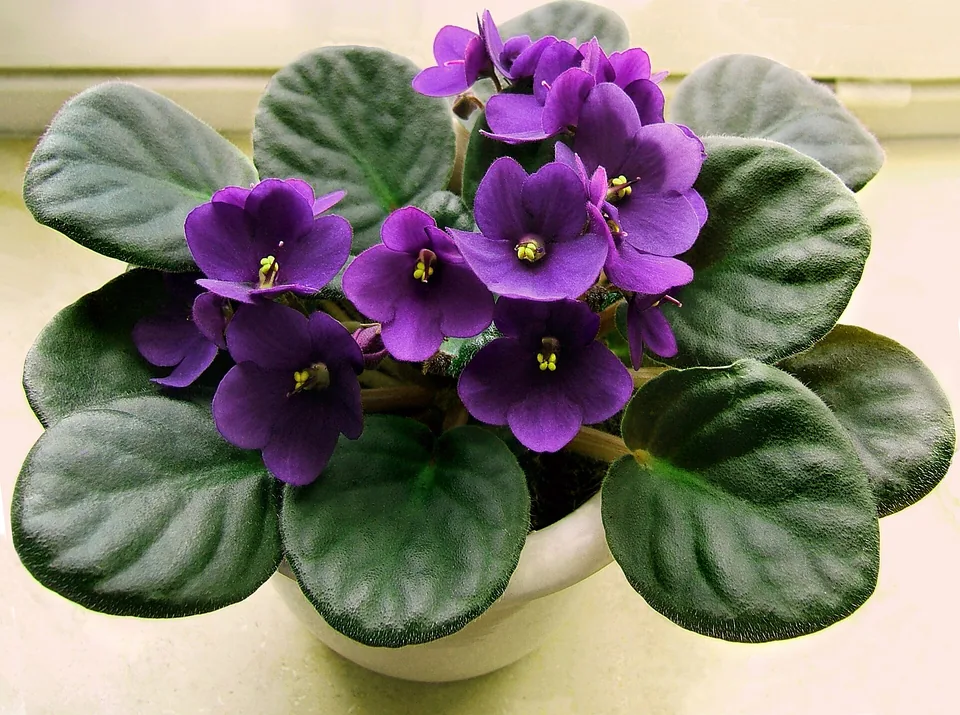
The African violet is a charming houseplant that grows happily indoors in a pot, forming a neat rosette 8–10 inches wide. Give it bright, filtered light, never full sun, and never let it sit in water. Best of all, it's safe around cats and dogs, and you can start new plants from a single leaf.
- Sun
Bright, filtered light; never full sun
What the sources say (3)
Light: Bright, filtered (indirect) light; never full sun
it prefers interior sites with bright, filtered light and moist soil
— Streptocarpus ionanthus (African Violet, Kenya Violet) | North Carolina Extension Gardener Plant Toolbox [1] It thrives in moderate to bright, indirect light
— African Violet: Houseplant How-To [5] they must never have full sun
— Violet, African [3] - Water
Never let it sit in water; skip very cold water and keep the leaves dry
What the sources say (3)
Watering notes: Never let the plant sit in water; avoid very cold water; water on the leaves causes spotting
Never let the African violet sit in water, as this will promote root diseases.
— African Violet: Houseplant How-To [5] It is intolerant of dry air or very cold water.
— Streptocarpus ionanthus (African Violet, Kenya Violet) | North Carolina Extension Gardener Plant Toolbox [1] Try not to get water on the leaves, because this will cause spotting damage.
— African Violet: Houseplant How-To [5] - Cold
Survives winters down to 40 °F (4.4 °C)
Tender: needs a frost-free greenhouse · USDA 11a · RHS H2 · Z11
What the sources say (2)
Hardiness, coldest zone: 11a [winter low 4.4 to 7.2 °C (40 to 45 °F)]
USDA Plant Hardiness Zone: 11a, 11b, 12a, 12b
— Streptocarpus ionanthus (African Violet, Kenya Violet) | North Carolina Extension Gardener Plant Toolbox [1] Hardiness, warmest zone: 12b [winter low 12.8 to 15.6 °C (55 to 60 °F)]
USDA Plant Hardiness Zone: 11a, 11b, 12a, 12b
— Streptocarpus ionanthus (African Violet, Kenya Violet) | North Carolina Extension Gardener Plant Toolbox [1] - Soil
Slightly acidic soil, pH 5.8–6.5
- Pests
Crown and root rot, gray mold, mealybugs, thrips and mites
What the sources say (2)
Pests: vine weevil, thrips, mealybugs, cyclamen mites, glasshouse leafhoppers
Insects that may damage this plant include vine weevil, thrips, mealybugs, cyclamen mites and glasshouse leafhoppers.
— Streptocarpus ionanthus (African Violet, Kenya Violet) | North Carolina Extension Gardener Plant Toolbox [1] Diseases: crown and root rot, botrytis blight
Diseases that may harm African violet are crown and root rot and botrytis blight.
— Streptocarpus ionanthus (African Violet, Kenya Violet) | North Carolina Extension Gardener Plant Toolbox [1] - Watch out
Overwatering is the number one problem: it rots the crown and roots
- Size
A rosette 8–10 in wide
What the sources say (1)
Mature width: 20.32-25.4 cm (8-10 in) rosette
Most plants form rosettes 8-10 inches across, but “minis” are popular with fanciers and make rosettes in the 3-inch range.
— Saintpaulia ionantha, African Violet [4] - Propagation
Most often from leaf cuttings; you can also divide the crown
What the sources say (3)
Propagation: Leaf cuttings (most common); tissue culture; seed (very few cultivars come true); division of the crown
The major means of propagation are by leaf cuttings and tissue culture.
— ENH 1096 [2] Very few Saintpaulia cultivars come true from seed.
— ENH 1096 [2] have the ability to produce plantlets from the leaves, the most common means of propagation
— Violet, African [3] - Sowing
Seeds sprout in 25 days, but few varieties come true from seed
What the sources say (4)
Days to germination: 25
Maintain high humidity with mist or fogging. Avoid direct watering. At 70°F media temperature, germination should take approximately 25 days.
— ENH 1096 [2] Propagation: Leaf cuttings (most common); tissue culture; seed (very few cultivars come true); division of the crown
The major means of propagation are by leaf cuttings and tissue culture.
— ENH 1096 [2] Very few Saintpaulia cultivars come true from seed.
— ENH 1096 [2] have the ability to produce plantlets from the leaves, the most common means of propagation
— Violet, African [3] - Containers
Grows well in pots, indoors
What the sources say (2)
In containers: Yes
#houseplant #container plant
— Streptocarpus ionanthus (African Violet, Kenya Violet) | North Carolina Extension Gardener Plant Toolbox [1] Indoors: Yes
A popular potted houseplant
— Streptocarpus ionanthus (African Violet, Kenya Violet) | North Carolina Extension Gardener Plant Toolbox [1] - Safety
Not toxic to cats, dogs or horses
Overview
African violet is an evergreen tropical houseplant that prefers bright, filtered light, moist well-drained soil and high humidity. [1] It is propagated mainly by leaf cuttings, and overwatering is its main problem. [2][1]
This record is incomplete: the sources we read do not cover every field yet.
Not yet covered by our sources: Watering
African Violet care
How to water African Violet
Watering
Not stated in the sources we read.
Watering notes
Never let the plant sit in water; avoid very cold water; water on the leaves causes spotting
What the sources say (3)
Never let the African violet sit in water, as this will promote root diseases.It is intolerant of dry air or very cold water.Try not to get water on the leaves, because this will cause spotting damage.How much light African Violet needs
Bright, filtered (indirect) light; never full sun
What the sources say (3)
it prefers interior sites with bright, filtered light and moist soilIt thrives in moderate to bright, indirect lightthey must never
have full sunHow much cold African Violet can take
Hardiness, coldest zone
11a [winter low 4.4 to 7.2 °C (40 to 45 °F)]
What the sources say (1)
USDA Plant Hardiness Zone:
11a, 11b, 12a, 12bHardiness, warmest zone
12b [winter low 12.8 to 15.6 °C (55 to 60 °F)]
What the sources say (1)
USDA Plant Hardiness Zone:
11a, 11b, 12a, 12bBest soil for African Violet
Soil pH, minimum
5.8
What the sources say (1)
The pH of the substrate should be adjusted to a range of 5.8-6.5.Soil pH, maximum
6.5
What the sources say (1)
The pH of the substrate should be adjusted to a range of 5.8-6.5.Where to grow African Violet
Indoors
Yes
What the sources say (1)
A popular potted houseplantIn containers
Yes
What the sources say (1)
#houseplant #container plantHow to propagate African Violet
Leaf cuttings (most common); tissue culture; seed (very few cultivars come true); division of the crown
How to grow African Violet
The plant
Family
Gesneriaceae
What the sources say (1)
African violet is an evergreen, tropical houseplant in the gloxinia family (Gesneriaceae).Mature width
20.32-25.4 cm (8-10 in) rosette
What the sources say (1)
Most plants
form rosettes 8-10 inches across, but “minis” are popular with fanciers and make rosettes
in the 3-inch range.Sowing and growth
Days to germination
25
What the sources say (1)
Maintain high humidity with mist or fogging. Avoid direct watering. At 70°F media temperature, germination should take approximately 25 days.Pests and diseases
Pests
vine weevil, thrips, mealybugs, cyclamen mites, glasshouse leafhoppers
What the sources say (1)
Insects that may damage this plant include vine weevil, thrips, mealybugs, cyclamen mites and glasshouse leafhoppers.Diseases
crown and root rot, botrytis blight
What the sources say (1)
Diseases that may harm African violet are crown and root rot and botrytis blight.African Violet pests and problems
Crown and root rot, botrytis blight, insect pests
Symptom: Crown and root rot and botrytis blight; vine weevil, thrips, mealybugs, cyclamen mites and glasshouse leafhoppers.
What to do: Overwatering is the number one issue.
What the sources say (1)
Diseases that may harm African violet are crown and root rot and botrytis blight. Insects that may damage this plant include vine weevil, thrips, mealybugs, cyclamen mites and glasshouse leafhoppers. Overwatering is the number one issue.
— Streptocarpus ionanthus (African Violet, Kenya Violet) | North Carolina Extension Gardener Plant Toolbox [1]
Remedies
Each remedy shows what official sources say about it; traditional remedies without an official source are marked as such. Harmful ones are listed so you know to avoid them.
Treating the plant
mealybugs
rubbing alcohol on a cotton swab Partly works
How: Remove light infestations with a cotton swab dipped in rubbing (isopropyl) alcohol; repeat the alcohol treatments as needed.
Remove light infestations with a cotton swab dipped in rubbing (isopropyl) alcohol
— hgic.clemson.edu [8] What the evidence says A few mealybugs found on a plant can be killed by dabbing the visible insects with alcohol on a cotton swab (alcohol dissolves the wax around the insect and its egg masses and kills them). This strategy is not adequate when mealybugs are present in large numbers.
— extension.missouri.edu [9] insecticidal soap spray Official source, not independently tested
Certain chemicals, including oils and insecticidal soaps, may cause plant injury if used at the wrong stage of plant development or when temperatures are too high.
— extension.missouri.edu [9] How: Insecticidal soap, ultrafine horticultural oil or resmethrin are the compounds registered for this pest; multiple applications are needed and the spray needs to contact the insect.
Among the compounds registered for control of this pest in Connecticut are insecticidal soap, ultrafine horticultural oil or resmethrin.
— portal.ct.gov [10]
cyclamen mites
hot water dip Partly works
How: Trim badly injured plant parts, then immerse the infested plant, pot and all, for 15 minutes in water held at 110 degrees F, with careful control of the water temperature.
Badly injured plant parts should be trimmed off where practical before dipping. The infested plant, pot and all, is immersed for 15 minutes in water held at 110 degrees F. Success of the treatment depends on careful control of the water temperature.
— entomology.mgcafe.uky.edu [11] What the evidence says Isolate infested plants and trim off or prune damaged parts. Hot water dipping may provide some control.
— entomology.mgcafe.uky.edu [11]
powdery mildew
picking off affected leaves Official source, not independently tested
How: Carefully pick off affected leaves as soon as symptoms are evident and place them in a plastic bag to avoid spreading the spores.
Disease can be minimized by carefully picking off affected leaves as soon as symptoms are evident. Symptomatic leaves can be placed into a plastic bag in order to avoid spreading the spores of the fungus.
— portal.ct.gov [10]
foliar nematodes
picking and destroying affected leaves Official source, not independently tested
How: Pick and destroy affected leaves and avoid splashing water from leaf to leaf or from soil to leaf.
Picking and destroying affected leaves and avoiding splashing water from leaf to leaf or from soil to leaf can help to control these nematodes.
— portal.ct.gov [10]
botrytis blight
removing spent flowers and grooming Official source, not independently tested
How: Groom the plants and remove spent or senescing flowers; remove the affected tissues carefully and discard them when dry.
Good sanitation practices including grooming the plants and removing spent or senescing flowers can minimize the potential for infection.
— portal.ct.gov [10]
thrips
handpicking infested blossoms Official source, not independently tested
How: Handpick infested blossoms if needed, starting from clean plants.
Control in the home begins with buying clean plants and if needed, handpicking of infested blossoms.
— portal.ct.gov [10]
Is African Violet poisonous?
Reported by the source, quoted verbatim. This is not medical or veterinary advice: if a person or an animal may have eaten this plant, contact a poison control centre or a veterinarian.
#non-toxic for cats #non-toxic for horses #non-toxic for dogs
[1]The source flags the risk for this animal but does not explain why.
Indicative values
Values from a secondary source, not checked word for word like the rest of this page. Use them as a starting point.
- Life cycle
- Herbaceous PerennialIndicative value, adapt it to your climate · Secondary source
- Mature height
- 15.2-22.9 cm (0.5-0.75 ft)Indicative value, adapt it to your climate · Secondary source
- Hours of sun
- 4-6 hoursIndicative value, adapt it to your climate · Secondary source
- Watering
- AverageIndicative value, adapt it to your climate · Secondary source
- Soil
- Well-drainedIndicative value, adapt it to your climate · Secondary source
- Care level
- MediumIndicative value, adapt it to your climate · Secondary source
- Growth rate
- ModerateIndicative value, adapt it to your climate · Secondary source
- Pruning
- February, March, AprilIndicative value, adapt it to your climate · Secondary source
Similar plants
- Flame Violet Episcia cupreata
- Lipstick Plant Aeschynanthus radicans
- Lipstick Vine Aeschynanthus humilis
- African Blood Lily Scadoxus multiflorus
- African Blue Lily Agapanthus praecox
- Allamanda Allamanda cathartica
- Amazonian Zebra Plant Aechmea chantinii
- Areca Palm Chrysalidocarpus lutescens
Sources
Every value above is quoted from these documents. Links lead to the original publisher.
- Streptocarpus ionanthus (African Violet, Kenya Violet) | North Carolina Extension Gardener Plant Toolbox · plants.ces.ncsu.edu, consulted
- ENH 1096 · edis.ifas.ufl.edu, consulted
- Violet, African · uaex.uada.edu, consulted
- Saintpaulia ionantha, African Violet · uaex.uada.edu, consulted
- African Violet: Houseplant How-To · extension.sdstate.edu, consulted
- How to Grow African Violets - Saintpaulia · harvesttotable.com, consulted
- Streptocarpus ionanthus ssp. ionanthus var. ionanthus | Gesneriad Reference Web · gesneriads.info, consulted
- hgic.clemson.edu · hgic.clemson.edu
- extension.missouri.edu · extension.missouri.edu
- portal.ct.gov · portal.ct.gov
- entomology.mgcafe.uky.edu · entomology.mgcafe.uky.edu
Written by Emilio Marruso · last checked