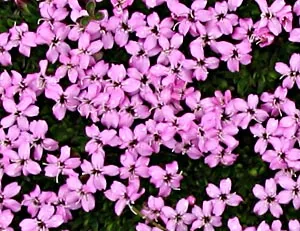


How to Grow and Care for Moss Campion
Silene acaulis
Written by Emilio Marruso · last checked
Toxic to: People · Why
At a glance
Moss campion is a tiny perennial that stays just 2–4 inches tall and spreads 8–10 inches wide. It's happy in full sun or partial shade and grows in containers too. Sow the seeds outdoors in late fall for spring sprouts, keep the soil moist but well drained, and enjoy a plant that's safe for cats, dogs and horses.
- Sun
Full sun to partial shade
What the sources say (2)
Light: Full sun to partial shade
Moss campion prefers full sun, low humidity, and cool temperatures.
— Silene acaulis (Catchfly, Cushion Pink, Dwarf Catchfly, Dwarf Silene, Moss Campion, Moss Pink, Mossy Campion) | North Carolina Extension Gardener Plant Toolbox [1] USDA: 3 - 9 Sun Exposure: Sun to partial shade Origin: Rocky Mountains in North America
— Moss Campion (Silene acaulis) [3] - Water
Keep the soil moist but well drained; it can't stand drought
What the sources say (2)
Watering: Keep soil moist, well drained
Watering Needs: Keep soil moist, well drained Propagation: Seeds in the fall, division in summer and fall, stem tip cuttings in late summer
— Moss Campion (Silene acaulis) [3] Watering notes: Intolerant to drought and winter wetness
It is intolerant to drought and winter wetness.
— Silene acaulis (Catchfly, Cushion Pink, Dwarf Catchfly, Dwarf Silene, Moss Campion, Moss Pink, Mossy Campion) | North Carolina Extension Gardener Plant Toolbox [1] - Harvest
The whole plant and roots are edible when cooked
- Watch out
Soggy soil in winter harms it: make sure water drains away
What the sources say (1)
Watering notes: Intolerant to drought and winter wetness
It is intolerant to drought and winter wetness.
— Silene acaulis (Catchfly, Cushion Pink, Dwarf Catchfly, Dwarf Silene, Moss Campion, Moss Pink, Mossy Campion) | North Carolina Extension Gardener Plant Toolbox [1] - Size
2–4 in tall and 8–10 in wide
What the sources say (2)
Mature height: 5.1-10.2 cm (2-4 in)
The plant measure 2 to 4 inches in height and 8 to 10 inches wide.
— Silene acaulis (Catchfly, Cushion Pink, Dwarf Catchfly, Dwarf Silene, Moss Campion, Moss Pink, Mossy Campion) | North Carolina Extension Gardener Plant Toolbox [1] Mature width: 20.3-25.4 cm (8-10 in)
The plant measure 2 to 4 inches in height and 8 to 10 inches wide.
— Silene acaulis (Catchfly, Cushion Pink, Dwarf Catchfly, Dwarf Silene, Moss Campion, Moss Pink, Mossy Campion) | North Carolina Extension Gardener Plant Toolbox [1] - Propagation
From seeds, stem cuttings or by dividing the plant
What the sources say (2)
Propagation: Seeds, stem cuttings, division
The plant is propagated by seeds or stem cuttings.
— Silene acaulis (Catchfly, Cushion Pink, Dwarf Catchfly, Dwarf Silene, Moss Campion, Moss Pink, Mossy Campion) | North Carolina Extension Gardener Plant Toolbox [1] Propagation: Seeds in the fall, division in summer and fall, stem tip cuttings in late summer
— Moss Campion (Silene acaulis) [3] - Sowing
Sow outdoors in late fall; the seeds sprout in spring
What the sources say (1)
Sowing: Late fall (direct sown outdoors for spring germination)
Seeds can be direct-sown outside in late fall for spring germination.
— Moss Campion Facts: Growing Moss Campion In The Garden | Gardening Know How [2] - Containers
Grows in containers too
What the sources say (1)
In containers: Yes
It may be used in rocky crevices, rambling over steppingstones, or spilling over the sides of a container.
— Silene acaulis (Catchfly, Cushion Pink, Dwarf Catchfly, Dwarf Silene, Moss Campion, Moss Pink, Mossy Campion) | North Carolina Extension Gardener Plant Toolbox [1] - Safety
Safe for cats, dogs and horses; people shouldn't eat large amounts
Overview
Moss campion is a compact, mat-forming evergreen perennial of arctic and alpine regions. [1] It prefers full sun and cool temperatures and is intolerant of drought and winter wetness. [1] It is propagated by seeds or stem cuttings. [1]
This record is incomplete: the sources we read do not cover every field yet.
Not yet covered by our sources: Hardiness, coldest zone, Hardiness, warmest zone, Pruning
Moss Campion care
How to water Moss Campion
Watering
Keep soil moist, well drained
What the sources say (1)
Watering Needs: Keep soil moist, well drained Propagation: Seeds in the fall, division in summer and fall, stem tip cuttings in late summerWatering notes
Intolerant to drought and winter wetness
What the sources say (1)
It is intolerant to drought and winter wetness.How much light Moss Campion needs
Full sun to partial shade
What the sources say (2)
Moss campion prefers full sun, low humidity, and cool temperatures.USDA: 3 - 9 Sun Exposure: Sun to partial shade Origin: Rocky Mountains in North AmericaHow much cold Moss Campion can take
Hardiness, coldest zone
Not stated in the sources we read.
Hardiness, warmest zone
Not stated in the sources we read.
Where to grow Moss Campion
Yes
What the sources say (1)
It may be used in rocky crevices, rambling over steppingstones, or spilling over the sides of a container.How to propagate Moss Campion
Seeds, stem cuttings, division
What the sources say (2)
The plant is propagated by seeds or stem cuttings.Propagation: Seeds in the fall, division in summer and fall, stem tip cuttings in late summerHow to grow Moss Campion
The plant
Life cycle
perennial
What the sources say (1)
The plant is a compact, cushion-like, or mat-forming evergreen perennial that has tiny star-shaped flowers in the summer.Family
Caryophyllaceae
What the sources say (1)
It is a member of the Caryophyllaceae family that includes the carnations or pinks.Mature height
5.1-10.2 cm (2-4 in)
What the sources say (1)
The plant measure 2 to 4 inches in height and 8 to 10 inches wide.Mature width
20.3-25.4 cm (8-10 in)
What the sources say (1)
The plant measure 2 to 4 inches in height and 8 to 10 inches wide.Remedies
The sources we checked give no remedies for this plant.
Is Moss Campion poisonous?
Reported by the source, quoted verbatim. This is not medical or veterinary advice: if a person or an animal may have eaten this plant, contact a poison control centre or a veterinarian.
Animals
#evergreen #non-toxic for cats #non-toxic for horses #non-toxic for dogs #stepping stones
[1]The source flags the risk for this animal but does not explain why.
People
Calendar
Sowing
Late fall (direct sown outdoors for spring germination)
What the sources say (1)
Seeds can be direct-sown outside in late fall for spring germination.Pruning
Not stated in the sources we read.
Months as given by the sources, which are mostly from the United States (northern hemisphere). In the southern hemisphere they shift by about six months.
Edibility
Reported by the source, quoted verbatim. Do not eat a plant on the basis of this page alone: identification mistakes can be dangerous.
Mossy campion is edible when cooked. It was used as a vegetable by peasants in Iceland and the Arctic and Alpine regions.
[1]
Similar plants
- Fire Pink Silene virginica
- Maltese Cross Silene chalcedonica
- Rose Campion Silene coronaria
- Starry Campion Silene stellata
- Wild Pink Silene caroliniana
- Bladder Campion Silene vulgaris
- Silene dioica Silene dioica
- Royal catchfly Silene regia
Sources
Every value above is quoted from these documents. Links lead to the original publisher.
- Silene acaulis (Catchfly, Cushion Pink, Dwarf Catchfly, Dwarf Silene, Moss Campion, Moss Pink, Mossy Campion) | North Carolina Extension Gardener Plant Toolbox · plants.ces.ncsu.edu, consulted
- Moss Campion Facts: Growing Moss Campion In The Garden | Gardening Know How · gardeningknowhow.com, consulted
- Moss Campion (Silene acaulis) · desert-tropicals.com, consulted
- Text · cdhs.us, consulted
- Silene acaulis - Useful Temperate Plants · temperate.theferns.info, consulted
- British Wild Plant: Silene acaulis Moss Campion · ukwildflowers.com, consulted
Written by Emilio Marruso · last checked