
How to Grow and Care for Royal catchfly
Silene regia
Written by Emilio Marruso · last checked
At a glance
This plant grows tall and proud, reaching 3–4 feet, and asks for little in return. Give it soil that drains well, sow its seeds in fall, or take cuttings from the base of the plant in spring to make new ones. If the lower leaves turn yellow and drop during a drought, that is its way of telling you it is thirsty.
- Water
Good drainage is a must; in drought the lower leaves may turn yellow and drop
What the sources say (3)
Watering notes: Good drainage is essential; during drought the lower leaves may yellow and drop
Good drainage is essential. Plants may need staking. Propagation Sow seed in fall; in spring, root basal cuttings.
— Royal catchfly - Fine Gardening [7] It needs well-drained, sandy or gravelly soil. It is easily propagated by seeds and is also available for sale at most native plant nurseries in the state.
— Royal Catchfly | Missouri Department of Conservation [2] During drought, the lower leaves may turn yellow and fall off the plant.
— Royal Catchfly (Silene regia) [6] - Cold
Survives winters down to −20 °F (−28.9 °C)
Very hardy · USDA 5 · RHS H7 · Z5
What the sources say (2)
Hardiness, coldest zone: 5 [winter low −28.9 to −23.3 °C (−20 to −10 °F)]
- Zones : 5, 6, 7, 8 - Characteristics : Attracts Hummingbirds
— Royal catchfly - Fine Gardening [7] Hardiness, warmest zone: 8 [winter low −12.2 to −6.7 °C (10 to 20 °F)]
- Zones : 5, 6, 7, 8 - Characteristics : Attracts Hummingbirds
— Royal catchfly - Fine Gardening [7] - Size
3–4 ft tall
What the sources say (1)
Mature height: 91-122 cm (3-4 ft)
Royal catchfly is a clump-forming, slender plant reaching 3 to 4 feet in height.
— Royal Catchfly: A rare Illinois native worth growing | The Garden Scoop | Illinois Extension | Illinois [5] - Propagation
From seed, or from cuttings taken at the base of the plant in spring
What the sources say (2)
Propagation: Seed; basal cuttings in spring
Good drainage is essential. Plants may need staking. Propagation Sow seed in fall; in spring, root basal cuttings.
— Royal catchfly - Fine Gardening [7] It needs well-drained, sandy or gravelly soil. It is easily propagated by seeds and is also available for sale at most native plant nurseries in the state.
— Royal Catchfly | Missouri Department of Conservation [2] - Sowing
Sow the seeds in fall
What the sources say (1)
Sowing: Fall
Good drainage is essential. Plants may need staking. Propagation Sow seed in fall; in spring, root basal cuttings.
— Royal catchfly - Fine Gardening [7]
Overview
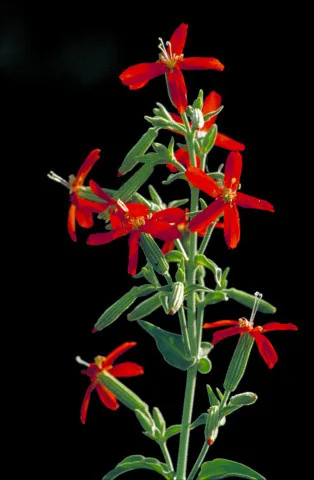
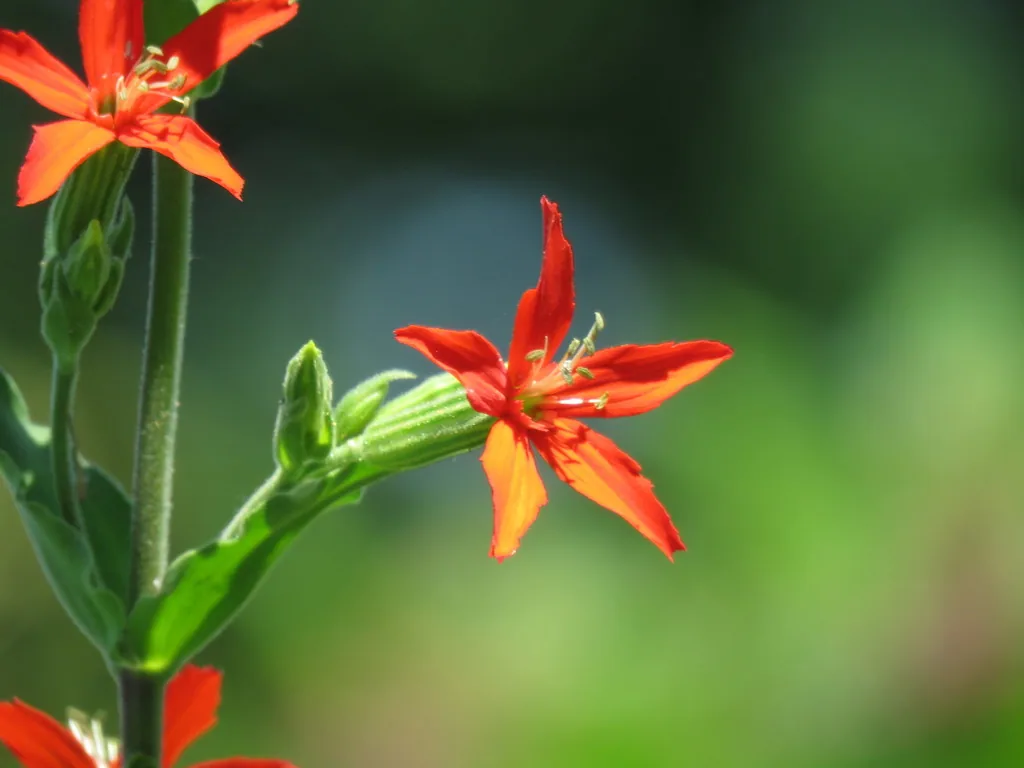
Silene regia is an erect perennial of the tallgrass prairie, 2-5 ft [0.6–1.5 m] tall, with bright red tubular flowers. [1][2] It is threatened by habitat loss in the wild but does well in garden settings. [2][5] Its red flowers attract hummingbirds and butterflies. [2]
This record is incomplete: the sources we read do not cover every field yet.
Not yet covered by our sources: Pruning
Royal catchfly care
Measurements in square brackets are our conversion into the other unit system; the quoted text is unchanged.
How to water Royal catchfly
Watering
The sources give different values depending on region, zone or growing conditions.
What each source says
According to Fine Gardening: Dry to medium; drought tolerant
According to Lady Bird Johnson Wildflower Center: Dry
According to Illinois Wildflowers: Moist to slightly dry
According to North Carolina Native Plant Society: Dry to moist
What the sources say (6)
According to Fine Gardening: - Tolerance : Drought Tolerant - Moisture : Dry to Medium - Light : Full SunAccording to Lady Bird Johnson Wildflower Center: ## Growing Conditions Light Requirement: Part Shade Soil Moisture: Dry Soil Description: Rocky soils.According to Illinois Wildflowers: The preference is full or partial sun in moist to slightly dry soil.According to North Carolina Native Plant Society: ## Light: | Sun - 6 or more hours of sun per day | ## Soil Moisture: | Dry, Moist- Tolerance : Drought Tolerant - Moisture : Dry to Medium - Light : Full SunCare Provide average, well-drained, neutral to alkaline soil in full sun or light shade. This species tolerates drought and clay soil but prefers sandy or gravelly soil.Watering notes
Good drainage is essential; during drought the lower leaves may yellow and drop
What the sources say (3)
Good drainage is essential. Plants may need staking. Propagation Sow seed in fall; in spring, root basal cuttings.It needs well-drained, sandy or gravelly soil. It is easily propagated by seeds and is also available for sale at most native plant nurseries in the state.During drought, the lower leaves may turn yellow and fall off the plant.How much light Royal catchfly needs
The sources give different values depending on region, zone or growing conditions.
What each source says
According to University of Illinois Extension: Best in full sun; tolerates part shade
According to Fine Gardening: Full sun or light shade
According to Friends of the Wildflower Garden: Full sun preferred
According to North Carolina Native Plant Society: Sun (6 or more hours per day)
According to Illinois Wildflowers: Full or partial sun
According to Lady Bird Johnson Wildflower Center: Part shade
What the sources say (11)
According to University of Illinois Extension: In the garden, it tolerates part shade but does best in full sun, where it will develop a more abundant cluster of flowers.According to Fine Gardening: Care Provide average, well-drained, neutral to alkaline soil in full sun or light shade. This species tolerates drought and clay soil but prefers sandy or gravelly soil.According to Friends of the Wildflower Garden: Full sun is preferred. In partial sun the stems will definitely recline.According to North Carolina Native Plant Society: ## Light: | Sun - 6 or more hours of sun per day | ## Soil Moisture: | Dry, MoistAccording to Illinois Wildflowers: The preference is full or partial sun in moist to slightly dry soil.According to Lady Bird Johnson Wildflower Center: ## Growing Conditions Light Requirement: Part Shade Soil Moisture: Dry Soil Description: Rocky soils.In the garden, it tolerates part shade but does best in full sun, where it will develop a more abundant cluster of flowers.Care Provide average, well-drained, neutral to alkaline soil in full sun or light shade. This species tolerates drought and clay soil but prefers sandy or gravelly soil.Full sun is preferred. In partial sun the stems will definitely recline.## Light: | Sun - 6 or more hours of sun per day | ## Soil Moisture: | Dry, MoistThe preference is full or partial sun in moist to slightly dry soil.How much cold Royal catchfly can take
Hardiness, coldest zone
5 [winter low −28.9 to −23.3 °C (−20 to −10 °F)]
What the sources say (1)
- Zones : 5, 6, 7, 8 - Characteristics : Attracts HummingbirdsHardiness, warmest zone
8 [winter low −12.2 to −6.7 °C (10 to 20 °F)]
What the sources say (1)
- Zones : 5, 6, 7, 8 - Characteristics : Attracts HummingbirdsHow to propagate Royal catchfly
Seed; basal cuttings in spring
What the sources say (2)
Good drainage is essential. Plants may need staking. Propagation Sow seed in fall; in spring, root basal cuttings.It needs well-drained, sandy or gravelly soil. It is easily propagated by seeds and is also available for sale at most native plant nurseries in the state.How to grow Royal catchfly
The plant
Mature height
91-122 cm (3-4 ft)
What the sources say (1)
Royal catchfly is a clump-forming, slender plant reaching 3 to 4 feet in height.Remedies
Each remedy shows what official sources say about it; traditional remedies without an official source are marked as such. Harmful ones are listed so you know to avoid them.
Treating the plant
aphids
crushing by hand Not verified
Traditional remedy, not verified by an official source.
How: If you notice aphids, squish them on the stalk.
water spray with a hose Not verified
Traditional remedy, not verified by an official source.
How: If you notice aphids, spray them off the stalk with a hose.
Calendar
Sowing
Fall
What the sources say (1)
Good drainage is essential. Plants may need staking. Propagation Sow seed in fall; in spring, root basal cuttings.Pruning
Not stated in the sources we read.
Months as given by the sources, which are mostly from the United States (northern hemisphere). In the southern hemisphere they shift by about six months.
Indicative values
Values from a secondary source, not checked word for word like the rest of this page. Use them as a starting point.
- Life cycle
- Herbaceous PerennialIndicative value, adapt it to your climate · Secondary source
- Drought tolerant
- yesIndicative value, adapt it to your climate · Secondary source
- Soil pH
- 6-7.5Indicative value, adapt it to your climate · Secondary source
- Care level
- MediumIndicative value, adapt it to your climate · Secondary source
- Growth rate
- LowIndicative value, adapt it to your climate · Secondary source
- Pruning
- March, April, May, March, AprilIndicative value, adapt it to your climate · Secondary source
Similar plants
- Bladder Campion Silene vulgaris
- Fire Pink Silene virginica
- Maltese Cross Silene chalcedonica
- Moss Campion Silene acaulis
- Rose Campion Silene coronaria
- Silene dioica Silene dioica
- Starry Campion Silene stellata
- Wild Pink Silene caroliniana
Sources
Every value above is quoted from these documents. Links lead to the original publisher.
- Lady Bird Johnson Wildflower Center - The University of Texas at Austin · wildflower.org, consulted
- Royal Catchfly | Missouri Department of Conservation · mdc.mo.gov, consulted
- Royal Catchfly, Silene regia Sims · friendsofeloisebutler.org, consulted
- Plants - North Carolina Native Plant Society · ncwildflower.org, consulted
- Royal Catchfly: A rare Illinois native worth growing | The Garden Scoop | Illinois Extension | Illinois · extension.illinois.edu, consulted
- Royal Catchfly (Silene regia) · illinoiswildflowers.info, consulted
- Royal catchfly - Fine Gardening · finegardening.com, consulted
Written by Emilio Marruso · last checked