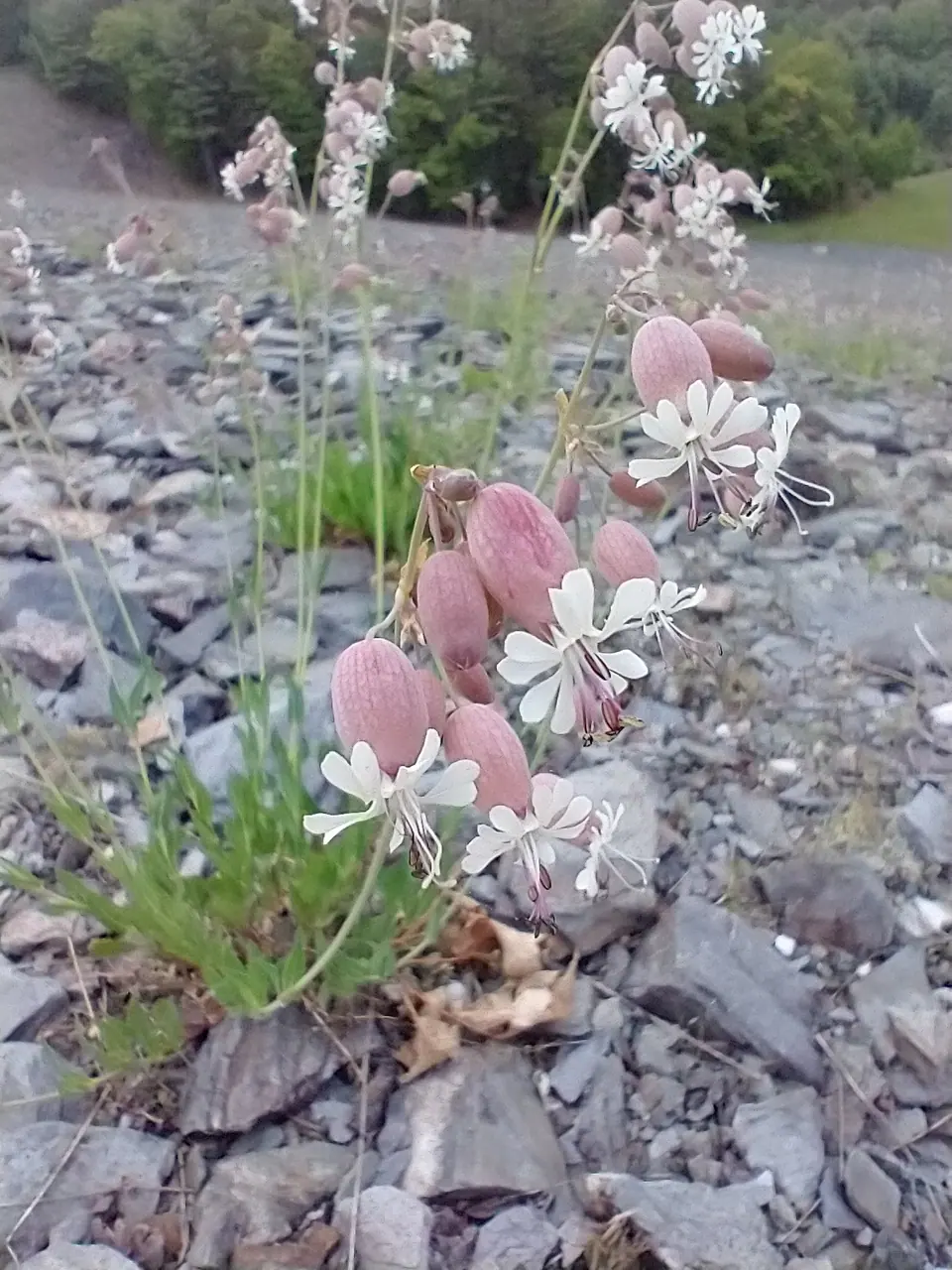
How to Grow and Care for Bladder Campion
Silene vulgaris
Written by Emilio Marruso · last checked
Toxic to: People · Why
At a glance
Bladder campion is a perennial with edible young shoots and leaves, enjoyed raw or cooked in salads and many dishes around the Mediterranean. Start seeds in early spring in a cold frame, or divide the plants in spring. Pick the shoots while they are small and the leaves before the plant flowers, and it will come back for you year after year.
- Cold
Survives winters down to −10 °F (−23.3 °C)
Very hardy · USDA 6 · RHS H7 · Z6
What the sources say (1)
Hardiness, coldest zone: 6 [winter low −23.3 to −17.8 °C (−10 to 0 °F)]
Water moderate Hardiness Zone 6+
— Bladder Campion (Silene vulgaris) — Practical Plants [6] - Planting
Plant seedlings out in summer; plant divisions straight in the ground in spring
What the sources say (2)
Planting: Summer (seedlings raised in a cold frame); spring (divisions planted direct)
prick the seedlings out into individual pots and plant them out in the summer.
— Bladder Campion (Silene vulgaris) — Practical Plants [6] Division in spring. Larger divisions can be planted out direct into their permanent positions.
— Bladder Campion (Silene vulgaris) — Practical Plants [6] - Harvest
Pick shoots at 2 in long and leaves before it flowers; eat them raw or cooked
What the sources say (2)
Harvest: Young shoots when about 5 cm [2 in] long; leaves before the plant flowers
The cooked young shoots, harvested when about 5cm long
— Bladder Campion (Silene vulgaris) — Practical Plants [6] The leaves should be used before the plant starts to flower
— Bladder Campion (Silene vulgaris) — Practical Plants [6] - Size
Grows up to 40 inches tall
What the sources say (1)
Mature height: 101.6 cm (3 1/3 ft)
Stems: Erect, branching, reaching 3 1/3 feet in height. Stems are without hairs.
— maidenstears Silene vulgaris Weed Profile - Weed Identification [3] - Propagation
Grow it from seed or divide the clump in spring
What the sources say (2)
- Sowing
Sow in early spring in a cold frame
What the sources say (1)
Sowing: Early spring (cold frame)
Seed - sow early spring in a cold frame.
— Bladder Campion (Silene vulgaris) — Practical Plants [6] - Safety
No toxicity reported, but the plant contains saponins
Overview
Bladder campion is an erect or low-growing perennial from rhizomes, treated as a weed of pastures and hay fields. [3] The native range of subspecies vulgaris is temperate Eurasia, Macaronesia and North Africa. [2] The leaves and young shoots are a wild food in Mediterranean countries. [7][6]
This record is incomplete: the sources we read do not cover every field yet.
Not yet covered by our sources: Light, Hardiness, warmest zone
Bladder Campion care
Measurements in square brackets are our conversion into the other unit system; the quoted text is unchanged.
How to water Bladder Campion
The sources give different values depending on region, zone or growing conditions.
What each source says
According to Practical Plants: Moderate water; drought intolerant
According to Useful Temperate Plants: Drought resistant
What the sources say (2)
According to Practical Plants: Shade tolerance
no shade
Water
moderate
Hardiness
Zone 6+
Soil textures
sandy, loamy
Soil pH
acid, neutral, alkaline
Tolerates Nutritionally Poor Soil
No
Drought
intolerantAccording to Useful Temperate Plants: A deep-rooting, drought resistant plant, with leaves that have a bluish-green covering of waxHow much light Bladder Campion needs
The sources give different values depending on region, zone or growing conditions.
What each source says
According to Minnesota Wildflowers: Part shade, sun
What the sources say (2)
According to Minnesota Wildflowers: Habitat: | part shade, sun; sandy or gravelly disturbed soilSucceeds in full sun to partial shade, preferring a well-drained moisture retentive light loamy soilHow much cold Bladder Campion can take
Hardiness, coldest zone
6 [winter low −23.3 to −17.8 °C (−10 to 0 °F)]
What the sources say (1)
Water
moderate
Hardiness
Zone 6+Hardiness, warmest zone
Not stated in the sources we read.
How to propagate Bladder Campion
How to grow Bladder Campion
The plant
Life cycle
perennial
What the sources say (1)
An erect or low-growing perennial from rhizomes with 'bladder-like' flowers. Bladder campion is primarily a weed of pastures and hay fieldsFamily
Caryophyllaceae
What the sources say (1)
## Family
Caryophyllaceae
## Scientific Name
Silene vulgarisMature height
101.6 cm (3 1/3 ft)
What the sources say (1)
Stems: Erect, branching, reaching 3 1/3 feet in height. Stems are without hairs.Remedies
Each remedy shows what official sources say about it; traditional remedies without an official source are marked as such. Harmful ones are listed so you know to avoid them.
Getting rid of it
invasive weed
hand-pulling Works
How: Hand-pulling should be conducted in early summer when the soil is moist.
Hand-pulling, mowing, or herbicide applications are effective. Hand-pulling should be conducted in early summer when the soil is moist.
— naturefilm.montana.edu [9] What the evidence says management should focus on stopping seed production. Hand-pulling, mowing, or herbicide applications are effective.
— naturefilm.montana.edu [9] mowing at flowering Works
How: Mowing is best once flower buds begin to form and/or flowers begin to open.
Hand-pulling, mowing, or herbicide applications are effective. Hand-pulling should be conducted in early summer when the soil is moist. Mowing is best once flower buds begin to form and/or flowers begin to open.
— naturefilm.montana.edu [9] What the evidence says management should focus on stopping seed production. Hand-pulling, mowing, or herbicide applications are effective.
— naturefilm.montana.edu [9]
Is Bladder Campion poisonous?
Reported by the source, quoted verbatim. This is not medical or veterinary advice: if a person or an animal may have eaten this plant, contact a poison control centre or a veterinarian.
Calendar
Sowing
Early spring (cold frame)
What the sources say (1)
Seed - sow early spring in a cold frame.Planting
Summer (seedlings raised in a cold frame); spring (divisions planted direct)
What the sources say (2)
prick the seedlings out into individual pots and plant them out in the summer.Division in spring. Larger divisions can be planted out direct into their permanent positions.Harvest
Young shoots when about 5 cm [2 in] long; leaves before the plant flowers
Months as given by the sources, which are mostly from the United States (northern hemisphere). In the southern hemisphere they shift by about six months.
Edibility
Reported by the source, quoted verbatim. Do not eat a plant on the basis of this page alone: identification mistakes can be dangerous.
Indicative values
Values from a secondary source, not checked word for word like the rest of this page. Use them as a starting point.
- Hours of sun
- 6-8 hoursIndicative value, adapt it to your climate · Secondary source
- Soil pH
- 6-7.5Indicative value, adapt it to your climate · Secondary source
- Care level
- MediumIndicative value, adapt it to your climate · Secondary source
- Growth rate
- LowIndicative value, adapt it to your climate · Secondary source
- Pruning
- March, April, MayIndicative value, adapt it to your climate · Secondary source
Similar plants
- Fire Pink Silene virginica
- Maltese Cross Silene chalcedonica
- Moss Campion Silene acaulis
- Rose Campion Silene coronaria
- Starry Campion Silene stellata
- Wild Pink Silene caroliniana
- Royal catchfly Silene regia
- Silene dioica Silene dioica
Sources
Every value above is quoted from these documents. Links lead to the original publisher.
- Silene vulgaris (Moench) Garcke · infoflora.ch, consulted
- Silene vulgaris subsp. vulgaris | Plants of the World Online | Kew Science · powo.science.kew.org, consulted
- maidenstears Silene vulgaris Weed Profile - Weed Identification · weedid.cals.vt.edu, consulted
- Silene vulgaris (Bladder Campion): Minnesota Wildflowers · minnesotawildflowers.info, consulted
- Silene vulgaris - Useful Temperate Plants · temperate.theferns.info, consulted
- Bladder Campion (Silene vulgaris) — Practical Plants · practicalplants.org, consulted
- Silene vulgaris, Bladder Campion: identification, distribution, habitat · first-nature.com, consulted
- Silene vulgaris (Moench) Garcke - Herbari Virtual del Mediterrani Occidental · herbarivirtual.uib.cat, consulted
- naturefilm.montana.edu · naturefilm.montana.edu
Written by Emilio Marruso · last checked