
How to Grow and Care for Rose Campion
Silene coronaria
Written by Emilio Marruso · last checked
At a glance
This easygoing perennial loves full sun and shrugs off dry spells, growing 2–3 ft tall. Shear it after the first flowering and it rewards you with a second flush of blooms. It even sows itself, so a few plants can turn into many; just give it a spot where the soil never stays wet.
- Sun
Full sun; takes partial shade, with afternoon shade in hot climates
What the sources say (2)
Light: Full sun; tolerates partial shade (afternoon shade in hot areas)
It is drought tolerant and does well in rock or crevice gardens. It prefers full sun but can tolerate some shade.
— Silene coronaria (Bloody William, Catch Fly, Lampflower, Mullein Pink, Rose Campion) | North Carolina Extension Gardener Plant Toolbox [1] Full sun delivers the best blooms, though a bit of afternoon shade is fine in hot regions.
— How to Grow and Care for Rose Campion | Gardener's Path [4] - Water
Handles dry spells well; never let the soil stay wet
What the sources say (2)
Drought: Drought tolerant; tolerates dry spells and dry conditions but not wet soil.
It is drought tolerant and does well in rock or crevice gardens.
— Silene coronaria (Bloody William, Catch Fly, Lampflower, Mullein Pink, Rose Campion) | North Carolina Extension Gardener Plant Toolbox [1] Soil: Lychnis likes well drained soil and can tolerate dry conditions. It will not tolerate wet soil conditions.
—  [6] - Soil
Well-drained soil, pH 6.5–7.5
What the sources say (4)
Soil pH, minimum: 6.5
Poorly draining soil increases the risk of root rot. Aim for a slightly acidic to neutral pH between 6.5 and 7.5 for optimal growth.
— How to Grow and Care for Rose Campion | Gardener's Path [4] Soil pH, maximum: 7.5
Poorly draining soil increases the risk of root rot. Aim for a slightly acidic to neutral pH between 6.5 and 7.5 for optimal growth.
— How to Grow and Care for Rose Campion | Gardener's Path [4] Drought: Drought tolerant; tolerates dry spells and dry conditions but not wet soil.
It is drought tolerant and does well in rock or crevice gardens.
— Silene coronaria (Bloody William, Catch Fly, Lampflower, Mullein Pink, Rose Campion) | North Carolina Extension Gardener Plant Toolbox [1] Soil: Lychnis likes well drained soil and can tolerate dry conditions. It will not tolerate wet soil conditions.
—  [6] - Spacing
12–15 in between plants
What the sources say (4)
Spacing: 30.5-38.1 cm (12-15 in)
transplants (fonte: University of Wisconsin-Madison Extension): When transplanting, space plants about 12 to 15 inches apart. The distinctive seedlings are easy to identify and easy to pull out if you don’t want them.
— Rose Campion, Silene coronaria – Wisconsin Horticulture [2] divisions (fonte: Gardener's Path): Replant healthy divisions at least 12 inches apart, placing the crown level with the soil surface.
— How to Grow and Care for Rose Campion | Gardener's Path [4] When transplanting, space plants about 12 to 15 inches apart. The distinctive seedlings are easy to identify and easy to pull out if you don’t want them.
— Rose Campion, Silene coronaria – Wisconsin Horticulture [2] Between plants: 30-38 cm [12–15 in] when transplanting.
When transplanting, space plants about 12 to 15 inches apart.
— Rose Campion, Silene coronaria – Wisconsin Horticulture [2] - Planting
Plant in late fall or early spring; move self-sown seedlings in late spring
What the sources say (5)
Planting: Late fall or early spring; self-sown seedlings transplanted in late spring
According to UC Master Gardeners (Calaveras County): How to Plant: plant in well drained soil from seed or transplants in late fall or early spring. Seeds like light for germination so do not cover with soil.
—  [6] self-sown seedlings (fonte: University of Wisconsin-Madison Extension): Thin the seedlings or transplant to other areas in late spring when large enough to handle.
— Rose Campion, Silene coronaria – Wisconsin Horticulture [2] divisions (fonte: Gardener's Path): Older clumps often develop a ring of new rosettes around a declining center. These can be lifted and divided in early spring or fall.
— How to Grow and Care for Rose Campion | Gardener's Path [4] How to Plant: plant in well drained soil from seed or transplants in late fall or early spring. Seeds like light for germination so do not cover with soil.
—  [6] Thin the seedlings or transplant to other areas in late spring when large enough to handle.
— Rose Campion, Silene coronaria – Wisconsin Horticulture [2] - Pruning
Shear after the first flowers for a second bloom; cut back in late fall or early winter
What the sources say (4)
Pruning: Late fall or early winter (cut back); shear after the first flowering for a second flush
According to UC Master Gardeners (Calaveras County): If you mulch, the seeds don’t germinate well, due to lack of light. Pruning needs: Prune back in late fall or early winter.
—  [6] According to University of Wisconsin-Madison Extension: Deadhead regularly to encourage continuous flowering or shear after the initial flowering to promote a second flush of flowers later in the season.
— Rose Campion, Silene coronaria – Wisconsin Horticulture [2] If you mulch, the seeds don’t germinate well, due to lack of light. Pruning needs: Prune back in late fall or early winter.
—  [6] Deadhead regularly to encourage continuous flowering or shear after the initial flowering to promote a second flush of flowers later in the season.
— Rose Campion, Silene coronaria – Wisconsin Horticulture [2] - Pests
Watch for slugs; wet soil causes root rot
What the sources say (1)
Pests: slugs
Insects, Diseases, and Other Plant Problems: Rose campion is generally insect and disease-free; however, slugs may be problematic.
— Silene coronaria (Bloody William, Catch Fly, Lampflower, Mullein Pink, Rose Campion) | North Carolina Extension Gardener Plant Toolbox [1] - Size
2–3 ft tall and 16 in to 2 ft wide
What the sources say (3)
Mature height: 61–91 cm (2–3 ft)
Dimensions: Height: 2 ft. 0 in. - 3 ft. 0 in.
— Silene coronaria (Bloody William, Catch Fly, Lampflower, Mullein Pink, Rose Campion) | North Carolina Extension Gardener Plant Toolbox [1] Plants form rosettes of leaves the first year and spreading mounds 2 to 3 feet tall in subsequent years.
— Rose Campion, Silene coronaria – Wisconsin Horticulture [2] Mature width: 41–61 cm (1 ft 4 in – 2 ft)
Height: 2 ft. 0 in. - 3 ft. 0 in. Width: 1 ft. 4 in. - 2 ft. 0 in.
— Silene coronaria (Bloody William, Catch Fly, Lampflower, Mullein Pink, Rose Campion) | North Carolina Extension Gardener Plant Toolbox [1] - Propagation
Sows itself; also grows from division and from cuttings at the base in late spring
What the sources say (5)
Propagation: Seed (self-sows), basal cuttings, division
Rose campion may be propagated by seeds and basal cuttings. The plant self-seeds and has the potential to become invasive.
— Silene coronaria (Bloody William, Catch Fly, Lampflower, Mullein Pink, Rose Campion) | North Carolina Extension Gardener Plant Toolbox [1] Propagation From seed. Or divide and take basal cuttings in early spring.
— Rose campion - Fine Gardening [5] Rose campion is easy to propagate from seed or by division.
— How to Grow and Care for Rose Campion | Gardener's Path [4] Cuttings: Basal cuttings in late spring.
Basal cuttings can also be taken in late spring.
— Rose Campion, Silene coronaria – Wisconsin Horticulture [2] Rose campion may be propagated by seeds and basal cuttings.
— Silene coronaria (Bloody William, Catch Fly, Lampflower, Mullein Pink, Rose Campion) | North Carolina Extension Gardener Plant Toolbox [1] - Sowing
Chill seeds 21 days, sow on the surface without covering; they sprout in 20–25 days at 70 °F
What the sources say (6)
Sowing depth: 0 cm [0 in] (surface-sow; seeds need light, do not cover)
Seeds like light for germination so do not cover with soil.
—  [6] Germination: Germinate at room temperature; seeds need light, so do not cover them with soil; germination occurs in 20-25 days. Indoors, start 7-9 weeks before the last spring frost.
Seed can be started indoors 7 to 9 weeks before the last expected spring frost. Germinate at room temperature.
— Rose Campion, Silene coronaria – Wisconsin Horticulture [2] Seeds like light for germination so do not cover with soil.
—  [6] Germinate at a temperature of 70 degrees; germination occurs in 20 -25 days.
—  [6] Seed stratification: For indoor sowing, chill the seeds in the refrigerator for 21 days.
If you would like to start indoors; chill the seeds in the refrigerator for 3 weeks.
—  [6] Days to germination: 20–25 days (at 70 °F [21 °C])
If you would like to start indoors; chill the seeds in the refrigerator for 3 weeks. Germinate at a temperature of 70 degrees; germination occurs in 20 -25 days.
—  [6]
Overview
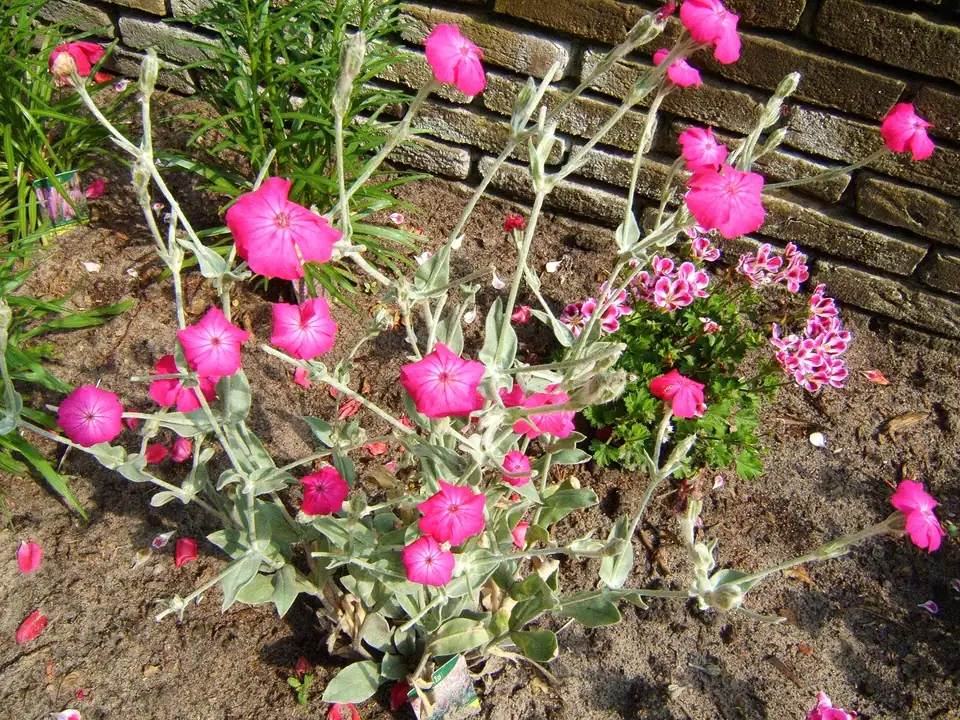
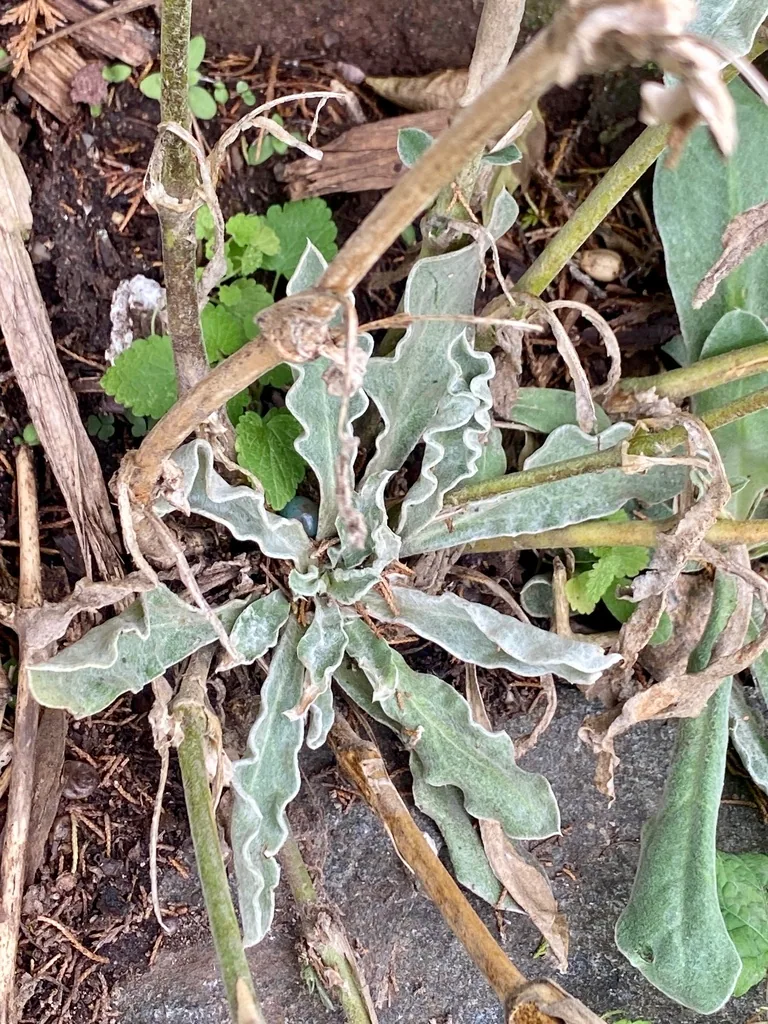
Silene coronaria (rose campion, syn. Lychnis coronaria) is a biennial or short-lived perennial covered in white woolly hairs, with silvery-green foliage and bright magenta flowers in summer. [1] It tolerates many soil types if they are well drained, is drought tolerant and is avoided by deer. [1] Though often short-lived, it self-seeds readily and keeps a planting going. [2]
Rose Campion care
How to water Rose Campion
Watering
The sources give different values depending on region, zone or growing conditions.
What each source says
According to UC Master Gardeners (Calaveras County): Regular water, tolerant of dry spells; do not overwater
According to Gardener's Path: Deep watering during extended dry periods; no regular irrigation
What the sources say (2)
According to UC Master Gardeners (Calaveras County): Water needs: regular water, tolerant of dry spells. Do not over water.According to Gardener's Path: Deep watering during extended dry periods is helpful, but regular irrigation isn’t necessary. Overwatering is more likely to cause problems than underwatering.Watering notes
The sources disagree:
What the sources say (3)
As with many silver-foliaged plants, rose campion prefers fairly dry, well-drained conditions in full sun or partial shade but will tolerate clay and moist soil.Soil: Lychnis likes well drained soil and can tolerate dry conditions. It will not tolerate wet soil conditions.The main problem you might encounter is root rot, usually the result of overly wet or poorly draining soil.How much light Rose Campion needs
Full sun; tolerates partial shade (afternoon shade in hot areas)
What the sources say (2)
It is drought tolerant and does well in rock or crevice gardens. It prefers full sun but can tolerate some shade.Full sun delivers the best blooms, though a bit of afternoon shade is fine in hot regions.How much cold Rose Campion can take
Hardiness, coldest zone
The sources give different values depending on region, zone or growing conditions.
What each source says
According to NC State Extension: 4a [winter low −34.4 to −31.7 °C (−30 to −25 °F)]
According to University of Wisconsin-Madison Extension: 4a [winter low −34.4 to −31.7 °C (−30 to −25 °F)]
According to Gardener's Path: 3 [winter low −40 to −34.4 °C (−40 to −30 °F)]
According to UC Master Gardeners (Calaveras County): 3 [winter low −40 to −34.4 °C (−40 to −30 °F)]
What the sources say (4)
According to NC State Extension: USDA Plant Hardiness Zone:
4a, 4b, 5a, 5b, 6a, 6b, 7a, 7b, 8a, 8b, 9a, 9b, 10a, 10bAccording to University of Wisconsin-Madison Extension: It is a short-lived perennial from southeastern Europe hardy in zones 4a to 8b .According to Gardener's Path: Native to Europe and Asia, rose campion has naturalized in parts of North America and is hardy in USDA Zones 3 to 9.According to UC Master Gardeners (Calaveras County): Rose Campion is a short lived perennial that self sows readily. Let seed heads stay if you would like more plants. Good in zones 3 -9Hardiness, warmest zone
The sources give different values depending on region, zone or growing conditions.
What each source says
According to NC State Extension: 10b [winter low 1.7 to 4.4 °C (35 to 40 °F)]
According to University of Wisconsin-Madison Extension: 8b [winter low −9.4 to −6.7 °C (15 to 20 °F)]
According to Gardener's Path: 9 [winter low −6.7 to −1.1 °C (20 to 30 °F)]
According to UC Master Gardeners (Calaveras County): 9 [winter low −6.7 to −1.1 °C (20 to 30 °F)]
What the sources say (4)
According to NC State Extension: USDA Plant Hardiness Zone:
4a, 4b, 5a, 5b, 6a, 6b, 7a, 7b, 8a, 8b, 9a, 9b, 10a, 10bAccording to University of Wisconsin-Madison Extension: It is a short-lived perennial from southeastern Europe hardy in zones 4a to 8b .According to Gardener's Path: Native to Europe and Asia, rose campion has naturalized in parts of North America and is hardy in USDA Zones 3 to 9.According to UC Master Gardeners (Calaveras County): Rose Campion is a short lived perennial that self sows readily. Let seed heads stay if you would like more plants. Good in zones 3 -9Best soil for Rose Campion
Soil pH, minimum
6.5
What the sources say (1)
Poorly draining soil increases the risk of root rot. Aim for a slightly acidic to neutral pH between 6.5 and 7.5 for optimal growth.Soil pH, maximum
7.5
What the sources say (1)
Poorly draining soil increases the risk of root rot. Aim for a slightly acidic to neutral pH between 6.5 and 7.5 for optimal growth.Where to grow Rose Campion
30.5-38.1 cm (12-15 in)
What each source says
transplants (fonte: University of Wisconsin-Madison Extension): 30.5-38.1 cm (12-15 in)
divisions (fonte: Gardener's Path): at least 30.5 cm (12 in)
What the sources say (3)
transplants (fonte: University of Wisconsin-Madison Extension): When transplanting, space plants about 12 to 15 inches apart. The distinctive seedlings are easy to identify and easy to pull out if you don’t want them.divisions (fonte: Gardener's Path): Replant healthy divisions at least 12 inches apart, placing the crown level with the soil surface.When transplanting, space plants about 12 to 15 inches apart. The distinctive seedlings are easy to identify and easy to pull out if you don’t want them.How to propagate Rose Campion
Seed (self-sows), basal cuttings, division
What the sources say (3)
Rose campion may be propagated by seeds and basal cuttings. The plant self-seeds and has the potential to become invasive.Propagation From seed. Or divide and take basal cuttings in early spring.Rose campion is easy to propagate from seed or by division.How to grow Rose Campion
The plant
Life cycle
short-lived perennial (sometimes biennial)
What the sources say (2)
Rose Campion is a very distinctive biennial or short-lived perennial that has very tall stems and is entirely covered with white wooly hairs.It is a short-lived perennial from southeastern Europe hardy in zones 4a to 8b .Family
Caryophyllaceae
What the sources say (1)
The plant is a member of the Caryophyllaceae family that includes carnations and pinks.Mature height
61–91 cm (2–3 ft)
What the sources say (2)
Dimensions:
Height: 2 ft.
0 in.
- 3 ft.
0 in.Plants form rosettes of leaves the first year and spreading mounds 2 to 3 feet tall in subsequent years.Mature width
41–61 cm (1 ft 4 in – 2 ft)
What the sources say (1)
Height: 2 ft.
0 in.
- 3 ft.
0 in.
Width: 1 ft.
4 in.
- 2 ft.
0 in.Sowing and growth
Days to germination
20–25 days (at 70 °F [21 °C])
What the sources say (1)
If you would like to start indoors; chill the seeds in the refrigerator for 3 weeks. Germinate at a temperature of 70 degrees; germination occurs in 20 -25 days.Sowing depth
0 cm [0 in] (surface-sow; seeds need light, do not cover)
What the sources say (1)
Seeds like light for germination so do not cover with soil.Pests and diseases
Pests
slugs
What the sources say (1)
Insects, Diseases, and Other Plant Problems: Rose campion is generally insect and disease-free; however, slugs may be problematic.Spacing
Between plants
30-38 cm [12–15 in] when transplanting.
What the sources say (1)
When transplanting, space plants about 12 to 15 inches apart.Roots
Root system
Slender to stout taproot.
What the sources say (1)
The plant has an upright habit and a slender to stout taproot.Propagation
Germination
Germinate at room temperature; seeds need light, so do not cover them with soil; germination occurs in 20-25 days. Indoors, start 7-9 weeks before the last spring frost.
What the sources say (3)
Seed can be started indoors 7 to 9 weeks before the last expected spring frost. Germinate at room temperature.Seeds like light for germination so do not cover with soil.Germinate at a temperature of 70 degrees; germination occurs in 20 -25 days.Seed stratification
For indoor sowing, chill the seeds in the refrigerator for 21 days.
What the sources say (1)
If you would like to start indoors; chill the seeds in the refrigerator for 3 weeks.Cuttings
Basal cuttings in late spring.
What the sources say (2)
Basal cuttings can also be taken in late spring.Rose campion may be propagated by seeds and basal cuttings.Heat and drought
Drought
Drought tolerant; tolerates dry spells and dry conditions but not wet soil.
What the sources say (2)
It is drought tolerant and does well in rock or crevice gardens.Soil: Lychnis likes well drained soil and can tolerate dry conditions. It will not tolerate wet soil conditions.Rose Campion pests and problems
Slugs
Symptom: Slug damage
What the sources say (1)
Insects, Diseases, and Other Plant Problems: Rose campion is generally insect and disease-free; however, slugs may be problematic.
— Silene coronaria (Bloody William, Catch Fly, Lampflower, Mullein Pink, Rose Campion) | North Carolina Extension Gardener Plant Toolbox [1] Root rot
Symptom: Yellowing, wilting or stunted growth; dark, soft, slimy roots with a foul odor
What to do: No reliable cure: remove affected plants; choose a site with sharp drainage and full sun
What the sources say (2)
Dig around the crown and inspect the roots. If they appear dark, soft, slimy, or have a foul odor, root rot is likely the cause.
— How to Grow and Care for Rose Campion | Gardener's Path [4] There’s no reliable cure for root rot once it sets in. Remove affected plants and dispose of them in the trash, not the compost.
— How to Grow and Care for Rose Campion | Gardener's Path [4] Anther smut and leaf spots
What the sources say (1)
Propagation From seed. Or divide and take basal cuttings in early spring. Problems Anther smut and leaf spots.
— Rose campion - Fine Gardening [5]
Remedies
Each remedy shows what official sources say about it; traditional remedies without an official source are marked as such. Harmful ones are listed so you know to avoid them.
Treating the plant
root rot
removing and binning affected plants Not verified
Traditional remedy, not verified by an official source.
How: There is no reliable cure once root rot sets in: remove affected plants and dispose of them in the trash, not the compost; replant in a site with sharp drainage and full sun.
Getting rid of it
self-seeding
pulling out unwanted seedlings Works
How: The distinctive seedlings are easy to identify and easy to pull out if you do not want them.
The distinctive seedlings are easy to identify and easy to pull out if you don’t want them.
— Rose Campion, Silene coronaria – Wisconsin Horticulture [2] What the evidence says The distinctive seedlings are easy to identify and easy to pull out if you don’t want them.
— Rose Campion, Silene coronaria – Wisconsin Horticulture [2] deadheading spent flowers Not verified
Traditional remedy, not verified by an official source.
How: Deadhead spent flowers to cut down on self-seeding (it also extends the bloom time).
mulch around the plants Works
How: Mulch around the plants: the seeds need light and do not germinate well under mulch.
If you mulch, the seeds don’t germinate well, due to lack of light.
—  [6] What the evidence says If you mulch, the seeds don’t germinate well, due to lack of light.
—  [6]
Calendar
Sowing
The sources give different values depending on region, zone or growing conditions.
What each source says
indoors (fonte: University of Wisconsin-Madison Extension): 7-9 weeks before the last spring frost
indoors (fonte: Gardener's Path): 6-8 weeks before the last frost
direct sowing outdoors (fonte: Gardener's Path): Fall
According to UC Master Gardeners (Calaveras County): Late fall or early spring
What the sources say (6)
indoors (fonte: University of Wisconsin-Madison Extension): Seed can be started indoors 7 to 9 weeks before the last expected spring frost. Germinate at room temperature.indoors (fonte: Gardener's Path): To start seeds indoors:
- Begin six to eight weeks before your last predicted frost date.direct sowing outdoors (fonte: Gardener's Path): To direct sow outdoors:
- Wait until fall, then scatter seeds on the soil surface where you want them to grow.According to UC Master Gardeners (Calaveras County): How to Plant: plant in well drained soil from seed or transplants in late fall or early spring. Seeds like light for germination so do not cover with soil.Seed can be started indoors 7 to 9 weeks before the last expected spring frost. Germinate at room temperature.How to Plant: plant in well drained soil from seed or transplants in late fall or early spring. Seeds like light for germination so do not cover with soil.Planting
Late fall or early spring; self-sown seedlings transplanted in late spring
What each source says
According to UC Master Gardeners (Calaveras County): Late fall or early spring
self-sown seedlings (fonte: University of Wisconsin-Madison Extension): Late spring
divisions (fonte: Gardener's Path): Early spring or fall
What the sources say (5)
According to UC Master Gardeners (Calaveras County): How to Plant: plant in well drained soil from seed or transplants in late fall or early spring. Seeds like light for germination so do not cover with soil.self-sown seedlings (fonte: University of Wisconsin-Madison Extension): Thin the seedlings or transplant to other areas in late spring when large enough to handle.divisions (fonte: Gardener's Path): Older clumps often develop a ring of new rosettes around a declining center. These can be lifted and divided in early spring or fall.How to Plant: plant in well drained soil from seed or transplants in late fall or early spring. Seeds like light for germination so do not cover with soil.Thin the seedlings or transplant to other areas in late spring when large enough to handle.Pruning
Late fall or early winter (cut back); shear after the first flowering for a second flush
What each source says
According to UC Master Gardeners (Calaveras County): Late fall or early winter
According to University of Wisconsin-Madison Extension: After the initial flowering
What the sources say (4)
According to UC Master Gardeners (Calaveras County): If you mulch, the seeds don’t germinate well, due to lack of light. Pruning needs: Prune back in late fall or early winter.According to University of Wisconsin-Madison Extension: Deadhead regularly to encourage continuous flowering or shear after the initial flowering to promote a second flush of flowers later in the season.If you mulch, the seeds don’t germinate well, due to lack of light. Pruning needs: Prune back in late fall or early winter.Deadhead regularly to encourage continuous flowering or shear after the initial flowering to promote a second flush of flowers later in the season.Months as given by the sources, which are mostly from the United States (northern hemisphere). In the southern hemisphere they shift by about six months.
Relative to frost
Less precise estimate: there is no weather station within 300 km.
Find frost dates by ZIP code or city
Sow indoors: 7 to 9 weeks before the last frost
Seed can be started indoors 7 to 9 weeks before the last expected spring frost.
— Rose Campion, Silene coronaria – Wisconsin Horticulture [2]
Count from the average frost dates where you live.
Similar plants
- Fire Pink Silene virginica
- Maltese Cross Silene chalcedonica
- Moss Campion Silene acaulis
- Starry Campion Silene stellata
- Wild Pink Silene caroliniana
- Bladder Campion Silene vulgaris
- Silene dioica Silene dioica
- Royal catchfly Silene regia
Sources
Every value above is quoted from these documents. Links lead to the original publisher.
- Silene coronaria (Bloody William, Catch Fly, Lampflower, Mullein Pink, Rose Campion) | North Carolina Extension Gardener Plant Toolbox · plants.ces.ncsu.edu, consulted
- Rose Campion, Silene coronaria – Wisconsin Horticulture · hort.extension.wisc.edu, consulted
- Lychnis / RHS Plant Guide · rhs.org.uk, consulted
- How to Grow and Care for Rose Campion | Gardener's Path · gardenerspath.com, consulted
- Rose campion - Fine Gardening · finegardening.com, consulted
-  · class.ucanr.edu, consulted
Written by Emilio Marruso · last checked