
How to Grow and Care for Johnson grass
Sorghum halepense
Written by Emilio Marruso · last checked
Toxic to: Horses, Cattle, People · Why
At a glance
Johnson grass is a tough perennial grass that loves full sun, six or more hours a day, and comes back year after year. It is easy to multiply by division, and its seeds can even be eaten in small amounts, raw or cooked. Just keep it in check: it spreads hard by roots and seed, so never let it set seed.
- Sun
Full sun: 6 or more hours a day
What the sources say (1)
Light: Full sun (6 or more hours of direct sunlight a day)
Light: Full sun (6 or more hours of direct sunlight a day)
— Sorghum halepense (Johnsongrass, Johnson Grass) | North Carolina Extension Gardener Plant Toolbox [1] - Cold
Survives winters down to −10 °F (−23.3 °C)
Very hardy · USDA 6a · RHS H7 · Z6
What the sources say (2)
Hardiness, coldest zone: 6a [winter low −23.3 to −20.6 °C (−10 to −5 °F)]
USDA Plant Hardiness Zone: 6a, 6b, 7a, 7b, 8a, 8b, 9a, 9b, 10a, 10b
— Sorghum halepense (Johnsongrass, Johnson Grass) | North Carolina Extension Gardener Plant Toolbox [1] Hardiness, warmest zone: 10b [winter low 1.7 to 4.4 °C (35 to 40 °F)]
USDA Plant Hardiness Zone: 6a, 6b, 7a, 7b, 8a, 8b, 9a, 9b, 10a, 10b
— Sorghum halepense (Johnsongrass, Johnson Grass) | North Carolina Extension Gardener Plant Toolbox [1] - Harvest
The seeds can be eaten in small amounts, raw or cooked
- Watch out
Spreads aggressively by roots and seed: stop it from seeding and pull young seedlings early
- Propagation
Multiply it by dividing the clump
What the sources say (1)
Propagation: Division
Recommended Propagation Strategy: Division
— Sorghum halepense (Johnsongrass, Johnson Grass) | North Carolina Extension Gardener Plant Toolbox [1] - Safety
Don't eat the leaves; leaves wilted by frost or drought can harm cattle and horses
Overview
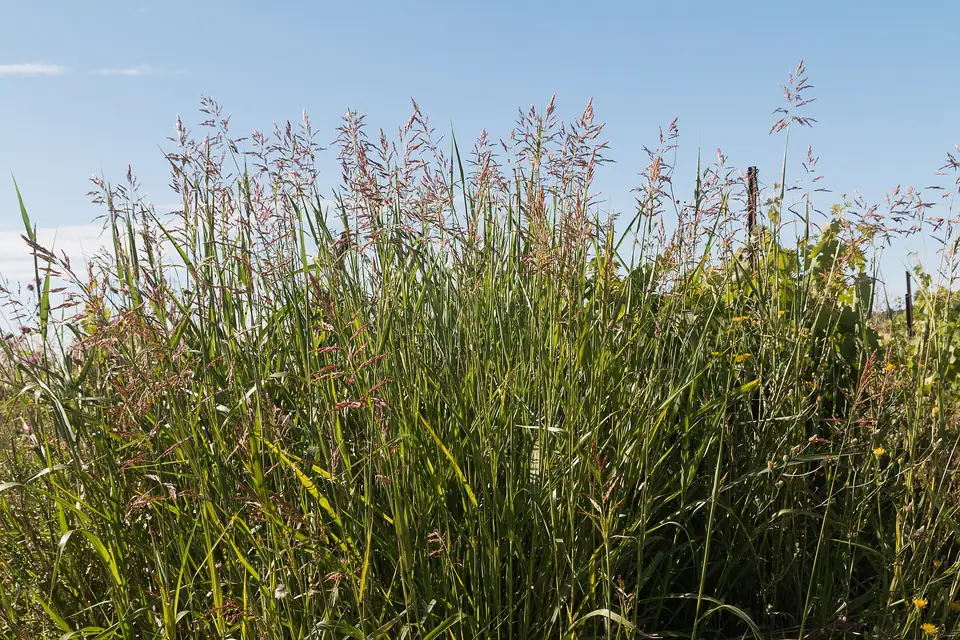
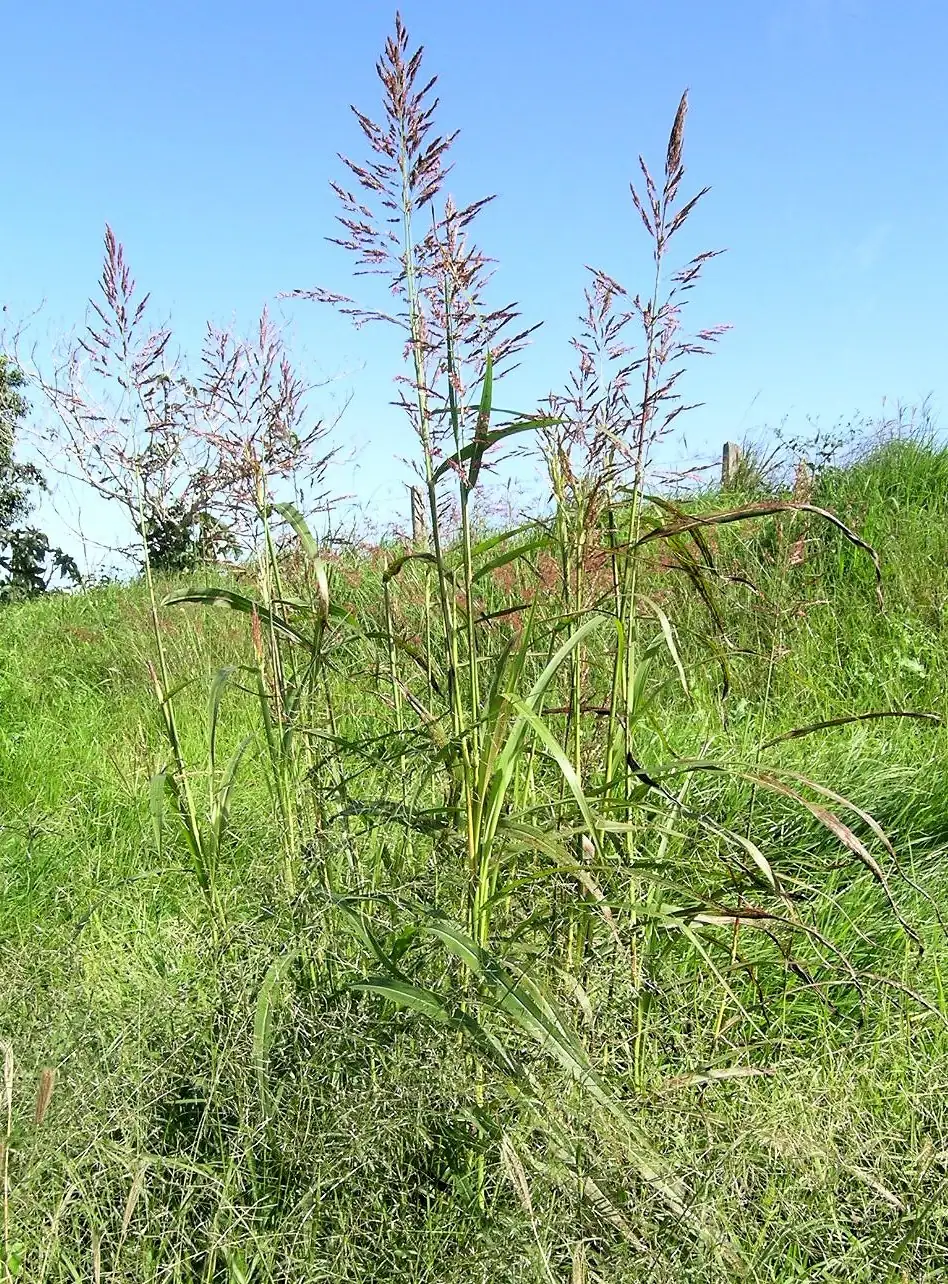
Johnsongrass is a perennial grass listed as invasive that spreads by thick rhizomes and seeds. [1] It prefers full sun and tolerates drier locations as well as gravel or clay soils. [1]
Johnson grass care
How much light Johnson grass needs
Full sun (6 or more hours of direct sunlight a day)
What the sources say (1)
Light:
Full sun (6 or more hours of direct sunlight a day)How much cold Johnson grass can take
Hardiness, coldest zone
6a [winter low −23.3 to −20.6 °C (−10 to −5 °F)]
What the sources say (1)
USDA Plant Hardiness Zone:
6a, 6b, 7a, 7b, 8a, 8b, 9a, 9b, 10a, 10bHardiness, warmest zone
10b [winter low 1.7 to 4.4 °C (35 to 40 °F)]
What the sources say (1)
USDA Plant Hardiness Zone:
6a, 6b, 7a, 7b, 8a, 8b, 9a, 9b, 10a, 10bHow to propagate Johnson grass
Division
What the sources say (1)
Recommended Propagation Strategy:
DivisionHow to grow Johnson grass
The plant
Life cycle
perennial
What the sources say (1)
coarse, herbaceous perennial grass in the Poaceae family thought to be native to the Mediterranean area but is now found in all temperate areas of the world.Family
Poaceae
What the sources say (1)
coarse, herbaceous perennial grass in the Poaceae family thought to be native to the Mediterranean area but is now found in all temperate areas of the world.Johnson grass pests and problems
Aggressive spread by rhizomes and seed
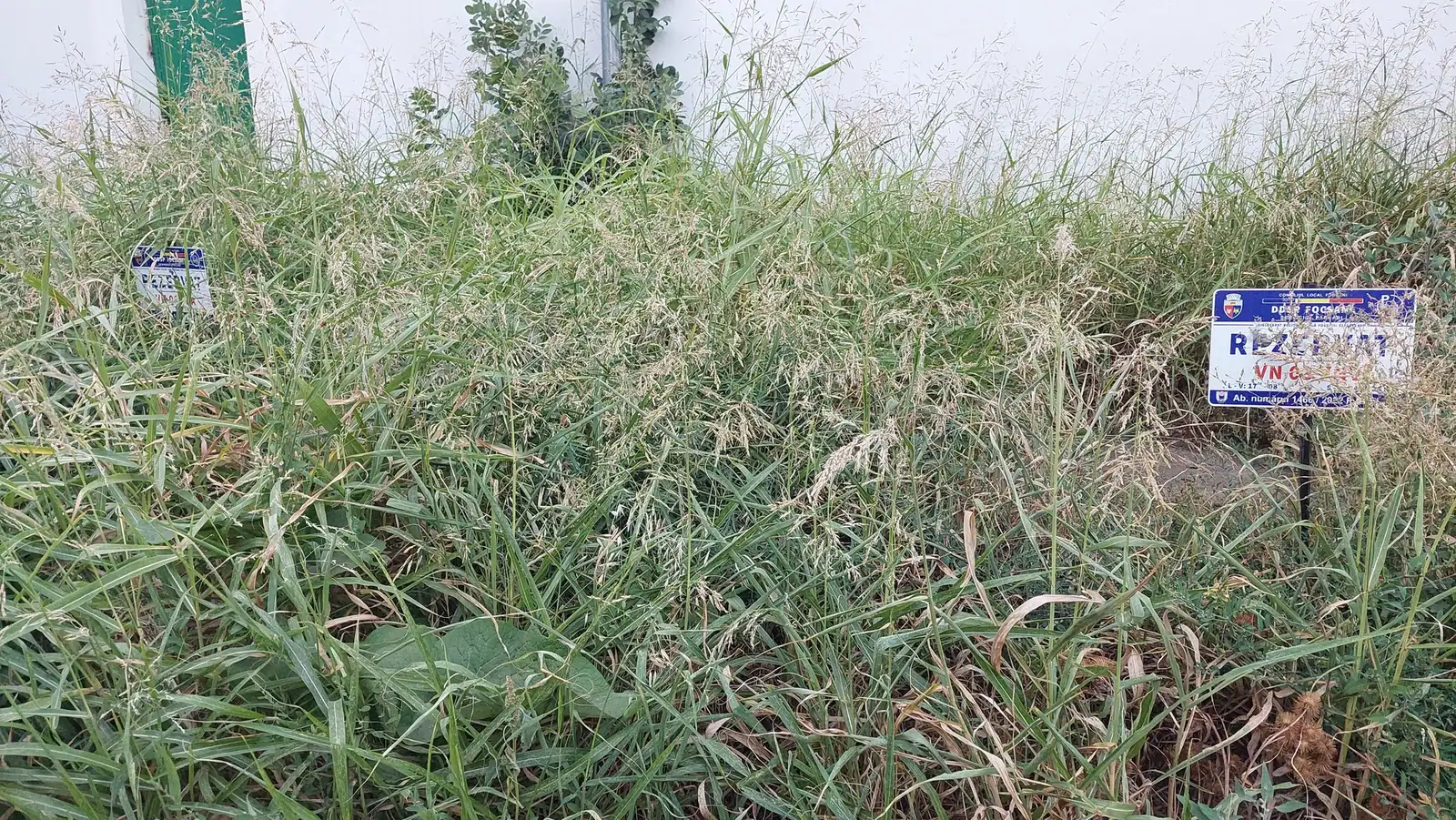
Symptom: Dense colonies that displace native vegetation
What to do: Control by preventing growth, spread and seed production, and by killing seedlings before rhizomes form.
What the sources say (2)
can form dense colonies that displace native vegetation
— Sorghum halepense (Johnsongrass, Johnson Grass) | North Carolina Extension Gardener Plant Toolbox [1] Johnsongrass is best controlled by preventing its growth, spread, and seed production, and by killing seedlings before rhizomes are formed.
— JOHNSONGRASS CONTROL 1 [3]
Remedies
Each remedy shows what official sources say about it; traditional remedies without an official source are marked as such. Harmful ones are listed so you know to avoid them.
Getting rid of it
invasive spread
dig out small patches Partly works
How: Dig out young, individual plants and small patches to remove the root mass and all the rhizomes.
Dig out young, individual plants and small patches to remove the root mass and all the rhizomes.
— solvepestproblems.oregonstate.edu [4] What the evidence says Dig out small patches with tools. Mowing and tarping are useful methods for johnsongrass, but other methods are necessary to get rid of it.
— solvepestproblems.oregonstate.edu [4] repeated mowing Partly works
Mowing alone is not recommended to control johnsongrass. It will regrow and bloom following limited mowing.
— solvepestproblems.oregonstate.edu [4] How: Regular mowing may deplete carbohydrate reserves in the rhizomes over time; repeated mowing every few weeks through the growing season.
Regular mowing of Johnsongrass may deplete carbohydrate reserves in rhizomes over time and help limit the spread of infestations
— fieldreport.caes.uga.edu [5] What the evidence says Johnsongrass is suggested to be intolerant of frequent mowing. However, it will persist with monthly hay cutting, so do not expect good control from cutting alone in most hay operations.
— aces.edu [6] disking or plowing Partly works
Choose tillage equipment and use clean equipment that eliminates spreading rhizome fragments.
— solvepestproblems.oregonstate.edu [4] How: Heavy fall tillage cuts the rhizomes into small pieces and exposes them to cold temperatures.
Fall tillage, especially heavy tillage (exposing >70% of the soil at a depth of 3 to 5 inches), can cut rhizomes into small pieces and expose them to cold temperatures, killing them.
— JOHNSONGRASS CONTROL 1 [3] What the evidence says Similar to mowing, johnsongrass is sensitive to disking or plowing. Further action is required to get rid of it.
— solvepestproblems.oregonstate.edu [4] continuous cattle grazing Works
However, the answer is no when Johnsongrass becomes stressed by drought or frost. Stress results in accumulation of prussic acid (cyanide) in the leaves, which is lethal to grazing animals.
— aces.edu [6] How: In continuously grazed pastures cattle overgraze the stand.
in continuously grazed pastures, cattle will quickly overgraze and eliminate a johnsongrass stand within a few years.
— aces.edu [6] What the evidence says in continuously grazed pastures, cattle will quickly overgraze and eliminate a johnsongrass stand within a few years.
— aces.edu [6]
Is Johnson grass toxic to pets?
Reported by the source, quoted verbatim. This is not medical or veterinary advice: if a person or an animal may have eaten this plant, contact a poison control centre or a veterinarian.
Animals
The foliage that becomes wilted from frost or hot, dry weather can contain sufficient amounts of hydrogen cyanide to harm cattle and horses if it is eaten in quantity.
[1]- Toxic principle
sufficient amounts of hydrogen cyanide
[1]
People
Edibility
Reported by the source, quoted verbatim. Do not eat a plant on the basis of this page alone: identification mistakes can be dangerous.
Seed cam be eaten in small quantities raw or cooked.
[1]
Similar plants
- Sorghum Sorghum bicolor
- African lovegrass Eragrostis curvula
- Aristida purpurea Aristida purpurea
- Bamboo Phyllostachys aurea
- Bermuda grass Cynodon dactylon
- Browntop Millet Urochloa ramosa
- Centipedegrass Eremochloa ophiuroides
- Chinese Fountain Grass Cenchrus alopecuroides
Sources
Every value above is quoted from these documents. Links lead to the original publisher.
- Sorghum halepense (Johnsongrass, Johnson Grass) | North Carolina Extension Gardener Plant Toolbox · plants.ces.ncsu.edu, consulted
- ENH1356 · edis.ifas.ufl.edu, consulted
- JOHNSONGRASS CONTROL 1 · purdue.edu, consulted
- solvepestproblems.oregonstate.edu · solvepestproblems.oregonstate.edu
- fieldreport.caes.uga.edu · fieldreport.caes.uga.edu
- aces.edu · aces.edu
Written by Emilio Marruso · last checked