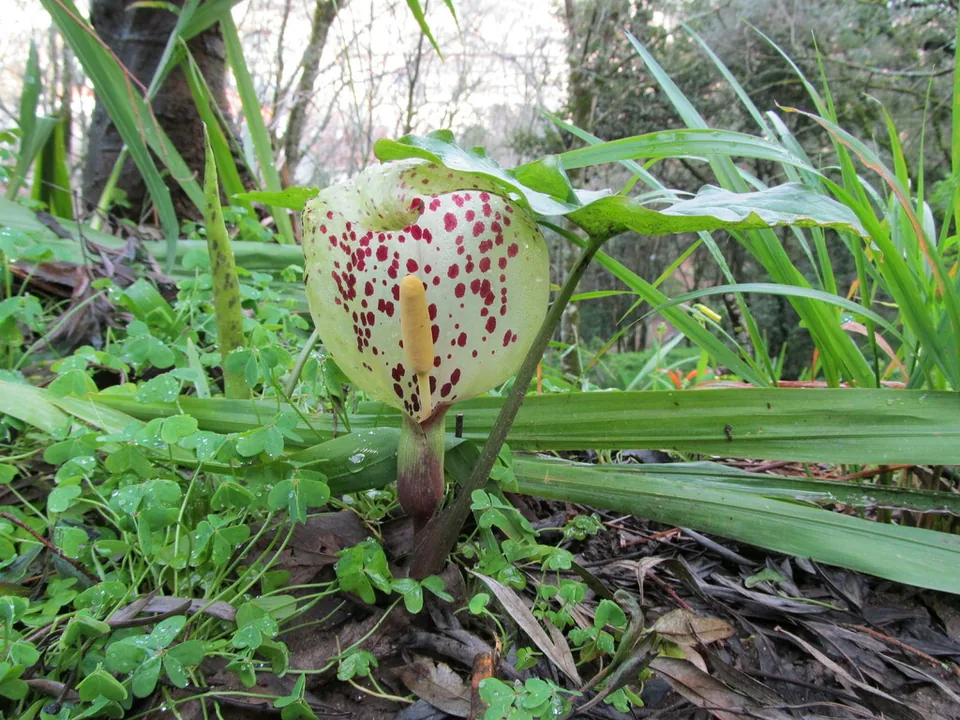
Cómo cultivar y cuidar Italian Arum
Arum italicum
Escrito por Emilio Marruso · última revisión
Tóxica para: Personas · Por qué
De un vistazo
El aro italiano es una vivaz que encaja tanto en rincones sombreados bajo los árboles como en lugares soleados, de semisombra a pleno sol. Dale una tierra húmeda y rica en humus y formará una mata de 30 a 60 cm de alto y de ancho, y también vive feliz en maceta. Usa guantes al tocarla y vigílala: se extiende con facilidad.
- Sol
De semisombra a pleno sol; ideal bajo árboles de hoja caduca
Qué dicen las fuentes (4)
Luz: Semisombra a pleno sol
Según NC State Extension: The plant grows in partial shade to full sun and is tolerant of most soil types.
— Arum italicum (Cuckoo Pint, Italian Arum, Italian Lily, Lords and Ladies, Orange Candle Flower) | North Carolina Extension Gardener Plant Toolbox [1] Según University of Arkansas Division of Agriculture: They’re most often grown in the deciduous woodland garden but do fine in full sun.
— Italian Arum [2] The plant grows in partial shade to full sun and is tolerant of most soil types. It prefers moist humus soils.
— Arum italicum (Cuckoo Pint, Italian Arum, Italian Lily, Lords and Ladies, Orange Candle Flower) | North Carolina Extension Gardener Plant Toolbox [1] garden but do fine in full sun. If you wish to increase the size of the colony, divide
— Italian Arum [2] - Riego
Mantén la tierra húmeda
Qué dicen las fuentes (1)
Notas sobre el riego: Prefiere suelos húmicos húmedos
The plant grows in partial shade to full sun and is tolerant of most soil types. It prefers moist humus soils.
— Arum italicum (Cuckoo Pint, Italian Arum, Italian Lily, Lords and Ladies, Orange Candle Flower) | North Carolina Extension Gardener Plant Toolbox [1] - Frío
Aguanta inviernos de hasta −28,9 °C (−20 °F)
Muy rústica · USDA 5a · RHS H7 · Z5
Qué dicen las fuentes (4)
Rusticidad, zona más fría: 5a [mínima invernal de −28,9 a −26,1 °C (de −20 a −15 °F)]
5a, 5b, 6a, 6b, 7a, 7b, 8a, 8b, 9a, 9b
— Arum italicum (Cuckoo Pint, Italian Arum, Italian Lily, Lords and Ladies, Orange Candle Flower) | North Carolina Extension Gardener Plant Toolbox [1] Rusticidad, zona más cálida:
Según NC State Extension: 5a, 5b, 6a, 6b, 7a, 7b, 8a, 8b, 9a, 9b
— Arum italicum (Cuckoo Pint, Italian Arum, Italian Lily, Lords and Ladies, Orange Candle Flower) | North Carolina Extension Gardener Plant Toolbox [1] Según University of Arkansas Division of Agriculture: winter hardy through most of zone 6
— Italian Arum [2] 5a, 5b, 6a, 6b, 7a, 7b, 8a, 8b, 9a, 9b
— Arum italicum (Cuckoo Pint, Italian Arum, Italian Lily, Lords and Ladies, Orange Candle Flower) | North Carolina Extension Gardener Plant Toolbox [1] - Suelo
Suelo rico en humus
Qué dicen las fuentes (1)
Notas sobre el riego: Prefiere suelos húmicos húmedos
The plant grows in partial shade to full sun and is tolerant of most soil types. It prefers moist humus soils.
— Arum italicum (Cuckoo Pint, Italian Arum, Italian Lily, Lords and Ladies, Orange Candle Flower) | North Carolina Extension Gardener Plant Toolbox [1] - Atención
Se extiende mucho por semillas y bulbos subterráneos; tira las plantas arrancadas a la basura, no al compost
- Tamaño
De 30 a 60 cm de alto y de ancho
Qué dicen las fuentes (2)
Altura adulta: 30-61 cm (1-2 pies)
Dimensions: Height: 1 ft. 0 in. - 2 ft. 0 in. Width: 1 ft. 0 in. - 2 ft. 0 in.
— Arum italicum (Cuckoo Pint, Italian Arum, Italian Lily, Lords and Ladies, Orange Candle Flower) | North Carolina Extension Gardener Plant Toolbox [1] Anchura adulta: 30-61 cm (1-2 pies)
Dimensions: Height: 1 ft. 0 in. - 2 ft. 0 in. Width: 1 ft. 0 in. - 2 ft. 0 in.
— Arum italicum (Cuckoo Pint, Italian Arum, Italian Lily, Lords and Ladies, Orange Candle Flower) | North Carolina Extension Gardener Plant Toolbox [1] - Multiplicación
Divide la mata, siembra semillas o planta sus bulbos subterráneos
Qué dicen las fuentes (2)
Propagación: División, semilla, bulbos
The plant is reproduced by seeds and corms.
— Arum italicum (Cuckoo Pint, Italian Arum, Italian Lily, Lords and Ladies, Orange Candle Flower) | North Carolina Extension Gardener Plant Toolbox [1] If you wish to increase the size of the colony, divide in the summer during their dormant season.
— Italian Arum [2] - Maceta
Crece también en maceta
Qué dicen las fuentes (1)
En maceta: Sí
Alternatively, keep the plant confined in a container and remove fruits before they are ripe.
— Arum italicum (Cuckoo Pint, Italian Arum, Italian Lily, Lords and Ladies, Orange Candle Flower) | North Carolina Extension Gardener Plant Toolbox [1] - Seguridad
Toda la planta es venenosa si se come e irrita la piel: usa guantes al tocarla
Resumen
El arum italiano es una cubierta vegetal herbácea perenne de la familia de las aráceas, considerada invasora en algunas partes de los Estados Unidos. [1] Todas las partes de la planta pueden causar irritación de la piel, y ingerir cualquier parte puede causar hinchazón de la garganta y la lengua. [1]
Citado en inglés, como en la fuente.
Esta ficha está incompleta: las fuentes consultadas aún no cubren todos los campos.
Aún no cubierto por nuestras fuentes: Riego, Poda
Cuidados
Riego
Riego
No figura en las fuentes consultadas.
Notas sobre el riego
Prefiere suelos húmicos húmedos
Qué dicen las fuentes (1)
The plant grows in partial shade to full sun and is tolerant of most soil types. It prefers moist humus soils.Luz
Semisombra a pleno sol
Lo que dice cada fuente
Según NC State Extension: Semisombra a pleno sol
Según University of Arkansas Division of Agriculture: Jardín de bosque caducifolio, también pleno sol
Qué dicen las fuentes (4)
Según NC State Extension: The plant grows in partial shade to full sun and is tolerant of most soil types.Según University of Arkansas Division of Agriculture: They’re most often grown in the deciduous woodland
garden but do fine in full sun.The plant grows in partial shade to full sun and is tolerant of most soil types. It prefers moist humus soils.garden but do fine in full sun. If you wish to increase the size of the colony, divideClima y frío
Rusticidad, zona más fría
5a [mínima invernal de −28,9 a −26,1 °C (de −20 a −15 °F)]
Qué dicen las fuentes (1)
5a, 5b, 6a, 6b, 7a, 7b, 8a, 8b, 9a, 9bRusticidad, zona más cálida
Las fuentes dan valores distintos según la región, la zona o las condiciones de cultivo.
Lo que dice cada fuente
Según NC State Extension: 9b [mínima invernal de −3,9 a −1,1 °C (de 25 a 30 °F)]
Según University of Arkansas Division of Agriculture: 6 [mínima invernal de −23,3 a −17,8 °C (de −10 a 0 °F)]
Qué dicen las fuentes (3)
Según NC State Extension: 5a, 5b, 6a, 6b, 7a, 7b, 8a, 8b, 9a, 9bSegún University of Arkansas Division of Agriculture: winter hardy through most of
zone 65a, 5b, 6a, 6b, 7a, 7b, 8a, 8b, 9a, 9bDónde cultivarla
Sí
Qué dicen las fuentes (1)
Alternatively, keep the plant confined in a container and remove fruits before they are ripe.Propagación
División, semilla, bulbos
Qué dicen las fuentes (2)
The plant is reproduced by seeds and corms.If you wish to increase the size of the colony, divide
in the summer during their dormant season.Cultivo
La planta
Ciclo de vida
perenne
Qué dicen las fuentes (1)
Italian arum is an herbaceous perennial groundcover and a member of the arum family (Araceae).Familia
Araceae
Qué dicen las fuentes (1)
Italian arum is an herbaceous perennial groundcover and a member of the arum family (Araceae).Altura adulta
30-61 cm (1-2 pies)
Qué dicen las fuentes (1)
Dimensions: Height: 1 ft. 0 in. - 2 ft. 0 in. Width: 1 ft. 0 in. - 2 ft. 0 in.Anchura adulta
30-61 cm (1-2 pies)
Qué dicen las fuentes (1)
Dimensions: Height: 1 ft. 0 in. - 2 ft. 0 in. Width: 1 ft. 0 in. - 2 ft. 0 in.Problemas
Invasividad
Síntoma: La planta es muy difícil de controlar y se propaga por semillas y bulbos subterráneos; no responde a los herbicidas.
Qué hacer: La eliminación manual es difícil; si se elimina, todas las partes de la planta deben colocarse en la basura y no en el contenedor de compost.
Qué dicen las fuentes (2)
If removed, all parts of the plant should be placed in the trash and not your compost bin.
— Arum italicum (Cuckoo Pint, Italian Arum, Italian Lily, Lords and Ladies, Orange Candle Flower) | North Carolina Extension Gardener Plant Toolbox [1] There are no effective ways to control the plant, and it is unresponsive to herbicides.
— Arum italicum (Cuckoo Pint, Italian Arum, Italian Lily, Lords and Ladies, Orange Candle Flower) | North Carolina Extension Gardener Plant Toolbox [1]
Remedios
Cada remedio indica qué dicen las fuentes oficiales; los remedios tradicionales sin fuente oficial aparecen marcados. Los perjudiciales están para que sepas evitarlos.
Cuidar la planta
babosas
recogida manual No verificado
Remedio tradicional, no verificado por una fuente oficial.
Cómo: Recoge a mano babosas y caracoles por la tarde y reduce los escondites como restos densos o tablas.
cinta de cobre o barrera de gravilla gruesa No verificado
Remedio tradicional, no verificado por una fuente oficial.
Cómo: Las barreras de cinta de cobre o gravilla gruesa alrededor de las coronas ayudan a proteger las hojas y brotes emergentes.
pulgones
chorro fuerte de agua No verificado
Remedio tradicional, no verificado por una fuente oficial.
Cómo: Enjuaga las colonias con un chorro firme de agua, especialmente en el envés de las hojas y los tallos florales.
jabón insecticida Funciona
For example, spraying home remedies that contain dish detergent on plants on a sunny day can injure the plant, essentially burning it.
— extension.psu.edu [5] Cómo: Si los números siguen altos, aplica jabón insecticida, asegurando una buena cobertura y evitando la aplicación bajo sol fuerte o temperaturas muy altas.
If numbers remain high, apply insecticidal soap or a light horticultural oil, ensuring good coverage while avoiding application in strong sun or very high temperatures.
— botanapp.com [3] Qué dicen las pruebas For example, insecticidal soap is a safe, effective organic insecticide with minimal environmental impact.
— extension.psu.edu [4]
Cómo eliminarla
mala hierba invasiva
eliminación manual (desenterrar los tubérculos) Funciona en parte
Be sure to wear gloves and protective clothing when handling this plant. All the plant parts can cause skin irritation.
— Arum italicum (Cuckoo Pint, Italian Arum, Italian Lily, Lords and Ladies, Orange Candle Flower) | North Carolina Extension Gardener Plant Toolbox [1] Control by digging is most effective for small invasions. All parts of the plant must be removed from the soil or an even worse infestation could occur.
— gardeningknowhow.com [8] Cómo: Desentierra las plantas individuales cuando el suelo esté húmedo y criba la tierra; retira todos los tallos, tubérculos y trozos de raíz; ponlos en bolsas y tíralos a la basura, no al compost.
Dig out individual plants and sift the soil. Remove all the stems, tubers, and root pieces.
— solvepestproblems.oregonstate.edu [6] Qué dicen las pruebas If you want to avoid herbicides, manual removal is the primary option, but it typically requires persistence over multiple years.
— extension.oregonstate.edu [7] agua hirviendo No verificado
Remedio tradicional, no verificado por una fuente oficial.
Cómo: El agua hirviendo también puede ser eficaz para matar las raíces de las plantas.
vinagre de grado industrial Funciona en parte
Homeowners should note that concentrations of acetic acid this high are incredibly harmful to humans.
— extension.illinois.edu [10] Cómo: Varias aplicaciones de vinagre de alta concentración matarán el follaje; puede que no llegue a la estructura subterránea.
While it may not reach the weeds' underground structure, several applications of industrial-strength vinegar will kill the foliage. Wear heavy gloves for this process.
— gardeningknowhow.com [8] Qué dicen las pruebas Vinegar can treat and kill weeds, but it must be herbicidal vinegar or acetic acid, not household vinegar ( Fiola and Gill 2024 ).
— extension.illinois.edu [9] eliminando las bayas antes de que maduren Funciona
Cómo: Corta los racimos de bayas antes de que maduren y deséchalos en la basura.
At minimum, cut off berry clusters before they ripen and dispose of them in the trash.
— solvepestproblems.oregonstate.edu [6] Qué dicen las pruebas Remove and dispose of berries before they ripen to prevent seed spread.
— extension.oregonstate.edu [7]
Toxicidad
Según la fuente, citada textualmente. No es un consejo médico ni veterinario: si una persona o un animal pudo haber ingerido esta planta, contacta con un centro de toxicología o con un veterinario.
Ingesting any part of this plant may lead to symptoms of throat and tongue swelling. This may cause increased difficulty breathing and result in possible death.
[1]- Partes venenosas
Poison Part: Bark Flowers Fruits Leaves Roots Seeds Stems
[1]- Principio tóxico
Poison Toxic Principle: Calcium oxalate crystals
[1]- Síntomas
Poison Symptoms: Ingesting any part of this plant may lead to symptoms of throat and tongue swelling. This may cause increased difficulty breathing and result in possible death. Physical contact with this plant can cause skin irritation.
[1]- Gravedad
Poison Severity: High
[1]
Be sure to wear gloves and protective clothing when handling this plant. All the plant parts can cause skin irritation.
[1]
Calendario
Poda
No figura en las fuentes consultadas.
Meses tal como los dan las fuentes, en su mayoría de Estados Unidos (hemisferio norte). En el hemisferio sur se desplazan unos seis meses.
Valores orientativos
Valores de una fuente secundaria, no comprobados palabra por palabra como el resto de esta página. Úselos como punto de partida.
- Riego
- PromedioValor orientativo, adáptalo a tu clima · Fuente secundaria
- pH del suelo
- 6-7Valor orientativo, adáptalo a tu clima · Fuente secundaria
- Nivel de cuidado
- MedioValor orientativo, adáptalo a tu clima · Fuente secundaria
- Crecimiento
- BajoValor orientativo, adáptalo a tu clima · Fuente secundaria
- Poda
- Mayo, junio, julioValor orientativo, adáptalo a tu clima · Fuente secundaria
Plantas similares
- Aro Arum maculatum
- Black Calla Arum palaestinum
- Arum pictum Arum pictum
- Anthurium Anthurium andraeanum
- Arrowhead Plant Syngonium podophyllum
- Blushing Philodendron Philodendron erubescens
- Cala Zantedeschia aethiopica
- Chinese Evergreen Aglaonema commutatum
Fuentes
Cada valor anterior se cita de estos documentos. Los enlaces llevan al editor original.
- Arum italicum (Cuckoo Pint, Italian Arum, Italian Lily, Lords and Ladies, Orange Candle Flower) | North Carolina Extension Gardener Plant Toolbox · plants.ces.ncsu.edu, consultado
- Italian Arum · uaex.uada.edu, consultado
- botanapp.com · botanapp.com
- extension.psu.edu · extension.psu.edu
- extension.psu.edu · extension.psu.edu
- solvepestproblems.oregonstate.edu · solvepestproblems.oregonstate.edu
- extension.oregonstate.edu · extension.oregonstate.edu
- gardeningknowhow.com · gardeningknowhow.com
- extension.illinois.edu · extension.illinois.edu
- extension.illinois.edu · extension.illinois.edu
Escrito por Emilio Marruso · última revisión