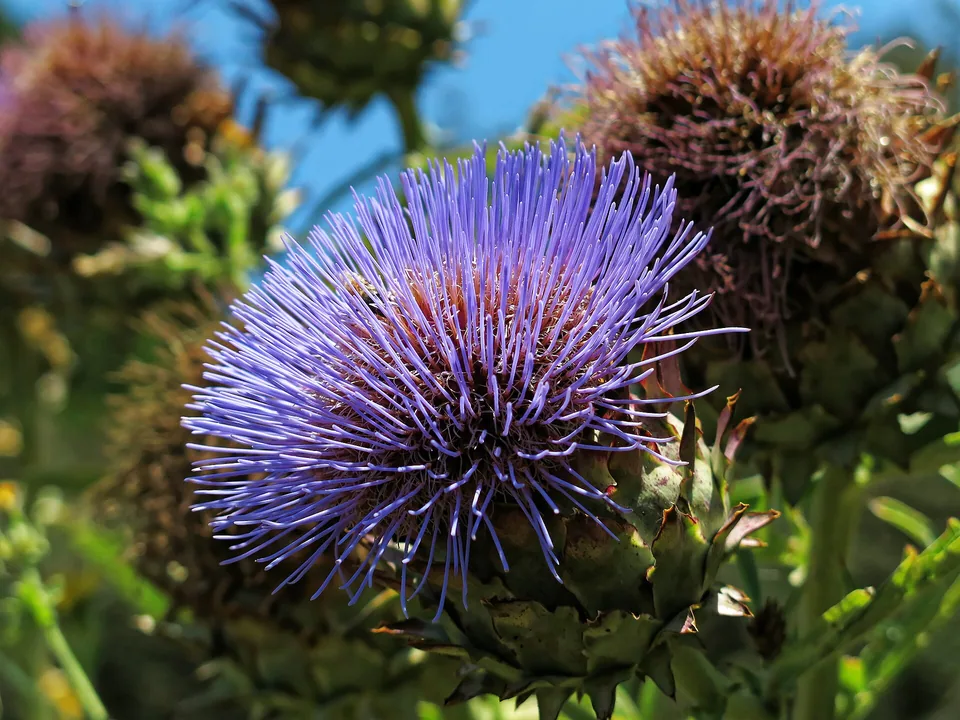


Cómo cultivar y cuidar Cardo
Cynara cardunculus
Escrito por Emilio Marruso · última revisión
De un vistazo
El cardo es una planta ornamental y comestible: una vivaz que luce en el jardín y te da pencas tiernas para cocinar como verdura. Dale sol pleno y un suelo rico, húmedo y con buen drenaje. Ata las plantas y cúbrelas unas semanas para blanquear las pencas, que están listas en septiembre; hasta las raíces se pueden cocinar.
- Sol
Sol pleno
Qué dicen las fuentes (2)
Luz: Pleno sol
Light: Full sun (6 or more hours of direct sunlight a day)
— Cynara cardunculus (Artichoke Thistle, Cardoon, Cardoons, Desert Artichoke, European Cardoon, Globe Artichoke, Scotch Thistle, Scottish Thistle, Spanish Artichoke, Wild Artichoke, Wild Cardoon) | North Carolina Extension Gardener Plant Toolbox [1] This plant grows best in full sun in well-drained soil in a site protected from strong winds.
— Cardoon, Cynara cardunculus – Wisconsin Horticulture [2] - Riego
Mantén la tierra húmeda, pero nunca encharcada
Qué dicen las fuentes (1)
Riego: Cultiva en suelo rico, bien drenado pero húmedo.
Cardoons need rich, well-drained but moist soil and full sun to grow.
— Cynara cardunculus (Artichoke Thistle, Cardoon, Cardoons, Desert Artichoke, European Cardoon, Globe Artichoke, Scotch Thistle, Scottish Thistle, Spanish Artichoke, Wild Artichoke, Wild Cardoon) | North Carolina Extension Gardener Plant Toolbox [1] - Frío
Aguanta inviernos de hasta −17,8 °C (0 °F)
Rústica en inviernos muy fríos · USDA 7a · RHS H6 · Z7
Qué dicen las fuentes (4)
Rusticidad, zona más fría: 7a [mínima invernal de −17,8 a −15 °C (de 0 a 5 °F)]
USDA Plant Hardiness Zone: 7a, 7b, 8a, 8b, 9a, 9b, 10a, 10b
— Cynara cardunculus (Artichoke Thistle, Cardoon, Cardoons, Desert Artichoke, European Cardoon, Globe Artichoke, Scotch Thistle, Scottish Thistle, Spanish Artichoke, Wild Artichoke, Wild Cardoon) | North Carolina Extension Gardener Plant Toolbox [1] It is hardy only in zones 7a to 10b , so is treated as an annual in cold climates .
— Cardoon, Cynara cardunculus – Wisconsin Horticulture [2] Rusticidad, zona más cálida: 10b [mínima invernal de 1,7 a 4,4 °C (de 35 a 40 °F)]
USDA Plant Hardiness Zone: 7a, 7b, 8a, 8b, 9a, 9b, 10a, 10b
— Cynara cardunculus (Artichoke Thistle, Cardoon, Cardoons, Desert Artichoke, European Cardoon, Globe Artichoke, Scotch Thistle, Scottish Thistle, Spanish Artichoke, Wild Artichoke, Wild Cardoon) | North Carolina Extension Gardener Plant Toolbox [1] It is hardy only in zones 7a to 10b , so is treated as an annual in cold climates .
— Cardoon, Cynara cardunculus – Wisconsin Horticulture [2] - Suelo
Suelo rico y con buen drenaje
Qué dicen las fuentes (1)
Riego: Cultiva en suelo rico, bien drenado pero húmedo.
Cardoons need rich, well-drained but moist soil and full sun to grow.
— Cynara cardunculus (Artichoke Thistle, Cardoon, Cardoons, Desert Artichoke, European Cardoon, Globe Artichoke, Scotch Thistle, Scottish Thistle, Spanish Artichoke, Wild Artichoke, Wild Cardoon) | North Carolina Extension Gardener Plant Toolbox [1] - Plantación
Trasplanta al jardín cuando ya no haya riesgo de heladas
Qué dicen las fuentes (1)
Plantación: Trasplanta al jardín después de que pase el peligro de las heladas.
Transplant to the garden after the danger of frost is past.
— Cardoon, Cynara cardunculus – Wisconsin Horticulture [2] - Cosecha
Ata y cubre las pencas jóvenes unas semanas para blanquearlas; están listas en septiembre
Qué dicen las fuentes (3)
Cosecha: Los cogollos de las plantas blanqueados como tallos de apio maduran en septiembre
The plant hearts are sometimes blanched like celery stalks (maturing in September).
— POTW: Cardoon | Hort in the Home Landscape | Illinois Extension | Illinois [4] Cómo cosechar: Los tallos jóvenes de las hojas se blanquean durante unas semanas antes de la cosecha atando las plantas y excluyendo la luz solar con una cubierta de tela, papel o cartón.
Stems are often blanched for a few weeks before harvest by tying plants up and excluding sunlight with a cloth, paper, or cardboard covering.
— Cardoon, Cynara cardunculus – Wisconsin Horticulture [2] Instead, the young, emerging leaf stalks are blanched, harvested, cooked, and eaten as a vegetable.
— Cynara cardunculus (Artichoke Thistle, Cardoon, Cardoons, Desert Artichoke, European Cardoon, Globe Artichoke, Scotch Thistle, Scottish Thistle, Spanish Artichoke, Wild Artichoke, Wild Cardoon) | North Carolina Extension Gardener Plant Toolbox [1] - Plagas
Caracoles, babosas, pulgones y escarabajo japonés; también podredumbre de raíz, podredumbre gris y oídio
Qué dicen las fuentes (3)
Plagas: caracoles, babosas, pulgones, escarabajo japonés
Diseases that may damage this plant include root rot, gray mold and powdery mildew. Insect problems include snails, slugs and aphids.
— Cynara cardunculus (Artichoke Thistle, Cardoon, Cardoons, Desert Artichoke, European Cardoon, Globe Artichoke, Scotch Thistle, Scottish Thistle, Spanish Artichoke, Wild Artichoke, Wild Cardoon) | North Carolina Extension Gardener Plant Toolbox [1] When grown as an annual, cardoon has few pests (although in the eastern U.S. there are reports of it being attacked by Japanese beetle) and is not favored by deer.
— Cardoon, Cynara cardunculus – Wisconsin Horticulture [2] Enfermedades: podredumbre de raíces, moho gris, mildiu polvoriento
Diseases that may damage this plant include root rot, gray mold and powdery mildew. Insect problems include snails, slugs and aphids.
— Cynara cardunculus (Artichoke Thistle, Cardoon, Cardoons, Desert Artichoke, European Cardoon, Globe Artichoke, Scotch Thistle, Scottish Thistle, Spanish Artichoke, Wild Artichoke, Wild Cardoon) | North Carolina Extension Gardener Plant Toolbox [1] - Atención
Puede extenderse y formar colonias: arranca la raíz gruesa; protégelo del viento fuerte
- Multiplicación
Por semilla, por división de la mata o por esquejes de raíz
Qué dicen las fuentes (2)
Propagación: Semilla, división y esquejes de raíz
Recommended Propagation Strategy: Division Root Cutting Seed Country Or Region Of Origin:
— Cynara cardunculus (Artichoke Thistle, Cardoon, Cardoons, Desert Artichoke, European Cardoon, Globe Artichoke, Scotch Thistle, Scottish Thistle, Spanish Artichoke, Wild Artichoke, Wild Cardoon) | North Carolina Extension Gardener Plant Toolbox [1] Cardoon can be started from seed sown indoors 6 to 8 weeks before the last frost.
— Cardoon, Cynara cardunculus – Wisconsin Horticulture [2] - Siembra
Siembra en interior 6–8 semanas antes de la última helada
Qué dicen las fuentes (4)
Siembra: En interiores de 6 a 8 semanas antes de la última helada; a finales de enero o principios de febrero en Illinois.
Según University of Wisconsin Extension: Cardoon can be started from seed sown indoors 6 to 8 weeks before the last frost.
— Cardoon, Cynara cardunculus – Wisconsin Horticulture [2] Illinois: Seeds of cardoon can be ordered online and started indoors in Late January or early February.
— POTW: Cardoon | Hort in the Home Landscape | Illinois Extension | Illinois [4] Cardoon can be started from seed sown indoors 6 to 8 weeks before the last frost.
— Cardoon, Cynara cardunculus – Wisconsin Horticulture [2] Seeds of cardoon can be ordered online and started indoors in Late January or early February.
— POTW: Cardoon | Hort in the Home Landscape | Illinois Extension | Illinois [4] - Maceta
Crece también en maceta
Qué dicen las fuentes (1)
En maceta: Sí
Cardoon can be grown as a container plant, but it requires a very large container.
— Cardoon, Cynara cardunculus – Wisconsin Horticulture [2]
Resumen
El cardo es una perenne mediterránea cultivada por sus tallos de hojas blanqueadas y su follaje ornamental plateado y espinoso. [2][1] Necesita pleno sol y suelo rico, bien drenado pero húmedo. [1] Está catalogada como especie invasora en Carolina del Norte y se considera maleza en algunas áreas. [1]
Citado en inglés, como en la fuente.
Esta ficha está incompleta: las fuentes consultadas aún no cubren todos los campos.
Aún no cubierto por nuestras fuentes: Distancia de plantación
Cuidados
Riego
Cultiva en suelo rico, bien drenado pero húmedo.
Qué dicen las fuentes (1)
Cardoons need rich, well-drained but moist soil and full sun to grow.Luz
Pleno sol
Qué dicen las fuentes (2)
Light:
Full sun (6 or more hours of direct sunlight a day)This plant grows best in full sun in well-drained soil in a site protected from strong winds.Clima y frío
Rusticidad, zona más fría
7a [mínima invernal de −17,8 a −15 °C (de 0 a 5 °F)]
Qué dicen las fuentes (2)
USDA Plant Hardiness Zone:
7a, 7b, 8a, 8b, 9a, 9b, 10a, 10bIt is hardy only in zones 7a to 10b , so is treated as an annual in cold climates .Rusticidad, zona más cálida
10b [mínima invernal de 1,7 a 4,4 °C (de 35 a 40 °F)]
Qué dicen las fuentes (2)
USDA Plant Hardiness Zone:
7a, 7b, 8a, 8b, 9a, 9b, 10a, 10bIt is hardy only in zones 7a to 10b , so is treated as an annual in cold climates .Dónde cultivarla
En maceta
Sí
Qué dicen las fuentes (1)
Cardoon can be grown as a container plant, but it requires a very large container.Distancia de plantación
No figura en las fuentes consultadas.
Propagación
Semilla, división y esquejes de raíz
Qué dicen las fuentes (2)
Recommended Propagation Strategy:
Division
Root Cutting
Seed
Country Or Region Of Origin:Cardoon can be started from seed sown indoors 6 to 8 weeks before the last frost.Cultivo
La planta
Ciclo de vida
perenne
Qué dicen las fuentes (3)
This fast-growing, tender herbaceous perennial in the aster family (Asteraceae) is native to the western and central Mediterranean where it was domesticated in ancient times.While it is a perennial, it is often grown as a half-hardy annual.The Cardoon ( Cynara cardunculus ) is a perennial, hardy to zone 7, which is closely related to globe artichoke.Familia
Asteraceae
Qué dicen las fuentes (1)
This fast-growing, tender herbaceous perennial in the aster family (Asteraceae) is native to the western and central Mediterranean where it was domesticated in ancient times.Altura adulta
Siembra y crecimiento
Días hasta la madurez
Las fuentes dan valores distintos según la región, la zona o las condiciones de cultivo.
Lo que dice cada fuente
cultivar 'Bianco Avorio':
cultivar 'Gobbo di Nizza':
cultivar 'Porto Spineless':
Qué dicen las fuentes (3)
cultivar 'Bianco Avorio': ‘Bianco Avorio’ has thin stalks and matures 110 days from transplant.cultivar 'Gobbo di Nizza': ‘Gobbo di Nizza’ (“hunchback of Nice” in Italian) features thick stalks with few spines. Matures 110 days from transplant.cultivar 'Porto Spineless': ‘Porto Spineless’ is a spineless variety with a compact habit, growing 3 to 4 feet tall. Matures 100 days from transplant.Cosecha y conservación
Cómo cosechar
Los tallos jóvenes de las hojas se blanquean durante unas semanas antes de la cosecha atando las plantas y excluyendo la luz solar con una cubierta de tela, papel o cartón.
Qué dicen las fuentes (2)
Stems are often blanched for a few weeks before harvest by tying plants up and excluding sunlight with a cloth, paper, or cardboard covering.Instead, the young, emerging leaf stalks are blanched, harvested, cooked, and eaten as a vegetable.Plagas y enfermedades
Plagas
caracoles, babosas, pulgones, escarabajo japonés
Qué dicen las fuentes (2)
Diseases that may damage this plant include root rot, gray mold and powdery mildew. Insect problems include snails, slugs and aphids.When grown as an annual, cardoon has few pests (although in the eastern U.S. there are reports of it being attacked by Japanese beetle) and is not favored by deer.Enfermedades
podredumbre de raíces, moho gris, mildiu polvoriento
Qué dicen las fuentes (1)
Diseases that may damage this plant include root rot, gray mold and powdery mildew. Insect problems include snails, slugs and aphids.Problemas
Enfermedades
Síntoma: Podredumbre de raíz, moho gris y mildiu polvoriento
Qué hacer: No se indica ningún método de control en los documentos
Qué dicen las fuentes (1)
Diseases that may damage this plant include root rot, gray mold and powdery mildew.
— Cynara cardunculus (Artichoke Thistle, Cardoon, Cardoons, Desert Artichoke, European Cardoon, Globe Artichoke, Scotch Thistle, Scottish Thistle, Spanish Artichoke, Wild Artichoke, Wild Cardoon) | North Carolina Extension Gardener Plant Toolbox [1] Caracoles, babosas y pulgones
Síntoma: Daños por insectos y moluscos
Qué hacer: No se indica ningún método de control en los documentos
Qué dicen las fuentes (1)
Diseases that may damage this plant include root rot, gray mold and powdery mildew. Insect problems include snails, slugs and aphids.
— Cynara cardunculus (Artichoke Thistle, Cardoon, Cardoons, Desert Artichoke, European Cardoon, Globe Artichoke, Scotch Thistle, Scottish Thistle, Spanish Artichoke, Wild Artichoke, Wild Cardoon) | North Carolina Extension Gardener Plant Toolbox [1] Daño por viento
Síntoma: Los vientos fuertes dañan la planta
Qué hacer: Ubica la planta en una posición protegida de los vientos fuertes
Qué dicen las fuentes (2)
The large taproot must be removed to avoid new sprouting. Strong winds can damage this plant.
— Cynara cardunculus (Artichoke Thistle, Cardoon, Cardoons, Desert Artichoke, European Cardoon, Globe Artichoke, Scotch Thistle, Scottish Thistle, Spanish Artichoke, Wild Artichoke, Wild Cardoon) | North Carolina Extension Gardener Plant Toolbox [1] This plant grows best in full sun in well-drained soil in a site protected from strong winds.
— Cardoon, Cynara cardunculus – Wisconsin Horticulture [2] Maleza
Síntoma: Se extiende formando colonias en algunos lugares
Qué hacer: Retira la raíz principal grande para evitar nuevos brotes.
Qué dicen las fuentes (1)
The large taproot must be removed to avoid new sprouting.
— Cynara cardunculus (Artichoke Thistle, Cardoon, Cardoons, Desert Artichoke, European Cardoon, Globe Artichoke, Scotch Thistle, Scottish Thistle, Spanish Artichoke, Wild Artichoke, Wild Cardoon) | North Carolina Extension Gardener Plant Toolbox [1]
Remedios
Cada remedio indica qué dicen las fuentes oficiales; los remedios tradicionales sin fuente oficial aparecen marcados. Los perjudiciales están para que sepas evitarlos.
Cuidar la planta
pulgones
aceite de neem Funciona en parte
Cómo: Usa aceite de neem en cuanto veas un pulgón.
Try and prevent aphids from getting a hold in the first place. Use neem oil as soon as you see an aphid.
— morningchores.com [5] Qué dicen las pruebas However, neem oil is not effective against every insect and disease, and often must be frequently reapplied to reach the desired outcome.
— extension.unh.edu [6] chorro de agua fuerte No verificado
Remedio tradicional, no verificado por una fuente oficial.
Cómo: Rocía las plantas con un chorro fuerte de agua para desprender las colonias.
jabón insecticida Funciona
For example, spraying home remedies that contain dish detergent on plants on a sunny day can injure the plant, essentially burning it.
— extension.psu.edu [9] Cómo: Después de un chorro fuerte de agua, usa jabón insecticida, asegurando la cobertura completa del envés de las hojas y los brotes.
Spray plants with a strong jet of water to dislodge colonies, then use insecticidal soap or a light horticultural oil, ensuring full coverage of leaf undersides and buds.
— botanapp.com [7] Qué dicen las pruebas For example, insecticidal soap is a safe, effective organic insecticide with minimal environmental impact.
— extension.psu.edu [8]
mildiu polvoriento
rociado con leche No verificado
Remedio tradicional, no verificado por una fuente oficial.
Cómo: Una pulverización foliar semanal con leche (dilución 1:9) ayuda a mantenerlo a raya.
babosas
barrera de gravilla No verificado
Remedio tradicional, no verificado por una fuente oficial.
Cómo: Crea una barrera seca de 5–8 cm de ancho con gravilla hortícola afilada o arcilla cocida triturada alrededor de la corona y revísala semanalmente, rellenándola donde la lluvia la haya aplanado.
polilla del plumerillo del alcachofal
Elimina y quema las partes infestadas. No verificado
Remedio tradicional, no verificado por una fuente oficial.
Cómo: Retira la parte afectada de la planta de inmediato y quémala; también puedes sellarla en la basura doméstica.
Cómo eliminarla
propagación invasiva del cardo
Elimina la raíz principal. Fuente oficial, sin prueba independiente
Cómo: La raíz principal grande debe eliminarse para evitar nuevos brotes.
The large taproot must be removed to avoid new sprouting.
— Cynara cardunculus (Artichoke Thistle, Cardoon, Cardoons, Desert Artichoke, European Cardoon, Globe Artichoke, Scotch Thistle, Scottish Thistle, Spanish Artichoke, Wild Artichoke, Wild Cardoon) | North Carolina Extension Gardener Plant Toolbox [1] Arranca las plántulas y corta las flores marchitas. Funciona
Cómo: Corta las cabezas de las flores antes de que produzcan semillas y retira cualquier plántula que aparezca fuera del área de plantación.
To control it, deadhead flower heads before seed set and remove any seedlings that appear outside the planting area.
— thegreenserenity.com [10] Qué dicen las pruebas Regularly pulling, hoeing or mowing weeds and encouraging grass to grow and out-compete the weeds is an excellent solution.
— extension.usu.edu [11]
Calendario
En interiores de 6 a 8 semanas antes de la última helada; a finales de enero o principios de febrero en Illinois.
Lo que dice cada fuente
Según University of Wisconsin Extension: En interiores de 6 a 8 semanas antes de la última helada.
Illinois: En interiores a finales de enero o principios de febrero.
Qué dicen las fuentes (4)
Según University of Wisconsin Extension: Cardoon can be started from seed sown indoors 6 to 8 weeks before the last frost.Illinois: Seeds of cardoon can be ordered online and started indoors in Late January or early February.Cardoon can be started from seed sown indoors 6 to 8 weeks before the last frost.Seeds of cardoon can be ordered online and started indoors in Late January or early February.Trasplanta al jardín después de que pase el peligro de las heladas.
Qué dicen las fuentes (1)
Transplant to the garden after the danger of frost is past.Los cogollos de las plantas blanqueados como tallos de apio maduran en septiembre
Qué dicen las fuentes (1)
The plant hearts are sometimes blanched like celery stalks (maturing in September).Meses tal como los dan las fuentes, en su mayoría de Estados Unidos (hemisferio norte). En el hemisferio sur se desplazan unos seis meses.
Respecto a las heladas
Estimación menos precisa: no hay ninguna estación meteorológica a menos de 300 km.
Busca las fechas de heladas por código postal o ciudad
Siembra en interior: de 6 a 8 semanas antes de la última helada
Cardoon can be started from seed sown indoors 6 to 8 weeks before the last frost.
— Cardoon, Cynara cardunculus – Wisconsin Horticulture [2] Trasplante: hacia la última helada
Transplant to the garden after the danger of frost is past.
— Cardoon, Cynara cardunculus – Wisconsin Horticulture [2]
Cuenta desde las fechas medias de las heladas de tu zona.
Comestibilidad
Según la fuente, citada textualmente. No comas una planta basándote solo en esta página: los errores de identificación pueden ser peligrosos.
Instead, the young, emerging leaf stalks are blanched, harvested, cooked, and eaten as a vegetable.
[1]Leaf stalks are blanched, harvested, and cooked as a vegetable. Roots may also be cooked and eaten.
[1]The flowers can be cut or dried and, while edible, are not considered as suitable for eating as Scolymus Group artichokes.
[1]Cardoon is an ornamental edible , as the blanched stems can be eaten, although doing so would ruin the ornamental appeal of the plant.
[2]The young tender leaf mid-ribs and immature flower stalks are used.
[4]
Valores orientativos
Valores de una fuente secundaria, no comprobados palabra por palabra como el resto de esta página. Úselos como punto de partida.
- Resiste la sequía
- SíValor orientativo, adáptalo a tu clima · Fuente secundaria
- pH del suelo
- 6-7.5Valor orientativo, adáptalo a tu clima · Fuente secundaria
- Nivel de cuidado
- MedioValor orientativo, adáptalo a tu clima · Fuente secundaria
- Crecimiento
- AltaValor orientativo, adáptalo a tu clima · Fuente secundaria
- Poda
- Marzo, abrilValor orientativo, adáptalo a tu clima · Fuente secundaria
Plantas similares
- African Daisy Dimorphotheca pluvialis
- Cempasúchil Tagetes erecta
- Ageratum Ageratum houstonianum
- Alpine aster Aster alpinus
- American Burnweed Erechtites hieraciifolius
- Appalachian Blazing Star Liatris squarrulosa
- Appalachian Ironweed Vernonia glauca
- Appalachian Sunflower Helianthus atrorubens
Fuentes
Cada valor anterior se cita de estos documentos. Los enlaces llevan al editor original.
- Cynara cardunculus (Artichoke Thistle, Cardoon, Cardoons, Desert Artichoke, European Cardoon, Globe Artichoke, Scotch Thistle, Scottish Thistle, Spanish Artichoke, Wild Artichoke, Wild Cardoon) | North Carolina Extension Gardener Plant Toolbox · plants.ces.ncsu.edu, consultado
- Cardoon, Cynara cardunculus – Wisconsin Horticulture · hort.extension.wisc.edu, consultado
- European Cardoon - Cynara cardunculus | North Carolina Extension Gardener Plant Toolbox · plants.ces.ncsu.edu, consultado
- POTW: Cardoon | Hort in the Home Landscape | Illinois Extension | Illinois · extension.illinois.edu, consultado
- morningchores.com · morningchores.com
- extension.unh.edu · extension.unh.edu
- botanapp.com · botanapp.com
- extension.psu.edu · extension.psu.edu
- extension.psu.edu · extension.psu.edu
- thegreenserenity.com · thegreenserenity.com
- extension.usu.edu · extension.usu.edu
Escrito por Emilio Marruso · última revisión