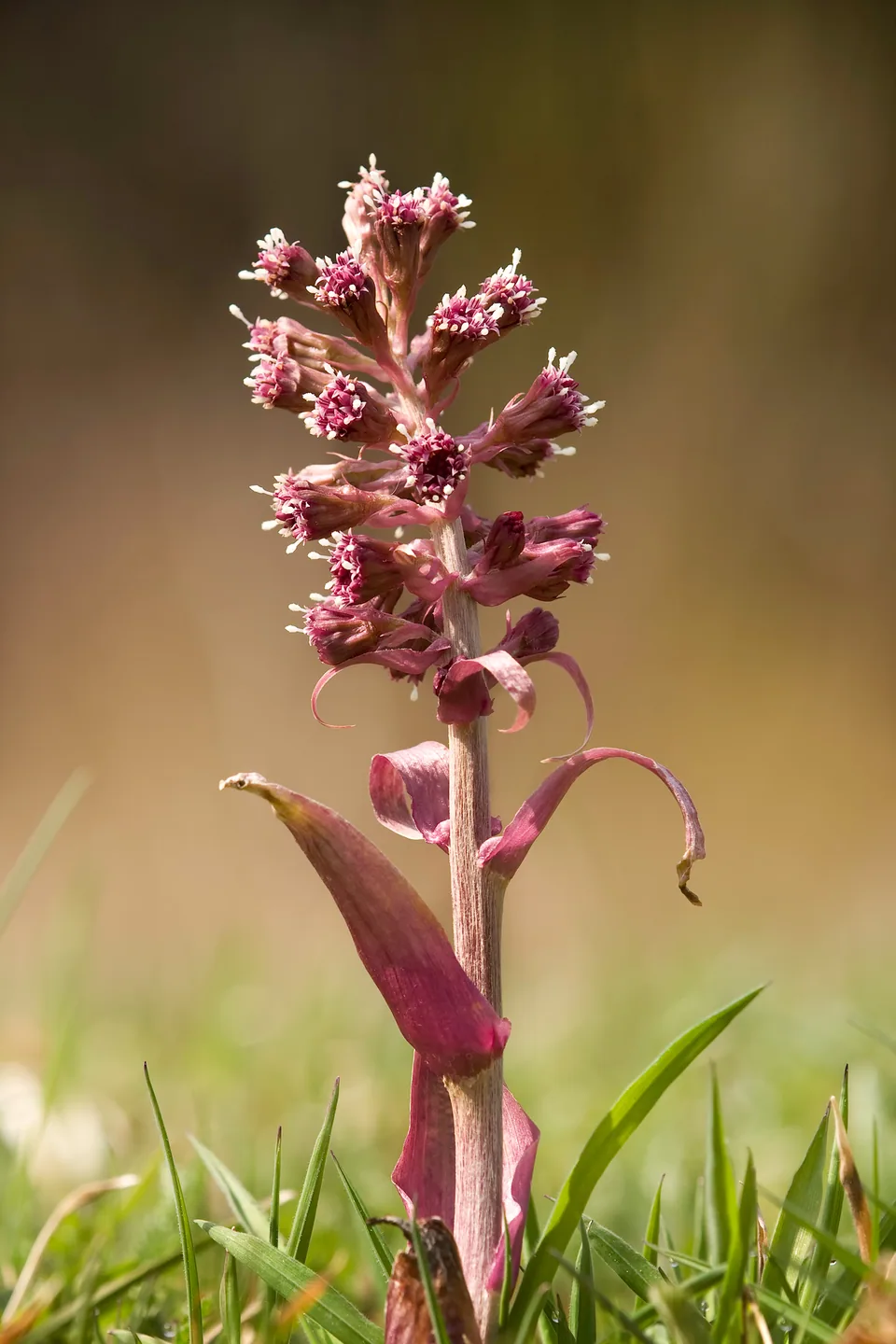
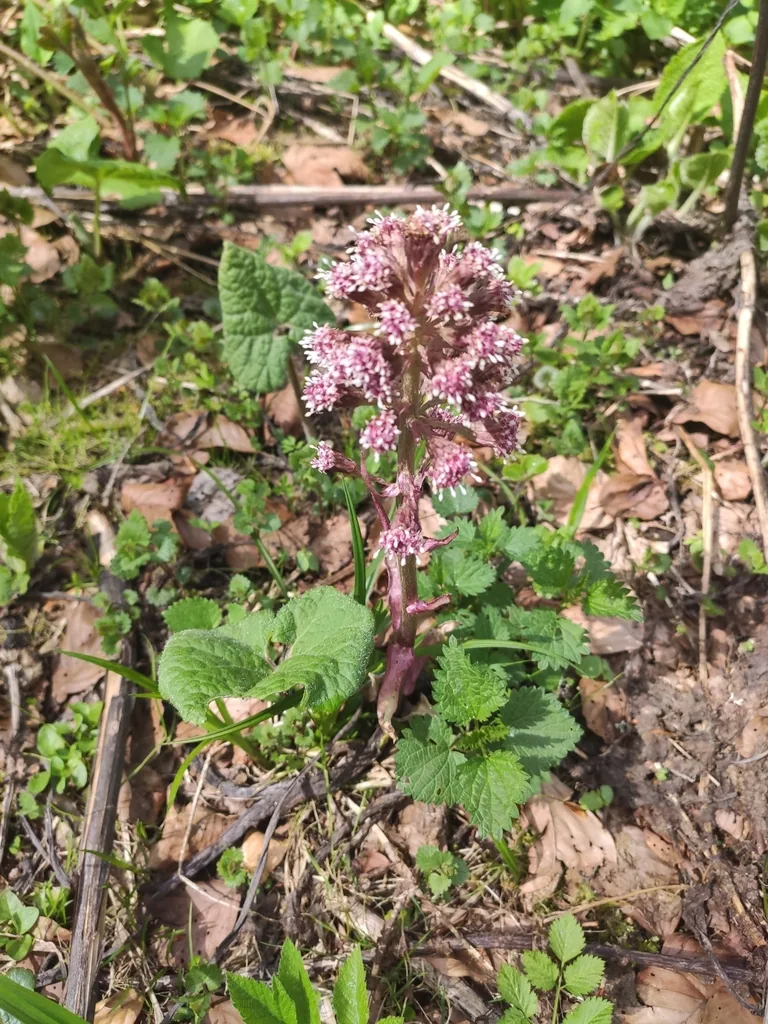

Cómo cultivar y cuidar Common Butterbur
Petasites hybridus
Escrito por Emilio Marruso · última revisión
Clasificada como venenosa · Por qué
De un vistazo
La sombrerera es una perenne a la que le encanta la tierra húmeda: dale un suelo siempre húmedo, pero nunca encharcado. Es fácil de multiplicar, porque puedes dividirla casi en cualquier época del año o sembrar sus semillas en cajonera fría. Eso sí, vigílala: sus raíces se extienden con rapidez, así que arranca los brotes que salgan donde no los quieras.
- Riego
Mantén la tierra siempre húmeda, pero nunca encharcada
Qué dicen las fuentes (2)
Riego: Suelo permanentemente húmedo pero no encharcado
but prefers a deep fertile humus-rich soil that is permanently moist but not stagnant, succeeding in shade, semi-shade or full sun
— Petasites hybridus - Useful Temperate Plants [4] Notas sobre el riego: Prefiere suelo húmedo
It is also known as bog rhubarb, due to its large leaves and preference for wet soil.
— Butterbur and Winter Heliotrope | RHS Advice [1] - Frío
Aguanta inviernos de hasta −34,4 °C (−30 °F)
Muy rústica · USDA 4 · RHS H7 · Z4
Qué dicen las fuentes (1)
Rusticidad, zona más fría: 4 [mínima invernal de −34,4 a −28,9 °C (de −30 a −20 °F)]
Hardiness Zone 4+
— Butterbur (Petasites hybridus) — Practical Plants [5] - Plantación
Planta las divisiones a finales de primavera o principios de verano, y las plántulas en verano
Qué dicen las fuentes (3)
Plantación: Finales de primavera o principios de verano (divisiones en maceta); verano (plántulas)
Según Temperate Plants Database (divisions): it is better to pot up the smaller divisions and grow them on in light shade in a cold frame until they are well established before planting them out in late spring or early summer.
— Petasites hybridus - Useful Temperate Plants [4] Según Temperate Plants Database (seedlings): prick the seedlings out into individual pots and plant them out in the summer.
— Petasites hybridus - Useful Temperate Plants [4] it is better to pot up the smaller divisions and grow them on in light shade in a cold frame until they are well established before planting them out in late spring or early summer.
— Petasites hybridus - Useful Temperate Plants [4] - Atención
Se extiende rápido por sus raíces: saca todas las raíces y vigila si vuelve a brotar
- Multiplicación
Divídela casi en cualquier época del año o multiplícala por semilla
Qué dicen las fuentes (2)
Propagación: División (tiene éxito en casi cualquier época del año); semilla
Division succeeds at almost any time of the year. Very easy, larger divisions can be planted out direct into their permanent positions.
— Petasites hybridus - Useful Temperate Plants [4] The plants have tuberous, fleshy, creeping roots and reproduce from fragments of these tubers, root pieces, and rhizomes.
— Common Butterbur | Minnesota Department of Agriculture [3] - Siembra
Siembra en cajonera fría en cuanto la semilla esté madura o a principios de primavera
Qué dicen las fuentes (1)
Siembra: En un marco frío tan pronto como la semilla esté madura o a principios de primavera
sowing the seed in a cold frame as soon as it is ripe or in early spring.
— Petasites hybridus - Useful Temperate Plants [4]
Resumen
La petasita es una perenne herbácea con hojas muy grandes que crece a partir de rizomas rastreros en suelo húmedo. [2][3] Su hábito expansivo puede convertirla en una maleza en los bordes del jardín, y la RHS aconseja controlar su propagación. [1] Todas las partes de la planta contienen alcaloides pirrolizidínicos, que dañan el hígado y son cancerígenos. [6]
Citado en inglés, como en la fuente.
Esta ficha está incompleta: las fuentes consultadas aún no cubren todos los campos.
Aún no cubierto por nuestras fuentes: Luz, Rusticidad, zona más cálida, Poda
Cuidados
Riego
Riego
Suelo permanentemente húmedo pero no encharcado
Qué dicen las fuentes (1)
but prefers a deep fertile humus-rich soil that is permanently moist but not stagnant, succeeding in shade, semi-shade or full sunNotas sobre el riego
Prefiere suelo húmedo
Qué dicen las fuentes (1)
It is also known as bog rhubarb, due to its large leaves and preference for wet soil.Luz
No figura en las fuentes consultadas.
Clima y frío
Rusticidad, zona más fría
4 [mínima invernal de −34,4 a −28,9 °C (de −30 a −20 °F)]
Qué dicen las fuentes (1)
Hardiness
Zone 4+Rusticidad, zona más cálida
No figura en las fuentes consultadas.
Propagación
División (tiene éxito en casi cualquier época del año); semilla
Qué dicen las fuentes (2)
Division succeeds at almost any time of the year. Very easy, larger divisions can be planted out direct into their permanent positions.The plants have tuberous, fleshy, creeping roots and reproduce from fragments of these tubers, root pieces, and rhizomes.Cultivo
La planta
Ciclo de vida
perenne
Qué dicen las fuentes (1)
Habit: Perennial herbaceous plant developing from a robust, fleshy creeping rhizome.Familia
Asteraceae
Qué dicen las fuentes (1)
Family:
Asteraceae
Biological form:Problemas
Propagación agresiva por rizomas
Qué hacer: Excava o retira a mano todo el sistema radicular y vigila que no vuelva a brotar.
Qué dicen las fuentes (1)
Due to the plant’s spreading rhizomes, dig or hand-remove the entire root system and monitor for re-sprouting.
— Common Butterbur | Minnesota Department of Agriculture [3]
Remedios
Cada remedio indica qué dicen las fuentes oficiales; los remedios tradicionales sin fuente oficial aparecen marcados. Los perjudiciales están para que sepas evitarlos.
Cómo eliminarla
propagación invasiva
extracción de los rizomas con horca Fuente oficial, sin prueba independiente
As plants can regenerate from small pieces of rhizome, it is best not to add roots or rhizomes to your home compost bin
— Butterbur and Winter Heliotrope | RHS Advice [1] Cómo: Usa una horca de jardín, introducida a toda su profundidad, para levantar y eliminar la mayor parte del sistema radicular; la eliminación repetida de nuevos tallos y secciones de rizoma debilita y finalmente erradica las plantas.
Fork out plants – use a border fork, inserted to its full depth, to lift and remove as much of the root system as possible.
— Butterbur and Winter Heliotrope | RHS Advice [1] Corta regularmente Fuente oficial, sin prueba independiente
Cómo: Usa una desbrozadora, cortadora de maleza o segadora para áreas grandes; si cortas el crecimiento nuevo regularmente, debilitas y eventualmente eliminas las plantas, lo que puede requerir más de una temporada de crecimiento.
Cutting back new growth regularly will weaken and eventually kill both plants.
— Butterbur and Winter Heliotrope | RHS Advice [1] Sofoca con cartón y mantillo. Fuente oficial, sin prueba independiente
Cómo: Cubre con una capa de material compostable como cartón, luego una capa de 20 cm (8 pulgadas) de materia orgánica como corteza o astillas de madera; el suelo debe permanecer cubierto durante al menos dos años.
Smother plants – cover with a layer of compostable material, such as cardboard, and then a 20cm (8in) thick layer of organic matter
— Butterbur and Winter Heliotrope | RHS Advice [1]
Calendario
Siembra
En un marco frío tan pronto como la semilla esté madura o a principios de primavera
Qué dicen las fuentes (1)
sowing the seed in a cold frame as soon as it is ripe or in early spring.Plantación
Finales de primavera o principios de verano (divisiones en maceta); verano (plántulas)
Lo que dice cada fuente
Según Temperate Plants Database (divisions): Finales de primavera o principios de verano
Según Temperate Plants Database (seedlings): Verano
Qué dicen las fuentes (3)
Según Temperate Plants Database (divisions): it is better to pot up the smaller divisions and grow them on in light shade in a cold frame until they are well established before planting them out in late spring or early summer.Según Temperate Plants Database (seedlings): prick the seedlings out into individual pots and plant them out in the summer.it is better to pot up the smaller divisions and grow them on in light shade in a cold frame until they are well established before planting them out in late spring or early summer.Poda
No figura en las fuentes consultadas.
Meses tal como los dan las fuentes, en su mayoría de Estados Unidos (hemisferio norte). En el hemisferio sur se desplazan unos seis meses.
Plantas similares
- Petasites pyrenaicus Petasites pyrenaicus
- Fuki Petasites japonicus
- African Daisy Dimorphotheca pluvialis
- Cempasúchil Tagetes erecta
- Ageratum Ageratum houstonianum
- Alpine aster Aster alpinus
- American Burnweed Erechtites hieraciifolius
- Appalachian Blazing Star Liatris squarrulosa
Fuentes
Cada valor anterior se cita de estos documentos. Los enlaces llevan al editor original.
- Butterbur and Winter Heliotrope | RHS Advice · rhs.org.uk, consultado
- Petasites hybridus (L.) G.Gaertn., B.Mey. & Scherb. subsp. hybridus – Giardino della Flora Appenninica · giardinocapracotta.unimol.it, consultado
- Common Butterbur | Minnesota Department of Agriculture · mda.state.mn.us, consultado
- Petasites hybridus - Useful Temperate Plants · temperate.theferns.info, consultado
- Butterbur (Petasites hybridus) — Practical Plants · practicalplants.org, consultado
- Bisherige Pflanze der Woche - Gewöhnliche Pestwurz — Botanischer Garten — TU Dresden · tu-dresden.de, consultado
- Petasites hybridus (butterbur sweet-coltsfoot): Go Botany · gobotany.nativeplanttrust.org, consultado
Escrito por Emilio Marruso · última revisión