
How to Grow and Care for Common Butterbur
Petasites hybridus
Written by Emilio Marruso · last checked
Classified as poisonous · Why
At a glance
Butterbur is a perennial that loves wet ground: give it soil that stays moist all the time, but never waterlogged. It is easy to multiply, since you can divide it almost any time of year or sow its seed in a cold frame. Just keep an eye on it: its roots spread fast, so dig out any shoots that pop up where you don't want them.
- Water
Keep the soil moist all the time, but never waterlogged
What the sources say (2)
Watering: Permanently moist but not stagnant soil
but prefers a deep fertile humus-rich soil that is permanently moist but not stagnant, succeeding in shade, semi-shade or full sun
— Petasites hybridus - Useful Temperate Plants [4] Watering notes: Prefers wet soil
It is also known as bog rhubarb, due to its large leaves and preference for wet soil.
— Butterbur and Winter Heliotrope | RHS Advice [1] - Cold
Survives winters down to −30 °F (−34.4 °C)
Very hardy · USDA 4 · RHS H7 · Z4
What the sources say (1)
Hardiness, coldest zone: 4 [winter low −34.4 to −28.9 °C (−30 to −20 °F)]
Hardiness Zone 4+
— Butterbur (Petasites hybridus) — Practical Plants [5] - Planting
Plant divisions in late spring or early summer, and seedlings in summer
What the sources say (3)
Planting: Late spring or early summer (potted-up divisions); summer (seedlings)
According to Temperate Plants Database (divisions): it is better to pot up the smaller divisions and grow them on in light shade in a cold frame until they are well established before planting them out in late spring or early summer.
— Petasites hybridus - Useful Temperate Plants [4] According to Temperate Plants Database (seedlings): prick the seedlings out into individual pots and plant them out in the summer.
— Petasites hybridus - Useful Temperate Plants [4] it is better to pot up the smaller divisions and grow them on in light shade in a cold frame until they are well established before planting them out in late spring or early summer.
— Petasites hybridus - Useful Temperate Plants [4] - Watch out
Spreads fast by its roots: dig out the whole root system and watch for new shoots
- Propagation
Divide it almost any time of year, or grow it from seed
What the sources say (2)
Propagation: Division (succeeds at almost any time of the year); seed
Division succeeds at almost any time of the year. Very easy, larger divisions can be planted out direct into their permanent positions.
— Petasites hybridus - Useful Temperate Plants [4] The plants have tuberous, fleshy, creeping roots and reproduce from fragments of these tubers, root pieces, and rhizomes.
— Common Butterbur | Minnesota Department of Agriculture [3] - Sowing
Sow in a cold frame as soon as the seed is ripe, or in early spring
What the sources say (1)
Sowing: In a cold frame as soon as the seed is ripe or in early spring
sowing the seed in a cold frame as soon as it is ripe or in early spring.
— Petasites hybridus - Useful Temperate Plants [4]
Overview
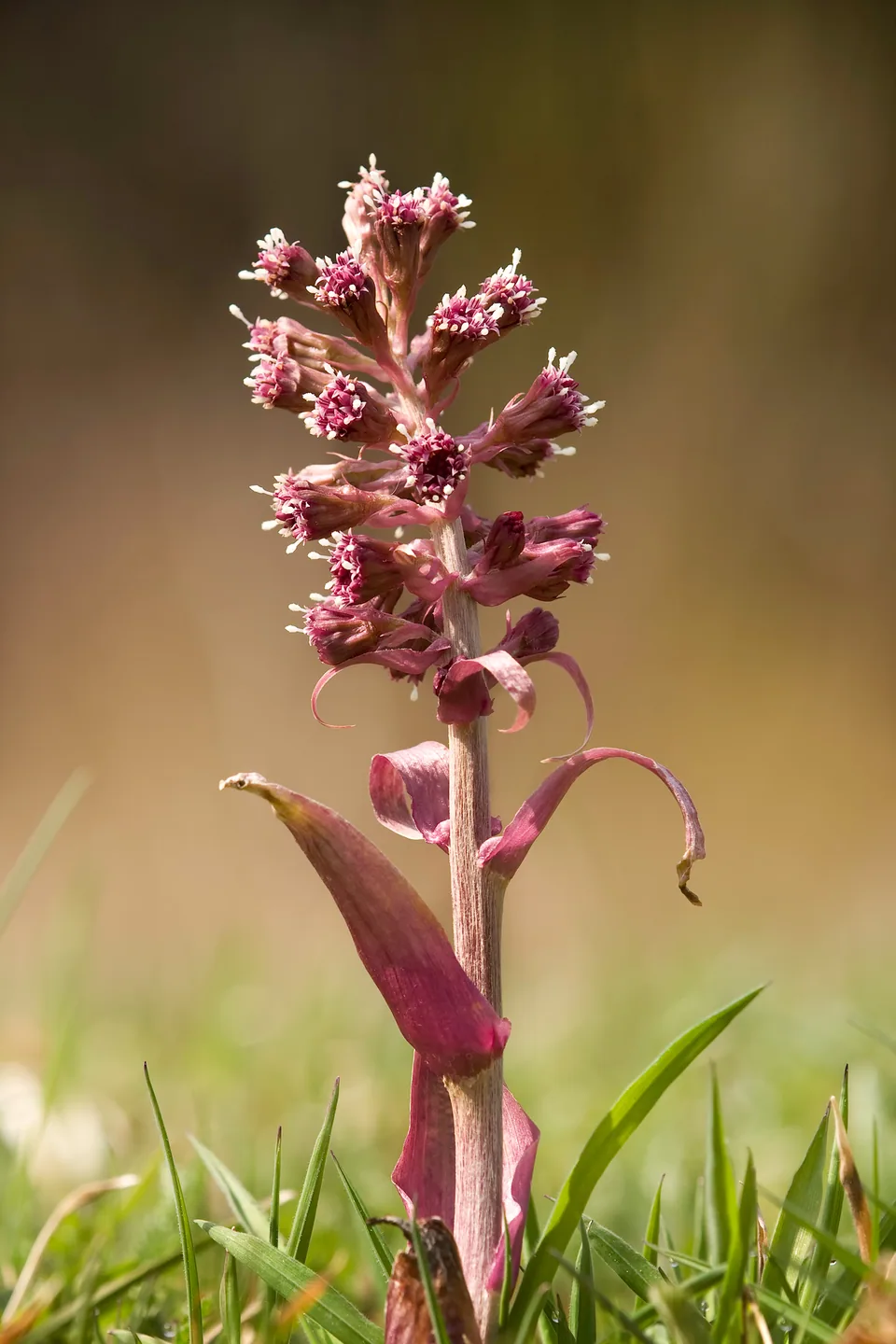
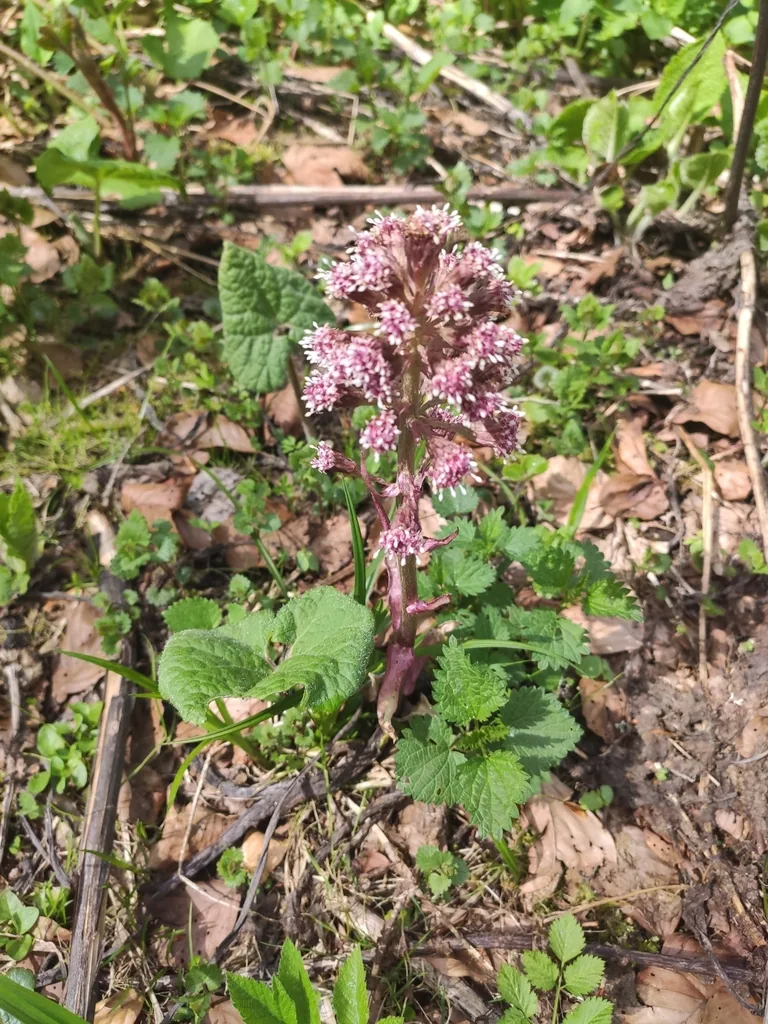
Butterbur is a herbaceous perennial with very large leaves that grows from creeping rhizomes in moist soil. [2][3] Its spreading habit can make it a weed in garden borders, and the RHS advises managing its spread. [1] All plant parts contain pyrrolizidine alkaloids, which are liver-damaging and carcinogenic. [6]
This record is incomplete: the sources we read do not cover every field yet.
Not yet covered by our sources: Light, Hardiness, warmest zone, Pruning
Common Butterbur care
How to water Common Butterbur
Watering
Permanently moist but not stagnant soil
What the sources say (1)
but prefers a deep fertile humus-rich soil that is permanently moist but not stagnant, succeeding in shade, semi-shade or full sunWatering notes
Prefers wet soil
What the sources say (1)
It is also known as bog rhubarb, due to its large leaves and preference for wet soil.How much light Common Butterbur needs
Not stated in the sources we read.
How much cold Common Butterbur can take
Hardiness, coldest zone
4 [winter low −34.4 to −28.9 °C (−30 to −20 °F)]
What the sources say (1)
Hardiness
Zone 4+Hardiness, warmest zone
Not stated in the sources we read.
How to propagate Common Butterbur
Division (succeeds at almost any time of the year); seed
What the sources say (2)
Division succeeds at almost any time of the year. Very easy, larger divisions can be planted out direct into their permanent positions.The plants have tuberous, fleshy, creeping roots and reproduce from fragments of these tubers, root pieces, and rhizomes.How to grow Common Butterbur
The plant
Life cycle
perennial
What the sources say (1)
Habit: Perennial herbaceous plant developing from a robust, fleshy creeping rhizome.Family
Asteraceae
What the sources say (1)
Family:
Asteraceae
Biological form:Common Butterbur pests and problems
Aggressive spread by rhizomes
What to do: Dig or hand-remove the entire root system and monitor for re-sprouting.
What the sources say (1)
Due to the plant’s spreading rhizomes, dig or hand-remove the entire root system and monitor for re-sprouting.
— Common Butterbur | Minnesota Department of Agriculture [3]
Remedies
Each remedy shows what official sources say about it; traditional remedies without an official source are marked as such. Harmful ones are listed so you know to avoid them.
Getting rid of it
invasive spread
forking out the rhizomes Official source, not independently tested
As plants can regenerate from small pieces of rhizome, it is best not to add roots or rhizomes to your home compost bin
— Butterbur and Winter Heliotrope | RHS Advice [1] How: Use a border fork, inserted to its full depth, to lift and remove as much of the root system as possible; repeated removal of new stems and rhizome sections weakens and eventually eradicates the plants.
Fork out plants – use a border fork, inserted to its full depth, to lift and remove as much of the root system as possible.
— Butterbur and Winter Heliotrope | RHS Advice [1] regular cutting Official source, not independently tested
How: Use a strimmer, brushcutter or mower for large areas; cutting back new growth regularly weakens and eventually kills the plants, which is likely to take more than one growing season.
Cutting back new growth regularly will weaken and eventually kill both plants.
— Butterbur and Winter Heliotrope | RHS Advice [1] smothering with cardboard and mulch Official source, not independently tested
How: Cover with a layer of compostable material such as cardboard, then a 20cm (8in) layer of organic matter such as bark or wood chips; the soil needs to stay covered for at least two years.
Smother plants – cover with a layer of compostable material, such as cardboard, and then a 20cm (8in) thick layer of organic matter
— Butterbur and Winter Heliotrope | RHS Advice [1]
Calendar
Sowing
In a cold frame as soon as the seed is ripe or in early spring
What the sources say (1)
sowing the seed in a cold frame as soon as it is ripe or in early spring.Planting
Late spring or early summer (potted-up divisions); summer (seedlings)
What each source says
According to Temperate Plants Database (divisions): Late spring or early summer
According to Temperate Plants Database (seedlings): Summer
What the sources say (3)
According to Temperate Plants Database (divisions): it is better to pot up the smaller divisions and grow them on in light shade in a cold frame until they are well established before planting them out in late spring or early summer.According to Temperate Plants Database (seedlings): prick the seedlings out into individual pots and plant them out in the summer.it is better to pot up the smaller divisions and grow them on in light shade in a cold frame until they are well established before planting them out in late spring or early summer.Pruning
Not stated in the sources we read.
Months as given by the sources, which are mostly from the United States (northern hemisphere). In the southern hemisphere they shift by about six months.
Similar plants
- Petasites pyrenaicus Petasites pyrenaicus
- Fuki Petasites japonicus
- African Daisy Dimorphotheca pluvialis
- African Marigold Tagetes erecta
- Ageratum Ageratum houstonianum
- Alpine aster Aster alpinus
- American Burnweed Erechtites hieraciifolius
- Appalachian Blazing Star Liatris squarrulosa
Sources
Every value above is quoted from these documents. Links lead to the original publisher.
- Butterbur and Winter Heliotrope | RHS Advice · rhs.org.uk, consulted
- Petasites hybridus (L.) G.Gaertn., B.Mey. & Scherb. subsp. hybridus – Giardino della Flora Appenninica · giardinocapracotta.unimol.it, consulted
- Common Butterbur | Minnesota Department of Agriculture · mda.state.mn.us, consulted
- Petasites hybridus - Useful Temperate Plants · temperate.theferns.info, consulted
- Butterbur (Petasites hybridus) — Practical Plants · practicalplants.org, consulted
- Bisherige Pflanze der Woche - Gewöhnliche Pestwurz — Botanischer Garten — TU Dresden · tu-dresden.de, consulted
- Petasites hybridus (butterbur sweet-coltsfoot): Go Botany · gobotany.nativeplanttrust.org, consulted
Written by Emilio Marruso · last checked