
How to Grow and Care for Petasites pyrenaicus
Petasites pyrenaicus
Written by Emilio Marruso · last checked
At a glance
Winter heliotrope is an easygoing plant that's happy in direct sun or semi-shade and asks for very little water. Plant it in winter or early spring, and you'll soon have plants to share, because new ones grow from small pieces of its underground stems. It grows in containers too, so even a small balcony can make room for it.
- Sun
Direct sun or semi-shade
What the sources say (2)
Light: Direct sun or semi-shade
Petasites fragrans is a fast growing plant that can grow in semi-shade or direct sun exposures
— Petasites fragrans or Winter heliotrope | Care and Growing [4] winter heliotrope being more tolerant of dry soils, in sun or shade
— Butterbur and Winter Heliotrope | RHS Advice [2] - Water
Water very lightly: too much moisture harms it, and it copes well with drier soil
What the sources say (2)
Watering: Water very moderately; very sensitive to excess humidity
Water very moderately, taking into account that Winter heliotrope is a plant very sensitive to excess humidity.
— Petasites fragrans or Winter heliotrope | Care and Growing [4] Watering notes: More tolerant of dry soils than butterbur
winter heliotrope being more tolerant of dry soils, in sun or shade
— Butterbur and Winter Heliotrope | RHS Advice [2] - Planting
Plant in winter or early spring
What the sources say (1)
Planting: Winter or early spring
Planting is done in winter or early spring.
— Petasites fragrans or Winter heliotrope | Care and Growing [4] - Pests
Watch out for slugs and snails
- Watch out
Spreads underground: dig it out with a fork, cut it often, or cover with cardboard and 8 inches of organic matter
- Size
4 to 12 inches tall in bloom, later up to 2 ft
What the sources say (1)
Mature height: 10-30 cm [4–12 in] at flowering, later up to 60 cm [24 in]
Stängel zur Blütezeit 10-30 cm, später bis 60 cm hoch.
— Petasites pyrenaicus (L.) G. López [1] - Propagation
Divide it when planting; small pieces of underground stem grow into new plants
What the sources say (2)
Propagation: Division at the time of planting; new plants can grow from small sections of rhizome
Petasites fragrans is propagated by division at the time of planting.
— Petasites fragrans or Winter heliotrope | Care and Growing [4] New plants can grow from small sections of rhizome
— Butterbur and Winter Heliotrope | RHS Advice [2] - Containers
Grows in containers too
What the sources say (1)
In containers: Yes
Winter heliotrope is used to form covering groups and in pots and planters for terraces and patios.
— Petasites fragrans or Winter heliotrope | Care and Growing [4]
Overview
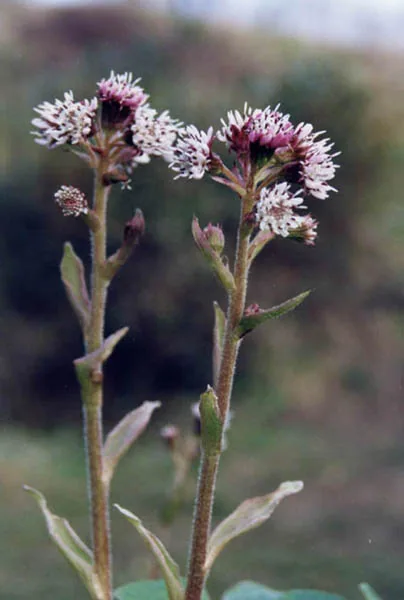
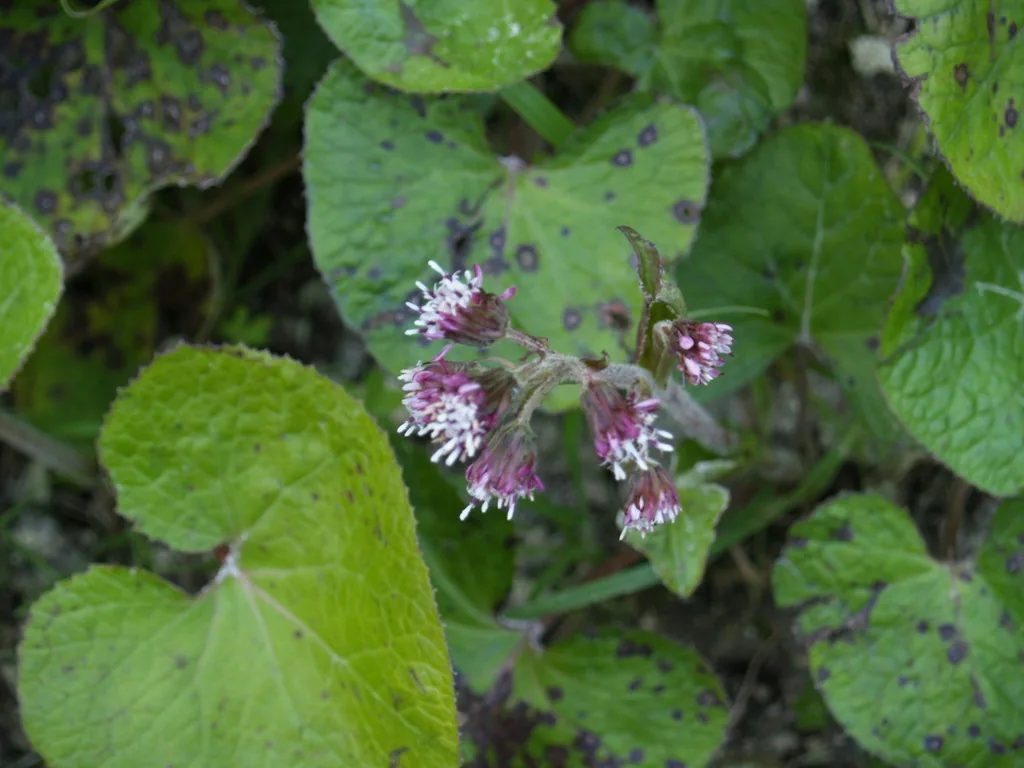
Winter heliotrope is a creeping perennial that flowers in winter and is used as ground cover and in containers. [4] It spreads by underground rhizomes and its expansion must be watched because it tends to become invasive. [2][4] It grows in sun or semi-shade and is very sensitive to excess humidity. [4]
This record is incomplete: the sources we read do not cover every field yet.
Not yet covered by our sources: Hardiness, coldest zone, Hardiness, warmest zone, Pruning
Petasites pyrenaicus care
How to water Petasites pyrenaicus
Watering
Water very moderately; very sensitive to excess humidity
What the sources say (1)
Water very moderately, taking into account that Winter heliotrope is a plant very sensitive to excess humidity.Watering notes
More tolerant of dry soils than butterbur
What the sources say (1)
winter heliotrope being more tolerant of dry soils, in sun or shadeHow much light Petasites pyrenaicus needs
Direct sun or semi-shade
How much cold Petasites pyrenaicus can take
Hardiness, coldest zone
Not stated in the sources we read.
Hardiness, warmest zone
Not stated in the sources we read.
Where to grow Petasites pyrenaicus
Yes
What the sources say (1)
Winter heliotrope is used to form covering groups and in pots and planters for terraces and patios.How to propagate Petasites pyrenaicus
Division at the time of planting; new plants can grow from small sections of rhizome
How to grow Petasites pyrenaicus
The plant
Family
Asteraceae
What the sources say (1)
Order
Asterales (
1ASTO )
Family
Asteraceae (
1COMF )Mature height
10-30 cm [4–12 in] at flowering, later up to 60 cm [24 in]
What the sources say (1)
Stängel zur Blütezeit 10-30 cm, später bis 60 cm hoch.Petasites pyrenaicus pests and problems
Slugs and snails
What the sources say (1)
Winter heliotrope can be attacked by slugs and snails .
— Petasites fragrans or Winter heliotrope | Care and Growing [4] Spreading by rhizomes
What to do: Fork out plants with a border fork, cut regularly, or smother with cardboard and a 20cm layer of organic matter.
What the sources say (2)
In good growing conditions a clump can spread quickly, forming a dense carpet.
— Butterbur and Winter Heliotrope | RHS Advice [2] use a border fork, inserted to its full depth, to lift and remove as much of the root system as possible.
— Butterbur and Winter Heliotrope | RHS Advice [2]
Remedies
Each remedy shows what official sources say about it; traditional remedies without an official source are marked as such. Harmful ones are listed so you know to avoid them.
Getting rid of it
invasive spread
forking out the rhizomes Official source, not independently tested
As plants can regenerate from small pieces of rhizome, it is best not to add roots or rhizomes to your home compost bin
— Butterbur and Winter Heliotrope | RHS Advice [2] disposal of material should be undertaken with great care to prevent further spread of the plant
— brickfieldspark.org [6] How: Use a border fork, inserted to its full depth, to lift and remove as much of the root system as possible; repeated removal of new stems and rhizome sections weakens and eventually eradicates the plants.
Fork out plants – use a border fork, inserted to its full depth, to lift and remove as much of the root system as possible.
— Butterbur and Winter Heliotrope | RHS Advice [2] regular cutting Official source, not independently tested
How: Use a strimmer, brushcutter or mower for large areas; cutting back new growth regularly weakens and eventually kills the plants, which is likely to take more than one growing season.
Cutting back new growth regularly will weaken and eventually kill both plants.
— Butterbur and Winter Heliotrope | RHS Advice [2] smothering with cardboard and mulch Official source, not independently tested
How: Cover with a layer of compostable material such as cardboard, then a 20cm (8in) layer of organic matter such as bark or wood chips; the soil needs to stay covered for at least two years.
Smother plants – cover with a layer of compostable material, such as cardboard, and then a 20cm (8in) thick layer of organic matter
— Butterbur and Winter Heliotrope | RHS Advice [2]
Calendar
Planting
Winter or early spring
What the sources say (1)
Planting is done in winter or early spring.Pruning
Not stated in the sources we read.
Months as given by the sources, which are mostly from the United States (northern hemisphere). In the southern hemisphere they shift by about six months.
Similar plants
- Common Butterbur Petasites hybridus
- Fuki Petasites japonicus
- African Daisy Dimorphotheca pluvialis
- African Marigold Tagetes erecta
- Ageratum Ageratum houstonianum
- Alpine aster Aster alpinus
- American Burnweed Erechtites hieraciifolius
- Appalachian Blazing Star Liatris squarrulosa
Sources
Every value above is quoted from these documents. Links lead to the original publisher.
- Petasites pyrenaicus (L.) G. López · infoflora.ch, consulted
- Butterbur and Winter Heliotrope | RHS Advice · rhs.org.uk, consulted
- Winter Heliotrope - Wild Food UK · wildfooduk.com, consulted
- Petasites fragrans or Winter heliotrope | Care and Growing · consultaplantas.com, consulted
- Petasites pyrenaicus (PEDFR)[Overview]| EPPO Global Database · gd.eppo.int, consulted
- brickfieldspark.org · brickfieldspark.org
Written by Emilio Marruso · last checked