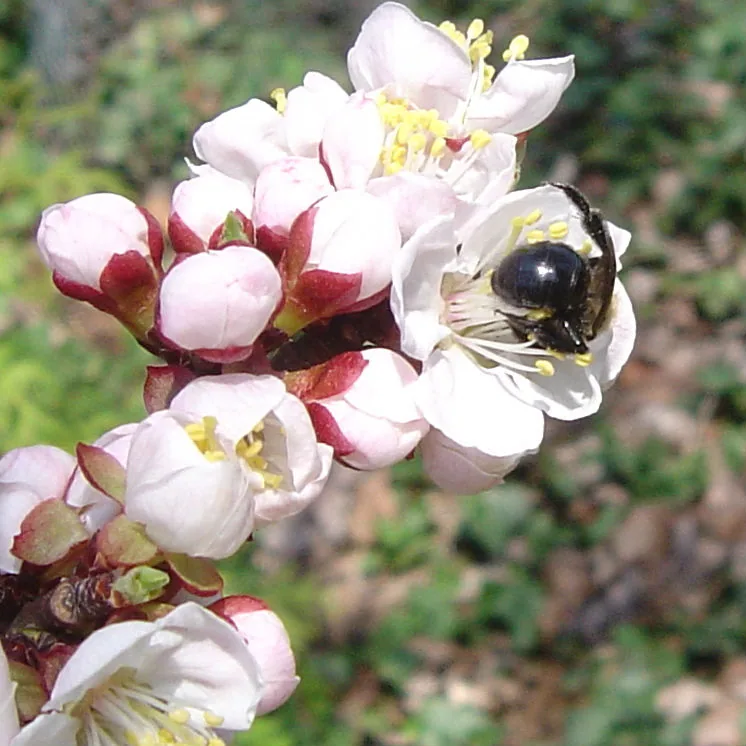
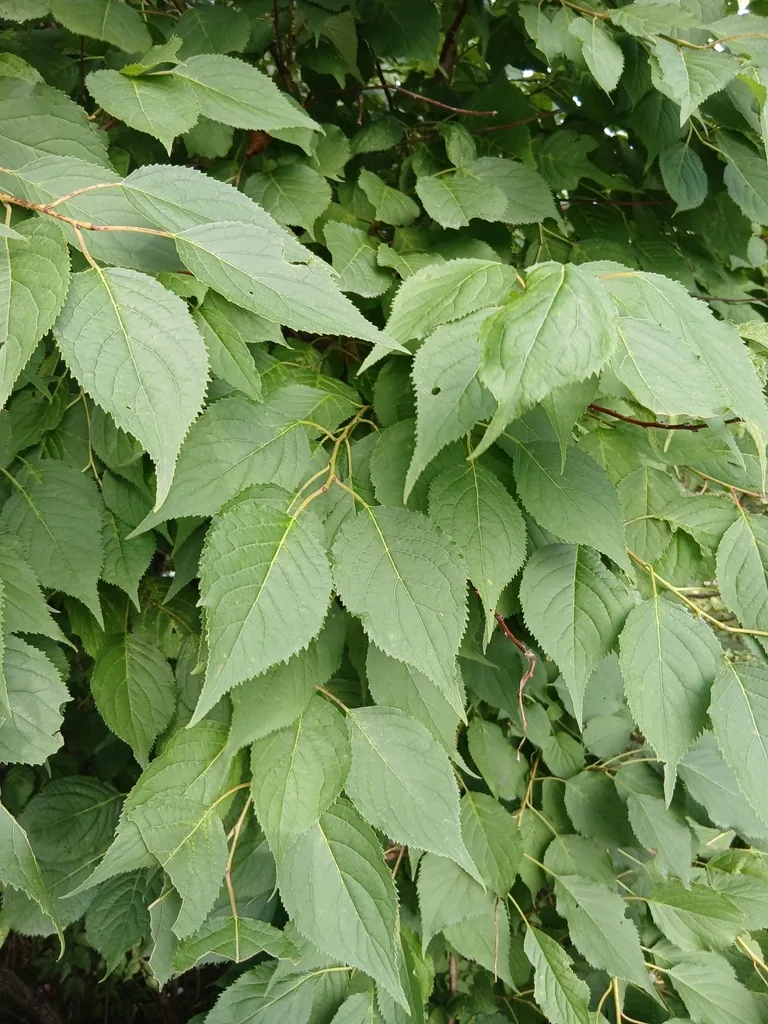

Cómo cultivar y cuidar Prunus mandshurica
Prunus mandshurica
Escrito por Emilio Marruso · última revisión
De un vistazo
El albaricoquero de Manchuria es un arbolito resistente para jardines soleados, de 3 a 4,6 m de alto. Sus frutos maduran de agosto a principios de septiembre y lucen sobre todo cocinados: allí donde crece se convierten en mermelada, caramelos y rellenos para dulces. Dale un suelo bien drenado que guarde algo de humedad y un rincón soleado, donde fructifica mejor.
- Sol
Sol pleno o semisombra; fructifica mejor al sol
Qué dicen las fuentes (3)
Luz: Pleno sol a semisombra; fructifica mejor al sol
Light: Full sun. Water: Will not withstand ponding, moderately drought tolerant.
— Manchurian Apricot | NDSU Agriculture [1] Succeeds in sun or partial shade though it fruits better in a sunny position [2] [7] . A very frost-resistant plant [10] .
— Manchurian Apricot (Prunus mandschurica) — Practical Plants [4] Light full sun Shade tolerance light shade Water moderate
— Manchurian Apricot (Prunus mandschurica) — Practical Plants [4] - Riego
Mantén la tierra húmeda pero nunca encharcada: el agua estancada le hace daño
Qué dicen las fuentes (2)
Notas sobre el riego: No tolera el encharcamiento; necesita suelo bien drenado y que retenga la humedad
Light: Full sun. Water: Will not withstand ponding, moderately drought tolerant.
— Manchurian Apricot | NDSU Agriculture [1] Thrives in a well-drained moisture-retentive loamy soil [2] [7] . Prefers some lime in the soil but is likely to become chlorotic if too much lime is present [1] .
— Manchurian Apricot (Prunus mandschurica) — Practical Plants [4] - Frío
Aguanta inviernos de hasta −40 °C (−40 °F)
Muy rústica · USDA 3 · RHS H7 · Z3
Qué dicen las fuentes (1)
Rusticidad, zona más fría: 3 [mínima invernal de −40 a −34,4 °C (de −40 a −30 °F)]
Scientific Name: Prunus armeniaca var. mandshurica Family: Rosaceae (Rose) Hardiness: Zone 3
— Manchurian Apricot | NDSU Agriculture [1] - Suelo
Suelo bien drenado que retenga la humedad, pH 6,0–7,5
Qué dicen las fuentes (4)
pH del suelo, mínimo: 6.0
Water: Will not withstand ponding, moderately drought tolerant. Soil: Grows best in loam soils with a pH of 6-7.5.
— Manchurian Apricot | NDSU Agriculture [1] pH del suelo, máximo: 7.5
Water: Will not withstand ponding, moderately drought tolerant. Soil: Grows best in loam soils with a pH of 6-7.5.
— Manchurian Apricot | NDSU Agriculture [1] Notas sobre el riego: No tolera el encharcamiento; necesita suelo bien drenado y que retenga la humedad
Light: Full sun. Water: Will not withstand ponding, moderately drought tolerant.
— Manchurian Apricot | NDSU Agriculture [1] Thrives in a well-drained moisture-retentive loamy soil [2] [7] . Prefers some lime in the soil but is likely to become chlorotic if too much lime is present [1] .
— Manchurian Apricot (Prunus mandschurica) — Practical Plants [4] - Plantación
Planta los arbolitos a finales de primavera o principios de verano, tras su primer invierno a cubierto
Qué dicen las fuentes (1)
Plantación: Finales de primavera o principios de verano (plántulas, después de su primer invierno bajo cubierta)
Grow them on in a greenhouse or cold frame for their first winter and plant them out in late spring or early summer of the following year.
— Manchurian Apricot (Prunus mandschurica) — Practical Plants [4] - Cosecha
Cosecha de agosto a principios de septiembre; el fruto es mejor cocinado, ideal para mermelada
Qué dicen las fuentes (1)
Cosecha: De agosto a principios de septiembre
Seed needs to be stratified for 3 months at 1-5 degrees Centigrade. Blossoms in May; bears fruit in August/early September.
— AgroAtlas - Relatives - Armeniaca mandshurica (Maxim.) Skvorts. - Manchurian apricot. [3] - Atención
Las heladas de primavera dañan las flores tempranas; el exceso de cal amarillea las hojas
- Tamaño
De 3 a 4,6 m de alto
Qué dicen las fuentes (1)
Altura adulta: 305-457 cm (10-15 pies)
Plant Type: Tree Growth Rate: Medium Mature Height: 10’-15’ Longevity: Medium
— Manchurian Apricot | NDSU Agriculture [1] - Multiplicación
Por semilla, esquejes en primavera o verano, o acodo en primavera
Qué dicen las fuentes (5)
Propagación: Semilla (estratificación en frío de 2 a 3 meses); esquejes de madera semidura con talón (julio/agosto); esquejes de madera blanda (primavera a principios de verano); acodo (primavera)
Según Practical Plants (PFAF): Seed - requires 2 - 3 months cold stratification and is best sown in a cold frame as soon as it is ripe [7] .
— Manchurian Apricot (Prunus mandschurica) — Practical Plants [4] Según AgroAtlas: Reproduces by seeds and summer cuttings. Seed needs to be stratified for 3 months at 1-5 degrees Centigrade.
— AgroAtlas - Relatives - Armeniaca mandshurica (Maxim.) Skvorts. - Manchurian apricot. [3] Seed - requires 2 - 3 months cold stratification and is best sown in a cold frame as soon as it is ripe [7] .
— Manchurian Apricot (Prunus mandschurica) — Practical Plants [4] Cuttings of half-ripe wood with a heel, July/August in a frame [2] [7] . Softwood cuttings from strongly growing plants in spring to early summer in a frame [7] . Layering in spring.
— Manchurian Apricot (Prunus mandschurica) — Practical Plants [4] Reproduces by seeds and summer cuttings. Seed needs to be stratified for 3 months at 1-5 degrees Centigrade.
— AgroAtlas - Relatives - Armeniaca mandshurica (Maxim.) Skvorts. - Manchurian apricot. [3] - Siembra
Siembra la semilla fresca en cajonera fría; necesita 2–3 meses de frío antes
Qué dicen las fuentes (6)
Siembra: Semilla fresca en cuanto madura, o semilla almacenada lo más temprano posible en el año, en un marco frío
is best sown in a cold frame as soon as it is ripe [7] . Sow stored seed in a cold frame as early in the year as possible [7] .
— Manchurian Apricot (Prunus mandschurica) — Practical Plants [4] Propagación: Semilla (estratificación en frío de 2 a 3 meses); esquejes de madera semidura con talón (julio/agosto); esquejes de madera blanda (primavera a principios de verano); acodo (primavera)
Según Practical Plants (PFAF): Seed - requires 2 - 3 months cold stratification and is best sown in a cold frame as soon as it is ripe [7] .
— Manchurian Apricot (Prunus mandschurica) — Practical Plants [4] Según AgroAtlas: Reproduces by seeds and summer cuttings. Seed needs to be stratified for 3 months at 1-5 degrees Centigrade.
— AgroAtlas - Relatives - Armeniaca mandshurica (Maxim.) Skvorts. - Manchurian apricot. [3] Seed - requires 2 - 3 months cold stratification and is best sown in a cold frame as soon as it is ripe [7] .
— Manchurian Apricot (Prunus mandschurica) — Practical Plants [4] Cuttings of half-ripe wood with a heel, July/August in a frame [2] [7] . Softwood cuttings from strongly growing plants in spring to early summer in a frame [7] . Layering in spring.
— Manchurian Apricot (Prunus mandschurica) — Practical Plants [4] Reproduces by seeds and summer cuttings. Seed needs to be stratified for 3 months at 1-5 degrees Centigrade.
— AgroAtlas - Relatives - Armeniaca mandshurica (Maxim.) Skvorts. - Manchurian apricot. [3] - Seguridad
El fruto no es tóxico, pero los huesos sí; aleja las ramas del ganado
Resumen
El albaricoquero de Manchuria es un árbol pequeño de hoja caduca y crecimiento rápido, originario de Manchuria y Corea, resistente al invierno, con una floración temprana en primavera y frutos comestibles. [1] Su floración temprana lo hace susceptible a los daños por heladas de primavera. [1] Es una fuente de portainjertos resistentes y tolerantes a las heladas para los albaricoqueros cultivados. [3]
Citado en inglés, como en la fuente.
Esta ficha está incompleta: las fuentes consultadas aún no cubren todos los campos.
Aún no cubierto por nuestras fuentes: Rusticidad, zona más cálida, Poda
Cuidados
Las medidas entre corchetes son nuestra conversión al otro sistema de unidades; el texto citado no cambia.
Riego
Riego
Las fuentes dan valores distintos según la región, la zona o las condiciones de cultivo.
Lo que dice cada fuente
Según NDSU Extension: Moderadamente tolerante a la sequía; sin encharcamiento
Según Practical Plants: Riego moderado; intolerante a la sequía
Qué dicen las fuentes (2)
Según NDSU Extension: Light: Full sun.
Water: Will not withstand ponding, moderately drought tolerant.Según Practical Plants: Shade tolerance
light shade
Water
moderate
Soil textures
sandy, loamy, clay
Soil pH
acid, neutral, alkaline
Drainage
well drained
Tolerates Nutritionally Poor Soil
No
Drought
intolerantNotas sobre el riego
No tolera el encharcamiento; necesita suelo bien drenado y que retenga la humedad
Qué dicen las fuentes (2)
Light: Full sun.
Water: Will not withstand ponding, moderately drought tolerant.Thrives in a well-drained moisture-retentive loamy soil [2] [7] . Prefers some lime in the soil but is likely to become chlorotic if too much lime is present [1] .Luz
Pleno sol a semisombra; fructifica mejor al sol
Qué dicen las fuentes (3)
Light: Full sun.
Water: Will not withstand ponding, moderately drought tolerant.Succeeds in sun or partial shade though it fruits better in a sunny position [2] [7] .
A very frost-resistant plant [10] .Light
full sun
Shade tolerance
light shade
Water
moderateClima y frío
Rusticidad, zona más fría
3 [mínima invernal de −40 a −34,4 °C (de −40 a −30 °F)]
Qué dicen las fuentes (1)
Scientific Name: Prunus armeniaca var. mandshurica
Family: Rosaceae (Rose)
Hardiness: Zone 3Rusticidad, zona más cálida
No figura en las fuentes consultadas.
Suelo
pH del suelo, mínimo
6.0
Qué dicen las fuentes (1)
Water: Will not withstand ponding, moderately drought tolerant.
Soil: Grows best in loam soils with a pH of 6-7.5.pH del suelo, máximo
7.5
Qué dicen las fuentes (1)
Water: Will not withstand ponding, moderately drought tolerant.
Soil: Grows best in loam soils with a pH of 6-7.5.Propagación
Semilla (estratificación en frío de 2 a 3 meses); esquejes de madera semidura con talón (julio/agosto); esquejes de madera blanda (primavera a principios de verano); acodo (primavera)
Lo que dice cada fuente
Según Practical Plants (PFAF): Semilla: estratificación en frío de 2 a 3 meses
Según AgroAtlas: Semilla: 3 meses a 1-5 °C [34–41 °F]
Qué dicen las fuentes (5)
Según Practical Plants (PFAF): Seed - requires 2 - 3 months cold stratification and is best sown in a cold frame as soon as it is ripe [7] .Según AgroAtlas: Reproduces by seeds and summer cuttings. Seed needs to be stratified for 3 months at 1-5 degrees Centigrade.Seed - requires 2 - 3 months cold stratification and is best sown in a cold frame as soon as it is ripe [7] .Cuttings of half-ripe wood with a heel, July/August in a frame [2] [7] .
Softwood cuttings from strongly growing plants in spring to early summer in a frame [7] .
Layering in spring.Reproduces by seeds and summer cuttings. Seed needs to be stratified for 3 months at 1-5 degrees Centigrade.Cultivo
La planta
Familia
Rosáceas
Qué dicen las fuentes (1)
Scientific Name: Prunus armeniaca var. mandshurica
Family: Rosaceae (Rose)
Hardiness: Zone 3Altura adulta
305-457 cm (10-15 pies)
Qué dicen las fuentes (1)
Plant Type: Tree
Growth
Rate: Medium
Mature Height: 10’-15’
Longevity: MediumProblemas
Helada de primavera
Síntoma: Daño a las flores tempranas
Qué dicen las fuentes (1)
It also produces edible fruit. Its early flowering does make it susceptible to spring frost damage.
— Manchurian Apricot | NDSU Agriculture [1] Clorosis inducida por cal
Síntoma: Clorosis cuando hay demasiada cal
Qué dicen las fuentes (1)
Prefers some lime in the soil but is likely to become chlorotic if too much lime is present [1] .
— Manchurian Apricot (Prunus mandschurica) — Practical Plants [4]
Remedios
Las fuentes consultadas no dan remedios para esta planta.
Toxicidad
Según la fuente, citada textualmente. No es un consejo médico ni veterinario: si una persona o un animal pudo haber ingerido esta planta, contacta con un centro de toxicología o con un veterinario.
Livestock ingest Prunus plant material when other forage is unavailable and out of curiosity when a branch falls into a pasture. Fruit from Prunus species is not poisonous but seeds and pits are.
[5]Aviso de género: dato referido a todo el género, no documentado para esta especie
Calendario
Semilla fresca en cuanto madura, o semilla almacenada lo más temprano posible en el año, en un marco frío
Qué dicen las fuentes (1)
is best sown in a cold frame as soon as it is ripe [7] . Sow stored seed in a cold frame as early in the year as possible [7] .Finales de primavera o principios de verano (plántulas, después de su primer invierno bajo cubierta)
Qué dicen las fuentes (1)
Grow them on in a greenhouse or cold frame for their first winter and plant them out in late spring or early summer of the following year.De agosto a principios de septiembre
Qué dicen las fuentes (1)
Seed needs to be stratified for 3 months at 1-5 degrees Centigrade. Blossoms in May; bears fruit in August/early September.No figura en las fuentes consultadas.
Meses tal como los dan las fuentes, en su mayoría de Estados Unidos (hemisferio norte). En el hemisferio sur se desplazan unos seis meses.
Comestibilidad
Según la fuente, citada textualmente. No comas una planta basándote solo en esta página: los errores de identificación pueden ser peligrosos.
Used for food (fruit). Local populations would use the fruit to make candy, pastila, jam and filling for sweets.
[3]Fruit - raw or cooked [6] . Not usually very palatable raw but it is all right cooked [10] .
[4]Seed - raw or cooked. It usually has a bitter flavour, though there are plants with sweeter seeds [9] .
[4]
Valores orientativos
Valores de una fuente secundaria, no comprobados palabra por palabra como el resto de esta página. Úselos como punto de partida.
- Ciclo de vida
- PerenneValor orientativo, adáptalo a tu clima · Fuente secundaria
- Horas de sol
- 6-8 horasValor orientativo, adáptalo a tu clima · Fuente secundaria
- Nivel de cuidado
- MedioValor orientativo, adáptalo a tu clima · Fuente secundaria
- Crecimiento
- BajoValor orientativo, adáptalo a tu clima · Fuente secundaria
- Poda
- Marzo, abrilValor orientativo, adáptalo a tu clima · Fuente secundaria
Plantas similares
- Afghan Cherry Prunus jacquemontii
- Ciruelo Americano Prunus americana
- Amur chokecherry Prunus maackii
- Albaricoque Prunus armeniaca
- Cerezo criollo Prunus serotina
- Carolina Cherry Laurel Prunus caroliniana
- Lauroceraso Prunus laurocerasus
- Chickasaw Plum Prunus angustifolia
Fuentes
Cada valor anterior se cita de estos documentos. Los enlaces llevan al editor original.
- Manchurian Apricot | NDSU Agriculture · ndsu.edu, consultado
- Prunus mandshurica - Useful Temperate Plants · temperate.theferns.info, consultado
- AgroAtlas - Relatives - Armeniaca mandshurica (Maxim.) Skvorts. - Manchurian apricot. · agroatlas.ru, consultado
- Manchurian Apricot (Prunus mandschurica) — Practical Plants · practicalplants.org, consultado
- Selected Poisonous Plants of the Pacific Northwest | Animal Agriculture | Washington State University · extension.wsu.edu, consultado
Escrito por Emilio Marruso · última revisión