
How to Grow and Care for Prunus mandshurica
Prunus mandshurica
Written by Emilio Marruso · last checked
At a glance
Manchurian apricot is a tough little tree for sunny gardens, growing 10–15 ft tall. Its fruit ripens from August to early September and shines when cooked: local people turn it into jam, candy and fillings for sweets. Give it well-drained soil that holds some moisture, and enjoy a sunny spot where it fruits best.
- Sun
Full sun to partial shade; it fruits better in sun
What the sources say (3)
Light: Full sun to partial shade; fruits better in sun
Light: Full sun. Water: Will not withstand ponding, moderately drought tolerant.
— Manchurian Apricot | NDSU Agriculture [1] Succeeds in sun or partial shade though it fruits better in a sunny position [2] [7] . A very frost-resistant plant [10] .
— Manchurian Apricot (Prunus mandschurica) — Practical Plants [4] Light full sun Shade tolerance light shade Water moderate
— Manchurian Apricot (Prunus mandschurica) — Practical Plants [4] - Water
Keep the soil moist but never soggy: standing water harms it
What the sources say (2)
Watering notes: Does not tolerate ponding; needs well-drained, moisture-retentive soil
Light: Full sun. Water: Will not withstand ponding, moderately drought tolerant.
— Manchurian Apricot | NDSU Agriculture [1] Thrives in a well-drained moisture-retentive loamy soil [2] [7] . Prefers some lime in the soil but is likely to become chlorotic if too much lime is present [1] .
— Manchurian Apricot (Prunus mandschurica) — Practical Plants [4] - Cold
Survives winters down to −40 °F (−40 °C)
Very hardy · USDA 3 · RHS H7 · Z3
What the sources say (1)
Hardiness, coldest zone: 3 [winter low −40 to −34.4 °C (−40 to −30 °F)]
Scientific Name: Prunus armeniaca var. mandshurica Family: Rosaceae (Rose) Hardiness: Zone 3
— Manchurian Apricot | NDSU Agriculture [1] - Soil
Well-drained soil that holds moisture, pH 6.0–7.5
What the sources say (4)
Soil pH, minimum: 6.0
Water: Will not withstand ponding, moderately drought tolerant. Soil: Grows best in loam soils with a pH of 6-7.5.
— Manchurian Apricot | NDSU Agriculture [1] Soil pH, maximum: 7.5
Water: Will not withstand ponding, moderately drought tolerant. Soil: Grows best in loam soils with a pH of 6-7.5.
— Manchurian Apricot | NDSU Agriculture [1] Watering notes: Does not tolerate ponding; needs well-drained, moisture-retentive soil
Light: Full sun. Water: Will not withstand ponding, moderately drought tolerant.
— Manchurian Apricot | NDSU Agriculture [1] Thrives in a well-drained moisture-retentive loamy soil [2] [7] . Prefers some lime in the soil but is likely to become chlorotic if too much lime is present [1] .
— Manchurian Apricot (Prunus mandschurica) — Practical Plants [4] - Planting
Plant young trees out in late spring or early summer, after their first winter under cover
What the sources say (1)
Planting: Late spring or early summer (seedlings, after their first winter under cover)
Grow them on in a greenhouse or cold frame for their first winter and plant them out in late spring or early summer of the following year.
— Manchurian Apricot (Prunus mandschurica) — Practical Plants [4] - Harvest
Pick from August to early September; the fruit is best cooked, great for jam
What the sources say (1)
Harvest: August to early September
Seed needs to be stratified for 3 months at 1-5 degrees Centigrade. Blossoms in May; bears fruit in August/early September.
— AgroAtlas - Relatives - Armeniaca mandshurica (Maxim.) Skvorts. - Manchurian apricot. [3] - Watch out
Spring frost can harm the early flowers; too much lime in the soil yellows the leaves
- Size
10–15 ft tall
What the sources say (1)
Mature height: 305-457 cm (10-15 ft)
Plant Type: Tree Growth Rate: Medium Mature Height: 10’-15’ Longevity: Medium
— Manchurian Apricot | NDSU Agriculture [1] - Propagation
From seed, cuttings in spring or summer, or layering in spring
What the sources say (5)
Propagation: Seed (2-3 months cold stratification); half-ripe cuttings with a heel (July/August); softwood cuttings (spring to early summer); layering (spring)
According to Practical Plants (PFAF): Seed - requires 2 - 3 months cold stratification and is best sown in a cold frame as soon as it is ripe [7] .
— Manchurian Apricot (Prunus mandschurica) — Practical Plants [4] According to AgroAtlas: Reproduces by seeds and summer cuttings. Seed needs to be stratified for 3 months at 1-5 degrees Centigrade.
— AgroAtlas - Relatives - Armeniaca mandshurica (Maxim.) Skvorts. - Manchurian apricot. [3] Seed - requires 2 - 3 months cold stratification and is best sown in a cold frame as soon as it is ripe [7] .
— Manchurian Apricot (Prunus mandschurica) — Practical Plants [4] Cuttings of half-ripe wood with a heel, July/August in a frame [2] [7] . Softwood cuttings from strongly growing plants in spring to early summer in a frame [7] . Layering in spring.
— Manchurian Apricot (Prunus mandschurica) — Practical Plants [4] Reproduces by seeds and summer cuttings. Seed needs to be stratified for 3 months at 1-5 degrees Centigrade.
— AgroAtlas - Relatives - Armeniaca mandshurica (Maxim.) Skvorts. - Manchurian apricot. [3] - Sowing
Sow fresh seed in a cold frame; seeds need 2–3 months of cold first
What the sources say (6)
Sowing: Fresh seed as soon as ripe, or stored seed as early in the year as possible, in a cold frame
is best sown in a cold frame as soon as it is ripe [7] . Sow stored seed in a cold frame as early in the year as possible [7] .
— Manchurian Apricot (Prunus mandschurica) — Practical Plants [4] Propagation: Seed (2-3 months cold stratification); half-ripe cuttings with a heel (July/August); softwood cuttings (spring to early summer); layering (spring)
According to Practical Plants (PFAF): Seed - requires 2 - 3 months cold stratification and is best sown in a cold frame as soon as it is ripe [7] .
— Manchurian Apricot (Prunus mandschurica) — Practical Plants [4] According to AgroAtlas: Reproduces by seeds and summer cuttings. Seed needs to be stratified for 3 months at 1-5 degrees Centigrade.
— AgroAtlas - Relatives - Armeniaca mandshurica (Maxim.) Skvorts. - Manchurian apricot. [3] Seed - requires 2 - 3 months cold stratification and is best sown in a cold frame as soon as it is ripe [7] .
— Manchurian Apricot (Prunus mandschurica) — Practical Plants [4] Cuttings of half-ripe wood with a heel, July/August in a frame [2] [7] . Softwood cuttings from strongly growing plants in spring to early summer in a frame [7] . Layering in spring.
— Manchurian Apricot (Prunus mandschurica) — Practical Plants [4] Reproduces by seeds and summer cuttings. Seed needs to be stratified for 3 months at 1-5 degrees Centigrade.
— AgroAtlas - Relatives - Armeniaca mandshurica (Maxim.) Skvorts. - Manchurian apricot. [3] - Safety
The fruit is safe, but the pits are poisonous; keep branches away from grazing animals
Overview
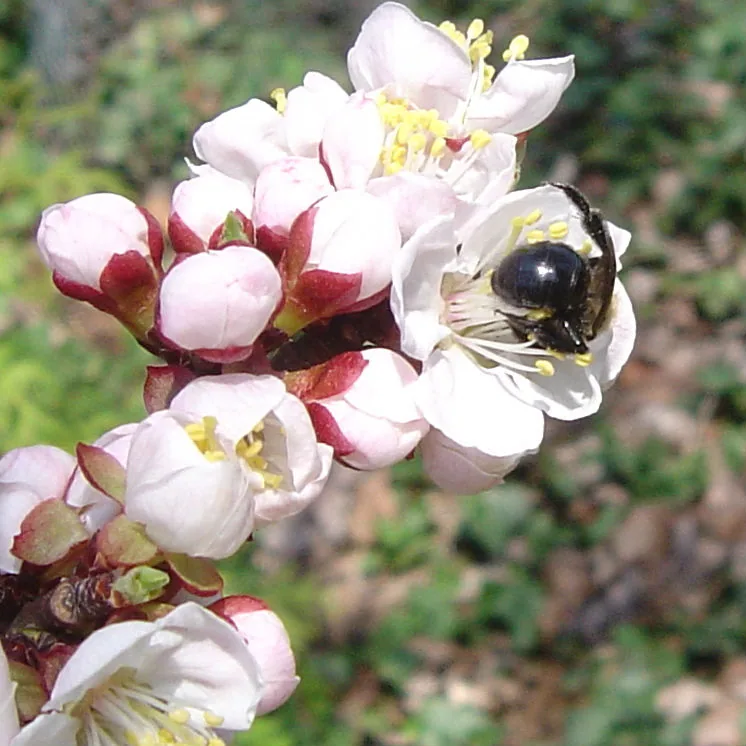
Manchurian apricot is a small, fast-growing deciduous tree from Manchuria and Korea, winter hardy, with an early spring flower display and edible fruit. [1] Its early flowering makes it susceptible to spring frost damage. [1] It is a source of hardy, frost-resistant stock for cultivated apricots. [3]
This record is incomplete: the sources we read do not cover every field yet.
Not yet covered by our sources: Hardiness, warmest zone, Pruning
Prunus mandshurica care
Measurements in square brackets are our conversion into the other unit system; the quoted text is unchanged.
How to water Prunus mandshurica
Watering
The sources give different values depending on region, zone or growing conditions.
What each source says
According to NDSU Extension: Moderately drought tolerant; no ponding
According to Practical Plants: Moderate water; drought intolerant
What the sources say (2)
According to NDSU Extension: Light: Full sun.
Water: Will not withstand ponding, moderately drought tolerant.According to Practical Plants: Shade tolerance
light shade
Water
moderate
Soil textures
sandy, loamy, clay
Soil pH
acid, neutral, alkaline
Drainage
well drained
Tolerates Nutritionally Poor Soil
No
Drought
intolerantWatering notes
Does not tolerate ponding; needs well-drained, moisture-retentive soil
What the sources say (2)
Light: Full sun.
Water: Will not withstand ponding, moderately drought tolerant.Thrives in a well-drained moisture-retentive loamy soil [2] [7] . Prefers some lime in the soil but is likely to become chlorotic if too much lime is present [1] .How much light Prunus mandshurica needs
Full sun to partial shade; fruits better in sun
What the sources say (3)
Light: Full sun.
Water: Will not withstand ponding, moderately drought tolerant.Succeeds in sun or partial shade though it fruits better in a sunny position [2] [7] .
A very frost-resistant plant [10] .Light
full sun
Shade tolerance
light shade
Water
moderateHow much cold Prunus mandshurica can take
Hardiness, coldest zone
3 [winter low −40 to −34.4 °C (−40 to −30 °F)]
What the sources say (1)
Scientific Name: Prunus armeniaca var. mandshurica
Family: Rosaceae (Rose)
Hardiness: Zone 3Hardiness, warmest zone
Not stated in the sources we read.
Best soil for Prunus mandshurica
Soil pH, minimum
6.0
What the sources say (1)
Water: Will not withstand ponding, moderately drought tolerant.
Soil: Grows best in loam soils with a pH of 6-7.5.Soil pH, maximum
7.5
What the sources say (1)
Water: Will not withstand ponding, moderately drought tolerant.
Soil: Grows best in loam soils with a pH of 6-7.5.How to propagate Prunus mandshurica
Seed (2-3 months cold stratification); half-ripe cuttings with a heel (July/August); softwood cuttings (spring to early summer); layering (spring)
What each source says
According to Practical Plants (PFAF): Seed: 2-3 months cold stratification
According to AgroAtlas: Seed: 3 months at 1-5 °C [34–41 °F]
What the sources say (5)
According to Practical Plants (PFAF): Seed - requires 2 - 3 months cold stratification and is best sown in a cold frame as soon as it is ripe [7] .According to AgroAtlas: Reproduces by seeds and summer cuttings. Seed needs to be stratified for 3 months at 1-5 degrees Centigrade.Seed - requires 2 - 3 months cold stratification and is best sown in a cold frame as soon as it is ripe [7] .Cuttings of half-ripe wood with a heel, July/August in a frame [2] [7] .
Softwood cuttings from strongly growing plants in spring to early summer in a frame [7] .
Layering in spring.Reproduces by seeds and summer cuttings. Seed needs to be stratified for 3 months at 1-5 degrees Centigrade.How to grow Prunus mandshurica
The plant
Family
Rosaceae
What the sources say (1)
Scientific Name: Prunus armeniaca var. mandshurica
Family: Rosaceae (Rose)
Hardiness: Zone 3Mature height
305-457 cm (10-15 ft)
What the sources say (1)
Plant Type: Tree
Growth
Rate: Medium
Mature Height: 10’-15’
Longevity: MediumPrunus mandshurica pests and problems
Spring frost
Symptom: Damage to early flowers
What the sources say (1)
It also produces edible fruit. Its early flowering does make it susceptible to spring frost damage.
— Manchurian Apricot | NDSU Agriculture [1] Lime-induced chlorosis
Symptom: Chlorosis when too much lime is present
What the sources say (1)
Prefers some lime in the soil but is likely to become chlorotic if too much lime is present [1] .
— Manchurian Apricot (Prunus mandschurica) — Practical Plants [4]
Remedies
The sources we checked give no remedies for this plant.
Is Prunus mandshurica poisonous?
Reported by the source, quoted verbatim. This is not medical or veterinary advice: if a person or an animal may have eaten this plant, contact a poison control centre or a veterinarian.
Livestock ingest Prunus plant material when other forage is unavailable and out of curiosity when a branch falls into a pasture. Fruit from Prunus species is not poisonous but seeds and pits are.
[5]Genus-level warning: refers to the whole genus, not documented for this species
Calendar
Fresh seed as soon as ripe, or stored seed as early in the year as possible, in a cold frame
What the sources say (1)
is best sown in a cold frame as soon as it is ripe [7] . Sow stored seed in a cold frame as early in the year as possible [7] .Late spring or early summer (seedlings, after their first winter under cover)
What the sources say (1)
Grow them on in a greenhouse or cold frame for their first winter and plant them out in late spring or early summer of the following year.August to early September
What the sources say (1)
Seed needs to be stratified for 3 months at 1-5 degrees Centigrade. Blossoms in May; bears fruit in August/early September.Not stated in the sources we read.
Months as given by the sources, which are mostly from the United States (northern hemisphere). In the southern hemisphere they shift by about six months.
Edibility
Reported by the source, quoted verbatim. Do not eat a plant on the basis of this page alone: identification mistakes can be dangerous.
Used for food (fruit). Local populations would use the fruit to make candy, pastila, jam and filling for sweets.
[3]Fruit - raw or cooked [6] . Not usually very palatable raw but it is all right cooked [10] .
[4]Seed - raw or cooked. It usually has a bitter flavour, though there are plants with sweeter seeds [9] .
[4]
Indicative values
Values from a secondary source, not checked word for word like the rest of this page. Use them as a starting point.
- Life cycle
- PerennialIndicative value, adapt it to your climate · Secondary source
- Hours of sun
- 6-8 hoursIndicative value, adapt it to your climate · Secondary source
- Care level
- MediumIndicative value, adapt it to your climate · Secondary source
- Growth rate
- LowIndicative value, adapt it to your climate · Secondary source
- Pruning
- March, AprilIndicative value, adapt it to your climate · Secondary source
Similar plants
- Afghan Cherry Prunus jacquemontii
- American Plum Prunus americana
- Amur chokecherry Prunus maackii
- Apricot Prunus armeniaca
- Black Cherry Prunus serotina
- Carolina Cherry Laurel Prunus caroliniana
- Cherry Laurel Prunus laurocerasus
- Chickasaw Plum Prunus angustifolia
Sources
Every value above is quoted from these documents. Links lead to the original publisher.
- Manchurian Apricot | NDSU Agriculture · ndsu.edu, consulted
- Prunus mandshurica - Useful Temperate Plants · temperate.theferns.info, consulted
- AgroAtlas - Relatives - Armeniaca mandshurica (Maxim.) Skvorts. - Manchurian apricot. · agroatlas.ru, consulted
- Manchurian Apricot (Prunus mandschurica) — Practical Plants · practicalplants.org, consulted
- Selected Poisonous Plants of the Pacific Northwest | Animal Agriculture | Washington State University · extension.wsu.edu, consulted
Written by Emilio Marruso · last checked