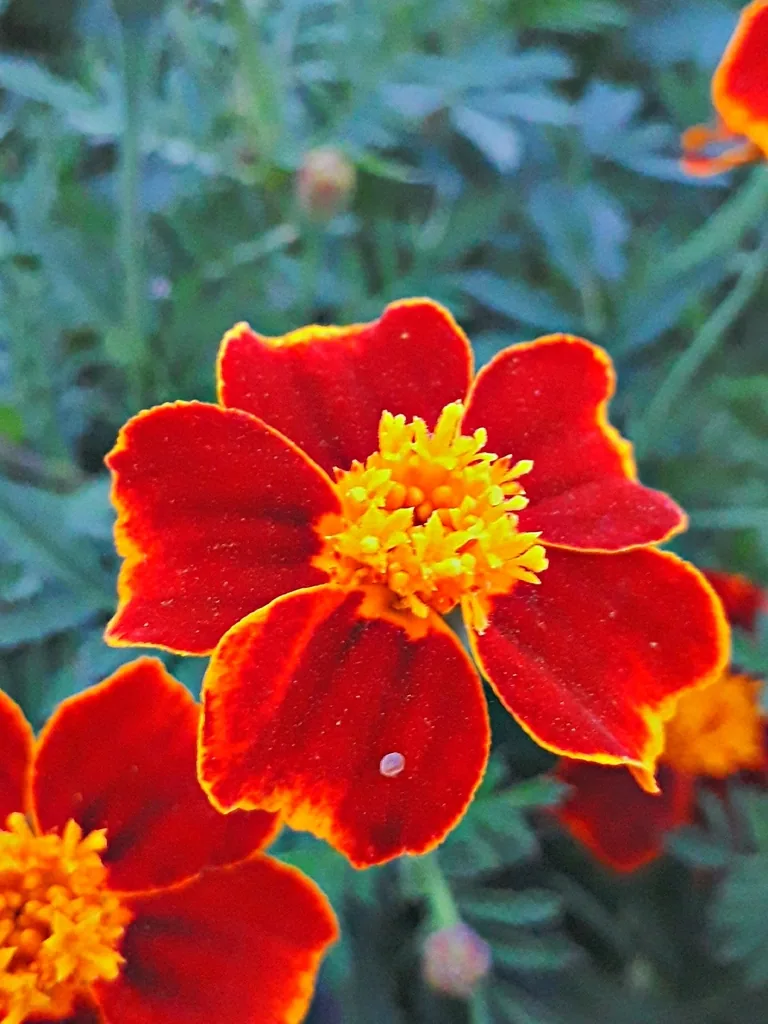
Cómo cultivar y cuidar Cempoalxóchitl
Tagetes patula
Escrito por Emilio Marruso · última revisión
Tóxica para: Personas · Por qué
De un vistazo
El clavel moro es una anual alegre y muy fácil de empezar: sembrado directamente en el jardín, sus semillas germinan en 5–7 días. Se queda pequeño, de 15 a 30 cm de alto, y vive feliz a pleno sol o en semisombra, en el suelo o en maceta, incluso en interior. Además, sus raíces sueltan una sustancia que aleja a los nematodos del suelo.
- Sol
De pleno sol a semisombra
Qué dicen las fuentes (2)
Luz: Pleno sol a semisombra
French marigold prefers full sun to partial shade in average, well-drained, evenly moist soil. It is deer-resistant and drought-tolerant once established.
— Tagetes patula (French Marigold) | North Carolina Extension Gardener Plant Toolbox [1] Full sun in moist well-drained soil Cultivars Large number of cultivars to choose from.
— Dwarf French Marigold (Tagetes patula)-Hort Answers - University of Illinois Extension [3] - Distancia
20–25 cm entre plantas
Qué dicen las fuentes (1)
Distancia de plantación: 20.3-25.4 cm (8 a 10 pulgadas)
Plant French and signet types 8 to 10 inches apart
— Marigolds: From Folklore to the Home Garden [4] - Abonado
Abono de liberación lenta al plantar y luego de vez en cuando; con mucho nitrógeno da hojas y no flores
Qué dicen las fuentes (9)
Cuándo: Al plantar, y luego ocasionalmente durante la temporada de crecimiento
In the absence of soil test results, a slow-release fertilizer formulated for annuals can be incorporated at the time of planting.
— How to Grow and Care for Marigolds in South Carolina | Home & Garden Information Center [5] Phosphorus deficiency is noted by the purpling of lower leaves. Fertilizing occasionally with a complete fertilizer during the growing season often prevents or reduces these issues.
— Growing Marigolds in the Home Garden | Yard and Garden [7] Abonos minerales: Fertilizante equilibrado o uno con un número medio más alto; fertilizante completo durante la temporada; fertilizante de liberación lenta para anuales al plantar
en contenedores: When planting marigolds in containers, use a soil-less potting mix supplemented with slow-release fertilizer or occasionally water with diluted liquid fertilizer.
— Marigolds: From Folklore to the Home Garden [4] A nitrogen-rich fertilizer stimulates more foliage growth at the expense of flowers. Use a balanced fertilizer or one with a higher middle number in the nutrient analysis to encourage flowering.
— Marigolds: From Folklore to the Home Garden [4] Phosphorus deficiency is noted by the purpling of lower leaves. Fertilizing occasionally with a complete fertilizer during the growing season often prevents or reduces these issues.
— Growing Marigolds in the Home Garden | Yard and Garden [7] In the absence of soil test results, a slow-release fertilizer formulated for annuals can be incorporated at the time of planting.
— How to Grow and Care for Marigolds in South Carolina | Home & Garden Information Center [5] Evitar: Fertilizantes altos en nitrógeno y alimentación abundante
Avoid fertilizers that are high in nitrogen, the first number in the nutrient analysis. A nitrogen-rich fertilizer stimulates more foliage growth at the expense of flowers.
— Marigolds: From Folklore to the Home Garden [4] Water : Moderate; ensure even moisture in soil but avoid waterlogging Fertilization : Low feeders; does not require heavy fertilization
— Marigolds – Wisconsin Horticulture [6] Signos de exceso: Más follaje a costa de las flores con fertilizante rico en nitrógeno
Avoid fertilizers that are high in nitrogen, the first number in the nutrient analysis. A nitrogen-rich fertilizer stimulates more foliage growth at the expense of flowers.
— Marigolds: From Folklore to the Home Garden [4] - Cosecha
Con las flores se hacen bebidas refrescantes; las hojas sirven para dar sabor
- Plagas
Vigila la araña roja, los trips y las chicharritas, además del oídio y la botritis
Qué dicen las fuentes (4)
Plagas: arañitas rojas, trips, chicharritas
Spider mites and thrips may also be a problem.
— Tagetes patula (French Marigold) | North Carolina Extension Gardener Plant Toolbox [1] Additional pests and problems that may affect this plant: Mites, leaf hoppers, botrytis, pythium root rot, aster yellows
— Dwarf French Marigold (Tagetes patula)-Hort Answers - University of Illinois Extension [3] Enfermedades: mildiu polvoriento, botrytis, mancha foliar, pudriciones, amarillamiento del áster, pudrición radical por pythium
It can be susceptible to powdery mildew, botrytis, leaf spot and rots.
— Tagetes patula (French Marigold) | North Carolina Extension Gardener Plant Toolbox [1] Additional pests and problems that may affect this plant: Mites, leaf hoppers, botrytis, pythium root rot, aster yellows
— Dwarf French Marigold (Tagetes patula)-Hort Answers - University of Illinois Extension [3] - Tamaño
15–30 cm de alto y 15–46 cm de ancho
Qué dicen las fuentes (3)
Altura adulta: 15-30 cm (6 a 12 pulgadas)
It is 6 to 12 inches high and 6 to 18 inches wide.
— Tagetes patula (French Marigold) | North Carolina Extension Gardener Plant Toolbox [1] Mature Height 6-12 Inches
— Dwarf French Marigold (Tagetes patula)-Hort Answers - University of Illinois Extension [3] Anchura adulta: 15-46 cm (6 a 18 pulgadas)
Dimensions: Height: 0 ft. 6 in. - 1 ft. 0 in. Width: 0 ft. 6 in. - 1 ft. 6 in.
— Tagetes patula (French Marigold) | North Carolina Extension Gardener Plant Toolbox [1] - Multiplicación
Guarda semillas al final de la temporada, solo de variedades de polinización abierta; las híbridas pueden fallar
Qué dicen las fuentes (1)
Guardar semillas: Guarda las semillas al final de la temporada solo de cultivares de polinización abierta; las semillas de cultivares híbridos pueden ser estériles o producir descendencia que no se parece a la planta madre
At the end of the season, seed can be saved from open-pollinated cultivars, but avoid saving seed from hybrid cultivars, as they may be sterile or produce offspring that do not resemble the parent plant.
— How to Grow and Care for Marigolds in South Carolina | Home & Garden Information Center [5] - Siembra
Siembra directa a 6 mm de profundidad; las semillas germinan en 5–7 días
Qué dicen las fuentes (3)
Profundidad de siembra: 0.6 cm (1/4 de pulgada)
Plant the seed approximately ¼ inch deep and expect germination in 5 to 7 days.
— How to Grow and Care for Marigolds in South Carolina | Home & Garden Information Center [5] When starting marigolds, moisten the soil and sow seeds about 1 inch apart and ¼ inch deep.
— Marigolds: From Folklore to the Home Garden [4] Días de germinación: 5-7 (siembra directa)
Plant the seed approximately ¼ inch deep and expect germination in 5 to 7 days.
— How to Grow and Care for Marigolds in South Carolina | Home & Garden Information Center [5] - Maceta
Crece bien en maceta, incluso en interior
Qué dicen las fuentes (3)
En maceta: Sí
French marigolds are great for beds, containers or as an edging plant in borders.
— Tagetes patula (French Marigold) | North Carolina Extension Gardener Plant Toolbox [1] Good border and edging annual. Good in containers.
— Dwarf French Marigold (Tagetes patula)-Hort Answers - University of Illinois Extension [3] En interior: Sí
Landscape Location: Container Houseplants Patio Pool/Hardscape Recreational Play Area
— Tagetes patula (French Marigold) | North Carolina Extension Gardener Plant Toolbox [1] - Seguridad
La savia en piel herida y al sol puede quemar y causar ampollas; el olor de las flores irrita nariz y ojos
Resumen
El tagete francés es una anual compacta y arbustiva de la familia de las margaritas, nativa de México y Guatemala. [1] Prefiere pleno sol a semisombra en suelo bien drenado y uniformemente húmedo, y es tolerante a la sequía una vez establecido. [1] Se utiliza en lechos, contenedores y bordes, y atrae polinizadores. [1]
Citado en inglés, como en la fuente.
Esta ficha está incompleta: las fuentes consultadas aún no cubren todos los campos.
Aún no cubierto por nuestras fuentes: Rusticidad, zona más fría, Rusticidad, zona más cálida, Poda, Propagación
Cuidados
Las medidas entre corchetes son nuestra conversión al otro sistema de unidades; el texto citado no cambia.
Riego
Las fuentes dan valores distintos según la región, la zona o las condiciones de cultivo.
Lo que dice cada fuente
Según NC State Extension: Suelo uniformemente húmedo; tolerante a la sequía una vez establecido
Según Penn State Extension: Deja que el suelo se seque un poco entre cada riego, luego riega abundantemente y en profundidad; riega con más frecuencia durante el clima caluroso
Según Clemson HGIC: Aproximadamente 1 pulgada [2,5 cm] de agua por semana después del establecimiento; deja que el suelo se seque un poco entre riegos
Según UW-Madison Extension: Moderado; asegura una humedad uniforme en el suelo pero evita el encharcamiento
Según Iowa State Extension: Suelos bien drenados a secos; tolerante a la sequía una vez establecido
Qué dicen las fuentes (6)
Según NC State Extension: French marigold prefers full sun to partial shade in average, well-drained, evenly moist soil. It is deer-resistant and drought-tolerant once established.Según Penn State Extension: allow the soil to dry slightly between each watering, then water thoroughly and deeplySegún Clemson HGIC: In the absence of adequate rainfall, water the soil deeply once a week, allowing it to dry somewhat between waterings.Según UW-Madison Extension: Water : Moderate; ensure even moisture in soil but avoid waterloggingSegún Iowa State Extension: Most marigolds prefer full sun with well-drained to dry soils. Once established, they are drought tolerantFrench marigold prefers full sun to partial shade in average, well-drained, evenly moist soil. It is deer-resistant and drought-tolerant once established.Luz
Pleno sol a semisombra
Qué dicen las fuentes (2)
French marigold prefers full sun to partial shade in average, well-drained, evenly moist soil. It is deer-resistant and drought-tolerant once established.Full sun in moist well-drained soil
Cultivars
Large number of cultivars to choose from.Clima y frío
Rusticidad, zona más fría
No figura en las fuentes consultadas.
Rusticidad, zona más cálida
No figura en las fuentes consultadas.
Dónde cultivarla
En interior
Sí
Qué dicen las fuentes (1)
Landscape Location:
Container
Houseplants
Patio
Pool/Hardscape
Recreational Play AreaEn maceta
Sí
Qué dicen las fuentes (2)
French marigolds are great for beds, containers or as an edging plant in borders.Good border and edging annual. Good in containers.Distancia de plantación
20.3-25.4 cm (8 a 10 pulgadas)
Qué dicen las fuentes (1)
Plant French and signet types 8 to 10 inches apartPropagación
No figura en las fuentes consultadas.
Cultivo
La planta
Ciclo de vida
anual
Qué dicen las fuentes (1)
French marigold is a compact bushy annual in the aster family (Asteraceae) and native to Mexico and Guatemala.Familia
Asteraceae
Qué dicen las fuentes (1)
French marigold is a compact bushy annual in the aster family (Asteraceae) and native to Mexico and Guatemala.Altura adulta
15-30 cm (6 a 12 pulgadas)
Anchura adulta
15-46 cm (6 a 18 pulgadas)
Qué dicen las fuentes (1)
Dimensions: Height: 0 ft. 6 in. - 1 ft. 0 in. Width: 0 ft. 6 in. - 1 ft. 6 in.Siembra y crecimiento
Días de germinación
5-7 (siembra directa)
Qué dicen las fuentes (1)
Plant the seed approximately ¼ inch deep and expect germination in 5 to 7 days.Profundidad de siembra
0.6 cm (1/4 de pulgada)
Qué dicen las fuentes (2)
Plant the seed approximately ¼ inch deep and expect germination in 5 to 7 days.When starting marigolds, moisten the soil and sow seeds about 1 inch apart and ¼ inch deep.Cosecha y conservación
Guardar semillas
Guarda las semillas al final de la temporada solo de cultivares de polinización abierta; las semillas de cultivares híbridos pueden ser estériles o producir descendencia que no se parece a la planta madre
Qué dicen las fuentes (1)
At the end of the season, seed can be saved from open-pollinated cultivars, but avoid saving seed from hybrid cultivars, as they may be sterile or produce offspring that do not resemble the parent plant.Plagas y enfermedades
Plagas
arañitas rojas, trips, chicharritas
Qué dicen las fuentes (2)
Spider mites and thrips may also be a problem.Additional pests and problems that may affect this plant: Mites, leaf hoppers, botrytis, pythium root rot, aster yellowsEnfermedades
mildiu polvoriento, botrytis, mancha foliar, pudriciones, amarillamiento del áster, pudrición radical por pythium
Qué dicen las fuentes (2)
It can be susceptible to powdery mildew, botrytis, leaf spot and rots.Additional pests and problems that may affect this plant: Mites, leaf hoppers, botrytis, pythium root rot, aster yellowsAbonado
Cuándo
Al plantar, y luego ocasionalmente durante la temporada de crecimiento
Qué dicen las fuentes (2)
In the absence of soil test results, a slow-release fertilizer formulated for annuals can be incorporated at the time of planting.Phosphorus deficiency is noted by the purpling of lower leaves. Fertilizing occasionally with a complete fertilizer during the growing season often prevents or reduces these issues.Frecuencia
Ocasionalmente durante la temporada de crecimiento
Lo que dice cada fuente
en contenedores: Alimentación líquida diluida ocasional, o fertilizante de liberación lenta en la mezcla para macetas
Qué dicen las fuentes (2)
en contenedores: When planting marigolds in containers, use a soil-less potting mix supplemented with slow-release fertilizer or occasionally water with diluted liquid fertilizer.Phosphorus deficiency is noted by the purpling of lower leaves. Fertilizing occasionally with a complete fertilizer during the growing season often prevents or reduces these issues.Abonos minerales
Fertilizante equilibrado o uno con un número medio más alto; fertilizante completo durante la temporada; fertilizante de liberación lenta para anuales al plantar
Lo que dice cada fuente
en contenedores: Fertilizante de liberación lenta en una mezcla para macetas sin tierra, o fertilizante líquido diluido
Qué dicen las fuentes (4)
en contenedores: When planting marigolds in containers, use a soil-less potting mix supplemented with slow-release fertilizer or occasionally water with diluted liquid fertilizer.A nitrogen-rich fertilizer stimulates more foliage growth at the expense of flowers. Use a balanced fertilizer or one with a higher middle number in the nutrient analysis to encourage flowering.Phosphorus deficiency is noted by the purpling of lower leaves. Fertilizing occasionally with a complete fertilizer during the growing season often prevents or reduces these issues.In the absence of soil test results, a slow-release fertilizer formulated for annuals can be incorporated at the time of planting.Evitar
Fertilizantes altos en nitrógeno y alimentación abundante
Qué dicen las fuentes (2)
Avoid fertilizers that are high in nitrogen, the first number in the nutrient analysis. A nitrogen-rich fertilizer stimulates more foliage growth at the expense of flowers.Water : Moderate; ensure even moisture in soil but avoid waterlogging
Fertilization : Low feeders; does not require heavy fertilizationSignos de carencia
Amarillamiento general de las hojas (nitrógeno); coloración púrpura de las hojas inferiores (fósforo)
Qué dicen las fuentes (1)
Nitrogen-deficient soils will lead to overall yellowing of the leaves. Phosphorus deficiency is noted by the purpling of lower leaves.Signos de exceso
Más follaje a costa de las flores con fertilizante rico en nitrógeno
Qué dicen las fuentes (1)
Avoid fertilizers that are high in nitrogen, the first number in the nutrient analysis. A nitrogen-rich fertilizer stimulates more foliage growth at the expense of flowers.Problemas
Enfermedades fúngicas
Síntoma: Susceptible a mildiu polvoriento, botrytis, mancha foliar y pudriciones
Qué hacer: No indicado en las fuentes
Qué dicen las fuentes (1)
It can be susceptible to powdery mildew, botrytis, leaf spot and rots.
— Tagetes patula (French Marigold) | North Carolina Extension Gardener Plant Toolbox [1] Arañitas rojas y trips
Síntoma: Las arañitas rojas y los trips también pueden ser un problema
Qué hacer: No indicado en las fuentes
Qué dicen las fuentes (1)
Spider mites and thrips may also be a problem. Some cultivars have shown good resistance to abiotic disorders.
— Tagetes patula (French Marigold) | North Carolina Extension Gardener Plant Toolbox [1] Amarillamiento del áster
Síntoma: La enfermedad fitoplasma se encuentra entre las plagas y problemas
Qué hacer: No indicado en las fuentes
Qué dicen las fuentes (1)
Additional pests and problems that may affect this plant: Mites, leaf hoppers, botrytis, pythium root rot, aster yellows
— Dwarf French Marigold (Tagetes patula)-Hort Answers - University of Illinois Extension [3]
Remedios
Cada remedio indica qué dicen las fuentes oficiales; los remedios tradicionales sin fuente oficial aparecen marcados. Los perjudiciales están para que sepas evitarlos.
Primeros auxilios
Primeros auxilios: no sustituyen al médico
irritación de la piel por contacto con la planta
lavarse la piel con jabón y agua Fuente oficial, sin prueba independiente
However, if the symptoms persist or worsen, contact your physician for further treatment.
— chop.edu [8] Instead, contact the Poison Control Center at 1-800-222-1222 immediately for information on what to do.
— chop.edu [9] Skin redness, burning pain, and blisters when broken skin is in contact with cell sap plus sunlight; nose and eye irritation from aroma of flowers.
— Tagetes patula (French Marigold) | North Carolina Extension Gardener Plant Toolbox [1] Cómo: Después del contacto con una planta irritante para la piel, lava las áreas expuestas a fondo con jabón y agua.
After contact with a skin irritant plant, wash the exposed areas thoroughly with soap and water.
— chop.edu [8]
Cuidar la planta
ácaros araña
un fuerte chorro de agua de la manguera No verificado
Remedio tradicional, no verificado por una fuente oficial.
Cómo: Si se detecta a tiempo, los ácaros y los trips a veces pueden eliminarse con un fuerte chorro de la manguera del jardín
aceite de neem Funciona
Cómo: Usa aceite de neem o aceite hortícola si encuentras una infestación.
Use neem or horticultural oil if you encounter an infestation.
— thespruce.com [10] Qué dicen las pruebas Neem oil is found in the seeds of the neem tree. The active component found in this biological pesticide reduces insect feeding
— extension.illinois.edu [11] jabón insecticida Funciona
Cómo: Jabón insecticida aplicado según las instrucciones de la etiqueta
Marigolds have few pests or problems, but spider mites and aphids may infest the plants. Usually, insecticidal soap applied according to label directions will solve the problem.
— Marigolds: From Folklore to the Home Garden [4] Qué dicen las pruebas For example, insecticidal soap is a safe, effective organic insecticide with minimal environmental impact.
— extension.psu.edu [12]
trips
un fuerte chorro de agua de la manguera No verificado
Remedio tradicional, no verificado por una fuente oficial.
Cómo: Si se detecta a tiempo, los ácaros y los trips a veces pueden eliminarse con un fuerte chorro de la manguera del jardín
pulgones
jabón insecticida Funciona
Cómo: Una aplicación semanal de jabón insecticida orgánico, o un rociado de agua
Marigolds have few pests overall, but spider mites and aphids sometimes infest them. Usually, a spray of water or a weekly application of organic insecticidal soap is all it takes to get rid of these pests.
— almanac.com [13] Qué dicen las pruebas For example, insecticidal soap is a safe, effective organic insecticide with minimal environmental impact.
— extension.psu.edu [12]
babosas
Recolección manual por la noche. No verificado
Remedio tradicional, no verificado por una fuente oficial.
Cómo: Sal cada noche con una linterna y arranca tantos caracoles y babosas de tus plantas como puedas.
amarillamiento del áster
Elimina las plantas infectadas Fuente oficial, sin prueba independiente
Cómo: Retira las plantas infectadas para evitar la propagación del fitoplasma a las caléndulas u otros miembros de la familia Aster.
It is recommended that infected plants be removed to prevent the spread of the phytoplasma to marigolds or other Aster family members.
— Growing Marigolds in the Home Garden | Yard and Garden [7]
Toxicidad
Según la fuente, citada textualmente. No es un consejo médico ni veterinario: si una persona o un animal pudo haber ingerido esta planta, contacta con un centro de toxicología o con un veterinario.
Poison Symptoms: Skin redness, burning pain, and blisters when broken skin is in contact with cell sap plus sunlight; nose and eye irritation from aroma of flowers. Poison Toxic Principle: Phototoxic thiophene derivatives
[1]- Partes venenosas
Poison Part: Flowers Leaves Roots
[1]- Principio tóxico
Poison Toxic Principle: Phototoxic thiophene derivatives
[1]- Síntomas
Skin redness, burning pain, and blisters when broken skin is in contact with cell sap plus sunlight; nose and eye irritation from aroma of flowers.
[1]- Gravedad
This plant has low severity poison characteristics.
[1]
Calendario
Plantación
Las fuentes dan valores distintos según la región, la zona o las condiciones de cultivo.
Lo que dice cada fuente
Según Penn State Extension: En cualquier momento desde la primavera hasta el verano
Según Clemson HGIC: Después de la última helada en primavera
Qué dicen las fuentes (3)
Según Penn State Extension: Plant French and signet marigolds anytime from spring through midsummer.Según Clemson HGIC: The ideal time to plant marigolds is after the last frost in spring.Plant French and signet marigolds anytime from spring through midsummer.Poda
No figura en las fuentes consultadas.
Meses tal como los dan las fuentes, en su mayoría de Estados Unidos (hemisferio norte). En el hemisferio sur se desplazan unos seis meses.
Respecto a las heladas
Estimación menos precisa: no hay ninguna estación meteorológica a menos de 300 km.
Busca las fechas de heladas por código postal o ciudad
Plantación: hacia la última helada
The ideal time to plant marigolds is after the last frost in spring.
— How to Grow and Care for Marigolds in South Carolina | Home & Garden Information Center [5] Siembra al aire libre: hacia la última helada
Once the soil has warmed and the danger of frost has passed, sow seeds directly into the garden.
— How to Grow and Care for Marigolds in South Carolina | Home & Garden Information Center [5]
Cuenta desde las fechas medias de las heladas de tu zona.
Comestibilidad
Según la fuente, citada textualmente. No comas una planta basándote solo en esta página: los errores de identificación pueden ser peligrosos.
Valores orientativos
Valores de una fuente secundaria, no comprobados palabra por palabra como el resto de esta página. Úselos como punto de partida.
- Resiste la sequía
- SíValor orientativo, adáptalo a tu clima · Fuente secundaria
- pH del suelo
- 6-7Valor orientativo, adáptalo a tu clima · Fuente secundaria
- Zonas de rusticidad USDA
- 2-11 [mínima invernal de −45,6 a 10 °C (de −50 a 50 °F)]Valor orientativo, adáptalo a tu clima · Fuente secundaria
- Nivel de cuidado
- MedioValor orientativo, adáptalo a tu clima · Fuente secundaria
- Crecimiento
- BajoValor orientativo, adáptalo a tu clima · Fuente secundaria
- Poda
- AgostoValor orientativo, adáptalo a tu clima · Fuente secundaria
- Propagación
- Propagación por semilla, esqueje, división, acodoValor orientativo, adáptalo a tu clima · Fuente secundaria
Plantas similares
- Cempasúchil Tagetes erecta
- Chinchimali del Perú Tagetes tenuifolia
- Pericón Tagetes lucida
- African Daisy Dimorphotheca pluvialis
- Ageratum Ageratum houstonianum
- Alpine aster Aster alpinus
- Appalachian Blazing Star Liatris squarrulosa
- Appalachian Ironweed Vernonia glauca
Fuentes
Cada valor anterior se cita de estos documentos. Los enlaces llevan al editor original.
- Tagetes patula (French Marigold) | North Carolina Extension Gardener Plant Toolbox · plants.ces.ncsu.edu, consultado
- Tagetes (Marigold) | North Carolina Extension Gardener Plant Toolbox · plants.ces.ncsu.edu, consultado
- Dwarf French Marigold (Tagetes patula)-Hort Answers - University of Illinois Extension · web.extension.illinois.edu, consultado
- Marigolds: From Folklore to the Home Garden · extension.psu.edu, consultado
- How to Grow and Care for Marigolds in South Carolina | Home & Garden Information Center · hgic.clemson.edu, consultado
- Marigolds – Wisconsin Horticulture · hort.extension.wisc.edu, consultado
- Growing Marigolds in the Home Garden | Yard and Garden · yardandgarden.extension.iastate.edu, consultado
- chop.edu · chop.edu
- chop.edu · chop.edu
- thespruce.com · thespruce.com
- extension.illinois.edu · extension.illinois.edu
- extension.psu.edu · extension.psu.edu
- almanac.com · almanac.com
Escrito por Emilio Marruso · última revisión