Companion Planting Chart: Good and Bad Garden Neighbors
Pair crops for a specific purpose, from sharing space to managing a pest, and keep tomatoes apart from potatoes where space allows.
by Emilio MarrusoPublished
Pair carrots with radishes to share space and try onions with cabbage only with a specific pest in mind. Give tomatoes and potatoes separate growing areas where you can because they share a disease. University of Minnesota Extension, Companion planting in home gardens reviews the companion evidence, West Virginia University Extension, Late blight of tomatoes advises against putting tomatoes close to potatoes and University of Minnesota Extension, Late blight of tomato and potato explains how late blight spreads [1] [2] [3].
In short:
- Pick a pairing for a named purpose such as saving space or checking a particular pest.
- Use onions beside cabbage as a limited trial and keep inspecting the cabbage.
- Separate tomatoes and potatoes where possible and watch both for signs of late blight.
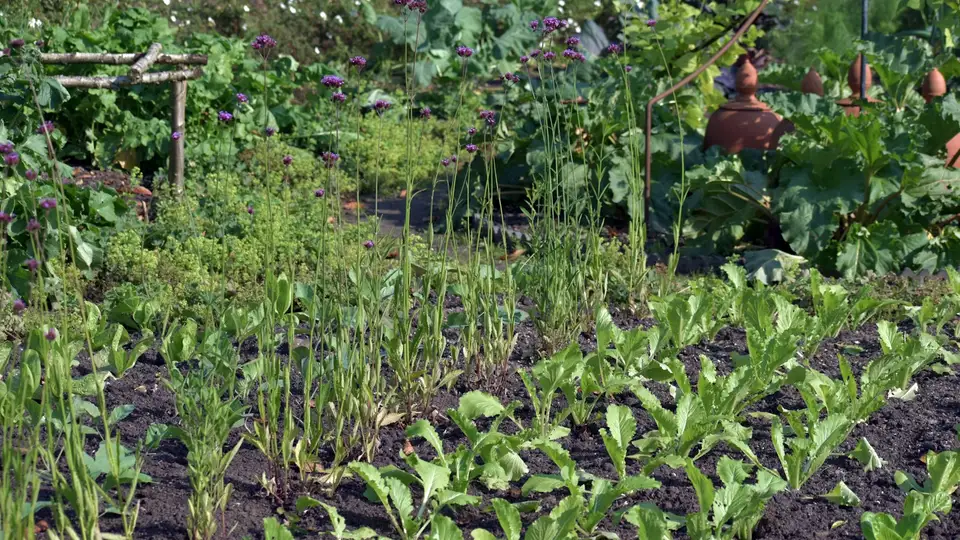
Which neighbors belong together?
| Neighbors | Decision | What the source supports |
|---|---|---|
| Carrot + radish | Try to save space [1]. | Side-by-side crops with a practical space benefit. |
| Lettuce + tomato | Harvest early lettuce as the tomato grows into the space [1]. | A temporary overlap between early and later crops. |
| Onion + cabbage | Try and monitor the cabbage [1]. | Onions were among companions associated with lower numbers of cabbage loopers and imported cabbageworms in research summarized by Extension. |
| French marigold + tomato | Consider for the studied whitefly context [1]. | A glasshouse study on glasshouse whitefly, with limited transfer to other settings. |
| Marigold + potato | Skip this pairing if the goal is controlling Colorado potato beetle [1]. | Multiple studies did not support that use. |
| Tomato + potato | Avoid close placement where possible [2] [3]. | The crops share a host risk from late blight, and the pathogen can travel through the air. |
Read the third column before choosing a row. A spacing combination can be useful even if it has never been shown to repel insects. A finding about one insect gives you a reason to watch for that insect. Keep the goal attached to the pair when you transfer it to your own bed [1].
How do you try onions next to cabbage?
Step 1 Name the insect you are watching
Start with cabbage loopers and imported cabbageworms. Minnesota's review describes onion among the companions that helped with these cabbage pests. If the damage you actually see consists of small holes from flea beetles, the same review describes weak or conflicting evidence for green onions and marigolds as flea beetle deterrents. Identify what is feeding before you judge the arrangement [1].
Step 2 Keep room to inspect your plants
Put the onion row where you can still reach the cabbages and see their leaves. Give the cabbage the mature space it needs instead of packing onions tight around each head. Record where you planted the pairing. If you have cabbage elsewhere, make notes on that planting too, including any differences in variety, sun and watering [1].
Step 3 Look for the result you intended
Examine leaves for both fresh damage and the insects responsible. A home comparison can guide next season's layout, even though a difference between beds can have several causes. Note what you observed, what you harvested and whether the companion got in the way. A companion you cannot tend or harvest needs a better position [1].
How do you share space without crowding crops?
For the carrot and radish example, assign a place in the bed for each crop, leaving room for carrots to stay after the radishes are lifted. Thin and pick the radishes in a way that avoids disturbing the neighboring row. Where you use lettuce and tomato, set the lettuce early and plan to pick it before the tomato canopy takes over. Leave access for the tomato support and for harvesting the lettuce [1].
Draw the bed both as it looks at planting and as it will look after the early harvest. If the later crop needs the same space before you are ready to harvest the earlier crop, revise the layout. This approach helps you judge the pairing by how the bed actually works during that overlap [1].
Why are tomatoes and potatoes poor neighbors?
They can both host late blight. West Virginia's guidance advises against putting tomatoes close to potatoes, while Minnesota describes infected planting material, volunteers and windborne spores as routes by which the disease can enter or move around an area. Separate the crops if you have room and inspect both. Moving a crop across your garden does not block windborne spores [2] [3].
Look for disease alerts from your local Extension office if you see suspicious blotches. Inspect the tomato as well as the potato and seek help identifying the problem before acting. Consider last season's planting too, because using a different neighbor now and rotating crops out of the same bed between seasons solve different placement decisions [2] [3].
What evidence should you look for before adding another pair?
Look for the crop, the companion, the species of insect, and the setting where a result was measured. A glasshouse study carries the conditions of that glasshouse with it. In an open bed, keep your normal monitoring routine and record what happens to the pest that was actually studied. Leave room for an arrangement you can adjust if it creates extra work [1].
Keep a comparison you can read later
Sketch the planting on paper and note the date you first saw damage. Record whether you saw the insect itself or only a mark on a leaf. If you change the watering or install a cover during the trial, add that to the record. It gives you a better basis for repeating the planting next season [1].
Frequently asked questions
Can any marigold protect tomatoes from every pest?
Use the French marigold finding for the studied whitefly and glasshouse context. It gives you a specific combination to evaluate [1].
Sources
- University of Minnesota Extension, Companion planting in home gardens · extension.umn.edu, consulted
- West Virginia University Extension, Late blight of tomatoes · extension.wvu.edu, consulted
- University of Minnesota Extension, Late blight of tomato and potato · extension.umn.edu, consulted
Written by Emilio Marruso · last checked